Software
Houzz Logo Print
webuser_882452772

Vapor barrier in basement ?

5 years ago

I‘m new to carpentry and new to building science but I need some advice.


A family member is a master carpenter and has built many homes in his life, when my spouse and I decided to remodel our basement last year, for some reason beyond what I can comprehend, he suggested to put a vapor barrier on BOTH sides of the wall. In a basement. Ugh. Now, this happened before I knew anything about anything and I didn’t think anything of it. My spouse is not a carpenter and listened to this family members advice because hey he’s built houses and they’ve never had problems! I know that in the 80s people loved their vapor barriers. Now that I am aware of all the issues that they can cause I’m mostly trying to figure out if this will cause major problems sooner than later. The drywall is already up and its been mudded and taped by my spouse who’s worked so hard on this. As much as I do not want to tear everything out and really piss him off, my conscience is telling me this is a terrible situation.


Our house has it’s fair share of air leaks, I haven’t done a blower door test but I just know there’s a lot of air movement. We do not have any water issues in our basement, we did when we first moved in and we sealed everything up that was causing issues (cracks, old windows) and made sure they were sealed before we remodeled. We run a dehumidifier downstairs 24/7. My big question is if there is a dehumidifier always running (humidity is never above 50%), our house is leaky, the vapor barrier isn’t sealed well (don’t ask - I just know it isn’t taped!) and there’s air movement in the floor joists - is this going to cause mold?


Thanks for reading.

Comments (5)

  • 5 years ago

    "My big question is if there is a dehumidifier always running (humidity is never above 50%), our house is leaky, the vapor barrier isn’t sealed well (don’t ask - I just know it isn’t taped!) and there’s air movement in the floor joists - is this going to cause mold?"


    Maybe and maybe not. Impossible to tell for sure but if you have the need to run a dehumidifier then you still have moisture coming from somewhere so yes you very well end up with mold with (2) vapor barriers as whatever moisture is there will get trapped.

  • 5 years ago

    Thanks. We live in WI. So dry winters and humid summers. I mostly run the dehumidifier 24/7 because I do not want any mold in the basement. It‘s more of a preventative measure than a need. We had a mold issue in this basement when it was flooding and before we sealed/filled everything up and had it professionally remediated. I’m not worried about water leaking into the basement after a year of watching and observing. I’m just paranoid about moisture in the basement so thats the reason behind the dehumidifier. I just think it’s a good idea!?

  • 5 years ago

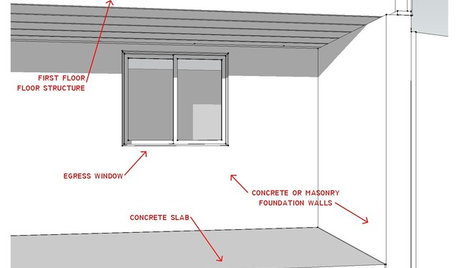
    At this point, the vapor barrier against the exterior foundation/basement wall is probably a good detail for you, moisture wicking into a basement through the exterior walls can be a big source of moisture in basements. Many current basements would use a low permeability foam insulation at this location against the outside wall. The insulation has other benefits in regards to changing the temperature profile through the wall section, but minus this knowledge, the vapor barrier here is an overall positive in my view.


    The interior vapor barrier behind the drywall is unwanted, but let's hope that the exterior vapor barrier does its job and keeps a major source of moisture out of the wall assembly. At this point you want the wall assembly to be able to dry to towards the interior. The general leakiness of the house is a good thing in terms of lowering indoor winter humidity. Other suggestions would be to keep the interior basement walls leaky - don't gasket switch plates or outlets, use vapor permeable paints on wall, no semi-gloss paints, etc. and no wallpaper. That's probably about all you can do. And do keep the humidifier running.


    I wouldn't get into a fight with your spouse at this point. At the moment you don't have mold. Keep a close watch and at some later date, maybe make an exploratory cut in the drywall to check on things. Also educate yourself, the Buildingscience.com web site has a lot of information about wall assemblies and proper vapor control.

    Laina Dee thanked formulaross20
  • 5 years ago


    Building Science Corp.

    You'll likely smell it before you see it!


    But, as noted above, the vapour barrier against the foundation wall should keep away a lot of the moisture on the concrete wall from contacting the fiber glass.


    In the 1990s, a plastic vapour barrier against the concrete was often recommended. Builders were directed to run it under the baseplate; theoretically that would provide an "out" for any condensing moisture. (BTW, moisture sensitive insulation is a very poor choice for a basement wall or rim joist.)


    Something about cobblers sticking to their last comes to mind.


  • PRO
    5 years ago

    The vapor barrier behind the drywall is problematic; it will trap moisture in the wall cavities. You're not likely to get much air circulation in the below-grade portion of the walls even if the installation of the vapor barrier wasn't perfect. Whether or not the moisture levels will be sufficient to support mold growth depends to a large extent on how effective the basement waterproofing is and whether there's a capillary break at the footing to limit moisture from wicking up into the foundation wall via the footing.


    One way to infer elevated moisture in the wall cavities is to monitor the moisture content of the drywall. You can use a pinless moisture meter so you're not leaving pin holes in the drywall every time you take a measurement. While it's not as good as a direct measurement of conditions in the wall cavities, if the moisture level of the drywall increases over time you'll have a better idea when it's time to open up a section of the wall and have a look.