Software
Houzz Logo Print
marielle_chaves

Advice needed— contractor installed floor with beetle damage

5 years ago
last modified: 5 years ago
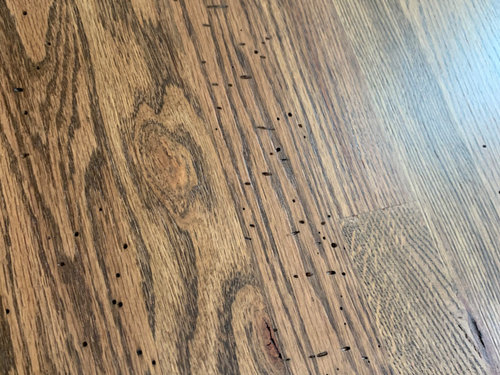
Looking for some advice here! We hired a general contractor to finish our attic and his flooring person installed wood that looks very damaged all over (looks to be powder beetle damage?) It’s not just in one small spot, it’s the entire room. they’re saying they can fix the appearance but I’m not happy with having new damaged wood installed. What would you do? Thank you!!


Comments (13)

  • PRO
    5 years ago
    last modified: 5 years ago
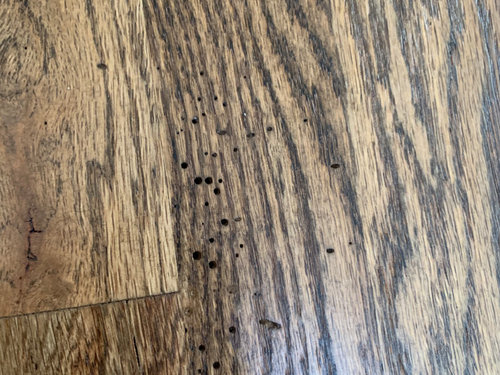
    I need to know more about the samples you looked at.

  • 5 years ago

    Thanks so much, Patricia. We didn’t look at samples and trusted our contractor, the wood was supposed to be Select Grade red oak, but the whole floor looks like that. I’m pushing back on the contractor that the materials they used were not Select Grade. Any and all advice is appreciated.

  • 5 years ago
    last modified: 5 years ago

    Read the last paragraph of this article, then decide how to proceed. Wood is a natural product and "stuff happens".

    https://www.colonialpest.com/powder-post-beetles-in-new-hardwood-flooring/

  • 5 years ago

    trusting your contractor was your first mistake. I think it's your problem now. If you don't have something in writing.

    Personally, I like it.

    I intentionally used 100 year old lumber for stair steps, my bug holes were deeper, and since the bugs were long dead. we flooded the surface with varnish and sealed up the holes so they wouldn't fill with dust. My husband is a general contractor and we use salvage materials whenever we can on our own projects. our wood came out of our own bldg. it's a conversation piece.

  • 5 years ago

    Thanks, Lyn. I can imagine your finished product looks really nice. We asked and agreed with our contractor on select grade red oak to match the rest of our house. We haven’t paid the contractor the final payment and he’s adamant that the wood used was Select, though everything I’ve researched said Select grade should not have many blemishes.

    I think my options are to not pay the final amount as the end result was not what we contractually agreed upon, or have them fill the holes though I’m not enthused about the second option since the materials were not what we agreed to.

  • 5 years ago

    Be careful you weren’t charged extra for distressed wood. Because that’s authentic distressing right there.

  • 5 years ago

    Ask them HOW they believe they can 'fix' the look? My guess is these holes go deeper than a standard sand/refinish...which means you would need to sand PAST the beetle damage.

  • 5 years ago
    last modified: 5 years ago

    The characteristics of "select" flooring vary from manufacturer to manufacturer (proprietary grades) unless a specific trade association standard is used, such as those of the National Wood Flooring Association. "Select" is less uniform than "clear".

    Unless the gc can show you a box of sample "select" boards with similar voids or a standard of "select" permitting them, I suggest you haven't got what you contracted for.

    I've purposely used distressed grades of flooring in multi-million dollar builds to convey the idea that the home was vintage.

    Filling and sanding may not get the "select" you are looking for. Leave aside that sanding deep enough to eliminate the voids will greatly reduce the life of the flooring.

  • PRO
    5 years ago

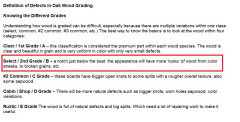
    Important to read what SELECT GRADE actually is and what the wood community considers acceptable.


    https://www.lordfloor.com/oak-wood-grading/


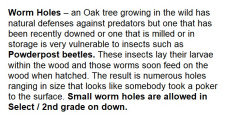
    Because you agreed to Select Grade, beetle holes are permitted in this grade of wood. If you wanted wood of better quality it would have cost more and you would have had to designate CLEAR not SELECT.


  • 5 years ago

    Just a person with google here... but if it was me with this problem, I would really work to understand all the terms listed in the "select grade" wood flooring. It seems that the definition is pretty universal across wood flooring sites. Once you understand what you actual bought (select grade), then you can argue that you did not get that, if indeed you did not. The issue comes around are these "pin worm" holes - seems like any number are permissible? If they are another type of worm hole - are those exempt from the unlimited pin worm hole clause? or are these worm holes in the flag - only 2 are permitted every 8'? Understanding all that, will likely help you to argue your case. (Side note - I had many of these holes in a floor in my first house - was built in 1890s so it added character. Here, I can see why you would want to have new and intact flooring installed! keep arguing until you can get it replaced!)


    Select Oak - A flooring product with coloration variations produced by differences of natural heartwood and sapwood, along with characters described. The face may contain: unlimited sound sapwood; slight imperfections in milling; a small tight knot every 3'; pin worm holes; burls and a reasonable amount of slightly open checks. Brown streaks should not extend the entire length of a piece. Two flag worm holes every 8' are permitted. Slight Imperfection in face work (torn grain) admitted. An intermittent, brown machine burn across the face not exceeding 1/4" width admitted. Also a slight quantity of bark on the back or sides admitted. Will admit pieces with 1/2" tongue. Spot filling is generally required for open characters. Average length, bundled or nested 3 1/4'.


    Select

    RULE— The face may contain sap, small streaks, pin worm holes, burls, slight imperfections in working, and small tight knots which do not average more than one to every 3 feet. Bundles to be 1-1/4 foot and longer. Average length 3-1/4 feet.

    GUIDE— May contain unlimited sound sap, slight imperfections in milling, small tight knot every 3 feet, pin worm holes, burls and reasonable amount of season and kiln checks. Streaks not running the entire length of piece, 2 flag worm holes to every 8 feet permitted. Slight imperfections in face work (torn grain) admitted. Also a slight quantity of bark on the back or sides admitted. Will admit pieces with 1/2 full tongue. Most of these defects are lost sight of after the floor is laid and finished giving a good appearance. Bundles to be 1-1/4 foot and longer.

    Marielle Chaves thanked Mamaham_NC_Zone7
  • 5 years ago

    @SJ McCarthy They would likely "fix the look" by filling the holes with wood filler, sanding and restaining/refinishing. As you said, it is not possible to sand down until there is no more hole left. I have some knots filled in various places around my wood flooring. It is not really noticeable probably by any one other than me or someone else mopping the floor.

  • PRO
    5 years ago

    Post photo of entire floor.