Software
Houzz Logo Print
ksmetamaid

Line clay pots with plastic?

5 years ago

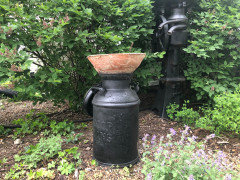
I have a couple of bowl-shaped clay pots that I go back and forth about using (some years I do, some years I don't). They have a base that is just the right size to fit inside a couple of old-fashioned milk cans to become a pedestal planter (we live on a farm and it fits the setting), so that's great. But of course, they dry out more quickly than plastic and that's been a frustration. I haven't used them in a few years for that reason, but I'd like to try again because I do like their shape. Has anyone lined clay pots with plastic? How has that worked? Do you think it's worth a shot, or am I just setting myself up for more disappointment. Thx!

Comments (15)

  • 5 years ago

    I don’t line clay pots with plastic sheet but I do insert plastic pots into clay pots. I’ve also lined fibre clay window boxes with plastic sheet. So I don’t see any reason not to line your bowls. But there must be drainage holes in the plastic and the clay.

    ksmetamaid thanked floral_uk z.8/9 SW UK
  • 5 years ago

    any chance of a pic or two?


  • 5 years ago

    Ken, yes. I'll go out now and take photos. It was dark last night and I couldn't when I posted. Check back soon! :)

  • 5 years ago

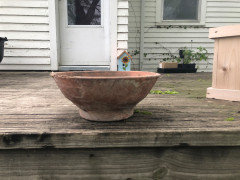
    Ta da! The shape is a bit unique so inserting a plastic pot wouldn't work well. I would spray paint the outside black to match the milk can pedestal.


  • 5 years ago
    last modified: 5 years ago

    I seal mine with Mod-Podge, or you can buy spray sealers for clay pots:

    Sealer

    ksmetamaid thanked Jilly
  • 5 years ago

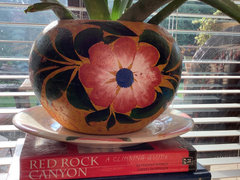
    Thought I’d attached this one, too.


  • 5 years ago

    Jinx, Mod Podge is a great idea! And I had no idea there was such a product as Clay Pot Sealer.

  • 5 years ago
    last modified: 5 years ago

    I have an old milk can I keep a pot in, too. :)

    Mine came from a pasture in Texas, poor thing was used as target practice. :D


    I seal all my decorative pots inside and out, otherwise the paint fades:


    Dirty window because the neighbor’s cats like to get on the patio chairs and look inside. Peeping toms. I clean that darn window daily. :D

  • 5 years ago

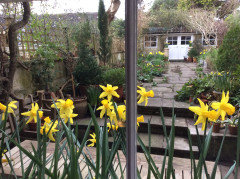
    It seems a pity to spray paint natural terracotta black. Could you use the bowls elsewhere and find something different for the cans? Or just leave the bowls natural? I have chimney pots about the same height and I just drop plastic pots into the tops. You can’t see them at all and the plants look as if they're growing out of the chimney pots. You can just see them in front of the shed.


    ksmetamaid thanked floral_uk z.8/9 SW UK
  • 5 years ago

    floral_uk, Thanks for your feedback. I *have* put other pots inside the neck of the milk cans, but then it's just so small, like maybe only 4-5" in diameter, that the presence of flowers is almost nil. I've also tried just setting larger pots on top, but it looks weird. So far these bowl pots fit the best. I've actually painted them black before, but the clay is sort of sloughing off on the outside, which I imagine is due to freezing and thawing when I left them outside, so I'll need to be a little careful with them from here on out.

  • 5 years ago

    Right, I see now. I didn’t realise the diameter was so small.

  • 5 years ago
    last modified: 5 years ago

    Drying out fast is what is great about them. It's healthier for the plant and easier to figure out when to water. So you water more often. They're a natural material and unlike plastic breaks down and goes back to the land. Sustainable. They are my number one choice in pots. Ceramic is second.

  • 5 years ago
    last modified: 5 years ago

    I agree with the 2 posters immediately above. Low-fired clay, terra cotta's most beneficial feature is that they dry down faster. Putting a plant in a plastic pot nested in a clay pot entirely eliminates the primary advantage of using clay, which is the fact that the walls of low-fired clay are gas permeable. They allow air/oxygen roots need to function efficiently in, and waste gasses (CO2, methane, SO2 [sulfur dioxide - rotten egg gas]) along with water vapor out.

    Most container media support up to 6" of soil saturation at the bottom of the pot. If this doesn't cause root disease, it's still a certainty it can sap a huge fraction of the plant's potential in terms of growth, yields (for food plants), vitality, and appearance. Using media, pots, and simple science to shorten the intervals at which plants need to be watered is one of the best things growers can do for their plants.

    There are 2 perspectives from which to view this issue, the growers ...... and the plant's. The grower might appreciate 3-4 week watering intervals, but the plant definitely will not, and in almost all cases (for conventional container culture) the plant will suffer much for the saturated soil behind these extended intervals. Less work/ fuss for the grower, less realization of the plant's potential, which is what most of us seek.

    The plant would prefer to be watered daily. More succinctly, it would appreciate being in a medium that requires the grower to water every day. Planting with media that demand this type of attention means there will be little or no excess (perched) water in the pot, even after a thorough watering when the planting is holding the maximum amount of water it can hold. A 3 week watering interval (for most plants) means 2 weeks of drowning roots, then a week of reasonably favorable conditions in the root zone before the cycle repeats beginning with the next watering.

    So whatever course the grower plots will have a conspicuous impact on the plant. I note fairly frequently that what the plant wants and what the grower wants are often mutually exclusive. There is no judgement to be made re whether the grower wants to go the extra yard and provide the best care possible for their plant, or whether they want plants that take care of themselves. I think the key take-away here is convenience usually comes at a price.

    As a bonsai practitioner, I grow on a lot of woody material for future bonsai trees. Most of the potential bonsai are in terra-cotta , but I'm starting to transition growing on material in plastic mesh pond baskets as the plants grow and develop even faster than when in terra cotta.

    Al

    ksmetamaid thanked tapla (mid-Michigan, USDA z5b-6a)
  • 5 years ago

    One of the main reasons I put plastic pots inside clay pots is the ease of changing the display. Instead of having to dig up and replant several times a year I can simply slip a new pot inside the clay pot. It’s particularly handy for changing out spring bulbs and allowing them to die down naturally out of sight. I dislike the appearance of plastic pots in the garden so for me this method is both aesthetic and practical. For my permanent containers of shrubs and perennials I just plant directly into the clay pots.

    ksmetamaid thanked floral_uk z.8/9 SW UK
Sponsored
Peabody Landscape Group
Average rating: 3.5 out of 5 stars8 Reviews
Columbus' Reliable Landscape Design & Contracting