Software
Houzz Logo Print
historian79

Visually minimalistic ventilation: When it practical?

5 years ago
last modified: 5 years ago
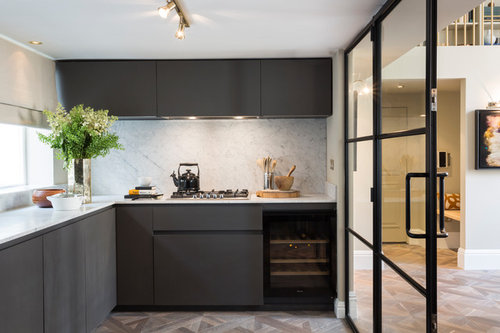
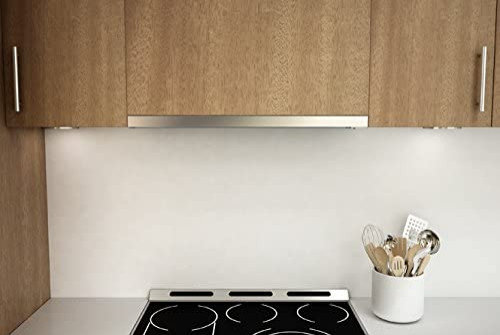
So, I'm a bit fascinated with this look, especially for use in a small kitchen:

Lancaster Gate, Bayswater, London, W2 · More Info


But I'm a little puzzled about some of the practical implications of it.

First question - an aesthetic one - How high do you suppose that line of upper cabinets is over the countertop in the photo above? (The photo doesn't say.) I really like how this looks. Also, I'm tall and wouldn't mind reaching into upper cabinets that are set high. But I'm not sure what height and size for cabinets makes this looks good vs. unexpected or out of proportion.

Second question - which relates to safety and effectiveness - which of the products that allow for this look are actually practical? (We cook 3-4 times a day and use electric - not gas. We don't fry very often, but do bake, sear, roast, simmer, braise, etc., including for pungent dishes like fish and curries.)

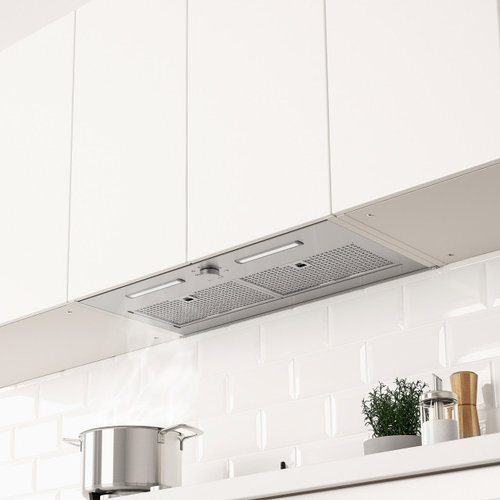
I've seen some products that seem designed to fit within an upper cabinet that is 30" or 36" wide and whose depth of the typical 12" for American upper cabinets. Likewise, Ikea has a 30" option that fits their 15" cabinets. The ventilation is completely concealed:

(Ikea's Oemsinnad)


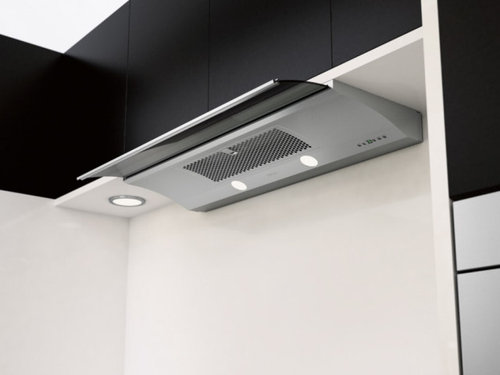
Then there are under-cabinet ventilation options that are visible but very minimal. Usually there's a piece that pulls out and retracts to make it deeper during use. Like this:

(I forget whose this one is)


(Zephr's Genova)


And there's then there's custom cabinets with a liner / ventilation insert set inside, which could be designed to have a deeper capture area than the first two options.

(1) All of three of these options involve cabinets with flammable components over top of ranges or cooktops, which makes me kind of nervous. What makes me additionally puzzled is that there seems to be some variation as to the recommended heights between products. Do I stop feeling mild panic at 24", 30", or 36", or some other number? (There seem to be somewhat different specs among products.)

(2) Are these capture areas adequate (the capture area seems small in some cases...) for electric/induction cooking that isn't massively hot/greasy most of the time?

(3) If you have this set up or have installed it for clients, are you happy with the result?

Comments (9)

  • 5 years ago

    If everything is catered, the sky is the limit for poser ventilation. Requirements are imposed when one decides to cook and wants full capture and containment by the exhaust ventilation (hood) rather than capture by deposit on the walls, ceilings, and fabrics. Requirements include rising and expanding cooking effluent plume overlap by the hood, and sufficient air flow that the plumes are contained by being pulled past the baffles, and not allowed to reflect out of the hood into the room.

    There are many threads here that address these requirements in detail including numerical examples.

    Commercial cooking hood systems optimize function while trying to minimize electrical energy cost. As a result they are large but efficient. Scaling into residential kitchen spaces imposes a lot of compromises. However, it is not necessary to compromise to the point of functional hopelessness as illustrated by the images provided in the Original Post.

    Danielle Gottwig thanked kaseki
  • 5 years ago
    last modified: 5 years ago
    Thanks - This is helpful. I guess I was right to feel skeptical about the effectiveness of some of these set ups.

  • 5 years ago

    Practicality is out the window with anything like that. It’s InstaPin fodder only.

  • 5 years ago
    last modified: 5 years ago
    It seems that the closest good answer to the photos above might be to do a custom hood that echoes the look of the cabinets. But rather than trying to match the cabinets in size, such an addition would be wider than the cooktop and deeper than the surrounding upper cabinets.


    I guess I knew that already, but there are so many companies trying to offer this and so many photos of it online that I started to wonder if I was just missing how it was being made to work.

  • 5 years ago

    @kaseki "There are many threads here that address these requirements in detail including numerical examples." Would you be able to link a few? idk if I'm not using the correct keywords or something, but I'm having trouble finding a good definitive guide.

  • 5 years ago
    last modified: 5 years ago
    My feelings about range hoods...

    Is Range Hood Necessary?


    We have an expensive ventilation system and never turn it on...never had an issue. Most people I know with vent hoods never use them and the people I know with the biggest baddest range hoods rarely cook.

  • 5 years ago

    Well, this is the biggest and baddest I am aware of, and the owner seems to cook on it. This might be a restaurant, though.


    Scaling down to my residence, this is the biggest/baddest that Wolf sells, AFAIK. We do cook.


    For more on interior air quality, some thread comments by @opaone provide some insights.

  • 5 years ago
    last modified: 5 years ago

    @Elizabeth:

    You could try "hood kaseki" which I just tried and got 503 results. You can read @opaone's revised hood FAQ (haven't reviewed it myself yet due to time) at https://bamasotan.us/range-exhaust-hood-faq/. There is also the unorganized https://www.houzz.com/discussions/5161173/hood-faq#n=90.

    For perspective on what is at issue from a commercial POV, try the Greenheck Guide at: https://www.tagengineering.ca/wp-content/uploads/2015/02/KVSApplDesign_catalog.pdf. The first dozen or so pages should be sufficient.

    There is no exact solution for a given situation. One would have to run computational fluid dynamics studies using different hood sizes, configurations, and flow rates for a specific mounting within a kitchen plan to determine optimality. But we probably have found sufficiency. (I am unaware of anyone complaining here that my opinion led to uncaptured smoke.)

    Even configuration and parameter sufficiency, though, is very dependent on the volume one can allocate to the hood system, and the make-up air system, along with cooktop characteristics, type of cooking (particularly oil temperature) and other factors.

    • Perfect is the enemy of good enough.
    • Unaffordable solutions won't be bought.
    • But striving to keep the house free of greasy effluent will be better than not doing so.
  • 5 years ago

    We have a gas Wolf range and massive Wolf range hood and ALWAYS use it. The hood gets turned on before the burners ALWAYS.

    On the rare occasion that someone doesn't turn it on, I can tell IMMEDIATELY from the fumes.

    But we have high-powered appliances because we COOK. It's not a show kitchen. Nobody bumps their head on the hood. It doesn't look obnoxious. It looks RIGHT.