Software
Houzz Logo Print
kendrahhendra

HELP my back: Cork flooring!

5 years ago
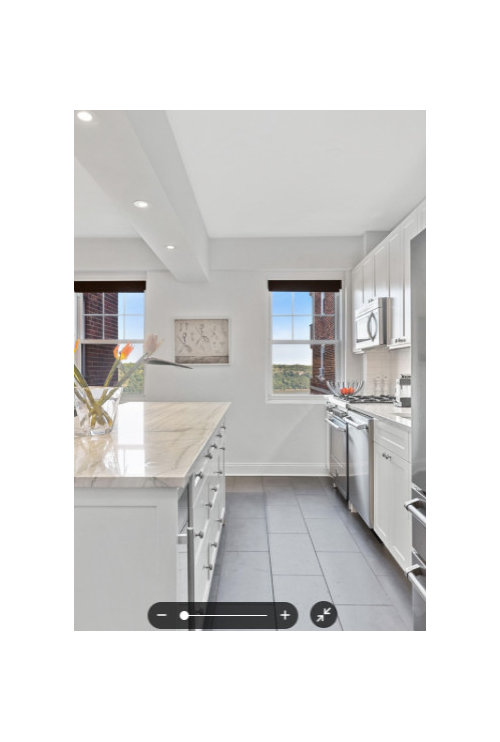

I have a bad back and am considering cork floors in our new coop unit's galley kitchen. What are the pros and cons of a floating vs glue down cork floor? And, should I put the cork on top of the current ceramic tile floor in my kitchen (which is on top of concrete slab subfloor) or demo the tile, level the concrete, and then lay cork?


I talked to one cork company and they said their floors are only 4 mm thick. That seems really thin to me and I'm wondering it will provide as much shock absorption as I am hoping for.


Also, we are getting new cabinets. Should the cork extend under the cabinets, or only be on the galley floor part of the kitchen?


My back thanks you for your responses!

Comments (14)

  • PRO
    5 years ago

    My advice would be to extend whatever flooring option you choose underneath the cabinets before hand if possible. Many houses have walls that are never going to be exactly even making the cabinets slightly off and also affecting where they sit on the floors. So if you have the option to lay the floors first it would be ideal.
    The comfort ability of the kitchen floor does depend greatly on the underlayment and subfloor. I can tell you from my experience that I layed a vinyl tile directly over old slate in our kitchen, and I wish I invested money in a more comfortable underlayment than just the leveling agent. It is still just so hard on your feet when standing in the kitchen cooking. If possible, I would recommend taking it down to the subfloor and installing new plywood if that’s in the budget,or working with the existing concrete subfloor as is and laying down a membrane or substrate that is going to have some give underfoot. Then the thickness of the cork shouldn’t matter quite as much because you’ll mostly be feeling the comfortability from the subfloor underlayment. Hope that helps!

  • 5 years ago

    I have 1'x2' floating vinyl tile in my kitchen and mudroom, and it feels very shock-absorbing to me, even compared to the wood in adjacent rooms. Subfloor prep involved lots of leveling compound (I'm in an older home with lots of, um, character). Unfortunately, the leveling compound and out-of-level spots resulted in a height change between the kitchen and other rooms.

    If you can, go with whatever elevation creates a smooth transition to your adjacent flooring.

    As far as flooring under cabinets vs. not under cabinets - there are good arguments and strong opinions for both. I would have not put flooring under our cabinets, but DH felt more strongly about it than I do - and hence we having wall-to-wall flooring.

  • 5 years ago

    Choose your flooring for how it looks to you, how durable it is and how easily it can be cleaned; choose your shoes -- indoor and outdoor -- for comfort. An inch thick heel in the right materials and a thinner part for the ball of the foot ... but also with comfortable insole and sole.

    I don't go barefoot at home because walking around with my feet flat on any floor for very long eventually gives me a back and leg ache.

    My best advise is for you to pay attention to the soles and insoles of your shoes -- their thickness and amount of firm cushion support. That will help your back everywhere, not just at home.

    For an example of what I mean, find a cheap thin pair of dollar tree flip flops and try them on and then go to a store that carries Clark's sandals and feel the difference.

    I've also had Bass and Sketchers and Athletic and TimeThruTime brand shoes that were really comfortable. The better shoes are somewhat firm but also cushioned -- like walking on the cushion for a luxury carpet. Not all comfortable shoes need to be expensive.

    I bought a pair of sandals -- flip flop style -- at WallMart several years ago and went back for three more pair before they sold out because of the comfort of standing on them. The logo on the resembles an odd "z" but with the top and bottom of the "z" longer than an actual "z" -- forgot the name but I still have there of the four pair. Wore my favorite out gardening in them.

  • 5 years ago

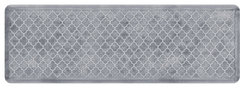
    Any thought to investing instead in gel mats or anti-fatigue mats like those used in restaurant kitchens? The floor of a galley kitchen is not an important design feature of your space, I would think. You might get more direct benefit out of a mat. These come in 22 different colors


    WellnessMats Premium Anti-Fatigue Mat Trellis Collection, Sea Mist, 72"x24" · More Info


  • 5 years ago

    I don't know that you'll get as much out of thinnish cork flooring as you would from a thick mat at your working zones -- plus you can replace the mat when it wears out, while replacing a scuffed cork floor is a much bigger deal. do you have any pets? our cork got ruined just from cats racing around...

  • 5 years ago

    Useful input here. I have a 70 lb dog and had not thought about how his nails might gouge the floor and I imagine his water dribble from drinking won’t be great either. But, if it reduces my back pain, I’ll deal with a the dents and stains.


    Thanks for focusing on the subfloor Voulou. I’m curious what kind of subfloor would be laid in between leveled concrete and cork for more comfort. Any ideas? I don’t know if the tile is right on top off the concrete or not. We just bought the unit, was built in the 30’s. Concrete was a new idea then and it is new to me now. I’m moving from a 170 year old house with wood floors that has so much give I feel like I’m on a spring floor.


    Suez - I hear you about footwear making a huge differenc. I live on Hoka’s. Go through about four pairs a year and I’m not even a runner. They look like hell with a skirt or dress but my health and comfort come first! Unfortunately, they still don’t help overcome the hardness of a concrete slab.


    I thought about gel mats. I’m curious if they ever feel like a tripping hazard. And, I wonder if they make one long enough for the entire kitchen. The walking space is 39 x 144 so the entire kitchen is really one long work zone. Thoughts?

  • 5 years ago

    I had a floating cork floor in my office in our old house. It wasn't the least bit slick, was very kind to my back and always looked great. Good luck!

  • 5 years ago

    I don’t know where you live but if you can, give a call to a restaurant supplier. Anti fatigue mats are standard in restaurant kitchens, which come in all sizes and shapes. Tripping is a real concern, but restaurant kitchens are very busy places, so finding out how mats are cut and laid is important to know. If you have any friends who work in restaurant,s, ask their advice. A lot of restaurant owners are very friendly talkative people, so strike up a.conversation with a cook if you have a chance.

    Kendrah thanked User
  • 5 years ago

    Thanks Ital. Our new apartment is in New York so I feel like we could not be in a better place to explore your recommendation for restaurant mats.

  • 5 years ago

    I'm a cork expert. So I'll chime in here.


    The 4mm thickness is glue down. The floating floors are much thicker. You will need to choose the format (glue vs floating) before you decide if it goes underneath or not not.

    The next thing to understand is a cork floor averages 4mm TOTAL cork. That's normal. A floating floor will often have 3mm on top and 1mm cork on the bottom. That's still 4mm.

    I suggest you get samples from all over and start your decision process once you have 1/2 dozen samples in your hands.

    www.icorkfloor.com

    They have +++ thickness and colour options. Floating and glue down and they have it in stock ready to ship inside 2days.


    And there is always a way to make a floating floor water resistant. Always.

    Kendrah thanked SJ McCarthy
  • 5 years ago

    SJ - I just followed the link you provided and most of the floating floors are 10.5 or 11 mm. If I read your comment correctly and floors are 4mm of cork, what is the extra 6.5 - 7 mm composed of?


    I have really bad asthmatic reaction to a lot of building materials. Do you know what adhesive binds the different layers of the floating floor? Also, what are the no VOC products you know of that will make the floor water resistant, since we want to use it in our kitchen? Thanks.

  • 5 years ago

    OK. So we need to explain "floating" (click together PLANKS) versus "glue down" tiles. The website has photos and links to plank of tile descriptions. They explain everything .


    The thick planks are made with European grade HDF cores. They allow you to click it together. The glue down tiles are 100% cork and require HUGE amounts of work (labour costs) to get it down.

    Kendrah thanked SJ McCarthy
Sponsored
Kuhns Contracting, Inc.
Average rating: 5 out of 5 stars26 Reviews
Central Ohio's Trusted Home Remodeler Specializing in Kitchens & Baths