Software
Houzz Logo Print
jadulberg

Repotted FLF immediately drooping / dropping leaves

5 years ago
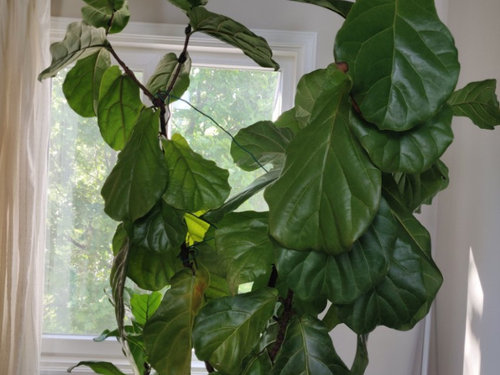
I just repotted my fiddle leaf fig after being root bound and had hydrophobic soil. See my last post about this > https://www.houzz.com/discussions/6070514/large-fiddle-leaf-fig-started-dropping-lower-leaves.


I repotted to a pot 2" bigger on Tuesday and now Saturday, the poor thing has already lost 2 leaves, a few more marked for death most others drooping badly.


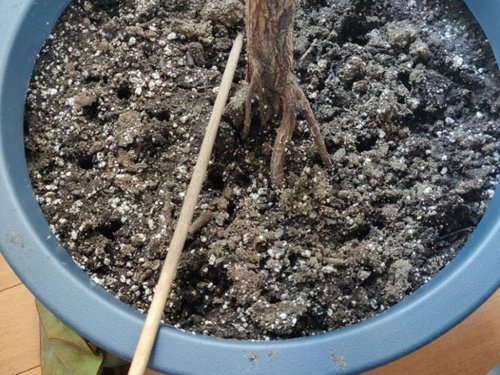
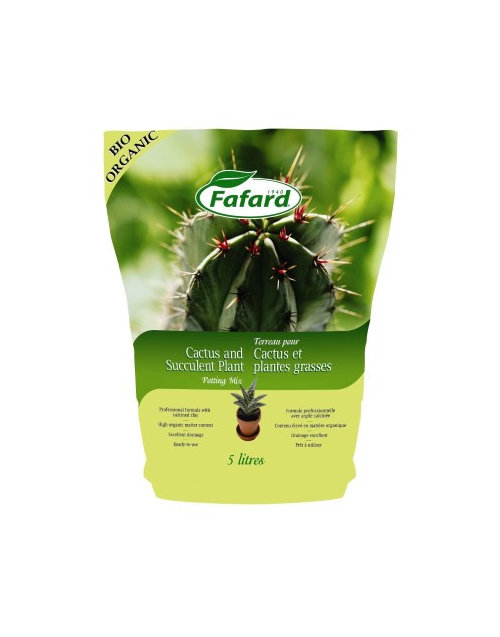
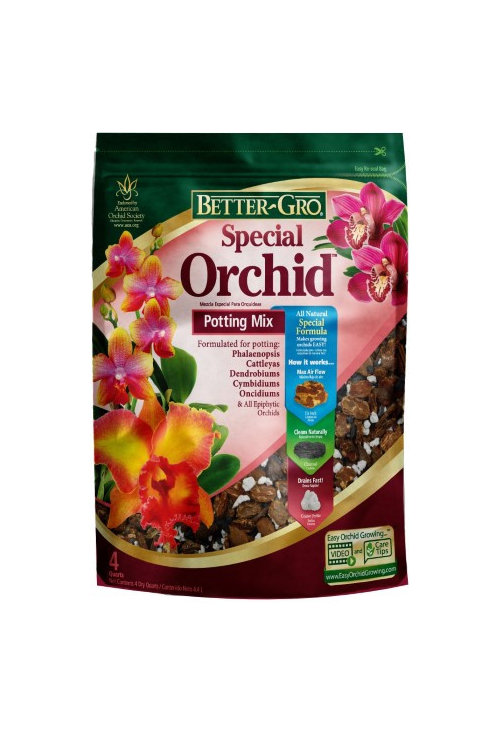
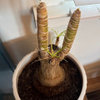
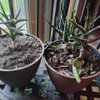
I used cactus mix, orchid mix (fir bark, charcoal, coarse perlite) and more perlite which I guess was incorrect. Here's what the soil looks like after 4 days... still damp and clearly wrong recommendations from other FLF websites. Not enough organic matter?


4 of these + 3/4 bag of the same size w/perlite>


2 of these>


I watered with my usual amount after repotting and no water drained out... bad sign.


How can I fix this? Do I have to repot again? Can I supplement the soil I just put in with other material? I hope I can re-use it.


I should mention that I pruned 3 branches at the same time which may have also been a bad idea. I had to cut some roots to free it from being root bound.


Feeling demoralized with this plant... any suggestions to bring it back to life would be much appreciated! Poor thing dropped about 12 leaves since October.


Thanks,

Jason


Comments (11)

  • 5 years ago

    How can I fix this? Do I have to repot again?


    ==>>

    tree time is counted in decades .. 4 days isnt within that definition ...


    you stressed the beegeebees out of it ... so how would more stress thru reportting help the first stress???


    i hope you propagated what you cut off ..


    i would just learn how to properly water your new media.. in your new pot ... and give it time to settle down ..


    though the media can make proper watering easier or harden.. its really all boils down to you learning how to deal with whatever you used ..


    did you moisten the media before use .. or was it mix bone dry and only wetted after potting ...


    get a teaspoon and dig around down a few inches .. and find out what going on down there in your new media .. no guessing ...


    its severely stressed... fert is not a response ... at this time


    ken


  • 5 years ago

    Hi Ken,

    Thanks for your response. The soil mix I used seem dry when I used it and I watered afterwards. I've been using a wooden dowel to check moisture and the soil still sticks to it a bit and clumps at the surface. The soil I replaced was fast draining so I'm not used to the retention this mix created.


    I did propagate what I cut, 6 plants worth. 3 in soil, 3 in water. I covered the 3 in soil with a bag to keep things humid. You can actually see a propagated branch from a few years ago behind the repotted tree in my first photo.

  • 5 years ago
    last modified: 5 years ago

    Did you really repot, as in a bare-root/ root prune, change of soil repot, or did you mainly pot up?

    Lack of organic matter isn't the issue; you can grow a much healthier tree in a properly structured medium with no organic component than a poorly structured medium with any amount of organic material from a little to all.

    Water retention is driven primarily by particle size and fine particles that also hold water internally is something you can be sure will hold water in excess and not enough air. Keep in mind that some media simply will not allow you to water correctly w/o great harm or loss of potential. When a medium is serving up an interval measured in weeks before watering is again appropriate, you can't fix the issue by learning to water the medium correctly. Where do you live?

    Al

  • 5 years ago

    Hi Al,


    I removed almost all of the old soil... As much as I could get out since I did it indoors and couldn't dunk the roots in water. I had to cut up the sides a bit to free the spiral of roots. I'm worried I broke too many roots which exasperated the problem.


    The particle size of the cactus soil I used was a little fine with some larger chunks but I thought it's whole purpose of it is good drainage and the bark and lots of perlite would help. I knew there was an issue when no water drained after a 2L soak. I would normally water with 3L and about 1/2L drained into the tray but now not even a drop.


    So I'm in a pickle... Wait to see what happens and risk more leaf drop or repot again adding lots of chunky materials but shock the tree again and drop leaves.


    I'm about 1hr west of Toronto in Waterloo. Frost warning tonight, when it was 30C the other day... go figure.


    Thanks for your time as always!

    Jason

  • 5 years ago
    last modified: 5 years ago

    Things are getting much worse for the plant now... looks like at least half of the original lower leaves are going to drop. The newer ones on the top seem ok so far. Super sad about this. Is it a lost cause? I'm assuming if it survives, there's no way to get any re-growth on the lower, woody branches?

  • 5 years ago

    The particle size of the cactus soil I used was a little fine with some larger chunks but I thought it's whole purpose of it is good drainage and the bark and lots of perlite would help. I knew there was an issue when no water drained after a 2L soak. I would normally water with 3L and about 1/2L drained into the tray but now not even a drop. I often remind growers of the fact that what it says on the bag is not a reliable indication of what you can expect the bag's contents to be. IOW, advertising almost always intentionally leads you to believe what is a lie, even though there is a built-in escape hatch for charges of fraud. The Keebler elves might tell you their crackers are "Made With 100% Whole Wheat Flour" which makes you want to believe you're buying extra healthy fare, all that fiber & stuff, yet the product could contain less than 1% whole wheat flour and the claim is still technically honest. Look at the horrendous and ridiculous claims made by formulators of the product 'Superthrive', yet they get away with it.

    Think of a tub half full of sand. Add a handful of perlite to the sand and mix. Does it add porosity to the mix or help with drainage? No. When you start with a very large fraction of fine particles, you really can't "amend it" effectively. What enables the grower to take advantage of high porosity and superior drainage is a very large fraction of coarse material amended with a small fraction of fine material, if any.

    Sorry about the quality of the image below. I think you can read all but the line that says 'Figure 2. The effect of mixing coarse and fine media components on porosity, water retention, and aeration in drained containers.

    Above, OR HERE, read why adding some chunky material (bark, perlite, etc) to a large fraction of fine material takes you backward in that it actually reduces o/a porosity of any given volume of medium. It's only after you have reached a 'threshold proportion', the point at which there is no longer enough fine material to fill all large air spaces between the coarse particles, that aeration increases. Because perlite is almost synonymous with 'drainage' and 'aeration' in the minds of most growers, it's far too often relied upon as a remedy for media we consider poor due to excess water retention. As you can see, if you're not adding a large enough fraction of coarse material (80-95%) to ensure there is little or no perched water AND not enough fines to fill large pores between coarse material, you're shooting yourself in the foot. What you tried to do ended up reducing the the amount of aeration & o/a porosity w/o improving drainage.

    Al

  • 5 years ago

    Thank you for such great information Al. I was wary of the small particle size of the cactus soil and should have listened to my gut.


    So my question now is what are my options to stop the inevitable death of this plant? Do I repot again? I can't easily find all the gritty mix materials and cannot find pine bark fines, just mulch of various types and the orchid mix.

  • 5 years ago

    If you can't change the medium, I would think about using some form of ballast in the bottom of the pot. The maximum ht of a PWT (perched water table) is a constant for any given medium that supports PW, and you can easily determine what is the max ht of the PWT for your soil if you want.

    How ballast works:

    Compare D to A above in order to get a sense of how much excess water you can eliminate from the medium by using ballast, and that's just a start.


    Since the max ht of the PWT is a constant, let's say you discover your medium supports a PWT the max ht of which is 6". You also happen to have a 9"x9" square pot and 6 hollow plastic blocks which are 3"x3"x6", which when arranged in a 3 block x 3 block square, fit perfectly in the bottom of the pot. If you fill the pot with medium and water thoroughly, you end up with a volume of medium 9x9x6 or 486 cu in of 100% saturated medium sitting in the bottom of the pot. If you put all 9 blocks in the bottom of the pot, water will perch above the 6" tall blocks as it's doing in the center image above the drainage layer. The water just "thinks" the top of the blocks is just the bottom of the pot and decides that's where it will perch so you still have the same amount of PW, but now the top of the PWT is 12" from the bottom of the pot. However, if you remove the single brick in the middle, the void is now full of medium that is 100% saturated; but, that will be the only part of the soil column even capable of holding PW. So through the fortuitous set of circumstances and your knowledge of ballast, you reduced the volume of medium capable of holding PW to 3x3x6, or 54 cu in which is about 11% of what you started with. You can use bricks, 2x4 cut-offs, overturned plastic storage boxes, whatever works best. The idea is to fill up most of the space that would normally be occupied by PW, but you must allow for continuity of an unbroken soil column from top of soil to pot bottom.

    Once you have the pot set up, you can water 'til your heart's content with no concern about over-watering, within reason.

    Al

  • 5 years ago
    last modified: 5 years ago

    I was actually able to find some mini pine bark nuggets at a local nursery that are of a decent size and I'm going to try to contact a somewhat local farm supply store for the growers sized gran-i-grit. I don't know where to find Turface though... found some people posting on here used oildri / qualisorb as substitutes.

    The ballast idea does make sense. Very very interesting info there and I'll apply it as best I can along with the pine bits if I can't find the grit mix.

    Thanks again,

    Jason

  • 5 years ago

    :( 4 more leaves dropped overnight. Turface are not easily accessible here that I can find. Will that oildri/qualisorb work as substitutes? Maybe crushed granite? I'm not sure about the gran-i-grit.


    When I repot again, can I augment what have with a whole bunch of the bark, perlite and oildri/qualisorb, leaving a much reduced volume of the cactus soil? I have quite a bit of orchid mix in there too but I guess not enough.

  • 5 years ago

    And so... 16 leaves dropped thus far, pretty much all the original leaves. I've repotted again using the 5:1:1 mix as I couldn't quickly source the gritty mix. If anyone is interested, here is a photo of my sad sad figgy and the roots. I figure another 6 leaves are marked for death. :(


    When I took the cactus soil + orchid mix out, you could see that it was quite compacted due to small particle size. I double checked the bag and it has sand and lime in it. Perhaps a lethal amount of the 3.


    Judging by the photos, do you think it may survive? Any tips to revive this former beauty? It spawned a number of cuttings you can see in the background...


    Thanks all.

    Jason

Sponsored
Custom Home Works
Average rating: 4.6 out of 5 stars10 Reviews
Franklin County's Award-Winning Design, Build and Remodeling Expert