Software
Houzz Logo Print
manvir_sahota28

Kitchen hood vent help!

5 years ago
Hello!


We are renovating our kitchen (fairly transitional in style) and removed the microwave/vent fan combination and will be replacing it with just a fan/vent.


We are going back and forth between some options:

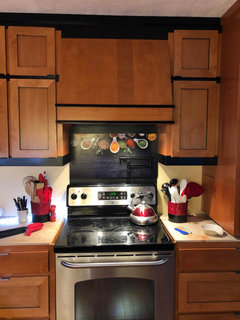
1. fully concealed fan with custom cover made to match our cabinets

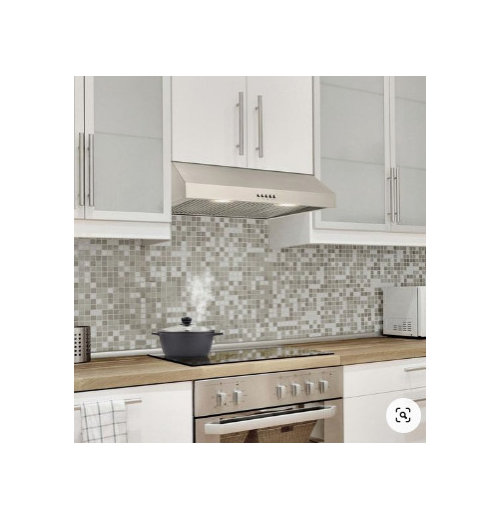
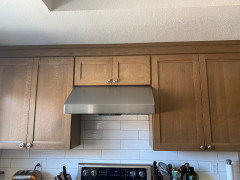
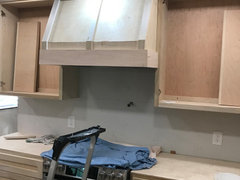
2. partially concealed fan with cupboards on top and exposed below

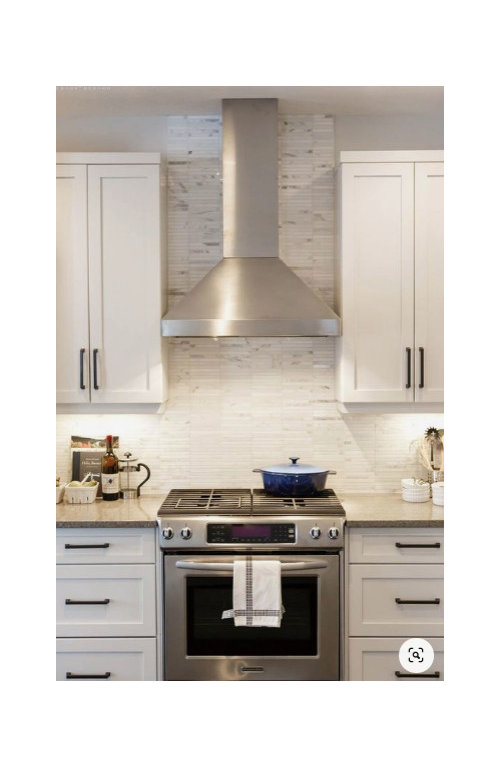
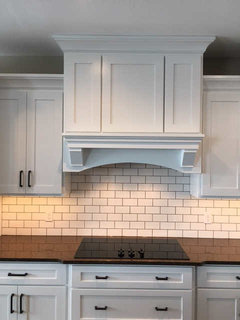
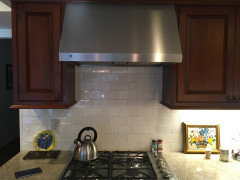
3. fully exposed fan with no storage option


I am very confused about the actual vent systems.. do these options require a different type of fan/system? Or is it all the same and just simply how you choose to conceal it?


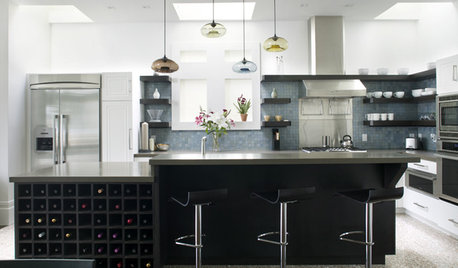
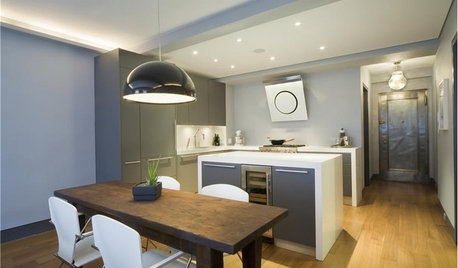
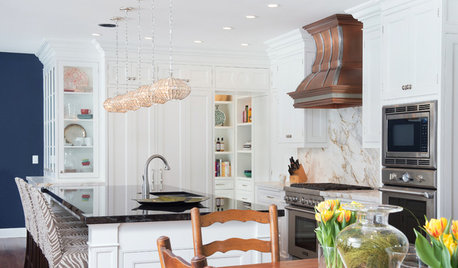
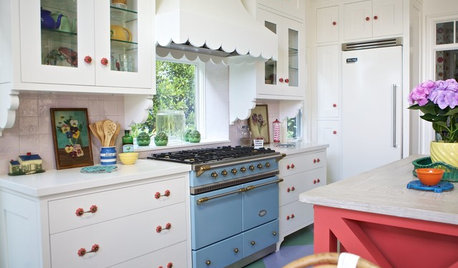
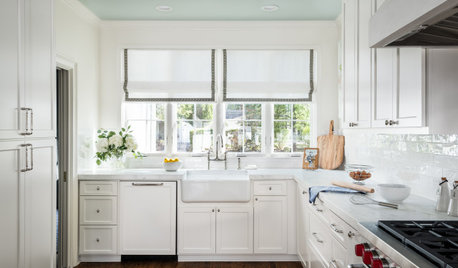
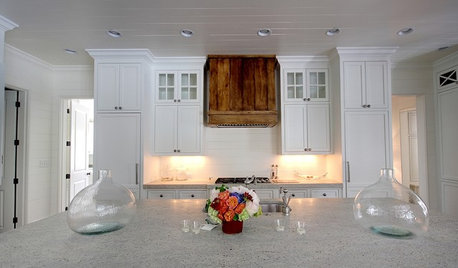
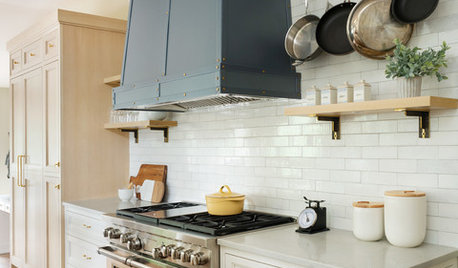
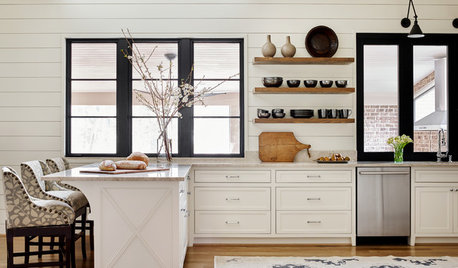
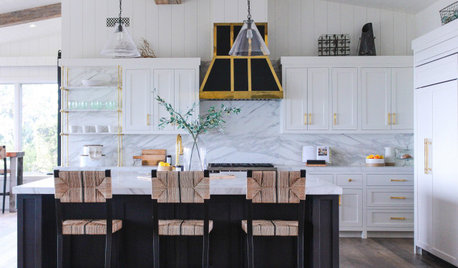
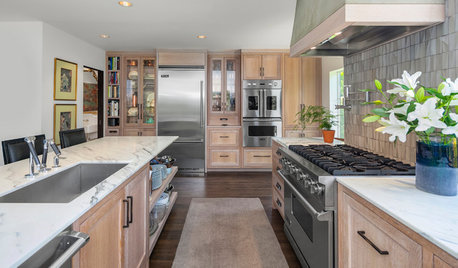
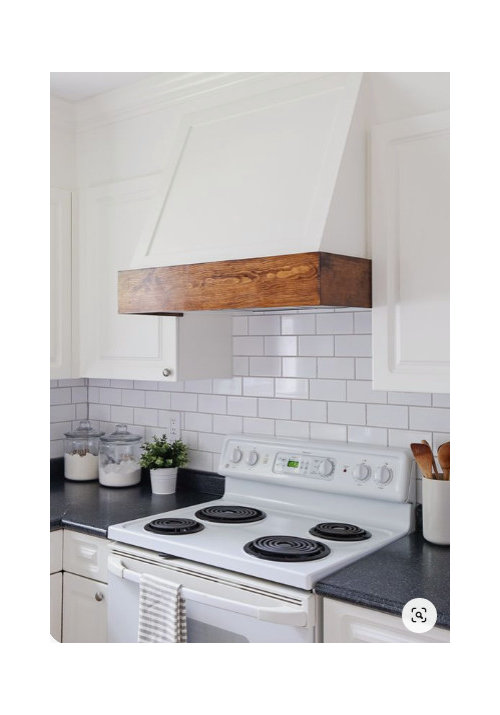
I'm very certain I am not using the right terms, so I've attached 3 photos here to illustrate the 3 ideas!


Thank you!


Comments (27)

  • 5 years ago

    The first one needs a vent insert and possibly a hood liner. The second is an under cabinet hood vent. The third is a chimney style vent. Im remodeling my kitchen im going with option one. My gas range is 30” my vent insert and hood cover will be 36”. Ive read there needs to be 3” on each side for proper venting. not sure if the other 2 needs that. BTW Im not a pro just been reading a lot on here whats needed.

  • 5 years ago
    last modified: 5 years ago

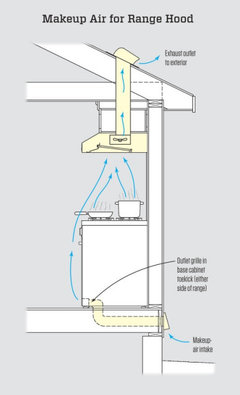
    this is a simple picture, but you should get the idea


    all three options require ducting. In fact, if you have a microwave over your stove, you still need ducting that removes the air/grease outside. if the micro has no ducting that vents to the exterior, it was done incorrectly. (unless you have one that's recirculating)

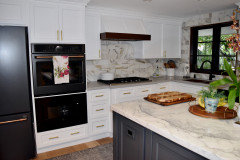
    I just redid my kitchen and removed the micro. I got a vent insert, and had the custom vent hood built around it (I got a new micro and moved it under the wall oven)


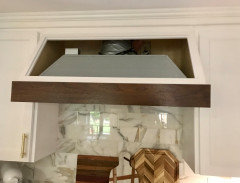
    storage up there is useless because it's so small. if you have a taller space, maybe you could have storage on one side, but really it's not necessary. the panel that I have (above the wood portion) is removeable so you can access the vent.

    Took it off to show you the pic


    depending upon your style, budget, if someone can make one, or if you can order one, any of them can be used. to me the chimney style is a bit more modern looking. the simple under cabinet vent is the least expensive. (your #2) you still need the ducting though! you can have the storage off to one side if you use that one.


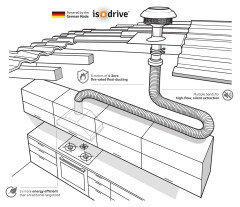
    the other thing that comes into play is the ducting. will the stove be against an exterior wall? can the duct throught the wall, the ceiling, up through the attic and out through the roof, etc. you can't just install ducting and have it vent to your attic. or into a wall.

    So determine how the venting will be done, and then choose what you think fits your needs. If you do a lot of heavy cooking, you'll want a vent with some power. the one I have works great, has 3 speeds and is easy to clean.

  • 5 years ago

    There is a large amount of writing here on hood systems and the requirements that they should meet as a function of different parameters. There is also a hood FAQ that you can find by using the Houzz search box at the top. You may search on 'hood' or 'MUA' or 'kaseki' or 'opaone' to collect links to a large number of commentaries. These will fill you in on terminology and requirements.

    And when you are ready to ask about details, be sure to specify your intended cooktop to be vented and to what temperature level you cook, e.g., to wok cook, or sear meat, or just boil eggs. What architectural limitations will influence the size and routing of your hood duct. What combustion appliances do you have that have some connection with the kitchen air that as a result influence make-up air requirements.

    This is a technical subject that we can help with once you are in a position to describe your working conditions.

  • 5 years ago

    @Beth H. :Did you use a liner with your insert?

  • 5 years ago
    last modified: 5 years ago

    Becky, what do you mean a liner?

    This is the insert I got. My carpenter built the hood around this at the shop. I gave this to him to use while he built it.

    https://www.homedepot.com/p/GE-36-in-Smart-Insert-Range-Hood-with-Light-in-Stainless-Steel-UVC9360SLSS/305968959

  • 5 years ago

    Liner == Insert

  • 5 years ago

    kaseki,,, she asked if I used a liner with the insert.

    I don't know if she knows what they are called.

  • 5 years ago

    I like the 2nd option because it's what I have in my kitchen and I prefer to have storage space (although, there is a round duct running through my cabinets up through the ceiling).

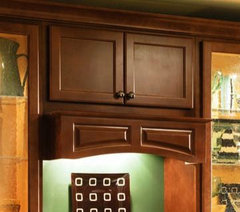
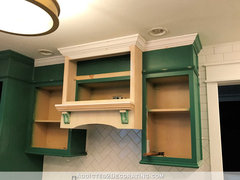
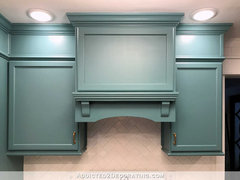
    There is an option that merges the first and second ideas so that you can have a cabinet with doors (or even a single door) above a decorative cover for a range hood.

    Keep in mind that your cover will need to be a minimum of 30" above the stove top.

    This one built the whole cabinet out to be a little deeper than the actual range hood.

    wood range hood designs - Google Search · More Info

    This one has a bump out for the range hood.

    Products - Omega National Products · More Info

    This is a single door version in progress


    DIY Wood Range Hood Cover - Some Adjustments For Safety + More Progress - Addict · More Info

    This shows that one finished


    DIY Range Hood Cover - Finished! - Addicted 2 Decorating® · More Info


  • 5 years ago

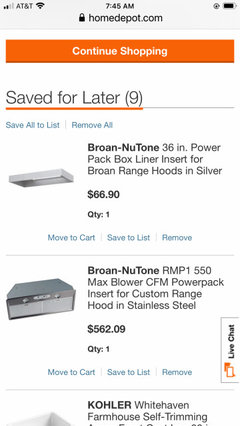
    @Beth H. :I was looking at this one that has a liner and insert. I didnt know if all inserts needed a liner. Good to know they dont! Thank you!


  • 5 years ago

    I stand corrected. It looks like Broan-NuTone have adopted the term 'insert' to refer to a separable package within a 'liner.' This is different from Wolf, for example, that has called externally unfinished hoods (intended to be enclosed by cabinetry) as 'liners,' and more recently, packages for installation in 12-inch cabinets 'inserts.' Examples may be found in the Wolf Design Guide pdf.

  • 5 years ago

    DIY-ers should keep in mind that when enclosing a liner in a wood 'hood,' the hood is not exempt from distances to combustibles rules found in each cooktop's installation instructions.

  • 5 years ago

    We had option one in our last house and it was a pain to try to keep clean. we went with option two in our current house and love it! It has a little extra storage, even with vent running through the middle and is a bridge between the cabinets on either side.


  • 5 years ago

    Hello everyone! thank you so much for your responses! This has been very helpful.


    Re ducting: that is already in place and it vents right out the wall and not into / through the attic as that kitchen wall is an exterior wall.


    A couple follow ups if I may:

    - do cabinet makers typically do custom hood fan surround covers or would that be a finishing carpenter?

    - do insert vents typically have a lower CFM?


    I am leaning towards either full exposed or fully covered options, but some good points about difficulty of cleaning wood vs metal.


    Thanks again! Learning a lot as I've been reading through all this.

  • 5 years ago

    - do insert vents typically have a lower CFM?

    No.

    I gave you the link to mine. it has 3 diff speeds.

    as for the cabinet maker, it just depends. my kitchen cabinet company has a carpenter on site. He did my hood, plus made me drawers for my island.

    If you are going w/custom cabinets, they can easily make you the hood.

  • 5 years ago

    I'd prefer option 3 only because the hood doesn't project out into the room as far-- I've bashed my head on the sharp corners of mine several times, ouch. Think about your height (and anyone else who will cook a lot at the stove) & compare it to the height of the hood lower edge/corner. But I think that open area between the upper part of the hood and the cabinets creates something you'll have to get up and clean periodically-- you know, that sticky dust. I'd much rather have the upper part of the hood hidden inside a small cabinet.

  • 5 years ago

    As you may notice in the reading, the hood entry area (insert entry area) is determined by the need to overlap the grease generating pan bases by the amount the cooking effluent plumes expand. The CFM is determined by the air speed needed for full containment (no plume reflection at the baffles) times the area of the hood or insert entry aperture. For hot cooking, 90 ft/min is my recommendation; maybe only 60 tt/min for simmering on induction if that is your max cooking condition. So if your hood entry is 2 ft x 3 ft, say, then you have 6 sq. ft. Multiplying by 90 yields a desired actual CFM of 540.

    Only half that is needed for a 12 x 36 inch hood, but then only the back burners can be used for cooking anything emitting grease or odor.

    But wait, there's more. Blowers, like swimming pool pumps, have a characteristic flow vs. pressure characteristic usually plotted on a graph and called a fan curve. You will need a blower rated at zero static pressure (hanging in free air) higher than the desired actual CFM. Without any analysis, I would recommend using a factor of 1.5. This gets you to 810 CFM.

    (For the 60 ft/min case, the value would be 540 CFM rated.) For the half-adequate 1 x 3 hood we get a rating of 400 CFM.

    Now you are ready to find a liner or hood that has a blower with the desired rated CFM, or an in-line or external blower with the desired rated CFM, based on your calculation of your cooking intent over your cooktop area. One shouldn't blindly buy a hood with blower without determining the requirements first.

  • 5 years ago

    I ended up buying this zline insert I wanted to get the one Beth posted but its not available till Sept. I need it now so my cabinet maker can build the surround hood.

    https://www.homedepot.com/p/ZLINE-Kitchen-and-Bath-ZLINE-34-in-Ducted-Wall-Mount-Range-Hood-Insert-in-Stainless-Steel-721-34-721-34/206888299?


  • 5 years ago

    I would talk to the folks at HVACQuick.com. Very knowledgeable folks, simple explanations, and very pleased with the results. They will ask about what type of stove you are planning to install and the height and width they recommend.

    They are a group of engineers who decided they could help the layperson without exorbitant prices. I highly recommend them!

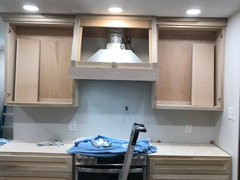
    I have almost completed my kitchen and I have done the first example with an electric range as I really don't care for gas stoves. Please excuse the "wood" countertop as the countertop install will hopefully be next week.


  • 5 years ago

    Looks good! i had electric stove for years but after the big texas freeze we decided to put in as much gas as we can. I have the same ”wood” countertops!

  • 5 years ago

    This is GE is 15 years old, but still going strong. I am not a gourmet cook, but I regularly wipe the stainless hood with stainless cleaner wipes and take off black smoke and dust build up. I have always wanted a white wood kitchen with a white wood enclosure over the range top, but I cant imagine how one would keep it looking white.

  • 5 years ago

    mary, with frequent wipe-downs! I take out my grill inserts and wash them every week if my son or I has been cooking w/the iron skillet. I wipe down the SS portion after each preperation. I wipe off the stove and usually wash the iron grates once a week.

    the white wood portion above gets wiped down weekly with Dawn and water. it does get unbelievebly greasy!

  • 5 years ago

    Yes, I do all that as well. Interesting to know that you wipe your wood portion with Dawn. I have wiped my kids bathroom cabinet down so many times I need to repaint it. I keep thinking I will have my cherry cabinets, which darken the room, painted white one of these days, but I just cant pull the trigger because I fear I will regret the upkeep.

  • 5 years ago

    what have you wiped it with?

    my cabs are a sprayed lacquer, so I don't want to use anything harsh. dawn really cuts through the grease

  • 5 years ago

    I wonder how difficult it would be to take some sheet metal and make a liner. Obviously you'd need to be careful not to cut yourself on sharp metal...

    @Becky H if you're getting gas appliances you'll also need a carbon monoxide alarm/detector in the home.

    I personally don't like gas-- had a friend who nearly died because he accidentally bumped the gas on while cleaning. He passed out but another friend came over, smelled the gas, dragged him outside, and went in to shut off the gas. I know a few people who had their houses burn down because of flames from gas stoves. It's not something to mess around with. I'm sure 90% of people have no problems, but I'm the kind of person who has bad luck.

  • 5 years ago

    Finally have my hood insert and cabinet made! just need to get it painted. The hood will be pure white to match my cabinets with the maple band a clear coat to match my island. Thank you @Beth H. : for pics of your hood. We had our cabinet maker make a removable panel for easy access to the insert.


  • 5 years ago

    looks good . almost the same as mine!