Software
Houzz Logo Print
randy_laura_evans

What would be causing yellowing on lemon tree leaves?

5 years ago
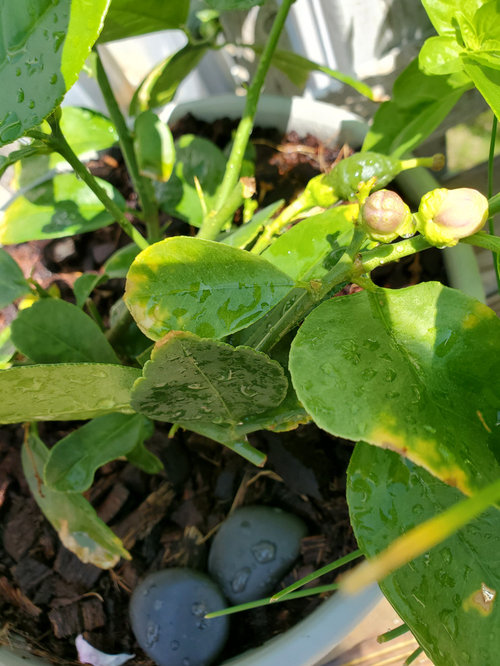
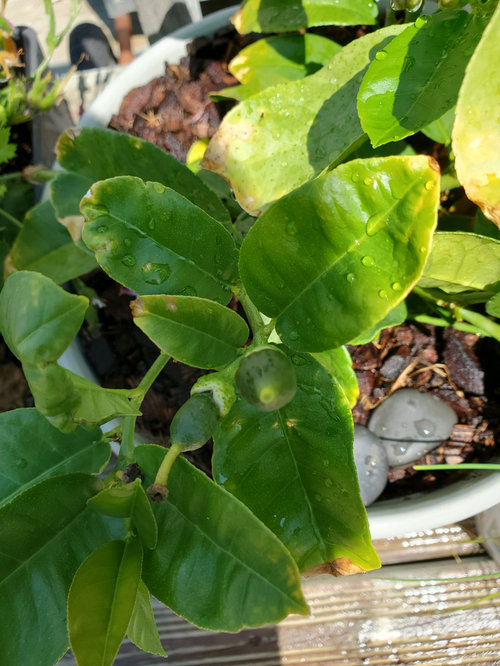
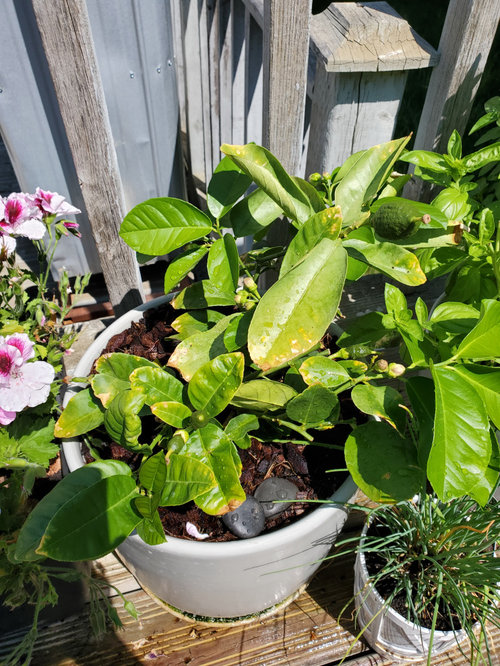
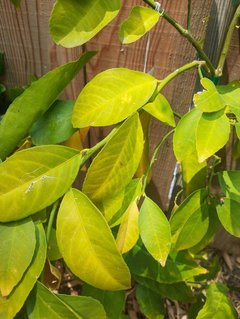
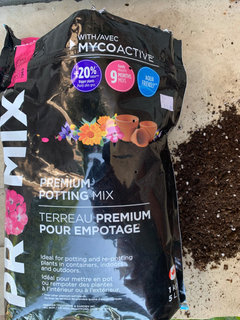
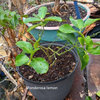
I was gifted this little lemon tree (think it's Meyer?) and planted it in a pot this Spring - made my own potting mix (1 part shop potting mix, 1 part coconut coir and 1 part perlite). I was expecting some yellowing of the leaves when I first re potted it which did happen but it is still happening months later to new leaves. What would be causing this? (I have been watering it once a day as it's 30°C at the moment.) Would love some help on what do do about this

Comments (40)

  • 5 years ago

    What's the pH of the water you are watering with? Have you fertilized it? Watering daily is probably too much.

  • 5 years ago

    Because all the yellowing seems to be on the tip of the leaves, it could easily be from high soluble salt burn.

  • 5 years ago

    interesting, ok I will do a PH test on the water and try watering it less! Thank you very much

  • 5 years ago

    Hello, I've had yellow leaves and in another forum I was told problem was lack of nutrition and that I should fertilize every 30 days during growing season, with something like this: https://www.homedepot.com/p/Vigoro-20-lb-All-Season-Citrus-and-Avocado-Plant-Food-160327/203091325 and avoid the fertilizer spikes I had been using.


    After fertilizing two weeks ago, yellowing seems to be going away.


    One more thing I did: i gave it ripened bananas mixed with water in a blender for added potassium.

    I would welcome any comments about this.

    This was advice from my wife's grandma from the other side of the planet.


  • 5 years ago

    I agree with Silica. Brown leaf tips may be due to salt build up. This occurs when watering is done in small amounts as evidenced by no excess water leaving the pot. I would soak the pot in a bucket of water or bathtub for 2 hours and water it twice.

    Salt damage may also be from your coco coir because depending on manufacturer, some coco coirs contain salt due to insufficient rinsing to rid salt.

    Fertilizing may cause more damage because fertilizer ingredients are salts, so I would not fertilize.

    I doubt very much that it is a nutrient deficiency.

    @Alex Taf: the leaves show NO evidence of nutrient deficiency and therefore fertilizing is unnecessary and will likely do more damage.

  • 5 years ago

    I agree with Vladimir. You are killing your tree watering in sips and adding fertilizer .

  • 5 years ago

    How do i save my lemon tree, it doesnt look like its thriving


  • 5 years ago
    last modified: 5 years ago

    Unfortunately it is not(

    Do you have any idea why?

    Did you stop by just to tell us or to seek help?

  • 5 years ago

    Nicole, you should start your own thread so that people are more likely to answer your question.

    Your soil looks very water retentive. What is in it? How often do you water?

  • 5 years ago
    last modified: 5 years ago

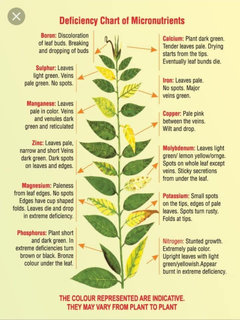
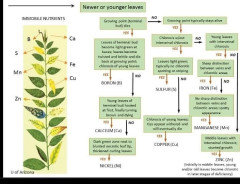
    Maybe these will help


  • 5 years ago

    Thank you Kabrahamsen, that is super helpful!

  • 5 years ago

    Nice chart, thank you))

  • 5 years ago

    I live in Florida and have lemon trees in the ground. For most of the growing cycle, South Florida is very dry. Little rain. The soil is sand, just like beach sand so drains quickly. I do not water the trees. I fertilize with a citrus fertilizer maybe twice a season.


    These trees grow very dry in very hot conditions. I looked at my trees and they are full of unripe fruit. I have a large orange tree also. Same fertilizer.


    I do not water them at all. Summer is the rainy season so they've been getting tons of rain. It is also extremely hot and humid. I also have a large Mango. Same treatment.


    I think you need to mimic where these trees grow. I would never recommend coir in a pot. I would only plant them in fast drying soil. Maybe with cactus sand mixed into potting soil.


    Your tree looks too wet. I would not recommend fertilizing. I would adjust the watering and the potting mix. Your photo looks like a root issue.


    Jane

  • 5 years ago

    Absolutely nothing wrong with coco coir in a pot, I use it in all of my citrus instead of peat. Everyone has a different environment and different things work in different environments.

  • 5 years ago

    Coir is a popular ingredient. However coco-based growing media undergo subtle changes during the life cycle that affect the pH of the nutrient solution. Professional mixes will take the PH drift into account. Choir on its own is a PH of 5.2 to 6.8. Nutrients may not be available if the PH is too high or low.


    It is not wrong using a glazed pot but they have some inherent problems. The glaze makes the pot waterproof. They hold heat like a coffee mug. They usually only have one drainage hole. The advantages of terra cotta being moisture evaporation and evaporative cooling are lost when you glaze a pot. I would be concerned with how hot the pots get in direct sun. I have a beautiful pair of $800 a piece glazed pots that flank my garage doors. The only thing that will grow in them are agave. No roses, no citrus, no hibiscus because the pots heat up to 140F in full sun.


    I water every day. The terra cotta pots are continually evaporating moisture which protects teh roots from heat. I use a professional potting mix which is peat moss based with compost.


  • 5 years ago

    "I use a professional potting mix which is peat moss based with compost."

    Why?

    In Italy in terracotta pots, clay loam soil.


  • 5 years ago


    Citrus, Cacti, Succulents, Photography · More Info


  • 5 years ago
    last modified: 5 years ago

    Yes Italy is famous for terra cotta and growing citrus. when in Rome do as the Romans do. If you don't live in Italy there are lots of good commercially available potting mixes no matter where you live.

  • 5 years ago
    last modified: 5 years ago

    There are pros and cons of using coco coir. Because of its high cation exchange rate, coco coir stores and releases nutrients as needed, but it tends to hold calcium, magnesium and iron. Another interesting fact is that it can hold up to 9x its weight in water. For hanging baskets is works great because it holds on to water. Citrus like moist roots but not too wet. 60% maximum humidity of a soil is a good target for citrus. That means after a deep watering the moisture level of the mix should return towards 60% without holding excess water.

    Your leaves do look like they have had some heat stress this summer. Water goes into a leaf and water is transpired out of a leaf to cool. When you have more water being transpired than the plant can return to the leaf through photosynthesis you start getting leaves that have ripples and are distorted in shape. I see this a lot growing indoors where VPD is stressful.

  • 5 years ago

    I use coco in in lots of different potting mixes for lots of different plants, it with coco chips are my go to ingredients. In my opinion LLO saying that it holds too much moisture for citrus is not true, I have no issues with that even indoors over the winter but as I have said before everybody grows in a different environment and what works well in one environment may not work well in another. Here are some of the m.ajor advantages of coco:

    • It’s a by-product from another industry.
    • It has an ideal pH.
    • It holds 22% air even when fully saturated.
    • It has excellent drainage properties.
    • Its anti-fungicidal properties help plants to get rid of soil-borne diseases.
    • 100% renewable.
    • Easy to hydrate.

    Overwatering with coco is not really a problem. Overwatering leads to lack of oxygen but with coco this is not really an issue. As long as aeration is good (which coco is even when saturated) overwatering isn't much of a problem.


    If your coco wasn't washed well by the manufacturer it can have a high salt content so be sure to rinse it real well if it wasn't.


    Coco itself is inert so you have to add any nutrients you want in it which isn't necessarily a bad thing with potted citrus as you can get that 5-1-3 npk level easily. Calcium and magnesium do tend to bind but that is easy enough to fix with some calmag.


  • 5 years ago
    last modified: 5 years ago

    Besides, back in the day when they first introduced coco as a alternative, it use to be riddled with salts and many were selling improperly washed out product. Many folks would not even take the time or work to make sure it was not washed properly; if so.

    They have come a long way now and in fact some provide a great product practically devoid of all salt or they just would not sell it anymore.

    I personally would not use it because I like pine bark better, but many I know do and they like it.

    With the marijuana craze, it would never sell if it was that bad.

  • 5 years ago
    last modified: 5 years ago

    Soil media are like fishing lures. Some lures are designed to catch fisherman and others are designed to catch tackle boxes. All lures work to some extent but some work better consistently. Good points Mike. A lot of similarities growing citrus and mary jane. MC and PH are key to consistent results. Too high or too low an MC will cause watering issues. Too high or too low a PH will cause nutrient and water uptake issues. To me growing citrus is like picking a lock. The more tumblers you have lined up the easier it is to pick the lock. If something is not working it is easier to find the problem if you know what variables like PH and MC are.

  • 5 years ago

    I am guessing MC doesn't stand for Master of ceremonies?

  • 5 years ago

    It all depends on the amount of oxygen open space within a medium. It is the lack of oxygen that causes damage or death of the roots.

  • 5 years ago

    Silica: I am now having the same problem with two of my trees. Both get rain water when necessary and and fertilizer (300 ppm nitrogen, Jack’s 25-5-15 Professional Fertilizer) once/month. What could be causing this?

  • 5 years ago
    last modified: 5 years ago

    the yellowing on the tip of the leaves - possibly for various reasons. Look in the handbook - calcium deficiency.

  • 5 years ago

    Browning leaf tip and margin is a sign the plant isn’t absorbing water properly, which is a symptom of over-fertilizing.

  • 5 years ago

    @Alex [Lithuania] - what handbook?

  • 5 years ago

    I still think it is just the very common case of yellowing from soluble salts. I been growing citrus 30 years, never heard of a citrus not absorbing properly.

  • 5 years ago
    last modified: 5 years ago

    Vladimir (Zone 6a Massachusetts) for example - "The Citrus Industry". Or look on the internet. When watering with rainwater (distilled water), pay attention to the lack of calcium. From non-detailed descriptions, it is impossible to say for sure - the problem may be for 6 reasons.

  • 5 years ago
    last modified: 5 years ago

    From Cornell University Cooperative Extension and Department of Horticulture,

    "High soluble salts in the soil will compromise plant health and yield. Fertilizers are salts that

    contain various plant nutrients. Excessive soluble salts can accumulate in the soil when excess

    fertilizer is used or when fertilizer is applied repeatedly without sufficient water to leach

    (wash) the fertilizer (salts) through the soil. Excessive soluble salts in the soil root zone can also

    come from soil amendments with high salt concentrations like manure/composted manure,

    de-icing materials, sea-spray or flooding from seawater.

    High soluble salt levels in the soil can cause plant drought stress. Water in the soil is drawn

    away from tender plant roots to the nearby high soluble salt areas in the soil. Without access to

    water plant cells dehydrate, plant stems wilt and roots can “burn” to the point of no recovery.

    Plant roots will absorb some of the excess salts in the soil including that from over fertilization.

    If a plant does not use and metabolize the excess salt it has taken up, it will reach toxic

    amounts in the plant. The most common symptom of this salt stress in plants is brown

    (“burnt”) edges on older leaves.

    To minimize high or excessive soluble salt levels:

    • Avoid using fresh manure.

    • Use moderation and caution when adding other soil amendments with high salt

    concentrations.

    • Do not over fertilize. Apply only the recommend label rate of fertilizers and water

    fertilizer off of foliage.

    • Keep de-icing materials on walkways.

    To correct high or excessive soluble salt levels:

    • Discontinue the use of all fertilizer until the salt levels returns to an acceptable balance

    that is determined by testing.

    • Be certain there is adequate drainage to help move salts out of the root zone.

    • Flush the soil with as much water as you can for several days. Apply water slowly so it

    will infiltrate into the soil and does not runoff taking topsoil with it.

    • If your soil has a lot of clay and is low in calcium, apply gypsum at a rate of 10 pounds

    per 100 square feet and water in. Then in 6 weeks have the soluble salt level tested

    again. Repeat if subsequent soluble salt test is high (strongly saline).

    • Determine the cause of the high salt levels and if you can avoid this situation in the

    future."

  • 5 years ago

    Summary of Excess Soluble Salts:

    Fertilizers are salts

    Salts can come from other sources like manure, amendments, seawater, or chemicals

    Excess soluble salts accumulate when fertilized too much or too frequently

    High soluble salt levels in the soil can cause drought stress

    Excess salts draws water away from tender roots to nearby salts

    Cells dehydrate, leaves wilt, and burn

    Plant can absorb 'some' excess salt but not too much

    Plant tips and margin will burn when amount is toxic

    Usually effects older leaves first


  • 5 years ago
    last modified: 5 years ago

    This post is beginning to be beat to death.

  • 5 years ago

    Thanks all for your advice, I really appreciate it. I agree with Silica, I think I have a bit to go off now, thank you!

  • 5 years ago

    Thanks all for your advice, I really appreciate it. I agree with Silica, I think I have a bit to go off now, thank you!

  • 4 years ago

    Did you notice if there were fruit/blooms on the branches with yellow leaves?

    FWIW, I agree that coir has 'issues' that require work-arounds if you want to use it as a substitute for peat. One of the issues is the tendency for coir to be high in dissolved solids (salts) when processed in sea water. There are other considerations that shouldn't be ignored when using coir as a significant fraction of a container grow medium. I wrote a short piece that reflects some of the research I did re coir and CHCs, as well as my own experiences while experimenting with it.

    Peat vs. Coir

    Sphagnum peat and coir have nearly identical water retention curves. They both retain about 90-95% of their volume in water at saturation and release it over approximately the same curve until they both lock water up so tightly it's unavailable for plant uptake at about 30-33% saturation. Coir actually has less loft than sphagnum peat, and therefore, less aeration. Because of this propensity, coir should be used in mixes at lower %s than peat. Because of the tendency to compact, in the greenhouse industry coir is primarily used in containers in sub-irrigation (bottom-watering) situations. Many sources produce coir that is high in soluble salts, so this can also be an issue.

    Using coir as the primary component of container media virtually eliminates lime or dolomitic lime as a possible Ca source because of coir's high pH (6+). Gypsum should be used as a Ca source, which eliminates coir's low S content. All coir products are very high in K, very low in Ca, and have a potentially high Mn content, which can interfere with the uptake of Fe. Several studies have also shown that the significant presence of phenolic allelochemicals in fresh coir can be very problematic for a high % of plants, causing poor growth, reduced yields, and chlorotic foliage.

    I haven't tested coir thoroughly, but I have done some testing of CHCs (coconut husk chips) with some loose controls in place. After very thoroughly leaching and rinsing the chips, I made a 5:1:1 soil of pine bark:peat:perlite (which I know to be very productive) and a 5:1:1 mix of CHCs:peat:perlite. I planted 6 cuttings of snapdragon and 6 cuttings of Coleus (each from the same plant to eliminate genetic variances) in containers (same size/shape) of the different soils. I added dolomitic lime to the bark soil and gypsum to the CHC soil. After the cuttings struck, I eliminated all but the three strongest in each of the 4 containers. I watered each container with a weak solution of MG 12-4-8 with STEM added at each watering, and watered on an 'as needed basis', not on a schedule. The only difference in the fertilizer regimen was the fact that I included a small amount of MgSO4 (Epsom salts) to provide MG (the dolomitic lime in the bark soil contained the MG, while the gypsum (CaSO4) in the CHC soil did not. This difference was necessary because or the high pH of CHCs and coir.) for the CHC soil.

    The results were startling. In both cases, the cuttings grown in the CHC's exhibited < 1/2 the biomass at summers end as the plants in the bark mix.

    I just find it very difficult for a solid case to be made (besides "It works for me") for the use of coir or CHC's. They're more expensive and more difficult to use effectively. The fact that some believe peat is in short supply (no where near true, btw) is easily offset by the effect of the carbon footprint of coir in its trek to the US from Sri Lanka or other exotic locales.

    That's the view from here. YMMV

    Coir Study: https://sites.google.com/site/plantandsoildigest/usu-crop-physiology-laboratory/coconut-coir-studies

    Al

  • 4 years ago

    Coir used to have salt problems when it first came on the market.. Today the manufactures take great pains to clean the product.

  • 4 years ago

    Poisoning the well ......

    Even if your statement were allowed to stand w/o comment, it doesn't negate the rest of coir's inherent characteristics that shouldn't be glossed over.

    Coir is widely known to have a potentially high EC/TDS (electrical conductivity/ total dissolved solids), no matter how much packagers have cleaned up their act, yet I didn't commit the hasty conclusion that a high level of dissolved solids (salts) is to blame for the chlorotic foliage because there isn't enough information to support that conclusion. It is interesting, however, that coir's potentially high EC/TDS levels would lend much more credence to your diagnosis of a high level of dissolved solids in the soil solution. The unwillingness to even entertain the the possibility there is a high EC/TDS issue caused by the coir is something I find interesting. While that is not a diagnosis, I still keep my mind open to that cause/effect relationship.

    Al

  • 4 years ago

    Coir used to have salt problems when it first came on the market.. Today the manufactures take great pains to clean the product.

Sponsored
Peabody Landscape Group
Average rating: 3.5 out of 5 stars8 Reviews
Columbus' Reliable Landscape Design & Contracting