Software
Houzz Logo Print
charlie_hughes91

Some concerns regarding a mold issue.

5 years ago
Greetings all,


I had a question for those knowledgeable about mold removal that I don't really know

the answer to. Any comments or advice would be greatly appreciated.


The situation was this :


My AC unit which resides above/inside a facade (a false drywall

ceiling, above which the AC unit is placed, with access panels embedded in the drywall)

just recently clogged due to a filter becoming too dirty before its expected 6 month

replacement date. The condensation from the AC dripped on to the drywall, and caused

water to leak through. I shut down the AC for 2 weeks while a repair person took their

time getting out here, and after grotesquely inflating the price of necessary repairs, it

turned out putting a new filter in had the AC running fine, with no further condensation

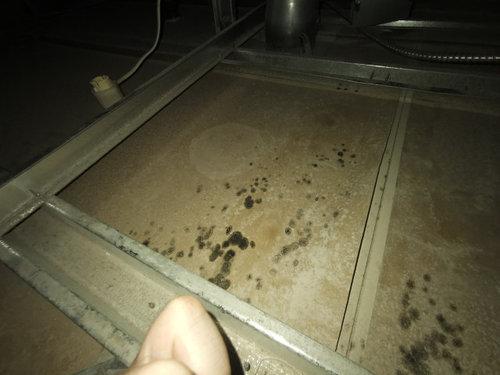
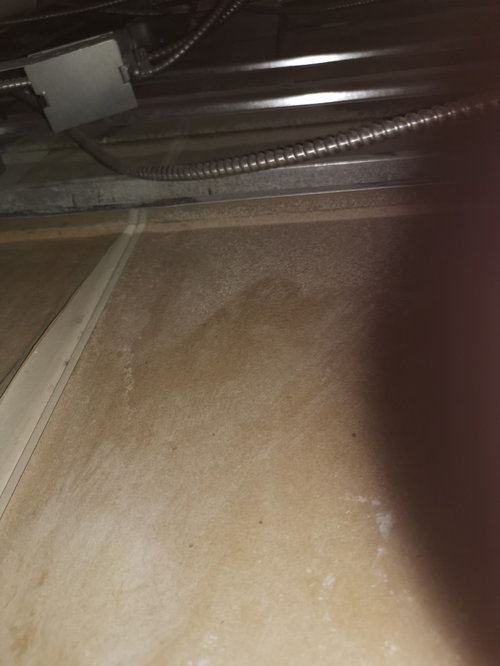
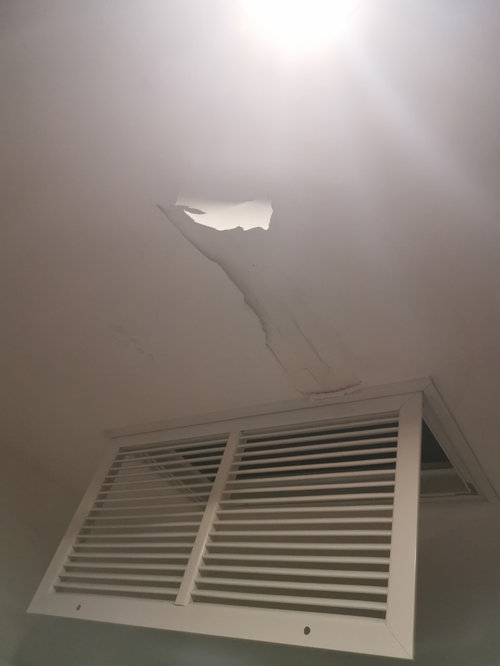
weeks later. This is the damage the condensation caused :


This repair person however missed/failed to mention that mold had formed along the

surface of the paper covering the sheetrock underneith this facade. Inside I took a picture

of the damaged panel :


Since this could have been discoloration from water alone, I cultivated a sample on agar

in a peitry dish and confirmed mold, however, the mold on the pietry dish was orange.


I called another professional, and they said that they needed to destroy a 6ft x 6ft

portion of the ceiling, that is, a significant portion of it, which would be a huge cost

to the tune of $1000, probably another $1000 to get a separate professional to

rebuild the ceiling.


After considering the matter, I thought to myself, perhaps the mold has not infiltrated

the drywall itself, even though the water has. The mold appeared to form on the

surface of the paper but after peeling up the paper, I didn't see any mold underneith.

The paper also didn't seem to have rotten through with mold. After scrubbing it

thoroughly, it came right off :


I decided to carefully remove the mold with baking soda/vinegar, and spent a lot of

time blow drying the surface to avoid further contamination. I've put a HEPA filter in

this space, and I was considering taking a sample of drywall on the opposite side of

the panel, seeing if that grows mold and if not, just getting someone to fix the drywall.

I would also put petri dishes on the inside of the facade after the HEPA's have done

their thing as a secondary test.


Two problems remain :


- If the drywall is indeed contaminated, it makes more sense to do the expensive

professional route. However if its NOT, is it logical and/or a reasonable bet to get

just a drywall person in? I worry that this could further contaminate the home.

on the other hand I have some doubts that the drywall has been infested with

mold, especially since it was only a few weeks that the AC was off and the

mold formed. The underside does not look contaminated and the drywall

on the non-moldy side has shown no signs yet of growing mold.


- I did several months back have water infiltration from the washing machine,

and part of me worries that the mold formed from a different location and that

that is potentially where it came from. If this is

the case, the mold would re-form on the dishes and I would know that the

expensive professional route is best.


I want to sell my condo ASAP, and I want to be honest about any problems before

doing so, however if this issue is superficial (ie mold formed exclusively due to the

AC water damage and increase in humidity) and I can simply have someone come

in to test the other location to rule out a serious mold problem, is this a valid and

perhaps cost effective means of doing so?


I would really really appreciate any advice you could offer on this.


Thanks


Charlie


Comments (6)

  • 5 years ago

    You did a good job of cleaning up the mold on the backside of the drywall. I would only expect the mold to be where the water dripped from the AC. I assume by now you have carefully inspected the surrounding area and found no other evidence of mold. If that is the case then I don't see the need to do further mold remediation above the ceiling.

    If the drywall had dark mold spots on the other side, then I would say it needs to be replaced. You have not seen mold evidence so I don't see the need to replace any of the drywall. The water dripped through a joint and caused the paper and paint to peel off. That is a simple fix if you are comfortable handling paper tape and joint compound. Once it is repaired it will need a coat of primer and one or two coats of ceiling paint.

    I don't feel you are hiding anything from a potential buyer. You had a water leak, you cleaned it up, and you made the necessary repairs. The home inspector will be able to open the access panel and do a visual inspection.

  • 5 years ago
    last modified: 5 years ago

    You're safe. It's fine. Peroxide in a spray bottle will kill anything that might be left, but probably not even necessary. BTW, bleach only makes mold invisible - it doesn''t kill all of it. I learned that from a remidiation company when I had concerns of my own.

  • 5 years ago

    Baking soda (a base) and vinegar (an acid) neutralize each other before they can do much good. You basically cleaned off the surface mold with water. You need bleach or peroxide to destroy any mold. Oh, and bleach DOES kill mold if sufficiently concentrated (10% or higher).

  • PRO
    5 years ago

    The situation was this :

    My AC unit which resides above/inside a facade (a false drywall

    ceiling, above which the AC unit is placed, with access panels embedded in the drywall)

    just recently clogged due to a filter becoming too dirty before its expected 6 month

    replacement date.


    Where your AC unit resides is this area a "conditioned space"? The mold could be due to the surface of the sheet rock sweating due to temperature differences from where the AC sits. From your picture there is no insulation on the sheet rock you show in the pictures.


    In some cases depending on location: sweating of this nature can be a direct cause of how you are running the machine or very unique conditions "weather" for your climate.

    Humidity plays a larger role in comfort than what most people realize. Dew forms at "dewpoint" temperature. This rule is the same outdoors as indoors. Dewpoint temperature along with moisture content of the air continually changes.


    So provided moisture heavy air never come in "contact" with a surface that is residing at current dewpoint temperature it never has the opportunity to condense into moisture.


    Mold can not grow without moisture.


    I service the Katy, Texas area.

  • 5 years ago

    I just wanted to say big thank you to everyone's suggestions here - I cleaned the area again

    with peroxide, re-dryed, then set up impromptu air filters in the space (HEPA filters attached

    to high volume PC fans) then tested again on agar. Neither scrapings from the paper nor

    small samples of drywall from the ceiling side showed any mold growth - the company

    clearly wanted to see a bigger problem then there was.


    Thanks again! :)

  • PRO
    5 years ago

    Congrats on remedying the problem. While mold can sometimes be a significant issue, restoration and mold abatement contractors have made a fortune playing off people's fears and turning small issues into big insurance claims.