Software
Houzz Logo Print
linnea56chgo5b

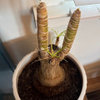
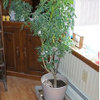
Is this normal for a Tricolor Pepperomia?

My daughter passed this plant along to me, because she was tired of seeing the droopy leaves. She felt that it looking "depressed" was making HER depressed.
She's great with houseplants, and really tried everything. I've never had one of these, so perhaps they just look like this? I believe she called it a tricolor pepperomia. To me it looks otherwise healthy.
Thanks.

Comments (5)

  • 5 years ago


  • 5 years ago

    No, not typical of the species. If your plant wilts while you can still detect moisture in the medium, it's a good bet you're over-watering. This plant tolerates going completely dry without much in the way of complaining, so allow it to dry down almost completely before you water, then saturate the medium and start the cycle again. You can tell what's going on deep in the pot (in terms of moisture levels) by using a wooden "tell" to "tell' you when it's time to water. More on this below.

    You should also be fertilizing regularly ..... about every 4th or 5th time you water would be about right. When you water, drop a marble or other object (button, bottle cap, diamond ring) in the pot. When you're about to drop the 4th or 5th object in the pot, you'll know it's time to fertilize. Foliage-Pro 9-3-6 should do an admirable job of providing all the nutritional supplementation the plant needs.

    If you find the medium stays too wet to water after 5 days or so, use the trick I'll leave below. It will help you rid the pot of ALL excess water. See 'Newton's Law' below.

    Using a 'tell'

    Over-watering saps vitality and is one of the most common plant assassins, so learning to avoid it is worth the small effort. Plants make and store their own energy source – photosynthate - (sugar/glucose). Functioning roots need energy to drive their metabolic processes, and in order to get it, they use oxygen to burn (oxidize) their food. From this, we can see that terrestrial plants need plenty of air (oxygen) in the soil to drive root function. Many off-the-shelf soils hold too much water and not enough air to support the kind of root health most growers would like to see; and, a healthy root system is a prerequisite to a healthy plant.

    Watering in small sips leads to avoid over-watering leads to a residual build-up of dissolved solids (salts) in the soil from tapwater and fertilizer solutions, which limits a plant's ability to absorb water – so watering in sips simply moves us to the other horn of a dilemma. It creates another problem that requires resolution. Better, would be to simply adopt a soil that drains well enough to allow watering to beyond the saturation point, so we're flushing the soil of accumulating dissolved solids whenever we water; this, w/o the plant being forced to pay a tax in the form of reduced vitality, due to prolong periods of soil saturation. Sometimes, though, that's not a course we can immediately steer, which makes controlling how often we water a very important factor.

    In many cases, we can judge whether or not a planting needs watering by hefting the pot. This is especially true if the pot is made from light material, like plastic, but doesn't work (as) well when the pot is made from heavier material, like clay, or when the size/weight of the pot precludes grabbing it with one hand to judge its weight and gauge the need for water.

    Fingers stuck an inch or two into the soil work ok for shallow pots, but not for deep pots. Deep pots might have 3 or more inches of soil that feels totally dry, while the lower several inches of the soil is 100% saturated. Obviously, the lack of oxygen in the root zone situation can wreak havoc with root health and cause the loss of a very notable measure of your plant's potential. Inexpensive watering meters don't even measure moisture levels, they measure electrical conductivity. Clean the tip and insert it into a cup of distilled water and witness the fact it reads 'DRY'.

    One of the most reliable methods of checking a planting's need for water is using a 'tell'. You can use a bamboo skewer in a pinch, but a wooden dowel rod of about 5/16” (75-85mm) would work better. They usually come 48” (120cm) long and can usually be cut in half and serve as a pair. Sharpen all 4 ends in a pencil sharpener and slightly blunt the tip so it's about the diameter of the head on a straight pin. Push the wooden tell deep into the soil. Don't worry, it won't harm the root system. If the plant is quite root-bound, you might need to try several places until you find one where you can push it all the way to the pot's bottom. Leave it a few seconds, then withdraw it and inspect the tip for moisture. For most plantings, withhold water until the tell comes out dry or nearly so. If you see signs of wilting, adjust the interval between waterings so drought stress isn't a recurring issue.

    Newton's First Law

    For conventional container culture, it's a given that saturated/partially saturated media rob roots of the oxygen they need to function normally and efficiently. At best, soil saturation robs your plants of immense measure of potential in areas like growth, appearance, yields, ….. At worst, plants unable to cope with the strain of drought stress caused by saturated media will succumb to it. This isn't a 'scare tactic, it's a very simple and straightforward observation that will be difficult to disagree with a straight face.

    Newton's First Law of Motion states that an object will remain either at rest, or in motion at a uniform rate and in a straight line unless acted upon by an external offsetting force. In this case, we will designate the 'object' as excess water in your potting medium. At risk of my being redundant, the 'law' can be seen as a simple statement about inertia, that objects will remain in motion and in a straight line unless a force acts to change the motion. To put the law to work for you/your plantings, you should water to beyond the point of total soil saturation - so the medium has been completely saturated and at least 15-20% of the water you have applied has exited the pot. Unless your soil is purposefully constructed to eliminate all/nearly all excess water, it's extremely probable, when the pot has stopped draining, there will be too much water in the potting medium for the plants' liking.

    To eliminate this excess water: immediately after a thorough watering, hold the pot in one hand over the sink, lawn, or over-sleeping significant other and move it downward, then sharply reverse the direction to upward. You'll immediately note that a good measure of 'excess' water will “continue downward in a straight line” and exit the drain hole. The sharper the reversal of direction, the more water exits the drain hole. When you have repeated the exercise until water no longer exits the drain hole on the reversal of direction, you will have eliminated all excess water and your plants will regard you with a newfound sense of awe.

    Al

    linnea56 (zone 5b Chicago) thanked tapla (mid-Michigan, USDA z5b-6a)
  • 5 years ago

    Thank you so much for all this detailed information! I'm sure I can use the wooden dowel trick for many plants.


    With this particular plant, since she may have been overwatering it for some time, would it help the recovery process If I repotted it with fresh potting medium?


    Sometimes when I realize I've overwatered something, usually when it's in a cachepot, I remove the pot, set the plant in the sink on a pad of paper towel, and replace the towels as needed until it's dry.


    A different family member started renting a house last year that came with numerous succulents, some quite large. He asked me for a "watering schedule." I explained that you can't schedule these things. But I think he decided to water every Saturday as part of his chore rotation (but he's never had succulents). When I came for a visit I realized they were all sopping wet. I depotted everything as above, and didn't put them back in their pots for 2 weeks. I think I saved them.

  • 5 years ago

    With this particular plant, since she may have been overwatering it for some time, would it help the recovery process If I repotted it with fresh potting medium? The most common reasons to repot are A) the medium is too water-retentive or B) the plant is rootbound. The 'Newton's First Law' trick will remove all excess water, so that reason is sort of taken care of, leaving the question, is it root bound? If yes, now is a good time to repot. Late fall through early spring is not, this, because the extended recovery period required by a lethargic plant (due to low light and the long, dark winter) leaves the plant vulnerable to insect herbivory and disease pathogens for a long while. Mid-Jun and all of July are best for repotting a huge % of houseplants. The plant would prefer a fast-draining and highly aerated medium. Examples:


    Sometimes when I realize I've overwatered something, usually when it's in a cachepot, I remove the pot, set the plant in the sink on a pad of paper towel, and replace the towels as needed until it's dry. That works fine, but it cannot remove as much water as you can remove with the help of Mr. Newton. I'd employ Newton as your helper for manageable pots and save the wick trick for the larger plantings. For the newspaper/ paper towels to work, the soil in the pot must be in contact with the paper. Even that 1/8" gap can interrupt the continuity of the soil column and stop the draining. You can also use a wick to "fool" water in the pot into "thinking" the pot is deeper than it is. The wick also acts as a part of the soil column to ensure continuity. Compare A to E below. Also not the value of tipping the pot by comparing the volume of excess water in the tipped pot B to that in A.

    One way to implement a wick:


    Using a strand from a rayon mop ^^^


    A different family member started renting a house last year that came with numerous succulents, some quite large. He asked me for a "watering schedule." I explained that you can't schedule these things. But I think he decided to water every Saturday as part of his chore rotation (but he's never had succulents). When I came for a visit I realized they were all sopping wet. I depotted everything as above, and didn't put them back in their pots for 2 weeks. I think I saved them. Strong work!

    Al

  • 5 years ago

    all you have to do it this.. if you want to look at pix:


    https://duckduckgo.com/?t=ffcm&q=Tricolor+Pepperomia&iax=images&ia=images


    and that quickly told me its not proper ...


    thank god you had it in hand for scale in the pic ... my simple observation is.. too big a plant for too small a pot ... probably severely root bound ... causing watering the fert issues ...


    i presume Al said that in a thousand more words....


    repot it.. put it in full shade for the rest of summer.. outdoors ... water properly.. treat it for bugs in early fall .. and bring it in a week or two later ...


    and if it looks great by xmas.. regift it back to her.. and tell her you are magic ...


    ken