Software
Houzz Logo Print
stillinwisconsin

Rubber tree SOIL???

5 years ago

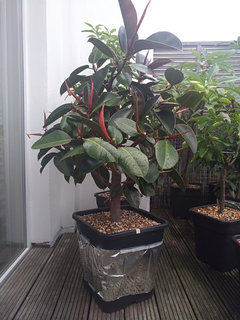
My rubber tree has skyrocketed after purchasing last year, i purchased from an antique store where she sat in the back of the room in low lighting…. she loves my south windows, and has quadrupled in size and continued to griw throughout the winter months


I didn’t change the pot size, but i did change the soil to a bark peat perlite mixture after purchasing because the soil it was in was really rock hard compact


now I need to transplant to a slighly larger pot, as roots are wrapping around the bowl


my conundrum is my wood burning stove in the winter I run a humidifier but its still not enough …. this is the only room with sufficient lighting in the winter


i think al tapla said he recommends his gritty mix for rubber trees


but I am thinking it won’t hold enough moisture for me


then i remember reading someone suggesting 80% pine bark and 10/10 each of perlite and vermiculite


any recommendations for me so i can keep her happy?


Comments (21)

  • 5 years ago

    My rubber tree, Ficus elastica, grows perfectly well in the 5-1-1 mix. I use this same mix for all my houseplants except for the succs and cacti. It is more moisture retentive than the gritty mix but I tend to underwater rather than overwater :-)

  • 5 years ago

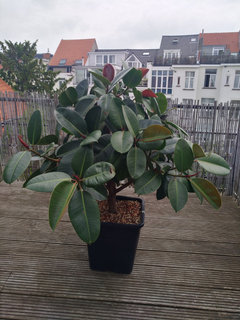
    Same here, my ficus elastica is doing really well in gritty mix (no bark in the mix, just lava, pumice and seramis, equal parts).

    All my plants are in this mix. Like Al said, I don't mind taking the time & effort to make the mix.

    Ficus is wintering in the living room, average temperature of 21°c, and 50% humidity, and watering +/- every seven days.

    First picture = june 2021, two weeks after the migration living room to the terrace😁☀!

  • 5 years ago

    Strong work, Michael.

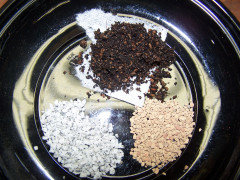
    A very large fraction of posts asking for remedies on forums related to gardening in containers are the result of problems extending from media that hold too much water. Sharp sand, builder's sand, torpedo sand, play sand, ..... will not increase aeration or drainage, the presumable reason one might incorporate them into a 'from scratch' medium or "amend" a medium. Even coarse horticultural sand (low left below - looks more like gravel) cannot improve aeration or appreciably improve drainage when mixed into media based on a large fraction of fine materials. The reason is, the fine material simply/completely surrounds each coarse particle, so where does the aeration come from? Truth be told, trying to amend media based on fine ingredients (peat, coir, compost, composted forest products, sand, topsoil, .....) with coarse material like horticultural sand actually decrease aeration on a per volume basis. Example. You have a jar of poor grow medium based on fine materials and it holds 6" of perched water. The jar is completely full of soil. If you add 1 particle of horticultural sand (the REALLY coarse material pictured) you displace an equal volume of the poor medium you're trying to amend, AND all the air space contained in that volume. Do that 1,000 times and you're left with the same volume of medium (because the jar overflows as the coarse particles are added), the jar is still full, but look how much air the 1,000 pieces of hort sand displaced. The o/a aeration in that jar has decreased dramatically. You can actually see this concept by looking at the image below. Which piles have the best aeration and drainage? The ones with the largest particles. Which has the worst, the one that started with all fine material then had Turface added to it. Now, imagine how much poorer the aeration/drainage would be if finer sand had been mixed into the material at the top.

    Reversing the process, start with a mix of Turface (low right) and the hort sand (low left). Obviously great aeration and drainage. How do you destroy that aeration and drainage? As you add fine material to the mix, it can only go into the large spaces between the large particles, and all you need to completely undo the aeration and drainage you seek by amending a medium, is add just enough fine material to fill all the air spaces. Example: A cup of Turface and a cup of hort sand = 2 cups medium with superb aeration and drainage - NO perched water at all. Let's say there is a half of cup of air space in the 2 cups of the medium. All it takes is 1/2 cup of peat in the mixture to fill every space between the soil particles, significantly reducing aeration and drainage.

    If a grower wants to take advantage of a well-aerated and fast draining medium, the medium must be based on a very large fraction of coarse material (>80-90%) which can actually provide the aeration, and the grower would need to add only a very small fraction of fine material, the only purpose of which would be to increase water retention to suit the GROWER'S needs. The plant wants superb drainage/aeration from the top of the soil column to the pot bottom.

    There's no judgment to be made if someone chooses commercially prepared, water-retentive media based on all small particles. We all order our priorities differently; however, when it comes to looking at things through the lens of what better serves the plant, there is no question that highly-aerated, fast-draining media offer plants a much greater opportunity for plants to realize as much of their genetic potential as possible.

    Interesting aside: The dark medium above, on the paper towel, is the medium in all of my raised beds where it works wonderfully. The reason it work well in RBs is because the earth acts as a giant wick, 'pulling' water out of the mix which would be much too water-retentive to use in a container. If you look closely, you can see fine white particles interspersed throughout the medium. That is sand. How much aeration would you say it's adding. I say none. I added the aside to emphasize what works in the garden as far as soil/ grow media is concerned, is almost certainly going to prove inappropriate in a container. Container culture is much closer to hydroponics than growing in the earth.

    Al

  • 5 years ago
    last modified: 5 years ago

    First, I was addressing the forum, not you, and we all agree that anyone CAN do whatever they want and they shouldn't be judged for it. I wasn't trying to change your mind and what you choose to do doesn't bother me in the least. I simply wanted others to see there is great folly in trying to amend poor media (due to excess water retention) by adding coarse materials, something true whether that's what you did/do or not. If you say that doesn't fit what you're doing, fine, it doesn't fit, so let it go; but that it doesn't fit doesn't make a single word of what I said untrue. I didn't demean you or engage in anything that could be considered ad hominem, or accuse you of a single thing, so why the ire? When you look for reasons to be upset, you're always going to find them. Maybe you could point to something I said that was wrong?

    Stop twisting my words to your benefit and quoting out of context as you've done before, and I invite you to try to convince anyone that what I said is a strawman argument. Here's the verbiage you're so upset about?

    I said "Example: You have a jar of poor grow medium based on fine materials and it holds 6" of perched water. The jar is completely full of soil. If you add 1 particle of horticultural sand (the REALLY coarse material pictured) you displace an equal volume of the poor medium you're trying to amend, AND all the air space contained in that volume. Do that 1,000 times and you're left with the same volume of medium (because the jar overflows as the coarse particles are added), the jar is still full, but look how much air the 1,000 pieces of hort sand displaced. The o/a aeration in that jar has decreased dramatically. You can actually see this concept by looking at the image below.

    Now that the truth is in front of us, it reveals you, not I, resorted to setting up the strawman.

    Al

  • 5 years ago

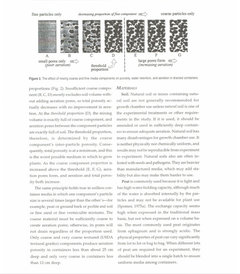
    This supports the explanation I gave above and provides additional visual confirmation of what occurs when fine material is "amended" by adding coarse material. As noted above, o/a air porosity decreases when adding coarse material to fine material until there is no longer enough fine material to fill all the spaces between the large particles (threshold proportion). ONLY then does aeration start to increase (rapidly) and drainage improve notably.

    Link to PDF file.

    Al

  • 5 years ago

    i do know how to punctuate but for whatever reason my iphone is not compatible when i type on this forum and i don’t know why ….


    Al, thank you for your valuable feedback it is much appreciated and if its ok for me to water every 3 days (or as needed) when my wood burning is going strong this winter, then i will definitely opt for the gritty mix


    another question… turface…. i have found it in wisconsin many years ago but i dont remember where …. on another thread a guy said a product called ”floor dry” at NAPA is virtually the same thing … do you know if this is true? I tried the turface website and nothing listed for wisconsin


    PNW & Al - i used the 5:1:1 mix years back for my outdoor container plantings (annuals) and holy smoke they absolutely thrived!!


    michael, you give me something to strive for … i have never seen such a massive (or beautiful) rubber tree specimen before! Or perhaps i need to move from zone 5a to 8b … haha


    al … I’m I’m trying to catch up on another discussion regarding cactus and succulent mix… covid quarantine made me buy echeverias and other succulents Bonsai Jack cactus mix is REALLY pricey and i can’t say my echeverias liked it too much (wisconsin climate). only my haworthia seems to thrive in it. i have my echeverias in sungro black gold cactus mix but the particle size varies depending what region it came from, some bags are fine particulates and others are larger bark pieces


  • 5 years ago

    First, thanks to the moderator for cleaning up this thread.

    For more about the difference between Turface (calcined Montmorillonite clay) and the NAPA floor dry (calcined diatomaceous earth) TRY HERE. There are pH and CEC differences as well. Within that thread, you'll find 2 more hyperlinks that will take you to 2 additional threads re same topic. I just helped another member find Turface near him in OH. If you let me know where you live, I can probably find it near you, unless you live in WI's outback. I know you can find it in Madison, Waukeshaw, Sussex, Brown Deer, Kaukauna, Appleton, or at least very near those cities. Bonsai Jack cactus mix is REALLY pricey and i can’t say my echeverias liked it too much. That's because they don't screen the fines out of the Turface. I’m trying to catch up on another discussion regarding cactus and succulent mix. Lots of info in that thread. It'd be a good one to read through.

    Al

  • 5 years ago

    Ok lets not keep the madness going … i just want to talk rubber tree soil and anything relevant … covid was hard enough on us ... lets move on …

  • 5 years ago

    @al ”waukeshaw” made me laugh (waukesha)


    I am in the outback lol near Ripon


    but i go to Oshkosh regularly so anything around that area will work (Appleton/kaukauna)


    i go to milwaukee maybe once every other month so thats doable too


    if i had to go to madison that would work too but oshkosh is more frequent for me


    many thanks… still have to catch up on that other thread

  • 5 years ago

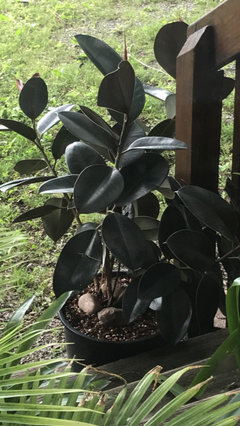
    My rubber tree is in Al’s 5-1-1 mix & has doubled in size in the 2 yrs Ive had it! Its the black-ish one, I think named ”burgundy ficus”.


  • 5 years ago

    Funnily enough, i I hopped onto this forum to ask this exact question! i have a regular ficus elastica that is a couple of years old, had left it in the original pot and media as iI had heard (likely somewhat misguided) that they preferred to be a little tighter in their pots. Having read Al’s posts on focus in containers, I have seen the errors in my ways! i happened to buy three ficus elastica Ruby this summer and have repotted all in the 5-1-1 mix (actually two grew in one pot so had to separate them, showed some initial stress with loss of a bottom leaf on each, but look much happier now).


    i didn’t know if others have had good success with the 1-1-1 gritty mix and their ficus trees as well or not, but sounds like so. Mine are likely to be exclusively grown indoors for now (not a lot of safe growing space on my back deck, and my citrus trees have claimed that for now!), and I am not always the best at watering more than every 5-7 days due to my busy work schedule. I really appreciate your expertise Al, as always!


    Rob

  • 5 years ago

    And I appreciate your kind words, Robert, as well as Rebecca's witnessing to the success she's had. Thank you both.

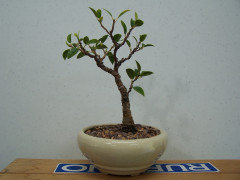
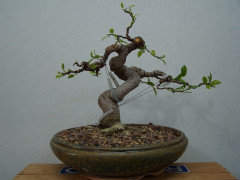
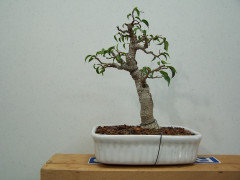
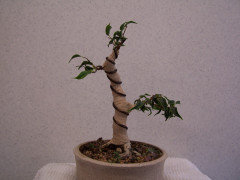
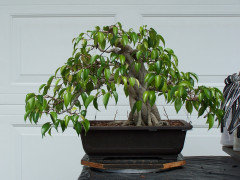
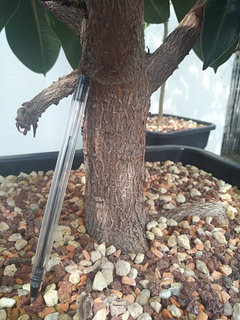
    I have about 40 ficus in pots, and all are in the gritty mix, from the teeny tiny plants to those I've cared for more than 30 years. Below are 3 small ficus I just repotted yesterday


    The tree below and the tree above are the same tree. Keep in mind that all of these trees have just been pruned hard

    The tree below was defoliated completely and rewired mid-July and is just leafing out.

    Al

  • 5 years ago

    ok I sourced Cherrystone #2 grit, Turface and reptibark …


    Can anyone tell me how exactly do i “screen“ the turface…. what does this mean?

  • 5 years ago

    The only place I could locate pine bark fines is in Seymour, WI but they said they only have it in spring and fall


    I cant remember for the life of me where i sourced it when i lived in Milwaukee

  • 5 years ago
    last modified: 5 years ago

    And for anyone else in Wisconsin reading this thread i was able to source Turface at Reinders in Appleton (they are in Elm Grove too, and maybe another location)…

    i got my reptibark from Petco online 24 qt bag for a little over $7 and free shipping

  • 5 years ago

    Can anyone tell me how exactly do i “screen“ the turface…. what does this mean? Use aluminum insect screen. Whatever doesn't pass through the screen is usable; the fines can be tossed into the garden, raised beds, compost pile, or used for hypertufa projects.

    You did purchase Turface MVP or Allsport, right?

    I used to buy prescreened fir bark for my gritty mix from an outfit called Oak Hill Gardens, which was focused on orchids and related supplies. It came in 4 cu ft bags and the last batch I bought was a p/u bed full, pretty sure it was 20some bags. I know they moved to Wisconsin, and I might have rec'd notice they were going out of business, but I'm not sure about that. I took a look on the net and could locate Oak Hill Gardens in Illinois, but I didn't see where they were in the business of selling anything.

    Al

    stillinwisconsin thanked tapla (mid-Michigan, USDA z5b-6a)
  • 5 years ago

    Yes i did get the Turface MVP!


    tomorrow i will shop for some insect screen


    I have to search these threads when i have more time, because someone told me awhile back where to get the gran-i-grit and pine bark fines, its bugging me that i cant recall


    I’ll be potting my Sanseveria, fiddle leaf fig, ponytail palm and rubber tree in the gritty mix … i might modify it a little for my holiday cactus though based on your prior comments on another thread re: tropical cactus plants


    thank you again

  • 5 years ago

    Gran-I-Grit (grower size) is mined in one of the Carolinas. #2 cherrystone/ quartzite is mined in Minnesota, might not be as hard to come by, and should be less expensive than Gran-I-Grit where you live. Physical characteristics as they relate to function in a grow medium make these products mutually interchangeable; and, IMO the #2 cherrystone makes a more eye appealing mix. Either product is available from farm/home type stores and elevators with a variety of pet food stuffs. Specialty feed stores are a good bet, too.

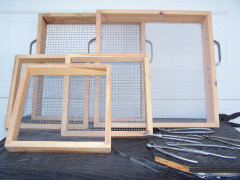
    You might be able to get a free piece of screen (used) from a glass company. Any hardware store that repairs windows, or a glass company, would sell you a piece of aluminum screen which would serve your purpose for a couple of dollars ..... maybe $4-5 as things are today.

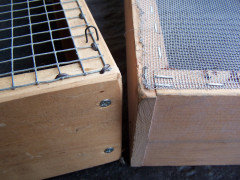
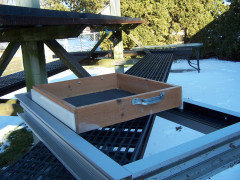
    What I use:


    Al


    stillinwisconsin thanked tapla (mid-Michigan, USDA z5b-6a)
  • 5 years ago

    Thank you for the photos and info


    So for the turface I’m assuming you just use the smaller insect screen and the larger one is for pine bark fines perhaps?

  • 5 years ago

    I have a large set and a small set of screens, each set consisting of a frame with insect screen, and 4 additional frames using screens with openings of 1/8, 1/4, 3/8, and 1/2". Most used is the insect screen as it not only screens all the Turface MVP I use, it also screens out dust from all the other prescreened ingredients I use in my growing adventures.Second most used is the 1/2" screen followed by the 3/8" screen. That will change when I run out of pre-screened fir bark and will need to return to screening pine park for my gritty mix. I think I only have 2-1/2 4 cu ft bags left.

    Al

    stillinwisconsin thanked tapla (mid-Michigan, USDA z5b-6a)