Software
Houzz Logo Print
graham_davis54

Dark Spots On Fiddle Leaf Fig?

5 years ago
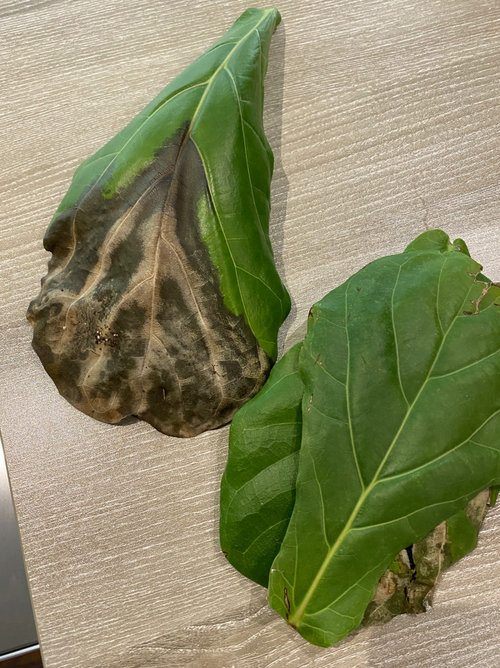
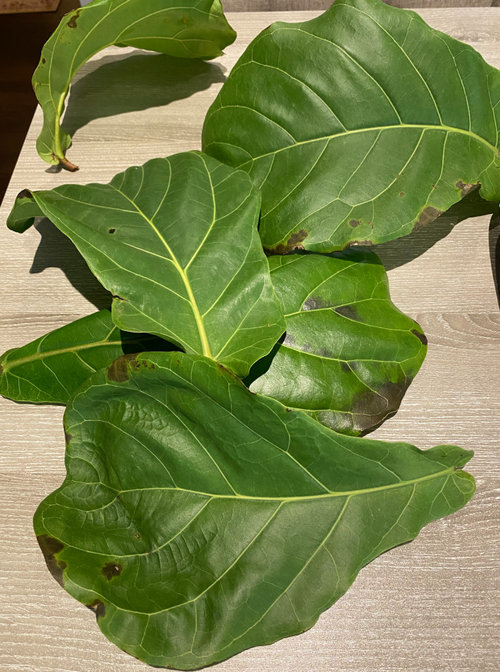
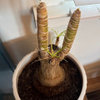
Hi! I’ve been having some unusual dark brown spots on my fiddle. It gets some good indirect sunlight every day, and I make sure it's properly watered and drain.


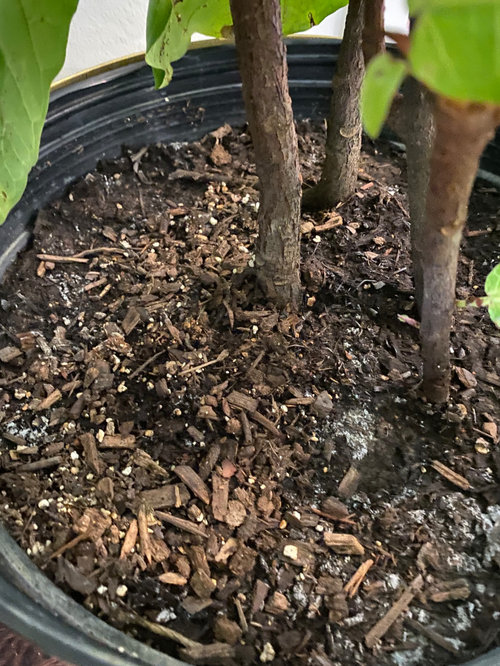
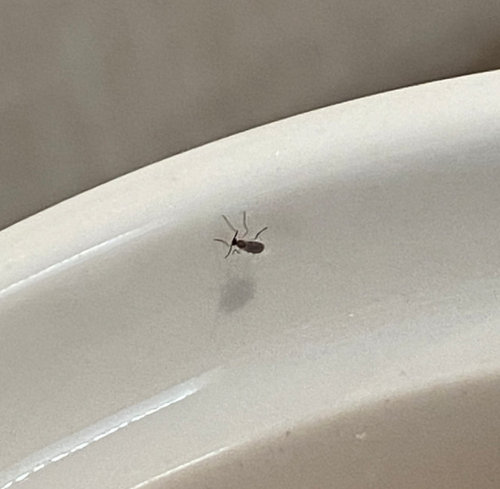
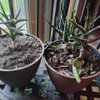
And despite living in a clean apartment where there are never bugs, I’ve noticed some small flea like bugs hovering around it a lot recently. I repotted it a few months back with new soil, so I wonder if there was some weird larvae inside of that. I've noticed some white spots on top of the soil developing, perhaps some kind of mold?


Anybody have any idea what's wrong with it?


Comments (4)

  • 5 years ago

    the white staining on the media indicates you have a salt build up in the media ... its from the water.. and fert ...


    or it could be what you suggests.. but it still means there is a problem with the media ....


    when it the last time this plant was properly repotted ...


    media wears out over the years .... and can lead to watering issues ....


    i also dont like how right around the stems .. the media looks mucky .... or doesnt look right ...


    can we see a pic of the whole plant ...


    i doubt this is bug related ..


    ken


  • 5 years ago

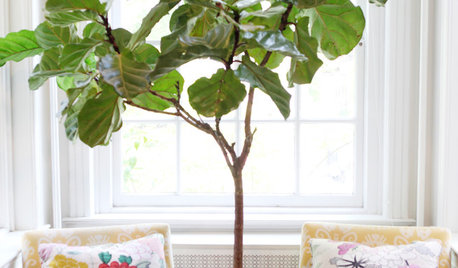
    Thanks Ken! @ken_adrian Adrian MI cold Z5 We repotted it a few months back, and we typically use this fertilizer every other watering. Here's a pic of the full plant. I pruned about 4 leaves from it last night that had some of those spots. The second pic shows where it is in proportion to the window and where it gets some sunlight from.


  • 5 years ago

    I’ve been having some unusual dark brown spots on my fiddle. It gets some good indirect sunlight every day, and I make sure it's properly watered and drained. Your plant definitely wants more than indirect sunlight. F lyrata is a plant that spends its early years fighting its way through the understory for its place in the canopy where it gets full sun. Your plant can be acclimated to tolerate full sun indoors, but a full sun position requires air movement. Surrounding leaves is a still layer of air (boundary layer) that acts as an insulator, trapping the heat generated when bright light strikes the foliage (passive solar gain). A fan will disrupt the boundary layer and allow the leaves to cool. If you decide to give the plant more light, gradually expose it to a heavier light load over the course of 10 days to 2 weeks. Your plant would LOVE being outdoors for the summer, and would enthusiastically show its pleasure should you decide to move it there. Morning and evening sun with shade at midday would be ideal. Again, the increased light exposure should be done gradually.

    And despite living in a clean apartment where there are never bugs, I’ve noticed some small flea like bugs hovering around it a lot recently. The insect appears to be a fungus gnat. They love wet grow media and rotting, vegetation, and organic fertilizers or soil amendments that break down quickly. I repotted it a few months back with new soil, so I wonder if there was some weird larvae inside of that. My guess is yes, or the wet medium is what attracted them. One gnat can turn into hundreds within a very short period. Now, about that grow medium ..... I see some chipped wood and bark on the surface, but the underlying medium looks severely compacted. It looks like the medium you chose when you repotted is excessively water-retentive, which would account for the gnats and the spoiled foliage. You can try using a "tell" to "tell" you when it's time to water, but proper watering won't fix compaction. What did it say on the bag of medium you recently used? Do you fertilize? With what? How often? I've noticed some white spots on top of the soil developing, perhaps some kind of mold? It probably IS dissolved solids left behind as water evaporated from the surface. Well-drained media generally don't get these deposits because they require water being wicked all the way to the surface from a larger reservoir held below in the medium. In fast-draining media, the water flowing over the soil surface dissolves deposits and flushes them out the drain hole. The surface of the soil dries very quickly because better media lack the ability to wick water all the way to the surface. What salts are deposited there from applications of fertilizer solutions are soon dissolved by the next application of water only, as already mentioned. The deposits might or might not be an indication of a salt build up in the medium; this because the deposit appear in very water-retentive media whether there is an abnormally high level of dissolved solids in the soil solution or not. If you habitually water such that a lot of water exits the drain hole when you water, it's doubtful there is any build-up of dissolved solids IN the medium; OTOH, if you water in sips because you already know the medium is too water-retentive, it's almost a certainty there IS a build-up of salts in the soil solution, especially if you fertilize regularly.

    Al

    Graham Davis thanked tapla (mid-Michigan, USDA z5b-6a)
  • 5 years ago
    last modified: 5 years ago

    Thank you so much for such a thorough answer @tapla (mid-Michigan, USDA z5b-6a). I don't remember which kind of soil I purchased, but it was likely an organic one for indoor plants. This is the fertilizer I use, usually every two waterings or so.


    I understand all the sunlight comments. As for the compacted soil, at this point do you think it's best to just do another repot? I would assume this time I should be layering in more wood chips or small rocks throughout to help with the drainage and from it not being too compact. If this is a repotting situation, do you have a soil you recommend? Thank you so much!

Sponsored
J.Holderby - Renovations
Average rating: 5 out of 5 stars4 Reviews
Franklin County's Leading General Contractors - 2X Best of Houzz!