Software
Houzz Logo Print
melissa_winchell39

Quartzite Baking Soda Poultice

5 years ago
last modified: 5 years ago
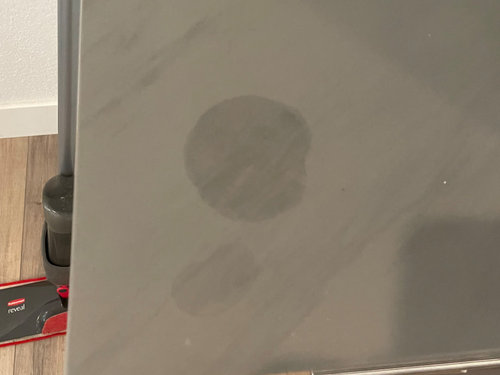
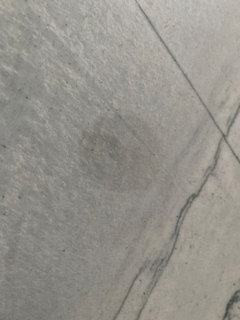
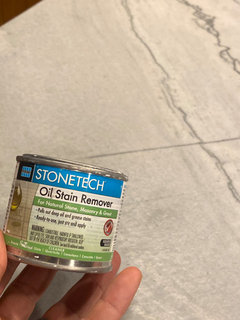
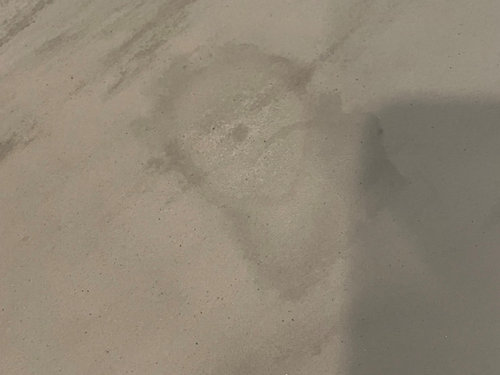
We had gray macaubus quartzite installed for our countertops. The first week of having it, it was unsealed and I stained it with peanut butter. I ended up applying StoneTech's Oil Stain Remover, but was provided a bad product and then later applied Bulletproof sealer, however, that was unsuccessful as well. Since then, I have had many stains that have appeared. I applied a baking soda and water poultice overnight/2 days. I have had the poultice removed for 6 days not and there are still water marks. The following questions remain:


1) does this need more drying time?

2) Why is there a ring left? Will this dry as well?

3) I see some white patch marks left, how can these be removed?

Any guidance would be appreciated. I have Stonetech Impregnator sealer and Porous Plus. I plan to apply one of these once the stain situation is handled.


Comments (21)

  • 5 years ago

    I replied to you on my post.

    per our installer, make a poultice of 100% pure acetone and Diatomaceous Earth. leave on overnight sealed with plastic wrap. keep repeating until it dries out.

    Melissa Winchell thanked Madeline Collier
  • 5 years ago

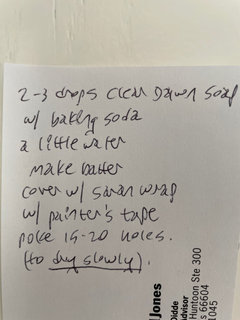
    I used baking soda and water as a poultice. I live in Arizona so it's really dry here. You might run a de-humidifier in your kitchen to see if that helps reduce your drying time to 8 hours with small holes cut in the Saran wrap sealing the poultice. The key part is that it should slowly dry on top of the stain over the course of 8 hours.

  • PRO
    5 years ago
    last modified: 5 years ago
    Bernz-O-Matic please. Don't go crazy.

  • 5 years ago

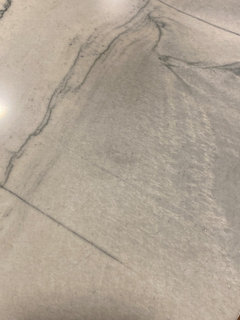
    @Joseph Corlett, LLC Thanks for the recommendation. Have you had any customers try the above recommended solution of acetone and dimataceous earth poultice? My second picture appears it's slowly drying, and I'm afraid the stain is still present.

  • 5 years ago

    I suggest you contact the fabricator and installer and send them these pictures. This product should have been sealed unless you told them you would seal it yourself. If you were not aware that it wasn’t sealed then you should be going back to them to fix it. I would go that route before doing anything else when you might have the opportunity to have it corrected by the installer or fabricator. Please do not use an impregnating sealant unless it is water based and purchased at a stone store you should ask your fabricator what they use. Hopefully there are some that will chime in for you.

  • PRO
    5 years ago

    Melissa:


    The acetone/DE poultice is a good shot and isn't going to hurt anything. This is more art than science.

  • 5 years ago

    @madelinecollier how many applications did it take you to get the spot out?

  • 5 years ago

    My poultice of baking soda and water was completely dry after 8 hours. I think that is key because part of the drying process pulls on the stain. That's why I recommended a dehumidifier to help your poultice dry (put it away afterwards) if you live somewhere with more humidity than Arizona. I needed 3 applications for a peanut butter stain and one or two for cooking oil stains.

  • 5 years ago

    I don't have an issue with the poultice drying. The problem I have is the porous countertop taking forever to dry once the poultice is removed as seen in the picture posted. Does the DE/acetone poultice keep pulling the water out? Or will I absolutely need a torch to dry the water set so deeply in the stone? I'm ready to seal the countertops but cannot get these spots dry! I've also started to see some white discoloring that is strange and occurred after my first baking soda application.


  • 3 years ago

    Melissa, I know this post is old, but what did you end up doing to get the moisture left behind from the poultice? Also what happened with the white spots?

  • 3 years ago

    @melissawinchell, please let us know how it turned out. Thanks!

  • 3 years ago
    last modified: 3 years ago

    @Melissa Winchell we just had the same exact thing happen on our new professionally ”sealed” Olympia Quartzite counters, and can’t get the stain rings out from after using baking soda/water poulstice. Did you finally find a way to clear them up?


  • 3 years ago

    This is a great poultice for grease/oil from a countertop restoration specialist. The clear Dawn dish soap is a very helpful ingredient.

  • 3 years ago

    Unfortunatley, nothing has worked well. It takes days for the rings to partially disappear after removing poltice and the stains never fully disappear. My white spots never went away either. Choosing this type of countertop was the worst decision i've made in renovating our home, i'm very disappointed. If anyone has good recommendations/techniques for removal, please add :)

  • 3 years ago

    I’ve had this same issue, with the white flecks and the ring around the area where the baking soda poultice was applied, which is still visible long after the water has dried (which took over a week to dry out) - on unsealed Mont Blanc quartzite.

    After much digging around, I’ve found that most if not all quartzite and even some granite slabs undergo a resining process from the stone supplier, where polyester resins are injected deep into the slab to fill any small fissures and voids within the stone. This both reinforces the stone as well as can enhance the color.

    My theory on this is that the baking soda poultice reacts with the resin and pushes it out to the sides of the area of application causing the ring. The white flecks I believe are because there is no longer any resin left in that area, and the small natural fissures in quartzite between the individual grains becomes visible.

    I don’t believe at this point there is any way to restore the stone to the way it was, without “re-resining” the stone, and I’m unsure if that can be done with an installed product.

  • PRO
    3 years ago

    Many of these quartzites are unsuitable as countertop material. The sooner the Natural Stone Institute, the trade association of the industry, starts aggressively policing the industry and its members, the better.

  • 3 years ago

    I am sure they’re fine assuming you don’t let a chemical sit on it for 24 hours like a poultice, of course a lot of people such as myself are not informed on this matter. It just needs to be sealed right away. My fabricator did not tell me any of this however which is annoying to say the least. I had no clue that there was a resin applied by the quarry, and blindly followed advice from the internet to use baking soda since it’s not acidic… again, a huge no no for quartzite.

    I re-polished the area on mine with a 1000 and 3000 grit diamond resin pad, then followed up with the MB-20 polish with a hogs hair pad and brought the surface back perfectly flat and glossy. The white flecks are still present but only noticeable if standing directly over it. I then applied 2 coats of Dry Treat Stain Proof premium sealer, I’m sure that had this been done initially none of this would have happened… oh well…

  • 3 years ago

    @Melissa Winchell so our installer gave us this stuff to try on our oil stains. it took 4 separate applications, but this each one lightened it to the point of barely being visible!


  • 3 years ago

    I’m glad it worked well for you! I use it and it lightened the area where the stain was too much (kinda bleached it). Thankfully, over time it has gotten less noticeable! I only used it on a small part of the stain, otherwise the bleach spot would’ve been much bigger.

  • 3 years ago

    Joseph Corlett,

    of all the countertops out there, which is the least likely to get damaged.

    i keep reading of people not happy with quartzites, other saying quartz counters chip and others saying granite etches. my budget is not big but i would like to spend what i have to in order to have a good countertop. thanks for any help.