Software
Houzz Logo Print
ruchioswal

Designing raised beds for vegetables

5 years ago
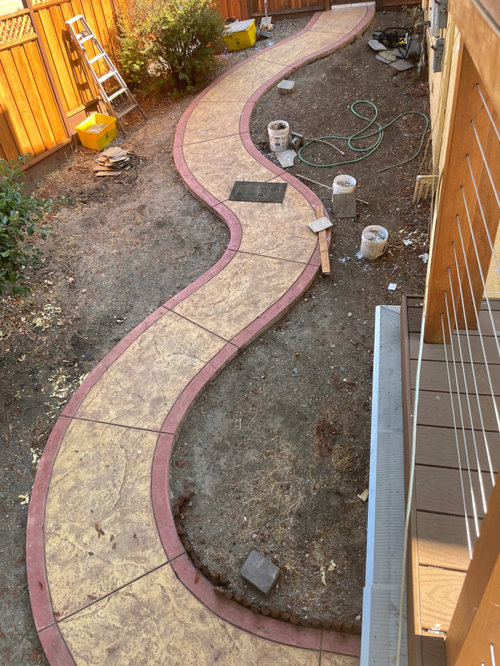
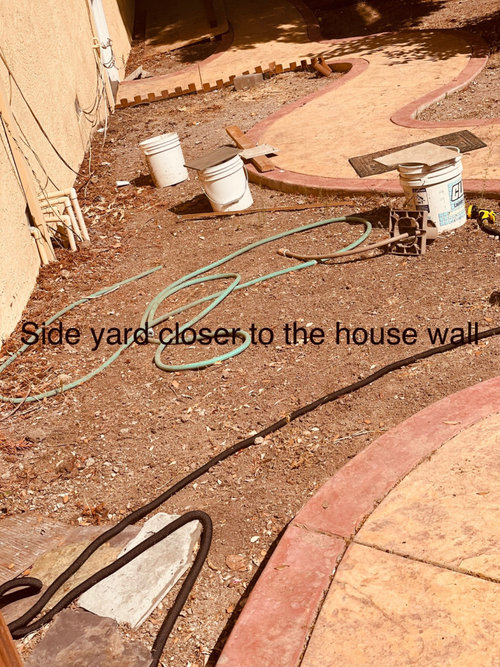
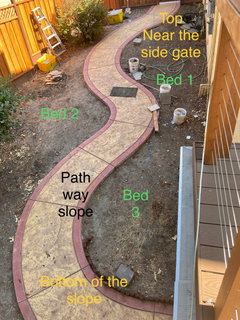
Looking to design raised beds for vegetable growing. This a sloped area, that gets 4-5 hours of direct sun. Do not like rectangular or square shapes of beds. Trying to go with the appropriate shape of beds to match the curvy path in between. Hope you get my vision. How would you design here? Please advice.
Thanks 🙏

Comments (44)

  • 5 years ago

    ^^ My thoughts exactly. Raised beds - with sides - do not lend themselves to other than very basic, usually rectangular, shapes. Corten steel might work ($$) but I'm not sure even CMU's or retaining wall blocks can be adapted easily to those tight curves.

  • 5 years ago

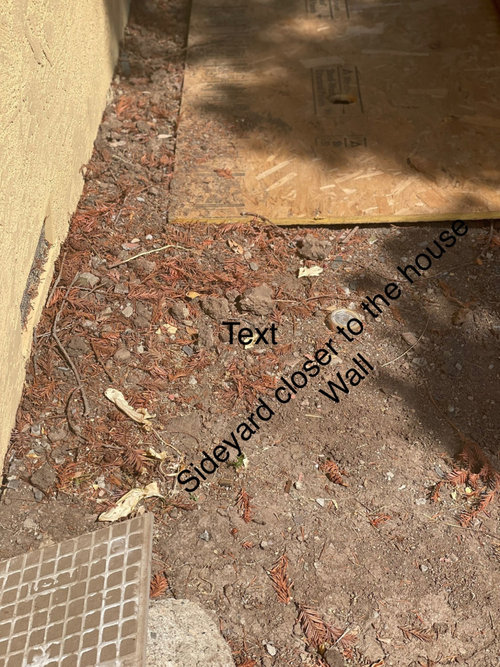
    Soil is compact and top layers have eroded because of slopes. How do go about mending the soil?

  • 5 years ago

    The curvy path was designed to "fill space". Your problem now is that you don't have a lot of contiguous space to work with. Horticulturally, plants won't care if they're in an oddly shaped raised bed but, as noted, curvy raised beds are going to be hard to build. Retaining wall blocks can be laid out in patterns, but they will join at an edge, and not at a full side, so sealing the walls properly might be difficult.

  • 5 years ago

    Those galvanized metal troughs could work but aesthetically, may not be what you’re looking for. They do come in a lot of sizes…

  • 5 years ago

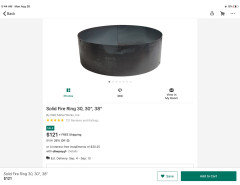
    I have been thinking about using these fire rings for raised beds, myself. I cannot see to get a link on it though. Look up “solid metal fire ring” in Houzz shopping.

  • 5 years ago

    They are steel (will develop patina) and are bottomless.

  • PRO
    5 years ago

    I don't see the point of the curvy path it is convoluted for some reason I am not seeing As for the beds you are pretty much now forced to do shapes that fit the path and that says custom so probably the corten steel idea and not cheap.A raised garden bed IMO needs to be at least 2ft. tall and a bit higher is better for actual use . IMO just redo the soil and plant in the ground at this stage. Ammneding the soil will require digging it out , you might find some info about double digging helpful it is used for redoing old beds . I honestly would straighten out the path and do proper rectangular beds.

  • 5 years ago

    +1 for amending the soil and planting in the ground. Amend by digging out 6” down, layer on cardboard for weed blocking, filling in with compost, adding seaweed fertilizer (I love Neptune concentrate) and bloodmeal. They don’t smell good but the scent goes away after a few days. Then plant and mulch with leaf mold compost. Mix in flowers that will attract pollinators alongside your veggies.

  • 5 years ago

    How much food do you want to plant and what do you have in mind for the rest of the space?


    I might think about a variety of pots and containers for the vegetables and a no mow lawn of some sort so I wouldn't have to mow around the curves and containers.


    I only grow some herbs and tomatoes, but really like having them in containers. Since I'm only doing a small amount of plants I can toss the dirt that is in smaller containers and easily amend the dirt in larger containers.


    https://savvygardening.com/patio-vegetable-garden/

  • 5 years ago

    Most vegetables want full sun. Maybe not the best spot for them.

  • 5 years ago

    Hi Callirhoe

    This is the only area for vegetable growing. My only option

  • 5 years ago

    That sun exposure is suitable for root vegetables and greens.

  • 5 years ago
    last modified: 5 years ago

    The curvy path is unfortunate. My first choice would be to remove it. It looks contrived, the curves serve no purpose other than taking up valuable growing space and making navigation harder (think loaded wheelbarrows, etc.).

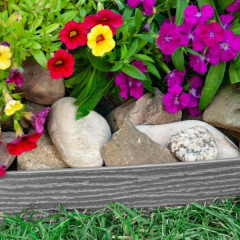
    If you have to live with it, you can try some tall, flexible plastic edging. It's not pretty but will elevate the soil level a bit. If you can anchor it properly...


  • 5 years ago

    Is the edging tall? Plastic edging should be common and easily available?

  • 5 years ago

    Where are you located and what veggies do you hope to grow?

    tj

  • 5 years ago

    I am in Northern California and would like to grow heirloom tomatoes
    Asian vegetables
    Cucumbers
    Herbs etc

  • 5 years ago
    last modified: 5 years ago

    I suggest you research those vegetables and their preferred growing conditions. Such endevours require forethought and planning to avoid unecessary expense, time and frustration. Landscaping, hardscaping in particular, should be installed with an overall plan in mind.

    You need to do some reading.

  • 5 years ago

    We will take a look

  • 5 years ago

    If you like the curves, keep them and use at least one space beside the meandering path for a tiny patio -- if only for a small table and a pair of chairs -- so you can enjoy your garden.

  • 5 years ago

    Great idea

  • 5 years ago

    4-5 hours of direct sun is OK for these veggies. You won't get optimal productivity, but you will get vegetables. Again, the purpose of the curved walkway is entirely clear. It is intended to fill space. That is, if you want to make a walkway look "big", you make it curved. I agree that improving the soil and just planting in the ground is the best way to start. Doing that, you'll get a feeling for how suitable the location is and, if it works for you, you can get more elegant with a raised bed.

  • 5 years ago

    I love your idea, of planting vegetables first directly into the soil. Since it is a sloped bed, a little difficult to walk up and down and garden. The middle path is created to have a wheelchair go up and down, earlier there were steps here.

  • 5 years ago

    So in your first pic, the top of the slope is at the bottom of the pic and it slopes down from there?

    tj

  • 5 years ago

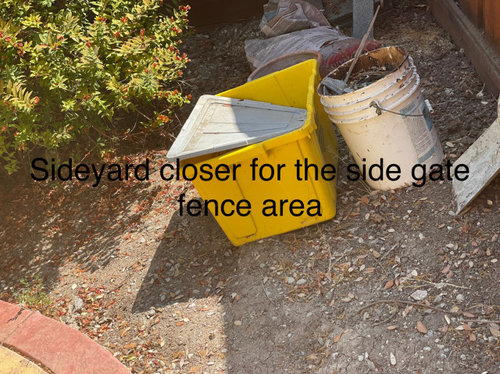
    Let me know if you can see my labeled picture

  • 5 years ago

    Ah! If you need the veggies to be wheelchair accessible then we are talking about different kinds of planting and perhaps taller pots closer to the path will be better and easily reached. Forget about amending the soil to the level i suggested earlier (though new plants will love compost). You could dig out just a couple inches and a little more where you put things like evergreen shrubs then mulch well as I suggest above. Pots with high quality soil can be scattered close to the edge of the path and plantings can vary as you’d like. This is a fun project and I look forward to seeing how it progresses! If you only need one of the beds accessible then figure out what you’d like to plant there so everyone can enjoy and participate. Tomatoes really like more sun than 4-5 hours a day (perhaps a small cherry variety could work?). Those can go in the ground and are reachable by a variety of heights.

  • 5 years ago

    And it appears you have a water supply line near the gate, correct? Keeping the plants lower to the ground there (ones that like wet feet) is a good idea so when water spills drips etc, you won’t have a soggy mess.

  • 5 years ago

    Yes water supply is up on top on the RHS. You are very observant.

  • 5 years ago

    Hi Sarah

    Right now I am active and not in a wheelchair. I am thinking ahead, we got a wheel chair access to a downstairs bedroom from the garage on this slope. Although now we think it is a bit too steep, might need railings one day.
    Any way coming back to gardening possibilities, I could either get raised beds of wood, table type with legs, or metal troughs, corrugated metal sheets , something easily reachable and walkable stepping stones in between. Flowers which are good companions to vegetables along the borders.

  • 5 years ago

    I have looked at core ten metal edging, very expensive. Similar idea is what I would like but cheaper alternative

  • 5 years ago

    The suggestion was made to use large containers. Especially for a sloped bed, that should work well. If eventually you want to make real raised beds, just dump out the containers into them. Now, you won't have as many square feet with containers as you would if you planted them in the soil, but again, you could use them to assess the site to see whether it is really worth it to go whole hog with a large raised bed there. One option is a cheap plastic garbage pail. You might chop it off to be half-height, drill some drainage holes, and you're ready to go. Not very pretty, but inexpensive and highly functional.

  • 5 years ago

    Yes, I could consider large troughs and big containers for raised beds

  • 5 years ago

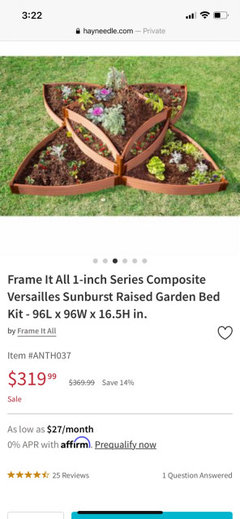
    Found this type of a raised bed , which is not rectangular or square! May be different sections of these could work?

  • 5 years ago

    You can also hang planters and brackets for baskets from a fence or post -- the post part of the fence or free standing post. If you find a really large wide Christmas tree stand those could well be an inexpensive way to hold a 4"x4" post (or a pipe with four brackets for hanging baskets) -- and you can move such free standing posts with the sun as needed.


    I have several of larger stands made similar to this one that are sized with four "feet" about 16" long to hold and balance a six foot post with four brackets -- just make sure you balance the weight. I cut the feet and nailed them directly to the post rather than connecting the boards first.


    https://www.youtube.com/watch?v=A9aMQZENVp0


    There is a wide price range for brackets:


    https://www.amazon.com/Hanging-Basket-Bracket-Swivel-Hook/dp/B01N7ZHXI7


    https://www.walmart.com/ip/Hanging-Basket-Brackets-Black-Wall-Hanging-Hooks-2-Pack-12-inch-Iron-Wall-Hanging-Basket-Stand-Hooks-for-Bird-Feeders-Plants-Lanterns-Wind-Chimes/678141581


  • 5 years ago

    A few thoughts from my own experience gardening on a slope.


    Made a traditional raised bed on a slope - meaning the top edge of the 2' deep bed ran parallel to the sloped ground, meaning the bed was also sloped. With each rain or watering, soil eroded downhill, leaving the top of the bed bare and the bottom with soil overflowing the bed wall. It was a constant PITA to keep hauling displaced soil back uphill. Lots of plants didn't thrive (roots constantly getting exposed, etc.) or outright failed. I work FT and don't have time to toil in the yard everyday so this was an exhausting garden. I suppose the severity of this issue will depend on your slope grade and how much soil runs downhill.


    Next year, did several containers (in the same spot, right on top of the bed), mostly at the top of the slope with some in-ground plants towards the bottom. Low growing (squash, etc.) were fine but tall ones like tomatoes and peppers ended up constantly tipping over, towards downhill, due to the containers getting top heavy and leaning on a slope. This happened even with large, wide bottom containers. Once the plants got tall, even a slight thunderstorm wind would blow the containers over since they were already leaning downhill. Shimming them with paving stones helped some, to make them sit more level.


    Third year, built the raised bed wall taller and taller as it went downhill, so the bottom of the slope was tall enough that when filled with soil, the top of the bed was level. (Think: retaining wall on a slope where the height of the wall differs along the hill so the ground remains flat on top.) This solved the downhill erosion issue but the whole experience was tons more work than anticipated. I'm no engineer - I had zero forethought about how things would work on a slope.


    What if, you made mini-tiers throughout the beds, to accommodate for the gradation of the slope? I grew up in a home with a steep sloped yard and it was tiered (with simple cinderblocks) so each tier had a flat surface. We combined veggies, herbs, cutting flowers, roses, annuals, perennials, evergreens in each area. Each tier had a mixture of plants year round instead of a dedicated "veggie bed." To this day, my veggies are tucked in-ground and in containers all throughout the yard. There is no dedicated vegetable garden or flower garden. And there are very few straight edges - I just let the plants curve here and there organically.


    BTW, love the curved path for the aesthetics!


    Sorry so long-winded. Good luck!

  • 5 years ago

    You're going to be limited by 4 -5 hours of sun. Is that consistent throughout the year, or is that in the summer? If it's less in the winter, you may be better off with ornamental shade plants. A pollinator garden would be beautiful alongside your curved path.

  • 5 years ago

    Your meandering path is beautiful. It's easy to visualize beds in each curve of your path. Where is the line between 'raised' bed and container gardening? I have never seen a made from scratch curved container garden. Large barrels/tubs would be the only curved material I can think of...animal troughs etc. I don't sense a slope so I am not really sure what the issue about tiered is.

  • 5 years ago

    Grow an assortment of vegetables in pots/tubs in the area to see what works with so little sun.


    I'm afraid you will be disappointed, but find out before you do anything on a larger scale.

  • 5 years ago

    https://www.burpee.com/gardening-supplies/containers-raised-beds/


    They have round planters and other elevated raised planters, as well as normal raised beds. You could try to find an old whiskey barrel.

  • 5 years ago
  • 5 years ago

    I also love curving lines in my garden, and made curving raised beds inside my greenhouse. My land produces a lot of stones (like, A LOT!) so I made my raised bed edges with stones, with help from two friends who were interested in trying a little masonry. We just used mud mortar, no cement. I'm very happy with them. They vary from about 12 to 18 inches high. Red bricks, cinderblocks, or cobblestones would also work but ngl it's a lot of work -- I think my back improved from the lifting that month, but it could have gone another way...


    For the slope issue, I think basic terracing would be best, so that each bed area has a flat surface. You can make the terrace borders also curved with nice segue or intersections with the path. I think it will be lovely. I grow vegetables and flowers, annuals and perennials, all kind of mixed together. I mulch heavily and grow annuals around perennials (such as grapes, asparagus, NZ spinach, herbs) until the perennials take the space.

  • 5 years ago

    High cold desert, could you please share pictures! Sounds like a great projrct