Software
Houzz Logo Print
ghibie19

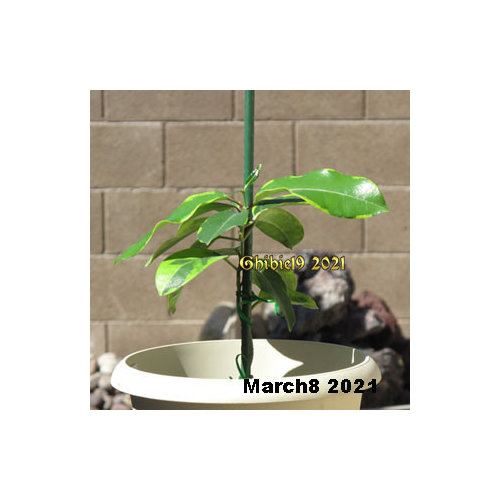
Inconsistent ‘Leaves’ growing Stephanotis.

4 years ago
last modified: 4 years ago
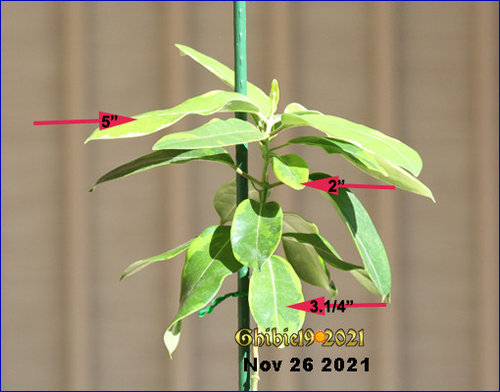
It’s so very weird with this Stephanotis!

I purchased this plant from Sheni’s Crystal in the spring of 2020 and I have not yet come across her to ask for her insight.

As you can see from the few pictures below. While the spacing of the leave internodes remains consistent, I’m stumped with how some of the leaves are small and yet a few are very large.

Has anyone else out there experienced the same? Is it possible or how can this growing leave mystery be corrected?


Comments (5)

  • 4 years ago

    why is it so low in the pot?


    if you tip it out.. what do the roots look like? .. what is the media? .. how do you water ... is there a drain hole???? .. does sun reflect off that wall .. does the pot heat up ... is it sitting on top of stone that also reflects and hold the heat ...


    you havent given us many facts to work with ....


    looks like a nutrient issue ... are you fert'g it at all??


    are we supposed to know the seller or owner???


    ken

    Ghibie19 thanked ken_adrian Adrian MI cold Z5
  • 4 years ago

    is that a typo.. or have you had it since 2011??? ... have you repotted it in the last decade ... im betting its a typo ... based on the size of the plant ...


    ken

    Ghibie19 thanked ken_adrian Adrian MI cold Z5
  • 4 years ago
    last modified: 4 years ago
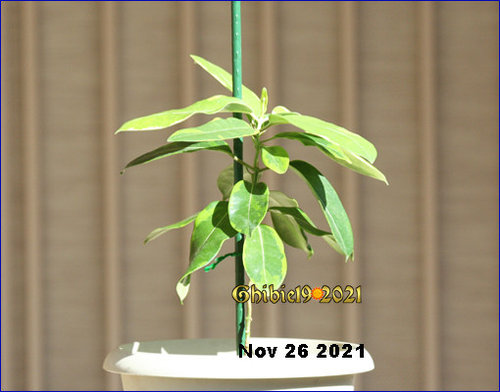
    To me, it looks like the internodes vary fairly significantly in length, but I don't have the benefit of having the tree in front of me.

    Trees are always reacting to environmental stimuli and their own chemical messengers in order to make the most economical use of resources and to keep their systems balanced. Sometimes, as in trees of the Mulberry Family which includes Ficus, leaves are genetically programed so each leaf will be larger than the last as the leaves appear along any given branch.

    The leaves of your tree vary significantly in size because the amount of water and (therefore) nutrients they received while the leaf was maturing was inconsistent.

    The parts of a tree that call for energy are called sinks, and the sinks are not created equal. In fact they are arranged in this pecking order, starting with the strongest: Energy is first allocated to respiratory function, i.e. to maintenance of living tissues, then, to production of fine roots, followed by flower and seed/fruit production, then primary growth (extension of both roots and shoots), then secondary growth (thickening), and finally, the synthesis of defensive chemicals. When a grower over or under-waters, the tree reacts as though it is facing a drought. Under-watering creates an actual shortage of water (and a drought response), while over-watering reduces the amount of oxygen in the grow medium which limits root function and roots' ability to move water efficiently, resulting in the same drought response symptoms we see when we under-water. As the tree's chemical messengers tell plant central that water is getting to be hard to come by, the initial reaction is to satisfy the energy needs of the roots, a stronger energy sink than primary growth. An outgrowth of this survival strategy is a change in the amount of resources available for leaf expansion. Not surprisingly, a reduction in leaf size limits transpirational and evaporative water loss through foliage. Should the over/ under-watering become serious, flow of another chemical messenger (auxin) produced in the growing tips of branches diminishes. This causes an abscission layer to form at the point where the leaf is attached to the branch (abscission = shedding) This effectively walls off the leaf so water cannot enter the leaf and be lost to the air. At some point not long after the abscission layer is complete, the leaf will be shed, falling from the tree due to wind, rain, or nothing more than its own weight.

    Interesting question - first time I've seen it asked.

    Al

    Ghibie19 thanked tapla (mid-Michigan, USDA z5b-6a)
  • 4 years ago

    Thank you Al Tapla

    I am learning significantly reading your explanation of what/how water transpires. Thank you.

    This plant is still in the original mix from the seller, even though I have potted it up to the larger container. Sheni provided me with the free mix and told me to repot into a larger container by just adding the soil she provided. The soil appears to be very easily moistened, but is still fast draining, even after drying out a bit and it appears to last longer between watering’s.

    At the time of purchasing this plant, Sheni had two more luscious plants in five gallon containers. I spent quite a bit of time debating whether to buy the five gallon one. I opted on this smaller one because it was the first time I had ever seen this plant and was really afraid of losing it.

    The plant has lost all four pair of its original leaves which weren’t non-uniform growing.

    Should I put the watering schedule on a timing interval, say like every 5─6 days instead of watering when the soil dries out?

  • 4 years ago

    Should I put the watering schedule on a timing interval, say like every 5─6 days instead of watering when the soil dries out? Unless you're using a medium that holds no (or precious little) water between soil particles, you'll find it's much better to water on an 'as needed' basis, making allowances for the influences of weather, light, and any other influence that impacts the amount of water a planting uses over time. From the plant's perspective, or looking at things from the POV of what's best for the plant, watering on a schedule is far more likely to lead to greater loss of your plants' potential than watering on an 'as needed' basis, ideally pulling the trigger on the watering can just before a diminishing water supply shows up as stressful to roots. Of course you'll likely not be able to determine perfectly when that occurs, but watering most plants when a wooden tell, pushed through the soil to the bottom of the pot, comes out not quite dry. A "tell" is more accurate and reliable than your own personal digital device (finger) or inexpensive water meters.

    For the most part, growers who suggest that you "water when the top inch or two of the soil is dry" are instructing other growers to over-water, i.e. unless the pot is 5" deep or less. In a 10" pot where the top 2 inches of the soil are dry, the bottom 6" can easily be (and often are) still 100% saturated with water. Prolonged periods of soil saturation kills the fine roots which do nearly all the plant's heavy lifting in terms of supplying water/nutrients. When this occurs, chemical messengers inform plant central that more roots are needed before the root system will be able to support additional top growth. Then, as the soil dries down and the volume of new hair-roots is approaching the point where top growth can once again begin, the grower waters and the cycle starts over again. This cyclic death and regeneration of roots caused by inappropriate watering can rob plants of nearly ALL of their potential growth, vitality, and ability to protect themselves against disease pathogens and insect herbivory.

    Best way to water: Water until you are sure the entire soil column is holding as much water as it can hold and at least 20% of the total volume of water applied has flushed through the soil and exited the drain. There should be NO pathway by which water, once having exited the pot via the drain hole, can make it's way back into the pot; so, the bottom of the pot should always be above the the bottom of the collection saucer.

    If the pot is manageable, tipping it at a 45* angle will remove a considerable amount of excess water from water-retentive media. Compare B to A below.

    If your planting is of a manageable size and you happen to be using a water-retentive medium, you can use Newton's First Law of Motion to your extreme advantage, thereby ridding the planting of ALL excess water. This can be a real game changer for easy to manage plantings.

    More re using a "tell" and to monitor moisture levels and Newton's First Law to remove excess water from plantings:

    Using a 'tell'

    Over-watering saps vitality and is one of the most common plant assassins, so learning to avoid it is worth the small effort. Plants make and store their own energy source – photosynthate - (sugar/glucose). Functioning roots need energy to drive their metabolic processes, and in order to get it, they use oxygen to burn (oxidize) their food. From this, we can see that terrestrial plants need plenty of air (oxygen) in the soil to drive root function. Many off-the-shelf soils hold too much water and not enough air to support the kind of root health most growers would like to see; and, a healthy root system is a prerequisite to a healthy plant.

    Watering in small sips leads to avoid over-watering leads to a residual build-up of dissolved solids (salts) in the soil from tapwater and fertilizer solutions, which limits a plant's ability to absorb water – so watering in sips simply moves us to the other horn of a dilemma. It creates another problem that requires resolution. Better, would be to simply adopt a soil that drains well enough to allow watering to beyond the saturation point, so we're flushing the soil of accumulating dissolved solids whenever we water; this, w/o the plant being forced to pay a tax in the form of reduced vitality, due to prolong periods of soil saturation. Sometimes, though, that's not a course we can immediately steer, which makes controlling how often we water a very important factor.

    In many cases, we can judge whether or not a planting needs watering by hefting the pot. This is especially true if the pot is made from light material, like plastic, but doesn't work (as) well when the pot is made from heavier material, like clay, or when the size/weight of the pot precludes grabbing it with one hand to judge its weight and gauge the need for water.

    Fingers stuck an inch or two into the soil work ok for shallow pots, but not for deep pots. Deep pots might have 3 or more inches of soil that feels totally dry, while the lower several inches of the soil is 100% saturated. Obviously, the lack of oxygen in the root zone situation can wreak havoc with root health and cause the loss of a very notable measure of your plant's potential. Inexpensive watering meters don't even measure moisture levels, they measure electrical conductivity. Clean the tip and insert it into a cup of distilled water and witness the fact it reads 'DRY'.

    One of the most reliable methods of checking a planting's need for water is using a 'tell'. You can use a bamboo skewer in a pinch, but a wooden dowel rod of about 5/16” (75-85mm) would work better. They usually come 48” (120cm) long and can usually be cut in half and serve as a pair. Sharpen all 4 ends in a pencil sharpener and slightly blunt the tip so it's about the diameter of the head on a straight pin. Push the wooden tell deep into the soil. Don't worry, it won't harm the root system. If the plant is quite root-bound, you might need to try several places until you find one where you can push it all the way to the pot's bottom. Leave it a few seconds, then withdraw it and inspect the tip for moisture. For most plantings, withhold water until the tell comes out dry or nearly so. If you see signs of wilting, adjust the interval between waterings so drought stress isn't a recurring issue.

    Newton's First Law

    For conventional container culture, it's a given that saturated/partially saturated media rob roots of the oxygen they need to function normally and efficiently. At best, soil saturation robs your plants of immense measure of potential in areas like growth, appearance, yields, ….. At worst, plants unable to cope with the strain of drought stress caused by saturated media will succumb to it. This isn't a 'scare tactic, it's a very simple and straightforward observation that will be difficult to disagree with a straight face.

    Newton's First Law of Motion states that an object will remain either at rest, or in motion at a uniform rate and in a straight line unless acted upon by an external offsetting force. In this case, we will designate the 'object' as excess water in your potting medium. At risk of my being redundant, the 'law' can be seen as a simple statement about inertia, that objects will remain in motion and in a straight line unless a force acts to change the motion. To put the law to work for you/your plantings, you should water to beyond the point of total soil saturation - so the medium has been completely saturated and at least 15-20% of the water you have applied has exited the pot. Unless your soil is purposefully constructed to eliminate all/nearly all excess water, it's extremely probable, when the pot has stopped draining, there will be too much water in the potting medium for the plants' liking.

    To eliminate this excess water: immediately after a thorough watering, hold the pot in one hand over the sink, lawn, or over-sleeping significant other and move it downward, then sharply reverse the direction to upward. You'll immediately note that a good measure of 'excess' water will “continue downward in a straight line” and exit the drain hole. The sharper the reversal of direction, the more water exits the drain hole. When you have repeated the exercise until water no longer exits the drain hole on the reversal of direction, you will have eliminated all excess water and your plants will regard you with a newfound sense of awe.

    Al

    Ghibie19 thanked tapla (mid-Michigan, USDA z5b-6a)