Software
Houzz Logo Print
socks12345

First harvest of compost

4 years ago
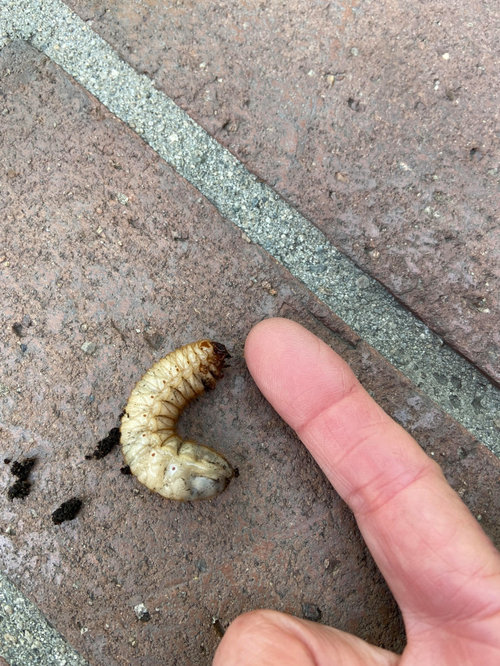
I set up my bin in the summer and harvested some compost from the bottom today. Compost looked ok but there was a bumper crop of the grubs pictured below. I wonder if I use this compost I'll be introducing more problems into the garden.


Comments (16)

  • 4 years ago

    It looks too big and has wrong markings for BSF imo. Looks more like a beetle larva. But anyhow, if you spread the compost you will be changing the conditions which spawned it and birds and the weather will put paid to it.

    socks thanked floral_uk z.8/9 SW UK
  • 4 years ago

    I agree, floral. (I've had soldiers before, and they are smaller and more stripey. Also not found so solitary like these are. I had them in clumpy masses in a bin.) Thanks.

  • 4 years ago

    I'm struck by how alike our index fingers look. Congratulations on the first batch. You don't have chickens, do you? They'd sift through that compost in a heartbeat.

    socks thanked annpat
  • 4 years ago

    Could be a June bug. Not a Japanese beetle, it would be orangish on one end. Those should be murdered on sight.

    socks thanked toxcrusadr
  • 4 years ago

    Ann, that's funny! Did you think you posted something when you were sleepwalking and didn't remember?


    Tox....you could be right as we do have June bugs. I'll look up the images of the larva for June bugs. I didn't know Juen bugs are unwanted, but I have been squashing them just in case. No chickens, but we have crows and jays who would love them, but none just standing for a handout and I'm not going to let them loose and hope some bird finds them. Thanks for the suggestion.

  • 4 years ago

    Similar grubs are often in my manure pile and compost, or even in the garden soil where I've enriched it a lot. I think these are what Americans generally call June bugs, but probably not the exact species, but anyway the family is chafer beetles. The grubs we get here don't seem to damage plant roots, and they do seem to eat and process manure, so I guess they're beneficial. But I don't like the large bumbling adult beetles that fly around and bump into things, so when I find the grubs I usually fling them out on the ground, and magpies come and eat them.

    socks thanked HighColdDesert
  • 4 years ago

    It’s a chafer. probably a cockchafer.

  • 4 years ago

    That is a grub. Grubs destroy roots of plants.

    must be controlled early spring to not grow to be beetles that will feed on plant leaves. Research ”grubs”

  • 4 years ago

    Not all grubs are damaging or eat plant roots. Predaceous ground beetles produce larvae that looks very similar and they are beneficial insects. And some 2000 species are native to the US. The point being - identify the culprit before you do a wholesale mass slaughter. Not all grubs are bad!!

    socks thanked gardengal48 (PNW Z8/9)
  • 4 years ago

    I agree with one of the readers above. I fling them out, calling to any bird in the area that I have found a "grub", regardless of species!

  • 4 years ago

    I've always felt this way, really, but now, like many backyard beekeepers, I've especially decided that almost any issue my plants and garden experience, should be left mostly unaddressed. I'm not on the garden tour route, and I don't need to depend on the food I raise, so it's arrogance to think that my gardening is a crucial situation. I believe that the enviromental "plan" was designed to be a successful, self-sustaining system---beneficials in a prevailing, often symbiotic, relationship with pests. I think when humans decided to deal with the pests heavyhandedly, they upset the apple cart. I don't think the trend toward zapping and eliminating links on feed chains can be slowed much, but I can do a tiny thing in my own yard.

  • 4 years ago

    I agree annpat. If I see what may be a harmful bug, I look at what it's doing, and if there isn't major damage, why bother it? If there aren't lawn or plant problems that are related to grub damage, then there's no need for a wholesale response.


    We had Japanese beetles infesting our linden tree several years back. Invasive exotic, and ravenous. We fought them hard. Eventually the tree died. I will still kill a Japanese beetle or grub if I see one, but they're hardly around now. They just really wanted to eat that tree, and then they went back to being an occasional sight around the place. Despite the mass attack, I never did really see much damage to the lawn from them. Moles eat them, and we seem to have plenty of those, since all the neighbors are loading up their lawns with chemicals and chasing them over to our place. I think we need a cat. :-]


  • 4 years ago

    There are bugs......and then there are exotic, non-native invasive species of bugs that really do need to be controlled, if not eliminated. Japanese beetles would be included in that category as they can be extremely damaging to both crops and ornamentals and have few native predators.

    WA state has previously been fortunate enough to escape their predation but the nasty little buggers are moving west!! Only 3 found a couple of years ago but numbering in the thousands only a year later!! Yikes!

  • 4 years ago

    Now and then I'll see a crowd of them feasting on something, and that's when I get out a spray bottle of the nuclear option and go to town on them. Little green b@$t@rd$.

  • 4 years ago

    I'm not live and let live, mind you, but all my battles are waged hand-to-hand. There will be a soapy end, for instance, to any brown tail moths and their offspring that I encounter this year no matter how tasty they may be to birds and other things I like. I no longer grow things that attract Japanese Beetles to my yard---no Oriental lilies. Nothing in my own yard is so precious, I had to admit, that it would warrant anything with reaching negative consequences.

Sponsored
Peabody Landscape Group
Average rating: 3.5 out of 5 stars8 Reviews
Franklin County's Reliable Landscape Design & Contracting