Software
Houzz Logo Print
xiaoyi_sheng

Hot water recirculating pump

4 years ago
Hi,
I would like to install a hot water recirculation pump as it takes quite a long time to get hot water on my 2nd floor.
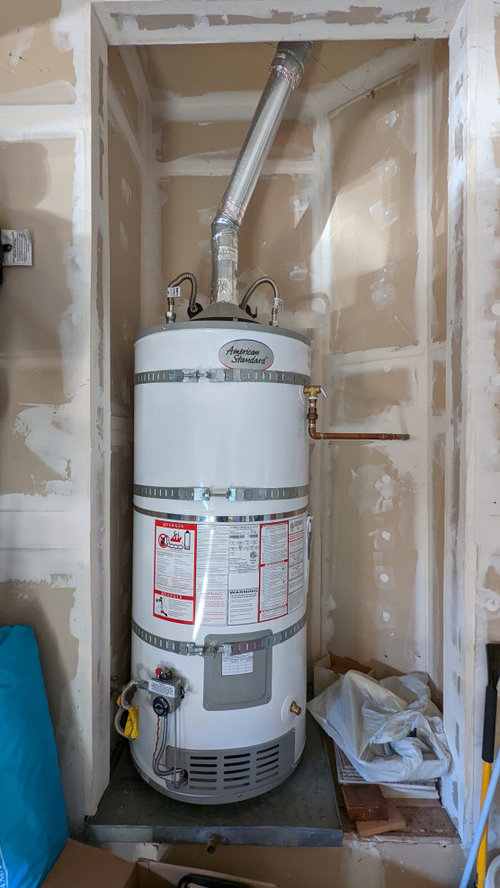
I have a tanked water heater as shown on the picture. I have a few questions:
1. What kind of pump would be the most recommended? Would a pump on the water heater with a programmable smart plug be the most recommended?
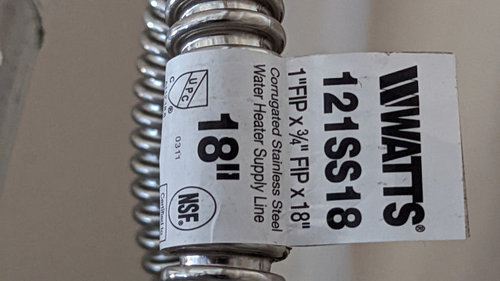
2. If I need to install the pump at the heater, what's the size of the pipe for the pump? My pipe says 1"FIP x 3/4"FIP x 18".
3. What's the best material to insulate the hot and cold water pipes attached to the tank? They seem to be quite close to the exhaust and I heard you cannot use foam in this case?
Thanks!

Comments (17)

  • 4 years ago

    You probably want something like this;


    Taco - SmartPlus-e ECM High-Efficiency Instant Hot Water System


    IMPO


    SR

  • 4 years ago
    last modified: 4 years ago

    Before you spend money on a recirculating pump and the additional energy it uses, you should investigate why the problem is occurring. Here are some questions:

    How many feet of pipe does the hot water travel? If the hot water heater is in an unheated space how cold does it get? How old is the hot water heater? Does the hot water pipe travel through unheated space? When was the last time the hot water heater was flushed? What is the temperature setting of the hot water heater? What is the temperature of the hot water on the second floor? Have you verified the cold water pipe is connected to the cold water inlet on the water heater?

    Finally how long is "quite a long time"?

  • 4 years ago
  • 4 years ago

    Stax, that product appears to be what I described (and suggested as a sub-optimal approach) = it's a pump that pulls water from the hot water pipe and puts it into the cold water system. You may not like the taste of the cold water in houses that have that.

  • 4 years ago

    I noticed that there is already a Watts Premier Sensor Valve installed in one of the master bathroom sink: shorturl.at/cesuF. So I assume the original house owner used such a system from Watts. I'm going to try to install such a system and see if it's going to help.


    The water heater is in the garage downstairs with no heating. It's about 6 months old. Not sure the water pipe path so plan to have a smart plug to run the system on demand only to minimize the recirculation needed.

  • 4 years ago

    Fill a glass with warm or hot water, let it cool, and than taste it.

    If you don't like the taste, the "Sub Optimal" description is valid. If it tastes fine, as I suspect, well, look at the suggestions re a recirc pump at the remote bathroom and save a ton of money.

  • 4 years ago

    Thanks for the suggestions. I only drink water from filter in my fridge, which helps to get rid of the taste from tap water a lot. Hopefully it would help with water from heater as well.


    The recirc system under the sink requires power supply there, which I don't have. So I will go with the pump installed at the heater, which I can use an extension cord to get power from a nearby outlet.


    Will report on how things work when I get the system set up.

  • 4 years ago

    I'm interested in what is described as the "optimal" system, as I do have to let the hot water run awhile before it becomes hot. My problem is that my wife objects to letting the water run so long, because it's wasteful. I think it would be fairly easy, because the kitchen sink (which is the primary issue) is on the first floor and I have an open basement with easy access to under the kitchen cabinets, and the DHW heater Is about 50 feet away. How much energy would the pump consume? I assume it would be running continuously which, in itself, is wasteful and, perhaps, noisy. To answer Mike_home's statement, the basement is heated, so the water in the pipe starts out at ~70°.

  • 4 years ago

    The pump itself does not consume much energy. One of the Amazon answers stated the pump draws 0.22 amp which is about 26 W of power. I would think most of the consumed energy is keeping the hot water sitting in the supply pipe at 95 F degrees. That is why the pump has a timer to limit the time of hot water circulation. A kitchen faucet is used practically the whole day. So the time would have to be set to run from early in the morning until late a night. I think this system is more about convenience of not having to wait for hot water than saving money.

    I would be concerned how long the recirculating pump will last. When the sensing valve is closed, and the pump is running, the pump is trying to push against a closed system. It must have a pressure sensor to keep from burning up. It also seems like a small pump to push water from the basement up to the second floor of a house.

    Mtvhike,

    If most of the hot water pipe is exposed in the basement, then try installing foam insulation to slow down the heat loss. It is not the perfect solution, but it may decrease the wait time.

  • 4 years ago

    The plan I have is to install a smart plug with a smart button (I ordered this) that can be programed to run the pump for a few mins just to get the hot water available when clicked. This way the pump will only need to run when you need to use hot water to minimize energy consumption on keeping water hot in the pipes as well as the pump running.

  • 4 years ago

    Does the pump you envision at the heater require a third (new) pipe be run to the remote bath?

  • PRO
    4 years ago

    I'm with Stax on this one. Unless you have a recirc line, the pump won't do any good.

  • 4 years ago

    I have the Watts Premier Sensor Valve installed in one of the master bathroom sink: shorturl.at/cesuF. This creates a circle as far as I know.

  • PRO
    4 years ago

    Based on the components you've selected, you'll be using the cold water line for a return line. It's a significant compromise compared with installing a dedicated return line, but retrofit applications typically involve compromises. The temperature of your cold water will vary. Some people find that objectionable.

  • 4 years ago

    Reporting back on how the system has worked for me so far. I set up a Google Assistant routine to turn on the smart plug connected to the hot water pump for 10 mins and turn it off automatically. The hot water comes out pretty fast after the 10 mins. I tried shorter times like 5 mins but I still need to wait for some time before hot water can come out of the furthest faucet of the house.


    With this setup, I just need to tell Google Assistant to turn on hot water when I wake up, before shower and before bedtime. It's pretty convenient.


    Watts manual suggested that the water flow might be too small with a single valve which can result in hot water coming in slow. I plan to install another hot water sensor valve in the sink next to it to see if that can speed up the hot water availability.

  • 4 years ago

    Adding the second hot water sensor valve did allow the hot water to come in much faster.

Sponsored
Mary Shipley Interiors
Average rating: 4.8 out of 5 stars34 Reviews
Columbus OH Premier Interior Designer 10x Best of Houzz