Software
Houzz Logo Print
need2seegreen

for cutting, why do we leave the rose on?

hello all!


Just out of curiosity, how come it is (sometimes?) thought that it is best to leave a rose on the bush, until it is past flowering, before using the stem to make a cutting?


I would expect that there is some type of plant hormone that makes it bloom - but how come I want to wait? Or is it a different substance that enhances the rooting of the cutting? (I am getting a book out of the library that may shed some light, but I was just wondering what people here think.)


I am wondering if I can have the rose inside, and still try to make a cutting.


I have a day or two to decide - things are slower now that the weather is cool.


All input is appreciated!!

Comments (16)

  • 4 years ago

    The development (and subsequent fading) of the bloom uses energy stored in the stem. That energy is then not available for formation of roots.

  • 4 years ago

    This is so interesting, thanks for starting the topic @Need2SeeGreen 10 (SoCal)

    I would love to understand this too!

    Hmmm, so am I getting this right?

    Per @fig_insanity Z7b E TN the spent bloom stems are just an indicator of the ripeness of stem that would work best, but then according to @jerijen you actually shouldn't take the ones with spent blooms because their energy is gone.

    So, stems that are similar to the ones with blooms, but not actually the ones with blooms work best?


  • 4 years ago
    last modified: 4 years ago

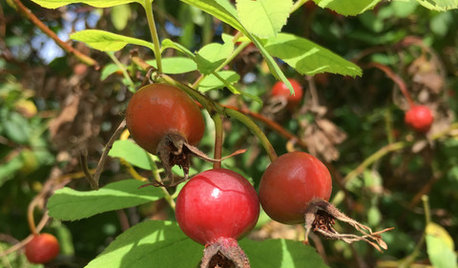
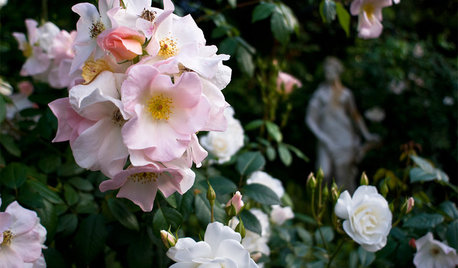
    If using the "spent bloom" indicator, referring to Jeri's post, you DON'T want to wait until hips start to form, which is energy intensive, not to mention that by the time hips form, the material is too mature. The best time is as the bloom fades, but before petal drop (assuming your rose drops it petals. Some don't). For many people, the ease of choosing propagation material (decisions, decisions) more than offsets the slightly lower vigor. Food is continually being sent through the plant, so even though blooming does use a lot of energy, most of that energy is replenished as it's used if food/nutrients are available. That's why we fertilize, lol. That said, you don't want hips to form, as that is a continuing drain on resources.

    Many nurseries even recommend using the spent bloom method for choosing cuttings. I know someone posted a link recently to a propagation video featuring Reverence for Roses, and they specifically mention choosing this type of material. But from experience, I've learned which stems make good cuttings, regardless of whether they've bloomed. You want semi-hardwood, neither soft, nor mature, but more like a plump green bean! If it bends without breaking, it's too soft, if it's at all woody, it's too far gone. Hardwood cuttings do work in certain circumstances, but mostly in cold-weather climates, over winter, and in the ground.

    Also, something I didn't address in the original post: you DON'T keep the spent bloom on the cutting. Always remove the bloom, and any remnant of a developing hip, or the cutting will exhaust all stored energy and kill itself trying to make seeds, instead of forming roots.

  • 4 years ago

    Fig, thanks for your insightful post. Just curious, is it a good idea if I use blind shoots as cuttings?

  • 4 years ago

    Thank you @fig_insanity Z7b E TN , very useful and clear advice!

  • 4 years ago

    Fig_insanity Z7a E TN Best explanation I have read yet. I knew the what, but not the why and was searching for that. I have been afraid to try some of my stems that did not bloom this year (long story) but thought it had to have bloomed. Off to make more cuttings!!!

  • 4 years ago
    last modified: 4 years ago

    @Feiy (PNWZ8b/9a) Sorry, I didn't see your question until just now. I'll have to admit I've not actually tried using blind shoots. Just in case, ya know? lol. But it's my understanding that one of the less common causes of blind shoots is insufficient or out of balance nutrients (the most common cause is late frost in Spring, but that probably doesn't apply to you in Z8). So using blind shoots might affect your rooting percentage. I'd suggest trying a few as an experiment, comparing them to the same number of cuttings made from optimum material. Then let us know how it goes.

    @ann beck (why can't I @ you??? Hmmmm.) Have at it! You can't have too many rose babies, lol. Also, you're on the border of where you can have success with either semi-hardwood or hardwood cuttings. For hardwood cuttings made in early winter, I wound the lower inch or so then just stick the leafless cuttings in the ground (mostly without rooting hormone, but it does help) in semi-shade (when the trees leaf out) and forget about them. Over winter, they form a callus, and then in Spring, they form roots when they start to break dormancy. You can cover them with a bottomless, cap-less plastic bottle if you like, just watch it doesn't overheat in Spring. Nothing could be easier. This works best for roses that enter full dormancy, but it will even work for some teas and chinas.

  • 4 years ago

    Dr. J.H. Nicholas wrote in "A Rose Odyssey" in 1937 that through the use of blind shoots to propagate Hybrid Perpetuals in the US, General Jacqueminot had been nearly destroyed. The HP's in the US tended to be overly vigorous, rangy plants which often ran blind. He visited the nephew of Roussel (the uncle introduced the rose) in France and found through judicious bud selection, he had "refined the variety to almost the quality of a Hybrid Tea", and that sufficient material had been obtained to replace the stock of Jacqueminot at Jackson and Perkins. You CAN use nearly all the material from a plant to reproduce it, but there is, at least, anecdotal evidence that doing so has resulted in degenerative results.


  • 4 years ago

    Interesting!

  • 4 years ago
    last modified: 4 years ago

    @roseseek VERY interesting, Kim. I wonder how much degradation of modern roses is already happening due to the same mistake recurring?

    I actually have "A Rose Odyssey" here somewhere, that I bought at a flea market years (and years) ago. But I've only flipped through it. I need to dig it out.

    And while I have your attention and we're on the subject of cuttings, have you ever seen the the climber 'Dr. J.H. Nicolas'? I've been trying to get my hands on one for even longer than I've owned the book, lol. About 10 years ago I found a lady out in CA who generously sent me cuttings, but that year we had a severe drought and heatwave with multiple days in a row over 100F, which at the time was unheard of here. I lost every cutting I took that year, not just DrJHN. The sweet lady has since passed away, and I don't know of another source.

    Thinking of that rose also makes me mourn Lynette (Old Rosarian) all over again. She used to grow it, and regretted that she left it behind when she moved her garden.

    Dr. J. H. Nicolas

  • 4 years ago

    I found this verrrrry interesting article that seems to support environmental factors as the cause for blind shoots, and that roses propagated from them were supposedly no more prone to more blind shoots themselves than roses propagated from flowering stems. Makes you go "hmmmm".


    "...1995 article in Scientia Horticulturae by Niels Bredmose and Jurgen Hansen of Denmark titled “Regeneration Growth and Flowering of Cut Rose Cultivars as Affected by Propagation Material and Method.” The article reports on an experiment conducted over a period of twenty months in which the authors compared the effects on two different cultivars of propagating flowering shoots versus blind shoots by cutting and grafting.”

    Mr. Martin’s comments continue for several paragraphs, so I’ll summarize some of the content here. The conclusions of the study showed though there was no significant difference in successful rooting percentage for cuttings from blind shoots versus flowering stems, the resulting plants propagated from blind shoots produced better blooms. And, another interesting result of their study was that plants propagated from blind shoots do not necessarily beget more blind shoots than those propagated from flowering stems. This points to the conclusions of many, I think, that blind shoots are not genetically but environmentally promoted."

  • 4 years ago

    Hey, John! Happy Holidays! It's obvious SOME degradation occurs. There have been at least three examples of stronger growing mutations of popular roses with "muddy" colored flowers. All three seem to have been associated with J&P. My take is it's because they actually watched for such things at the time while others likely didn't. French Lace mutated and had really dirty colored flowers. I read years ago it cost them many tens of thousands of dollars to clean that one up. Circus sported to several variations and produced a similar mutation with dirty colored flowers. And, good old Angel Farts. There are two "out there". One is a stronger plant with muddy purple flowers. The other is the weaker plant with the clearer lavender toned blooms. Who has which, I have no idea, but they've been in the marketplace for many years. I can't comment on newer varieties and their potential for such things as I've not bought newer varieties in some years. There have simply been very few newer roses which piqued my interest.


    I haven't seen Dr. J.H. Nicolas, ever. I remember reading of the rose many years ago and found its breeding interesting, mostly because of the Charles P. Kilham seed parent. I grew Georg Arends and it was SO rusty with SO much black spot and mildew, I swore I would NEVER grow anything descended from it. Thankfully, the disease addiction was broken in the cross to get to Pink Favorite. I took a chance on that one because Jack Harkness proclaimed it, "rudely healthy". A "boring rose" from a nurseryman's stand point as it was so perfect, such an easy thing to grow. It was. I'd love to grow it again. But, Nicholas, no sir. I've never physically encountered that rose, anywhere.


    Get out A Rose Odyssey and READ it. It's a great book and will teach you MUCH. Wonderfully "readable". Much more so than his "Rose Manual".


  • 4 years ago

    @fig_insanity Z7b E TN that article supports what I have said for many years. The rose is going to produce what IT requires. Not what YOU want. If it needs more leaves, that's what it is going to make. Nature doesn't waste resources. If the temps aren't warm enough to support the pollinator activity, the rose is unlikely to ovulate. So, what will it do with the energy it needs to expend? Grow blind shoots. If it needs more nutrition to support all of that ovulation, it's going to push more foliage (blind shoots). I've never worried about them. Everything green feeds the plant. You want as many leaves as possible to shield the canes from sun burn (scald) and to feed the organism. Old ARS supported floral research found it required 35 perfect leaves to produce one perfect bloom (of course that was with the specific types studied, but it gives you something to consider). You want a dozen flowers? How many leaves should you encourage? So, if the plant is just pushing leaves when you want flowers, check the temperatures. Are they warm enough to encourage bee activity? Check the fertilizing. Did you give it too much nitrogen? But, don't cut off the blind shoots. They are feeding the plant.

  • 4 years ago
    last modified: 4 years ago

    Wow another great thread!!! I learn so much! I had a mystery in summer with a body bagged Tropicana and Granada, both had no scent at all and both were grafted. I somehow thought the graft might take away the scent and asked numbers of people, when 1 older nurseryman in Hawaii said that he had run into newer Tropicanas without scent, but better disease resistance, he thought that it might have been a sporting thing, but he was sure they had been released to "fix" Tropicana's disease resistance.

    roseseek, I remember when I first heard that mother nature does things for a reason and we need to look for a reason. I think that is the big problem with a regular spray program, that it hides what the rose is trying to tell us. I was shocked that I could actually do something to help my poor rose.....like cutting back on the nitrogen or cutting back on my overwatering and my rose would be healthier. I read so much that I had gotten a bad rose or needed to regularly spray....Now I just focus on being a better detective. AND I figured out my blind shoot issue...high nitrogen without a balance of PK....something our whole area tends toward.


    fig_insanity Z7a E TN Not sure the @ thing. We have had such a weird year, a freeze in Oct, then none until now, so most of my roses were trying to start up again. I took cuttings of ones that I was pruning down anyway, but ones I didn't have much I have waited. The local Rose Society suggests Oct-Nov for hardwood, but this is such a weird year, we will see. They are in sand outside because the rain has been daily and no sun. (Although they are behind a shrub, in case.) I have had fabulous success with softwood, but need the space for seed starting soon. I can't do cuttings without the heat mat (too chilly inside even) and I need that for seeds too.

  • 4 years ago

    Kim always has the most sensible advice. Thank you.