Software
Houzz Logo Print
doriswk

Arthurium Leaves turning Yellow, need help please

4 years ago
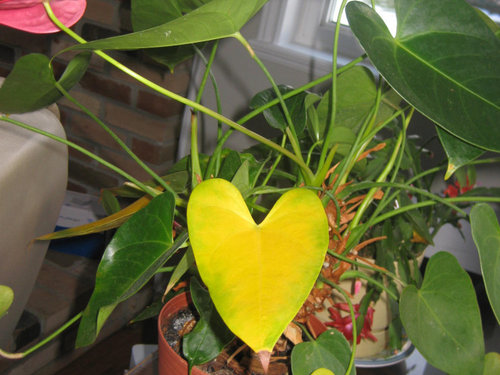
A couple of weeks after our move I noticed several leaves of our pink Arthurium plant are turning yellow. Searching online gave several options: overwatering, too much light, not enough nutrients, low humidity. I want to do the right thing, but don't know which ?

a) Due to moving ? We moved on a snowy day, that could have impacted it, although all our houseplants were carefully packed into my SUV and then placed into the new house. Still, some of the buds of the Christmas cacti fell off before opening up, and some of their branches look tired.....

2) lack of nutrients ? There are now two plants in the same pot, I should have divided them but postponed it too next spring. I also know I did not feed any of our plants for at least 6 weeks, too much going on, and also I thought plants don't mind a break during the winter. And since the Arthurium is now blooming, I had read somewhere not to feed during blooming periods.

3) location? In the old house it was in an east facing window, now it is in a South facing window ( the other option here would be North facing, but that room is on the cool side...). Since its winter here now I thought it would get more light from the S facing window, was planning to keep it in the N facing room in the summer months...

In spite of it blooming now , my temptation is to water and give it the same plant food it used to get, which is what I also give to the orchids.

Aside from owning this plant for over two years and not having had any issues with it so far, I have really no experience with this type of plant.

Would love some input! Thanks!


Comments (7)

  • 4 years ago

    track into the plant... are they the oldest leaves ...


    where are you.. big city name.. how cold was it outside when you moved them ... did you warm the car first??


    nutrient issues dont appear inside a coupel weeks ...


    nor do light issues .... months for that to show ..


    your plant is stressed.. if its the only one of the bunch in on the move.. do the happy dance.. you beat most the odds ...


    just dont kill it now trying to love it to death ...


    water properly for the next month or 3... let it settle down ... just remove the couple random yellow leaves ...


    ken

  • 4 years ago

    Thanks for reaching out Ken. The big city is Toronto. It was snowing when we moved.. car was heated up but not much . Two of my Christmas cacti got stressed too and dropped some buds and branches, but all in all we did O.K. Well, we got all stressed a bit... will keep watching over my babies. ....

  • 4 years ago

    Thank you for your comprehensive comment, tapla. Amongst the many possibilities of what might be going wrong, aside from a new location that is a bit cooler and dryer are:

    1) I should have transplanted this plant last spring as there are at least two or three in there now. But I left it alone because there was no more room for another plant and it was looking good. I already had to give plants away, and I knew we would be moving to a roomier house. I am hesitant to re-pot the arthurium right now because it is blooming, Or should I ?

    2) There seems to be possibly white mold in the soil, also in the soil of some of our Christmas cacti. I can see little white spots, and there is a smell to the soil. I also just noticed what looks like powdery mildew on the tips of the rosemary plant. Was thinking of giving all the effected pots a hydogen peroxide bath and spray ?

    1. water supply, The plant did fine with the city water for over two years. But since beginning December we are on well water. We may have to hook up to a water softener which will bring along its own issues. Have not crossed that bridge yet...


  • 4 years ago

    I am hesitant to re-pot the arthurium right now because it is blooming .... or should I? There is a difference between repotting and potting up. Repotting includes bare-rooting and root pruning, where potting up is only a half-measure - bumping the plant up a pot size and filling in around the edges with a bit of fresh grow medium. Assuming you live in the northern hemisphere, it's better to repot Anthurium in June, around Father's Day or the Summer Solstice. That timing ensures the quickest recovery from the stress of repotting. As a temporary measure, if the roots are tight in the pot, it would be good to pot up to a slightly larger pot now, then plan for a repot in mid-June. You can pot-up even if the plant is in bloom if you don't disturb the roots.

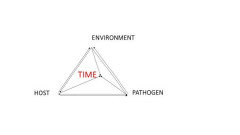
    There seems to be possibly white mold in the soil, also in the soil of some of our Christmas cacti. I can see little white spots, and there is a smell to the soil. I also just noticed what looks like powdery mildew on the tips of the rosemary plant. Was thinking of giving all the effected pots a hydrogen peroxide bath and spray? Is it mold or dissolved solids (salts) left behind from water that has evaporated from the surface of the grow medium. Mold (fungus) is not necessarily a bad thing. Plants live in harmony with thousands of different fungi, and even form a symbiotic relationship with some of them. If you detect a rotten egg smell (hydrogen sulfide), it's likely the grow medium is saturated, at least the medium in the lower part of the pot. That's not a good thing. Be careful with hydrogen peroxide. It contains an O- oxygen free radical that will oxidize the first organic molecule the free atom contacts. It's better to treat a mold/fungal issue with a fungicide, or breaking the disease tetrahedron

    by changing the environment; i.e., allowing the soil to dry down between waterings, and perhaps taking steps to limit how much excess water the medium CAN hold at watering time. In order for a pathogen to become a problem, it needs all 4 sides of the tetrahedron at the same time.

    Plant pathologists often describe the disease process using a 4-sided figure called the disease tetrahedron (think “pyramid – 3 sides + the bottom). Each side of the tetrahedron represents an essential part of the infection process. There must be a virulent pathogen (capable of infecting the plant) that is genetically capable of recognizing its host. Either the environment must be conducive to the development of the pathogen, or the pathogen must be able to stress/weaken the plant. The 4th requirement is the time required for diseases to develop and spread. Whenever conditions are such that any one (or more) of the 4 requirements is missing from the equation, there is no immediate threat.

    Since the best medicines are prophylactic, the grower who makes sure plants are healthy and not stressed is ahead of the game. Biotic diseases are better able to overcome the natural defenses of plants weakened by stress that occurs when the plant is forced to deal with cultural conditions near or beyond the limits the plant is genetically programmed to deal with.

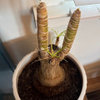
    Circling back to the disease tetrahedron, we can see a wet grow medium that contains the virulent inoculum provides 2 of the 4 essential sides needed for a disease to develop – environment and inoculum. Time, the third essential side will not likely be on the side of the grower in the case of a too wet medium, so you can't use that to your advantage. We know there will be potential hosts, but not whether or not the hosts will be susceptible to the pathogen, or weak enough for the pathogen to infect the host. It ,akes the most sense to change the environment (as already mentioned, to break the disease cycle ...... if indeed there is a fungal or bacterial pathogen in play. Perhaps some clear images would be helpful .....

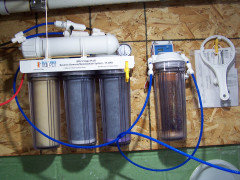
    The plant did fine with the city water for over two years. But since beginning December we are on well water. We may have to hook up to a water softener which will bring along its own issues. Have not crossed that bridge yet ... If you are comfortable spending a couple of hundred dollars for a small reverse osmosis system, it would be an excellent idea - especially if you don't like the taste/smell of the well water. I run city water through my small system and it provides me with all the water I need for drinking and watering plants. You could tap into your supply plumbing anywhere upstream from the softener. It only took me about a half hour to install mine. Filters last more than a year and aren't expensive. My son and I just installed a customized system in his home and it made water that was previously repulsive (taste and smell) completely free of odor or tastes.

    Al

  • 4 years ago
    last modified: 4 years ago

    Thank you again for your detailed information.

    It took me a while to digest and understand what you are saying here and also in your Overview of Good Growing Practices. I probably still haven't gotten it all, but I do "get" that providing the right growing environment is the best long term approach to keeping our house plants happy. I failed the anthurium in this regard by doing what suited me best, but not the plant.

    At this point, I will get the right soil ( I believe its tropical plant soil) to just pot up, and then divide and repot in June. I noticed that there are blooms only on one side where I believe is the mother plant and one new plant, The other side with the older offspring shows no blooms. I was tempted to separate and re-pot this one, but re-considered because its winter here and cold, and not as much light as in June....


    We used a small reverse osmosis unit while on city water, this after tiring from dragging natural spring water to the city for years.

    We really don't have any issues with taste or smell of our well water here, and we had it tested for potability. We only thought of water softener because it is already here ( although the previous owner had disconnected it and its not hooked up now ) and noticed that the untreated well water leaves a lot of residue in our washing machine and dish washer.

  • 4 years ago

    You're welcome, Doris.

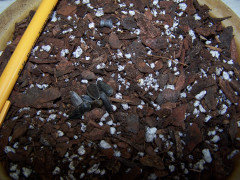
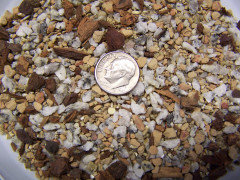
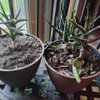
    I grow in media based on 2 different formulations, depending on the plant material. Here's what they look like:


    Notice how 'chunky' they are. Water retention and aeration are directly linked to particle size. The best media will be made from a very large fraction (85%+) of particles about the size of a small peppercorn or larger. Getting to the point where you needn't do battle with your grow medium for control of your plants' vitality is a pivotal point on the journey to a green thumb. Let me know if you need/ want further help.

    Al