Software
Houzz Logo Print
westes

Using Garden Waste Compost as a Substitute for Bark

4 years ago
last modified: 4 years ago

In a raised bed, what are the reasons that you might prefer using bark over garden waste compost? In a container situation, I understand that carefully sized bark helps to control the hydrology of water in the container, by lowering the perched water table. In a raised bed that concern goes away, so it might be more about the relative ability of each type of ingredient to hold nutrients. Let's consider this question in the context of a plant that does well in bark soils, such as Azalea, Rhododendron, or Camellia.

Comments (16)

  • 4 years ago

    I have read and reread this post and can’t really follow the premise. In a raised bed one uses ordinary garden soil. One might add garden compost, just as one would to any bed. There’s no reason I can see to even consider bringing bark into the equation.

    westes Zone 9b California SF Bay thanked floral_uk z.8/9 SW UK
  • 4 years ago
    last modified: 4 years ago

    @floral_uk z.8/9 SW UK What if your normal soil is hard clay and the pH is 7.5? Say that you want to grow a large, shallow-rooted rhododendron that will over time develop a large root system (wide not deep). Sure, you could rework the existing soil and try to acidify it as well, but that is difficult to maintain over many years, especially as the roots spread out. It is easier to build a small retaining wall and put some soil with the proper acidity in the raised bed. Separately, acid-loving plants do very well in soils where bark is a primary ingredient, probably because they grow in the canopy of large conifer trees and the soil organic layer where they grow is constantly fed by the shedding of those trees.

  • 4 years ago

    @tapla (mid-Michigan, USDA z5b-6a) Can you list the percentages for your formula for making that raised bed soil? What kind of plants are you growing in that? It seems like it would be fairly acidic soil. In general, we have a very similar approach.

  • PRO
    4 years ago

    Are you asking if it's better to use bark or compost in the bottom of your containers to help with potential perched water tables? Or at the bottom of your raised beds?

    I don't put stuff in the bottom of my containers, those are just soil all through. I do have the habit of rotating and refreshing since they are containers and having chunks of bark at the bottom would be a pita. A few handfuls of good garden compost is a nice addition I like to add. I usually mix it in when I pot things in. Good well broken down compost. I don't seem to get perched problems.

    At the bottom of my cage beds I would put wood. I do hugelkultur at 28-36" tall, so big wood at the bottom of the cage is a benefit for water retention. Also right handy bottom filler. I pack on other garden scrap from weeding and cleanups till I hit "soil depth"- then I top the cages well with a goodly many inches of soil- usually mixed with a bunch of good compost. Two cages I ran last year (full scrap loads, no wood under) was summer squash and trailing nasturtiums followed up with a repack of marigolds reaped from the the border of the garlic bed cleanup. The other cage ran some greens in the spring till it got too hot, and then mini watermelons and zinnias took over from there.

    I got a pile out back of bark chip too, but that goes to garden paths rather than into beds. This year whats left of it is going in to the bee yard I'm building instead of paths.

    But since conifer bark was mentioned and acid... I do use pine straw as a top mulch. For my garlic bed. It seems to like the addition rather well. The pine cones are also handy to help fill in garden paths with the bark. I got a wagonload to haul off the access drive that I didn't get around to last fall.

    I think a good compost is always a good top mulch. But I see a lot of folks around here that have azelas and the like seem to mulch on top with bark more often than leave it just compost.

    westes Zone 9b California SF Bay thanked beesneeds
  • 4 years ago

    I do have alkaline clay soil and I garden directly in that soil using appropriate plants. If I wanted to grow a rhododendron I’d plant it in a large container full of ericaceous mix, as I do with blueberries. I wouldn't attempt to create an entire bed for it from scratch.


    westes Zone 9b California SF Bay thanked floral_uk z.8/9 SW UK
  • 4 years ago

    @floral_uk z.8/9 SW UK So build a bottomless container on top of your alkaline clay soil that is two feet deep and three by three foot square. Fill that box with a soil that Rhododendrons like. It works just fine.

  • 4 years ago

    I have neither the space nor the desire to grow a rhododendron. My entire plot at home is probably smaller than the average American garage and my separate allotment is exclusively for edibles. I garden with the natural conditions I have rather than straining against them.

    westes Zone 9b California SF Bay thanked floral_uk z.8/9 SW UK
  • 4 years ago

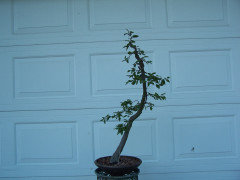
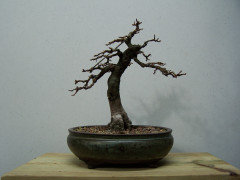
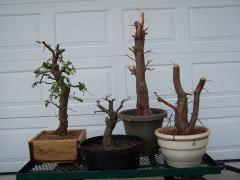
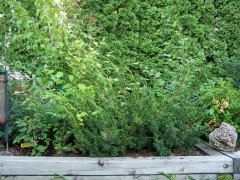
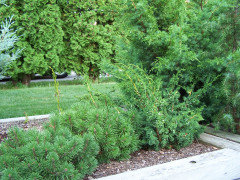
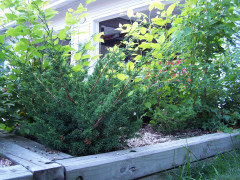
    Can you list the percentages for your formula for making that raised bed soil? Try this thread from 12 yrs back. What kind of plants are you growing in that? From about 2006 forward, I used the beds for growing on woody plants for larger potential bonsai


    For the last few years, I've been growing tomatoes/ peppers/ herbs in the front RBS and still have bonsai in the back ones. It doesn't seem to matter what I plant, everything does amazingly well.

    I haven't felt I needed a soil test, and the only fertilizer I used on the beds was a high-N slow release (but not CONTROLLED release such as Osmocote). Because of the yearly renewal of bark, there will always be SOME N immobilization, but nothing that couldn't easily be fixed with an annual application of the the 27-3-3 (and later 26-0-5) slow release.

    I probably should mention that the soil beneath the beds was very good sandy loam to start with. I really only built the beds to make weed control in the long term crops/ trees easier. It could also be that what I figured was N immobilization due to addition of the bark, was actually competition from the hedge or arborvitae that is anchored 4-5 ft away from the near edge of the beds, so take that into account if you decide to do something similar.

    Al

    westes Zone 9b California SF Bay thanked tapla (mid-Michigan, USDA z5b-6a)
  • 4 years ago

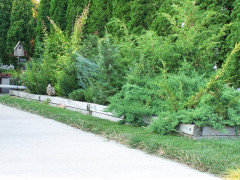
    @tapla (mid-Michigan, USDA z5b-6a) Those are some beautiful conifers. I will try to work through that thread from 12 years ago.

    Your beds are about two fence posts high? So that would be eight to 12 inches? I was thinking of going about two feet high on my raised beds.

  • 4 years ago

    They are 2 4x4s tall, and lagged together, so 7". A 4x4 is 3.5" square.

    If you're looking for a 24" ht, you might consider stacking 3-2x8 frames (for a total ht of 22.5"). You could also utilize an additional 2x4 or 2/6 frame in there somewhere, if you truly wish to be taller than 24". In order to fasten them together, I would use vertical 2x4s, inside or outside (inside makes using a weed trimmer easier), and screw the frames to the verticals with 5/16 lag screws more time/expense but better) or 3" long #10 deck screws. The corners of the frames should definitely be lagged together and screwed to a 2x4 in each corner. The vertical 2x4s should extend at l;east a ft below the bottom of the lowest horizontal board to prevent the weight of the soil from bowing the sides. At 24" ht, it will also likely be necessary to add some cross ties across the smaller top dimension. 4'x8' frames are what I chose to build, because it's easy to reach half-way across the 4' span to weed.

    If I was building them today, I would definitely build them higher ...... not as young and agile as I was when I originally built them.

    Al


  • 4 years ago

    @tapla (mid-Michigan, USDA z5b-6a) I was actually thinking of just using retaining wall concrete blocks, and maybe putting those as a circular pattern to build a bottomless container for each major plant. For example, I want a giant Clematis to climb a 40-foot high Conifer. So I can give that one plant its own raised bed where I want it to grow.

    For a new home with no garden at all, I might think about your approach.

  • 4 years ago

    @tapla (mid-Michigan, USDA z5b-6a) So your formula for raised bed soil appears to be:

    5 parts bark

    2 parts peat

    2 parts Turface

    2 parts sand

    That gives organic content about 64% of the mix.

    I am thinking of modifying this to:

    3 parts bark

    2 parts garden waste compost (finished)

    1 part biochar

    2 parts Turface

    3 parts pumice sand

    1 part clay loam

    That gives about 50% organic content, but most of those organic parts are not very water-retentive. How important do you think the peat is to your formula?

  • 4 years ago

    Hey, @westes Zone 9b California SF Bay,

    I prefer organic waste as fruits and vegetables provide plenty of minerals and moisturize the soil. And there is no need for any expense too. Our kitchen waste is dumped in a trench and used after a few days. And the other waste is collected in the disposal bins are taken away by the company. Trust me; this is the best fertilizer for my garden. I owe you guys to try it once as this is an effective way of waste management too.

    westes Zone 9b California SF Bay thanked mathew_stok
  • 4 years ago

    'In a raised bed, what are the reasons that you might prefer using bark over garden waste compost?'


    Bark would be cheaper surely, if wanting vast supplies of it. OTOH, I understand that some people have access to free supplies of garden waste (unlike where I live). So in that case, I would wonder why anyone would use bark.


    My ideal raised garden bed would contain soil (the real thing, not potting mix) and composted garden waste and composted food waste. Bark is not my cup of tea at all.


    'In a container situation, I understand that carefully sized bark helps to control the hydrology of water in the container, by lowering the perched water table.'


    I don't understand that question completely. Carefully sized anything controlls the movement of water through 'soil' mixes in container plants. Bark is plentiful, readily available and cheap, so it's used. It's not very nice though, in my opinion.


    'In a raised bed that concern goes away, so it might be more about the relative ability of each type of ingredient to hold nutrients.'


    No.


    Bark is pretty hopeless at such a thing - not as hopeless as some, I am sure, like sand. But a good, TRUELY coarse sand is IMO a good ingredient for potting mixes. If you know of a good source, please let me know.


    'Let's consider this question in the context of a plant that does well in bark soils, such as Azalea, Rhododendron, or Camellia.'


    I think if you were to ask an azalea, camellia or rhododendron, "Do you like a bark soil?" the answer would be, "Whatever gave you that idea?? It's what we get put in these days. Why are humans so obsessed with it?" Plants probably don't understand economics.


    westes Zone 9b California SF Bay thanked tete_a_tete
  • 4 years ago
    last modified: 4 years ago

    Considerable value could be added to our opinions if we took the time to explain why we embrace them. In many cases, an opinion represents little more than a placeholder for when we stopped thinking. In the same vein, opinions and old beliefs are often as comfortable as an old pair of shoes ..... so comfortable we're too often willing to overlook the holes in them.

    Al

    westes Zone 9b California SF Bay thanked tapla (mid-Michigan, USDA z5b-6a)
Sponsored
Peabody Landscape Group
Average rating: 3.5 out of 5 stars8 Reviews
Franklin County's Reliable Landscape Design & Contracting