Software
Houzz Logo Print
markay_6746

Spring Rose Disaster

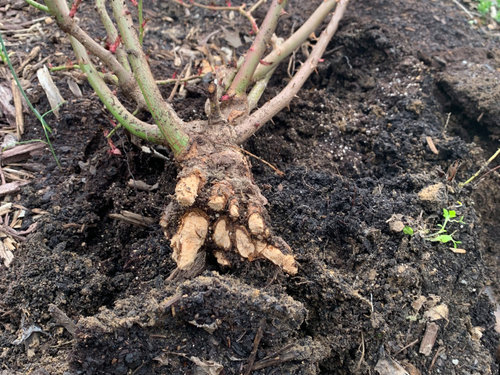
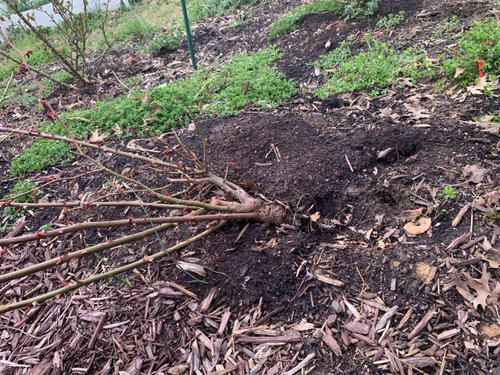
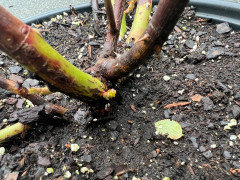
Last year was my first year growing roses. All my bushes wintered over well and were coming to life. I went out today and noticed several appeared to be lying on the ground. we’ve had some wind and rain and my first thought was that they’d been blown over. When I went to investigate, I found the roots were decimated. two roses appear to have the roots chewed completely off. The other two had some remaining roots, but certainly not enough to support the top growth.


I don’t know what did the damage or how go protect the remaining roses. Any thoughts? Is it possible I can cut the two with some roots WAY back and maybe salvage them? Do you think it’d be possible to root cuttings from the canes of the ones without roots? Or, should should I just shrug this off knowing I over ordered and now have space for my new roses? What would you do?


RIP Olivia Rose, Cream Veranda, Earth Song and Earth Angel. 😭


Comments (62)

  • 4 years ago

    As far as rooting hormone goes, Markay, I did not use it for this purpose although I always do for cuttings. I think the size of the bushes made it hard to dip in the rooting solution dilution.

  • 4 years ago

    This is amazing - I had no idea gophers would do this much damage to several roses all at once! Thank Heavens Sheila figured out the miracle cure.

    Jackie

  • 4 years ago

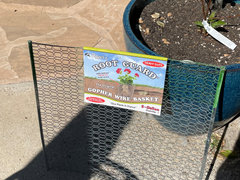
    Markay -- I'm so sorry for your great losses! I have lost rose bushes to gophers and it's always heartbreaking. I tried re-rooting two rose bushes that gophers got -- and I did get them to re-root, but they were kind of sickly even in the third year -- never back to "normal" - so I finally just bought new bushes. So even though I did get a couple to re-root, it took a very long time for that to happen, and then they didn't seem happy. Unlike some other folks on here who've done much better. I have ALL of my roses and fruit trees in gopher wire cages now -- with two exceptions, as they have big root balls and pre-date my use of cages. And don't use the flimsier stainless steel ones. Get the really hard ones you have to make a shape with. I use 5 gallon cages for roses and 15 gallon cages for my fruit trees.

  • 4 years ago

    Deborah - what are the gopher cages you use for roses made out of?


    Jackie

  • 4 years ago

    I found 2 more very damaged roses this morning. they look healthy above ground, but very few roots remaining. I have hope they may recover.

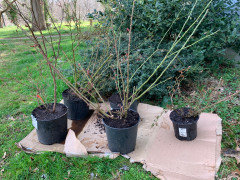
    Of the four from yesterday, Earth Angel is likely a goner. The stems look really desiccated. I don’t hold out much hope for Olivia Rose Austin either. I’ll give them a chance, but my expectations are very low. I have a bunch of new roses coming this spring and I guess I know where I can plant them now… but in steel cages!

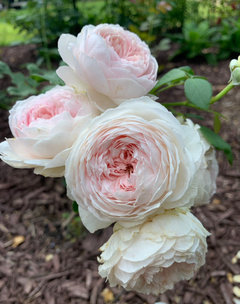
    Earth Angel from last summer and my rose ICU.


  • 4 years ago
    last modified: 4 years ago

    Good luck, Markay. I'm sure you are right that finding the roses ASAP after the roots are eaten to start the resuscitation process is important. Roses live in cold storage when dormant waiting for shipping so if temps are cool that could have helped a bit.

    Your experience looks exactly like mine. I don't have my computer photos ATM (computer in the shop) but the roses later last Summer, before planting back in the ground, looked totally normal again blessedly.

    Markay MD-Zone 7B thanked Sheila z8a Rogue Valley OR
  • 4 years ago

    Good luck, Markay, and please let us know how they do ultimately.


    Jackie

  • 4 years ago

    That damage is HORRENDOUS. Good luck with the recovery!

  • 4 years ago

    I am also in Maryland. We've had groundhogs living intermittently in our fenced garden. You can spot their holes which come to the surface. sometimes the holes are not close to the roses we think are threatened. Have-a-heart traps are made big enough for groundhogs. They love cantaloupe. You must take them 2 miles away when you frelease them !

  • 4 years ago

    This entire thread makes me smile - it is a great example of how folks on here help each other, and jump in to find resources (like Sheila!) to help others who are facing unknown problems. There is expertise on here for almost any gardening problem, and people are so generous with their time and knowledge.


    Jackie

  • 4 years ago
    last modified: 4 years ago

    Markay,

    Of all the species of gophers, only one is an Eastern resident, the Southern Pocket Gopher, native to parts of: Alabama, Georgia, and Florida. There are no gophers at all in Maryland. The rest of the gopher species are Midwestern and Western USA residents.

    Groundhogs do indeed live in Maryland, but they are very finicky eaters preferring the choicest tender greens such as field clover, and of course, garden plants, especially vegetables. This specialist eating habit seems to contradict the dumpy, eating machine impression they give by their appearance. They make enormous burrows, but only eat above ground, and not usually during winter while they are hibernating.

    The damage done to your roses was done over winter while they were still in the ground, by a rodent that ate the roots while they themselves were underground, accessing the roots through horizontal tunnels they dig just below the soil surface. Voles are the culprit in your case. Voles are a "no-see'em'" evil if there ever was one.

    The damage they can do is considerable. Voles are the bane of suburban/rural rose gardeners here in the North East. They do not hibernate but stay active all winter eating any available edible roots they can access. Rose bushes are often left completely rootless by their damage, as is clearly seen in your case.

    Poisoning and trapping them are only partially effective. Wire cage baskets will work. 1/2" hardware cloth open top baskets are fashioned and clipped together, 16" deep and 24" across, placed in a size appropriate hole, back filled with good garden soil, and the rose bush planted in its center, should allow the bush to be protected from voles. Make sure the basket soil surface top edge is not placed below ground level.

    Sorry for your miseries, especially since your bushes are growing so well and made fantastic growth so far!

    Moses

    Markay MD-Zone 7B thanked Moses, Pitt PA, cold W & hot-humid S, z6
  • 4 years ago
    last modified: 4 years ago

    Hi @jacqueline9CA - here is a photo of the brand I use:

    And here -- look at ground level, you can just see the top of the cage sticking up (this keeps them from coming in from the top).

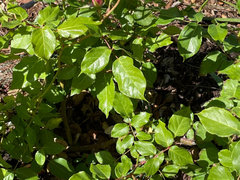
    p.s. this is Duchesse de Brabant just starting to bloom! Grown from a 4" pot from Annie's Annuals. But this is year 3 -- I am very impatient, so this has felt like FOREVER to get a real rose bush from a 4" plant!

  • 4 years ago
    last modified: 4 years ago

    Markay,

    Pat Henry from Roses Unlimited has a video on YouTube where she briefly discusses voles and shows her version of a rose basket. She uses 1/4" hardware cloth, and leaves the bottom of the basket open (really a cylinder or collar, not a basket, if you want to be technical). Yes, voles only make their tunnels just below the soil surface, horizontally, parallel with the soil surface, and I am certain her 'baskets' work very well. It looks very easy to make, too, having no bottom.

    Check out her video, just type in "vole damage on roses" in the YouTube search and you will find it.

    Moses

  • 4 years ago

    @Moses, Pitt PA, cold W & hot-humid S, z6 thank you so much for the information. it’s good to know the enemy. I am still a bit perplexed having grown many perennials and vegetables here without issue for several years aside from squirrels being squirrels. I swear they’ll dig a plant up just to watch it die. This is a new bed though and I suspect we got into their turf as we reduced the lawn. It amazes me though because my folks had horrible vole problems in NE PA but they never bothered the roses.

  • 4 years ago
    last modified: 4 years ago

    Markay,

    Thanks! It's like lightning strikes and tornadoes. You never know when or where they will hit. Voles are so commonly encountered here in W. PA as to be a given. However, their almost guaranteed presence is in less built up suburban and rural locales. Their populations ebb and flow, every year is different.

    The big cities and in regional, well built up neighborhoods with closer homes, smaller gardens, and lots of vehicle traffic, they are less of an issue.

    Voles are heavily predated upon by birds of prey, foxes, coyotes, and snakes. No matter how distasteful a snake population, particularly black snakes, may be in your garden, they are your roses best friends.

    Moses

  • 4 years ago

    We’ve got a pretty healthy population of preditors around so I think they’ll keep the population in check. I’m wondering if the gardens proximity to the neighbors bird feeder might also have contributed… Plus, nice fluffy amended soil with a blanket of mulch of course.

    My mom used to plant crown imperial to discourage voles with pretty good success.

  • 4 years ago

    I'm in the middle of Montgomery county and never had a problem with voles. Ground is hard clay/silt. I would imagine they would have trouble digging through it. We have ground hogs that will eat vegetables and dig holes, but I don't think they would burrow into rose roots and eat them.


    Seems you can go to home depot and buy some fencing. Would likely be a lot less expensive than buying a specialty product. At least if you're doing a lot of holes.

  • 4 years ago

    @charles kidder, I’m at the South Eastern end of Anne Arundle county and about 3-4 miles in from the bay. My garden soil is basically heavily ammended sand so yeah… not much resistance for burrowing critters. I talked to my husband about a barrier around the bed and he was not on board so we’ll stick with individual baskets. knowing that they don’t need bottoms definitely makes it easier.

  • 4 years ago

    You can buy a 25', 50' or 100' roll of fencing and cut it to appropriate size. I do it all the time. I build cages to support hydrangeas, protect from rabbits, etc... . Just cut to length with a wire cutter, wrap it around in a circle and tie the ends. I use green electrical wire to tie the ends. If you're burying the cage, you probably don't even need to tie the ends.

  • 4 years ago

    Markay, I've never had voles damage roses here, either. They are not that large, and I don't think they have the jaw power to take on a rose with big healthy roots. Gophers, do, though (in the West). Luckily, the resident badgers really killed off the gopher supply, and it's been a long time since a gopher did any damage in my garden. Diane

  • 4 years ago

    I don't know much about voles, and next to nothing about areas outside of CA -- but with the roots being eaten off, I'm going to bet it all that caging or fencing the top will do diddly squat to protect the roots. I've had gophers eat through wood, hard clay, resin pots, and ceramic pots to get to the tasty roots. The only thing that has worked for me is the heavy duty gopher wire cage or the hardware cloth (which is not cloth - but very small squares of metal). I put the hardware cloth at the bottom of my raised beds and use the cages for every tree, rose, shrub or plant I really care about. I've tried juicy fruit gum, broken glass in the hole, castor oil, cinnamon oil, garlic plugs, etc. NOTHING worked. One year I even planted a row of daffodils (gophers won't eat those bulbs, poisonous) and gopher purge to make a barrier into my garden. They literally pushed the bulbs out of the ground where they wanted to tunnel! So much for that. Even if I'm super vigilant, the baby gophers make almost no disturbance when they start making new homes, and I can't see the evidence of them until it's too late. And, I usually go out of town for a bit each summer, and invariably I come home to at least 2-3 dead plants (usually annuals or short lived perennials that I've not caged). I live near a wildland interface, so we have a never-ending population. I've seen gopher snakes, others have seen rattle snakes, and we have owls around (I also put up an owl house last year), not to mention hawks, coyotes, foxes, bobcats, mountain lions, and occasionally a great blue heron! Last week I used my gopher hawks, and I must have caught a gopher, as I found one of my traps on the edge of the canyon, with just a bit of hair left and the cylinder cracked. I'm thinking a coyote found a snack box. All this to say -- if something is getting your roots -- I think you need to cage everything. If you're in a more urban environment, you could just go hard core and set traps and eliminate the threat and then stay vigilant, but if you have neighbors breeding gophers...

  • 4 years ago

    I think you need bottoms in root cages Markay. Diggers Heavy Duty root cages are what Deborah and I use.

  • 4 years ago

    Yes, Sheila. I think thats the whole point unless they only dig to a certain depth. Also the reason for extending it above ground.

  • 4 years ago

    Interesting, Moses. That's exactly what I have started doing- hardware cloth tubes. The trick is to leave a high enough "lip" above ground to keep them from entering the cylinder from above ground. I failed to do that at first and paid dearly.

  • 4 years ago

    The images you posted are almost certainly the result of damage by Voles The link is to the University of Maryland extension page that discusses Vole damage and control.


    In other areas of America, including the West, Southwest, the Great Plains and in Canada where I live, Pocket Gophers which are larger than Voles are often the cause of damage that looks almost identical to your images. However, Pocket Gophers apparently do not occur in Maryland or the Northeast. Here is a good video that explains how to tell which species of burrowing animal is the one causing damage in your garden.


    We had almost identical damage to one of our rose collections in Summerland last winter. We will need to consider a trapping program to deal with our issue here. I think it might be helpful to others to help differentiate and identify the animal species that is the cause. That is critical to figuring out how to solve the problem.


    Cheers, Rick


  • 4 years ago
    last modified: 4 years ago

    I was talking about my vole drama with someone local who suggested that the voles had a major population boom last year because of the periodical cicadas which reduced predation because all the predators were busy feasting on the bugs. Hopefully things will rebalance soon. I noticed the phlox have now disappeared also.

  • 4 years ago

    I agree that it's likely voles. The gophers on the West Coast are different and more voracious than the ones here on the East Coast. The voles here in the East abound in sandy soil acid soil in or near pine forests and do heartbreaking damage to gardens, especially established roses. I know because I planted some things for my cousin's LI garden and some roses suffered the same fate as in the photos shown here. I think castor oil applied around the time of the first frost, might deter them for a while -- somewhat.

  • 4 years ago

    This is so interesting about voles vs gophers on the East and West coasts. It reminds me of what I learned years ago on here - location, location, location! Where a plant is growing (or not) is THE MOST important thing to take into consideration when thinking about growing it, taking care of it, or trying to help someone who is having problems with it. That is very easy to forget.


    Jackie

  • 4 years ago

    Just thought I would come back and give you all an update. Amazingly, I did not lose a single rose. most of the bushes appear to have made a full recovery and look ready to go back in the ground. The worst hit rose was earth angel. I really was ready to give up on Earth Angel, but there was still green at the base of the canes so I kept watering faithfully and this week she finally showed signs of new growth. It’s not a lot, but it’s something!


  • 4 years ago

    Yay!!!!!!

  • 4 years ago

    What a wonderful update!

  • 4 years ago

    So glad to hear that it worked out.

  • 4 years ago

    This is wonderful, Markay! Very interesting that voles do this damage in the East. I have voles trying to kill my Betty Corning clematis now here and they are relentless. My replanted roses are all doing fine after their gopher attack, but the are in root cages so gophers cannot get in. I have the clematis in a cage but the voles go under the edge. At least we know what to do now. Roses are amazing.


  • 4 years ago

    Markay, glad to hear that! i also had quite some vole damage last winter, with one vole living in my garage in the pots :( Some roses bounced back in a suprising way, but a few baby roses didn’t make it.

    claire

  • 4 years ago

    Oh no! I’m sorry to hear it Claire.

  • 4 years ago

    Markay, I am so happy for the new growth on your Earth Angel.

    So glad that your roses recovered in spite if those dang voles.

    Well done !

  • 4 years ago

    I was interested in this thread before out of curiosity, and now I am REALLY interested in it! In our area of Northern CA, lots and lots of gophers are around, but never in 33 years in my garden. Ha! Yesterday my DH pointed out a gopher hole (it looked as it said it would on the internet, so my hopes that a mole had made it were dashed) AND an extensive gopher tunnel, both in my new garden, to which I have been moving lots of my oldest and rarest roses! ARGHHH!. I immediately printed Sheila's advice above, and ordered the 5 gallon heavy duty Digger's root cages, although so far there is no damage on any of the roses.


    then, My DH and I had a talk this morning. Our BIL, who lives 15 minutes away, has a serious gopher infestation, because he waited too long to do anything about it. So, my DH has agreed to talk with him and find out what he is doing to kill the gopher(s), and what is working, not working, etc. I am NOT in favor of killing anything, but my SIL vetoed killing when they had 1 gopher, and now they have dozens! So, I told my DH I would worry about saving any roses which get attacked, and he has permission to worry about the gophers, as long as I don't have to do participate, or see them. (that is also how we handle occasional infestations of wood rats in our garden and attic).


    So, I am glad this thread was here and easy to find, and sorry that I am now very interested in it.


    Jackie

  • 4 years ago

    Good luck Jackie!

  • 4 years ago

    Thanks, Markay - please keep letting us know how your rescued roses are doing -


    Jackie

  • 4 years ago

    Well done, Markay!! What a blessing to have experienced people here to help. :) :)


    Jackie and Claire...here's hoping for the best.

  • 4 years ago

    I was a little slow on making a connection because once things are in the ground I forget which roses came from which vendors, but it turns out that my undamaged roses were mostly ordered from Palatine and grafted on multiflora rootstock. I guess the voles don’t like multiflora rootstock!

  • 4 years ago

    Markay - good thinking! Interesting that the voles are so particular.

  • 3 years ago

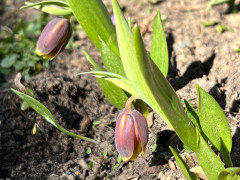
    I wanted to stop back and update this post. Of the roses that were damaged last year, all but one (Earth Angel) recovered thanks to y’all advise to soak the roses and then pot them up and keep then in a protected, shady spot. This fall, I planted allium and fritillaria bulbs along ghe edges of the bed and near roses. I had read that the pungent smell made it hard for voles to find their preferred food source.


    I can report that I have had zero vole casualties this year and have not noticed any ”mysterious” holes dug in the garden. So far I’ve found the results encouraging!


    Fritillaria uva-vulpis


    it’s not pretty, but it seems to do the trick. 🙃


  • 3 years ago

    That's encouraging news!

  • 3 years ago
    last modified: 3 years ago

    Note that I also did not provide a nice layer of mulch which may have also had an impact.

  • 3 years ago

    Markay, that is great news!

  • 3 years ago

    Congratulations on saving your roses! I think that fritillaria is very attractive. A border of the new alliums (Such as ’Millenium’) could be very nice.

  • 3 years ago
    last modified: 3 years ago

    Bravo, Markay!!! Victory!!!

    Moses ( better sign off, the Houzze gremlins let me slip through aaccidentallyaaccidentallye

    now, so I thought!)

  • 3 years ago

    Just stumbled across this thread and realize I may have some voles digging in my yard too! What size baskets would you suggest I order?

  • 3 years ago

    5 gallon work well. Diggers heavy Duty are the best.