Software
Houzz Logo Print
scott_sanford48

Hardwood floor disaster

4 years ago
last modified: 4 years ago
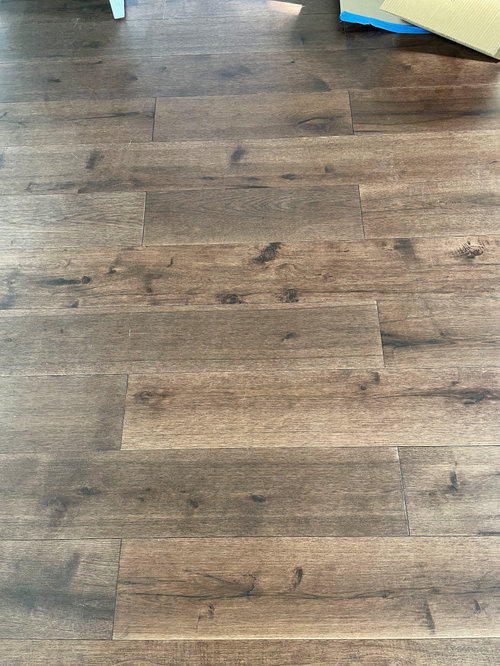
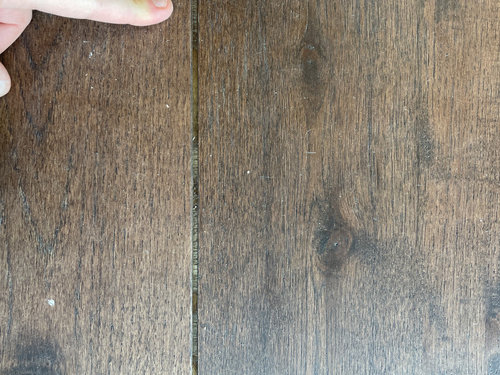
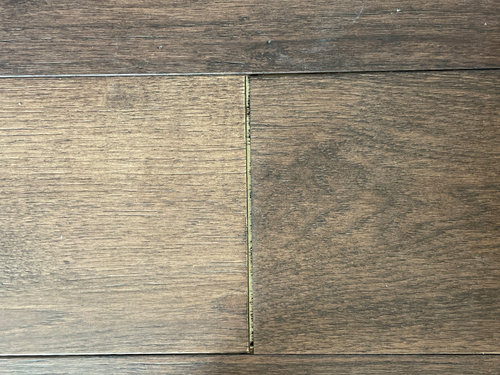
Contractor hired somebody to install our hardwood floors. It is engineered wood over plywood with a sound barrier underlay. They did a floating install. There are big soft spots and also take a look at the pattern of how the planks line up. Adding some photos of some big gaps I found after removing the cardboard protecting the floor


Comments (15)

  • 4 years ago

    "There are big soft spots"


    What sort of prep was done to the subfloor? It needs to be flat to within an 1/8" in 10'.


    "and also take a look at the pattern of how the planks line up."


    What do the instructions state for staggering the pattern? What was the installers reasoning for doing it this way?

  • 4 years ago
    last modified: 4 years ago
    Old floor was removed and all previous nails. AHF products installation guide says "Be attentive to staggering the ends of the boards at least 4 ̋-6 ̋ (10-15 cm) when possible, in adjacent rows (Figure 3). This will help ensure a more favorable overall appearance of the floor."


  • 4 years ago

    Staggering the ends seems to be customary practice from what I have read. The day he started I can swear I heard him watching a video on his phone on how to install hardwood flooring. Not a good sign.

  • 4 years ago
    last modified: 4 years ago
    It is the way to install hardwood flooring. I'd be contacting the contractor pronto.


    This is what I find so frustrating about hiring "professionals," the whole point is you hire someone because you are unable to do it yourself or you prefer to pay an "expert." But really, you need to BE an expert to know when the hired help is screwing up! It's ridiculous! I don't go to med school so that I can keep tabs on my doctor.

    These pages are filled with stories like this, yours, thankfully, seems to be a fairly benign fix. But I seriously resent the fact that I need to know how something needs to be done correctly when I'm theoretically paying someone else who should know.


    I feel like floor installations should be handled by the store from which the floor was purchased, you would at least expect competence.


    Also, many contractors like to present themselves as a "Jack of all trades" when they are neither a Jack, nor a master.

  • 4 years ago

    There are big soft spots"


    What sort of prep was done to the subfloor? It needs to be flat to within an 1/8" in 10'. How flat is the subfloor? No leveling was done?

  • PRO
    4 years ago
    last modified: 4 years ago

    Some manufactures will have illustrations that will state "H" patterns are not acceptable. Most will defer and state to follow NWFA installation standards. These are in place to keep installers honest about their skills. Like following manufacturer's instructions.

  • 4 years ago

    "Be attentive to staggering the ends of the boards at least 4 ̋-6 ̋ (10-15 cm) when possible, in adjacent rows"


    Well, he did do that ... each row is staggered from the one immediately adjacent to it ... he just stagged back and forth or the boards were a length that it came out looking that way. Got a picture from further back with more floor? Though what I really question is those two little mini boards ... what's up with that?


    Soft spots isn't good; I suspect the others may have already hit that nail (or lack there of, since it's floating) on the head ... it would imply those spots are floating over dips in the surface below, leaving more give, or softness, as the floor flexes into those dips when stepped on.

  • PRO
    4 years ago

    IMO the subfloor was not prepared for this install to start Waht was the discussion before any work began .The stagger is for sure not ideal but by the time rugs and furniture are in it will be less noticeable but the subfloor will not be something you can live with. I need to know what your contract rrad , was the new subfloor part of that or was this done with old subfloor. we need more info.

  • 4 years ago
    last modified: 4 years ago

    That stagger would be completely unacceptable to me. As in rip it out and start over unacceptable.

  • 4 years ago
    last modified: 4 years ago

    As to the pattern... the installer must follow norms for installation of the product unless specifically instructed otherwise. Running bond is not the norm for any wood floor I have seen.

    The soft spots mean the floor was not installed correctly (the already discussed prep) and it will only get worse over time.

    The entire thing should be a redo at your contractor's expense.

  • 4 years ago
    last modified: 4 years ago

    We had engineered hardwood installed 7 years ago (nailed and it had no soft spots) in one area of the house and inherited Pergo (glued I believe) from the previous owner in another area. All of it was removed to prepare for this install Old nails and glue were removed. Maybe the floating installation versus nailing is the problem?

  • 4 years ago

    The difference would be that a floor that is glued or nailed would have each board secured to the subfloor, so any variation would be transferred to the top surface; the floating floor floats over the surface (as the name implies), so if there's slight low spot, it leaves a void, which translates to the soft spot you feel when you feel the give of the boards flexing into that void.

  • 4 years ago

    It wasn’t the most level floor but at least it was solid. I prefer that to squishy. should I tell them to take it up and nail it down?

  • 4 years ago

    No. You should tell them to take it up and level the subfloor according to the manufacturer's instructions.

    There is no reason to void the warranty at install, be it nail down or floating.