Software
Houzz Logo Print
nancy_kwon76

Mealy bugs on my weeping fig!

4 years ago
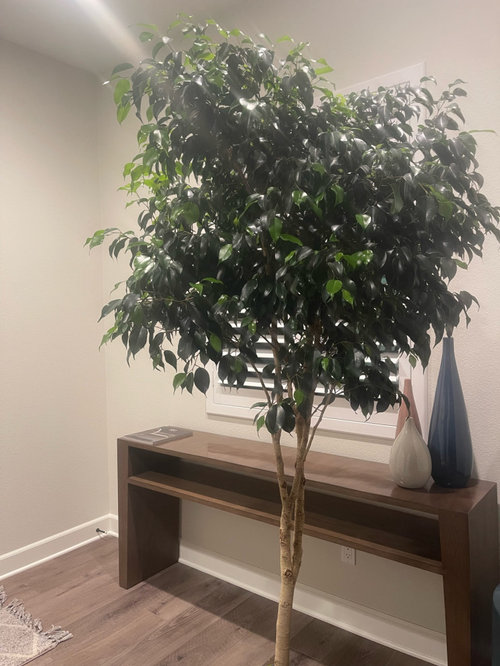
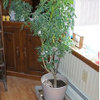
A few months ago, I received this tree as a house warming gift. Three weeks ago, found a bunch of mealy bugs on them. I sprayed the entire tree with neem oil and tried to remove any bugs I saw. I’ve been doing this every week and I catch a few bugs every time. Is there any other way of catching these bugs? This process is incredibly time consuming!

Comments (10)

  • 4 years ago

    if you are able to take it outside in summer.. i would suggest looking into a systemic product that you would add to the media.. so the plant would soak it up.. and kill all the bugs for sure ...


    you could probably do that in the house.. but i would prefer to do it outside ... with the plant in full shade for a few weeks ...


    ken

  • 4 years ago

    Agree. A systemic could be effective for this guy. They also make a granular systemic that's relatively easy to apply to houseplants. Bonide Systemic granules for houseplants. Follow the instructions. You can buy it at Ace Hardware or most independent garden centers. Unless of course you are in Canada. The active ingredient is banned there.


    I have found that the granule-type systemics work pretty well with plants that are thirsty (like your ficus). These plants will take up more of the systemic. It doesn't work as well on plants that aren't as thirsty such as hoyas or succulents. With those, the liquid-mix type is better.


    Personally, I have found neem oil to be non-effective. But I do know a lot of people say it works for them.

  • 4 years ago

    Thank you so much for all this advice!!! Is there anything I should be aware of after a systemic… major leaf drop, etc.? I want the plant to survive and don’t want to kill it in the process of saving it! I am also a new plant parent so this is slightly out of my element!

  • 4 years ago
    last modified: 4 years ago

    I have many Ficus benjamina among the 12-15 different species of Ficus I tend to in pots. While I agree with the thought that a systemic containing Imidacloprid is probably going to be the best bet, I have had problems with products (Marathon, for one) which provide the Imidacloprid in a granular vehicle. I use fast draining, highly aerated grow media and the granular products are so fine they clog air space in the soil and negate the value of such media. Also, a spray product works much faster than a products that utilize the root pathway.

    My suggestion would be to use Bayer 3-in-1 for Insects, Disease, and Mites. You do need to make sure you're using the product with Imidacloprid. Bayer makes 2 different products labeled 3-in-1 for Insects, Disease, and Mites, only one of which contains Imidacloprid. Indication it contains the active ingredient Imidacloprid will be found on the lower left side of the front label, and on the back label. I just bought case of 8 quarts last summer from DoMyOwn.

    I have more than 200 trees in containers, and the 3-in-1 product is my 'go to' for it's systemic insecticide and it's systemic fungicide (Tebuconazole). It works well for mites, but I rarely encounter mite issues. When I do, I usually use 3 different miticides in rotation to prevent mite populations from becoming immune to a particular product, as is their wont.

    Your plant will tolerate the spray very well. Keep out of sun after spraying until dry. Do not spray indoors. Spray outdoors late in the day. When the product has dried on the plant, the plant is safe to bring indoors if you prefer, though your plant will undoubtedly enjoy being summered outdoors rather than being relegated to a lower light indoor setting.

    Your tree will quickly grow out of bounds unless you learn how to pinch it to keep it in check. W/o regular pinching, you'll soon find yourself wondering what to do with what the plant has become. In most cases, what is needed for an out of bounds plant is a very hard pruning back to a very basic structure. The plant will definitely tolerate that, but it's better do your due diligence along the way so the tree grows into what you want it to be rather than what it wants to be. Left to its own devices where the tree naturally occurs, it has a graceful weeping habit; however, significant indoor influence causes the tree to grow to look nothing like its counterparts where they naturally occur.

    Neem oil has little in the way of knockdown (instant death), unless it's mixed with other products like pyrethrin. It is primarily an antifeedant (makes bugs sick to their stomach) and a disruptor of the insects life cycle. It prevents breeding and inhibits the process of maturation; so, if you're using it as your 'go to' product, you need to stick with it. Also, the best product to be using is pure, cold-pressed neem oil ...... and the oil should be refrigerated until needed for mixing as it can turn rancid.

    Al

  • 4 years ago

    Oh boy do I feel for you…..meely bugs are my nemesis! I have quite a few orchids and i brought one home that was hiding them……they spread! The ONLY thing that worked was the Bonide granules that ”popmama” mentioned above. Some states don‘t allow it but ebay is a good source…..I used to get it at my local hardware store until my state won’t allow it anymore….I do buy it from ebay and am extremely careful with it it. Good luck!

  • 4 years ago

    The active ingredient in the Bonide granular insecticide is Imidacloprid. Again, Imidacloprid is an appropriate response to mealybug and scale infestations, but there are better ways of delivering the insecticide than granular products. Spraying works much faster than via the root pathway, and a liquid soil drench has no effect on soil structure, unlike the granular product.

    In the end, it makes no difference to me what someone ultimately decides to use, but I would hate to see someone unnecessarily going through what I did, using the granular product.

    Al

  • 4 years ago

    Thank you so much!!! This is so incredibly helpful, as I didn’t even know there was a spray version. I just hate these bugs. They keep coming back and unless they get adult-size, the small ones are hard to catch.

    Al- on another note, since you provided some helpful tips on pruning, for the branches that have no leaves, would you recommend I proactively prune them?

  • 4 years ago

    "..... would you recommend I proactively prune them?" Absolutely. If you're not regularly proactive, at some point you'll need to do the equivalent of one of the familial interventions we can sometimes see on TV. Your tree is genetically programmed to 'spend' about 2/3 of the energy/ food it produces during photosynthesis in the top 1/3 of the tree. The ONLY way you can stop the lower branches from dying back and the upper branches from getting so thick they jar the eye, is by pruning/thinning branches, pinching, and maybe partially defoliating leaves in the upper 1/3 of the plant. This forces the tree to 'spend' more energy on the lower branches, which helps to keep them healthy and the tree full. It also helps the lower branches thicken and keeps the upper branches more twig-like, which is how the tree looks where it occurs naturally.

    Having 40 years of practice at bonsai, I've become intimately familiar with how to manipulate woody plants of all types. I've posted many images to the houseplant forum of the Ficus I care for, including sequential images that show the trees' progress. I'll share if you like.

    Al


  • 4 years ago

    Yes! Any help would be appreciated!! I appreciate all the advice.

  • 4 years ago

    This is a Ficus benjamina. It started as a 3" pot of 5 ficus about as thick as a pipe cleaner, progressed to this horrific mess (but I had a plan):

    After several more years it looked like this:

    It was to full ^^^ to prune properly and wire, so I defoliated it:

    Then styled it:


    Same tree as the one above it ^^^, just starting to fill in after the styling.

    Next is a Ficus Microcarpa:

    90% + of its foliage removed in June:

    August after about 8 weeks of growth after pruning:

    Below is another image, same day, taken after styling:

    Other misc Ficus:

    F microcarpa:

    F microcarpa:

    F benjamina:

    F benjamina variegata:

    F benjamina

    F natida with a sacrifice branch, the job of which is to thicken the trunk. The large ugly branch will not be a part of the end composition:

    F benjamina, first styling:

    F benjamina, inosculated (fused/ approach grafted:

    F salicafolia (willow-leaf ficus), defoliated

    3 more F salicifolia in need of pruning/ wiring:

    Al