Software
Houzz Logo Print
filesw

Ventilation for induction stovetop?

4 years ago
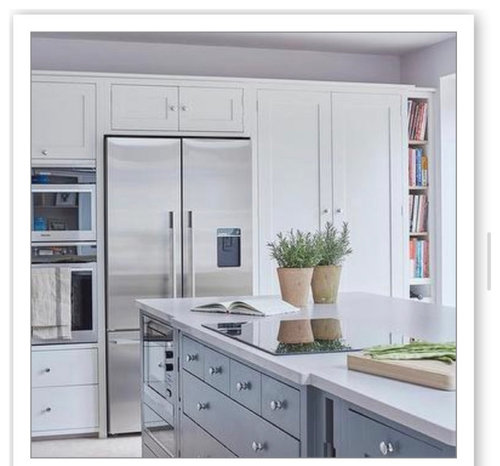
We are adding an induction cooktop to our island. Our ceilings are vaulted. Do we need a vent? Either ceiling or downdraft?

Comments (10)

  • 4 years ago
    last modified: 4 years ago

    I think it depends how you cook. i ddon’t have one in my kitchen and don’t need one.

    And know of homes that don’t have.

  • 4 years ago

    Yes if you do more than heat water. Induction only [in the context of this question] eliminates gas combustion products that should be vented. Otherwise, one can generate the same grease particle laden cooking plumes as with gas cooking, or electric coil cooking. If you want low odor levels in the house, minimal wall, ceiling, and fabric coatings from cooking, then you want an overhead hood capable of cooking-plume capture and containment.

    For context, as well as for details, please review a selection of the myriad (after all these years) hood threads on this forum, in addition to @opaone's link above.

    Spoiler: There are many ways to try to hide or remove from view the means of plume venting; none of these will be sufficiently effective for any hot oil level cooking. Only systems that approximate -- within the limitations of residential architecture -- commercial hood practice will be successful. These will have an intake aperture boundary that limits plume escape, have an airflow sufficient to limit plume escape, and in general do this with practical size and cost. This gets one to hoods that overlap the plume expansion at the hood base height, and achieve a flow rate into the hood appropriate to keep the plumes from reflecting out, and entrain the plume content into the flow past the baffles or other filtering means.

    The best one can do with island cooking where one wants to avoid sight-line blockage is raise the hood some and grow the hood capture entry aperture.

  • 4 years ago
    last modified: 4 years ago

    We have an induction range on a 39" deep penninsula counter between our galley kitchen and our living area. We don't do a lot of frying but use the stove top fairly regularly. We have a downdraft vent. It does the best job of capture when I use the back hobs. I clean the filters regularly because they get greasy so it's capturing some. We also have doublehung windows on the adjacent wall. The vent doesn't remove strong cooking odors well.

    I wouldn't change my range location for anything, and our vent isn't a miracle worker, but every bit helps.

  • 4 years ago

    While I couldn't live without a vent hood, my sister-in-law has an induction cooktop in her peninsula with no vent and they aren't bothered by it at all....and they are ambitious in the kichen, cooking most meals and hosting large family parties. It's an open floorplan house to boot.


  • 4 years ago
    last modified: 4 years ago

    "my sister-in-law has an induction cooktop in her peninsula with no vent and they aren't bothered by it at all..."

    Two things to keep in mind;

    1) The primary reason for a range hood is VOC's and Carcinogens produced from cooking, whether gas or induction, that are harmful to our health and that you cannot necessarily smell or be 'bothered by'. These slowly accumulate in your body over time resulting in various ailments some years down the road including Cancer, COPD and other stuff.

    2) I've been in more than few homes that people thought smelled fine. They didn't :-)

  • 4 years ago

    As others have said, depends on how you cook. When on the stovetop, I am mostly boiling water or frying veggies at medium heat. Historically, our stovetop cooking was primarily vegetarian. At our old home, with an induction cooktop, I never turned on the vent and it was fine. No grease or smells.


    My husband has recently taken up sous vide cooking, which involves throwing a steak on high heat at the very end to give it an intense sear. Our current home is an electric cooktop with no vent. The result is a disaster - grease up the windows, smoke alarm going off all the time :) We are an open window kind of house most of the year, so within a couple hours, it typically does not smell. But the smoke alarm and mess are annoying, and merit a vent.

  • 4 years ago

    It is tough for strangers to advise you on this. Do you regularly use a vent hood now? What is your cooking style? Most folks I know that even have big powerful range hoods over professional-style gas ranges don't use them for anything other than lighting. I can't remember the last dinner party I went to when the hood vent was running.


    Personally, in the grand scheme of thing, I think the notion of cooking effluent causing disease, is kind of silly. If you own car, it is far more likely to kill you than your stove top :)


  • 4 years ago
    last modified: 4 years ago

    Just put in the tallest/best downdraft you can find and look for a stovetop configuration that places the hob you're most likely to saute on closest to the back. They're not obtrusive and it's kind of fun to watch them slide up and down.

    We have two white metal pendants over our counter that look clean and although they do always have a film when I wipe them, they're never as greasy as the downdraft filters, even though the filters get washed more frequently. As I said, it's doing something, bless it's sleek little heart.