Software
Houzz Logo Print
hzdeleted_5149688

Kalmiopsis leachiana or fragans?

4 years ago
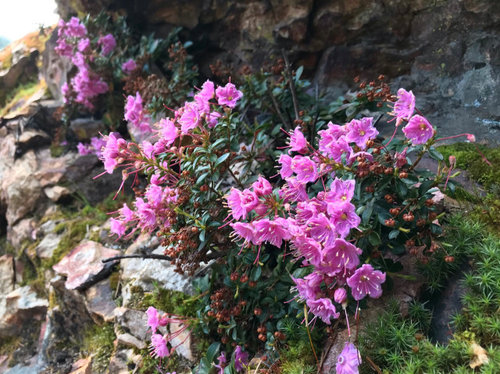
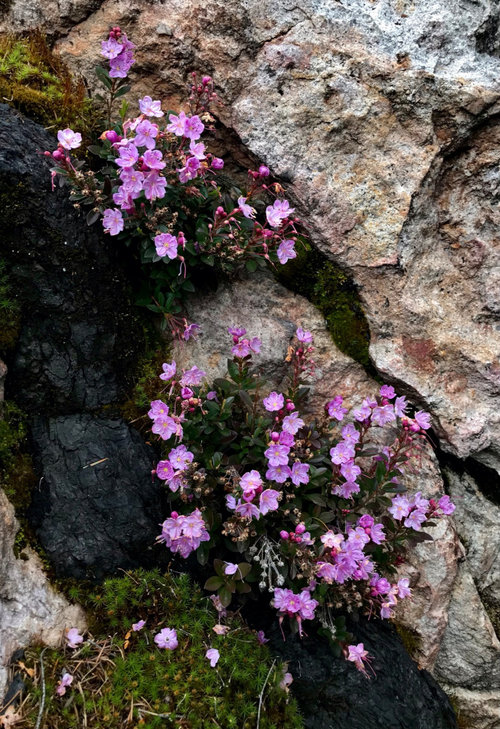
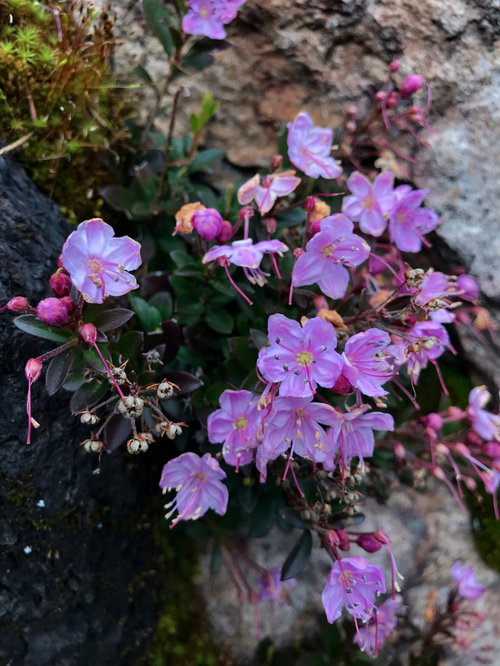
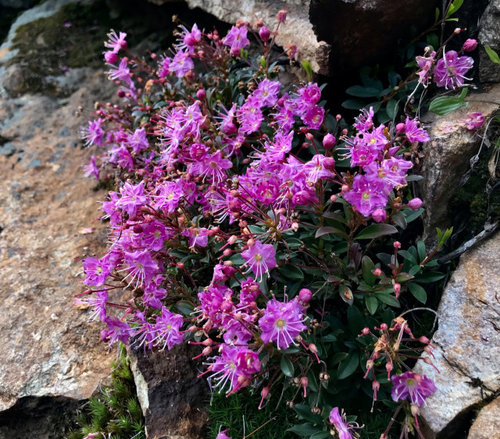
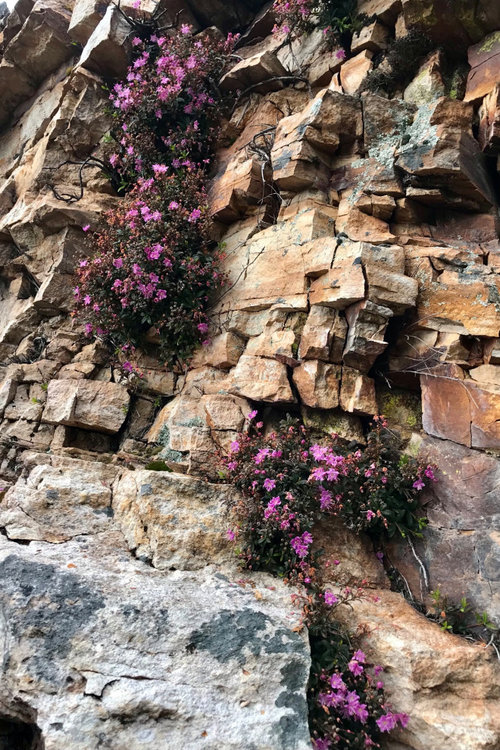
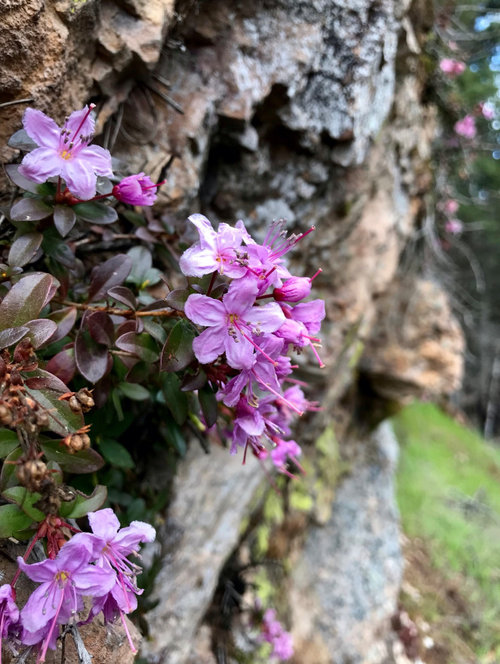
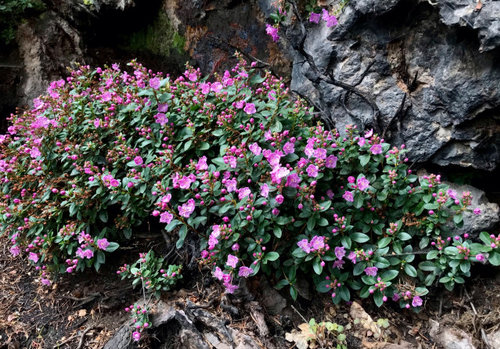
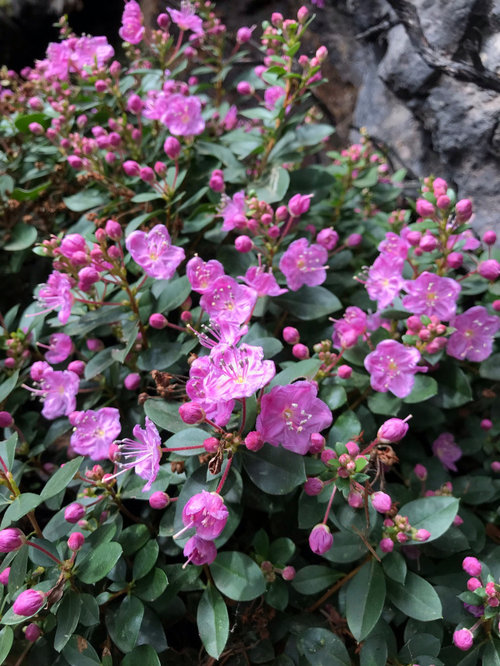
Hi Everyone, I went to a location out of Roseburg, Oregon to find some Kalmiopsis. I am unclear as to how to tell the difference between the species. Bonap says that these have to be K fragrans, and as far as I have read, the only major difference between the two species is the depth of the lobes. The genetics represented at this one site seem to have various lobe depth. Tell me what you think. Plants were all growing in the cracks between the rocks. Super cool to see! I hope you enjoy.


Plant 1


Plants 2 and 3


Closeup of plant 2 on top of last photo


Plant 4


Photo 5, with a couple plants in the cracks.


Plant 6, very sure that this one is fragrans.


Plant 7


Closeup of Plant 7. If I didn't know better, I'd call this leachiana...


Comments (13)

  • 4 years ago
    Undoubtedly, I would need a key. Based on the Bonap maps, we should just call them all fragrans. It was really interesting to see them living up on the rocks. I wish that I'd had more time to explore the area as there were many more rocky outcroppings on the mountains nearby, but there was poison oak leafing out everywhere we trod. The plants were growing in the natural horizontal cracks in the rocks as a crevice garden. I had hoped to make it out to see leachiana also, but we were cutting it close with time and I accidentally slept in on Saturday, so we didn't get to investigate those areas. Next time!

  • 4 years ago
    They are beautiful species. I dont grow any Ericaceae, but that will change soon. Have you seen any Kalmiopsis in cultivation? They advertise it, as one of the world's rarest plants, and it looks like everyone carrying it, is out of stock. There's never enough time to go see everything I'd like to either. It's been very muddy here, so I didn't go see the Jeffersonia diphylla,(Twinleaf), because I might cause some damage to the path, and also there's a really steep ravine, you have to suffer on the way there. They are known for losing their petals with the slightest breeze, so the brief window was missed. I took road trips to the west coast in the 90's, but I wasn't very knowledgeable about a lot of the plants I saw, but I knew what genus many of them were. We drove up to the top of Mount Hood in June, and the spring wildflowers were blooming near the top. I remember Erythronium. I'd love to see it all again and really take it in.

    User thanked Jay 6a Chicago
  • 4 years ago
    No idea. Just jealous you have such things.

  • 4 years ago
    Gorgeous! Thank you for this.

  • 4 years ago
    last modified: 4 years ago

    Jay, I can't believe you don't have a single member of Ericaceae in your garden! I thought they were ubiquitous in every garden on the planet. You don't have any Ledum, Erica, Rhododendron, Vaccinium, Enkianthus, Menziesia, Chimaphila, Arbutus, Arctostaphylos, Cassiope, Calluna, Kalmia, Phyllodoce, Andromeda, Oxydendron, Gaultheria, Leucothoe, or Pieris? Let alone all of the strange and wonderful rarities like Kalmiopsis, Xylococcus, Rhodothamnus, Epacris, Richea, Macleania, or Loiseleuria? Or even a wild Monotropa or Pyrola? How could you possibly have a full garden!?

    By the way, walking through the vast Arbutus menziesii groves was a fragrant heaven this past trip.

    I have bought three Kalmiopsis fragrans in the past, just from the local garden shop down the street. Two survive, but just that. I wish I had seen them in the wild before positioning them! I'm going to either dig the two that are alive and replant in a partly-shady crevice, or get some new ones when they become available.

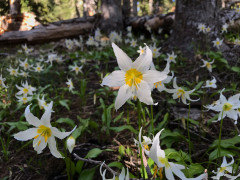
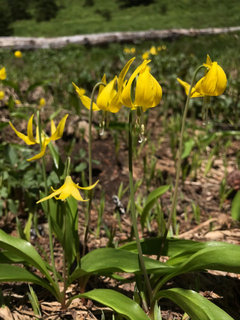
    The Erythronium montanum in the mountains are very lovely. You were probably not "at the top," of Mt Hood at 11,200', but at Timberline at 5600'. The lilies don't grow anywhere near the top. I'm planning backpacking trip up to the Olympics during peak Avalanche lily season and will report on my findings. Here's one from a trip to Goat Rocks in 2020.


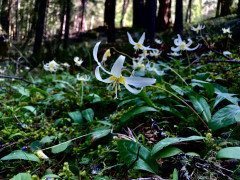
    And Erythronium grandiflorum from that same trip.


    And here's Erythronium oregonum from last weekend.


    And if you've made it this far and you want to come visit, I'd be happy to show you all around. I've been dying to meet Floral, peren.all, etc, for nearly 20 years... And I still think of Jay as a "newcomer", even though he's been here for something like 10 years. I'm always walking about somewhere looking at flowers, and many of the spots we go to aren't a difficult climb or long walk (although those big trips are super fun too!).

  • 4 years ago

    mac I can imagine few trips that would bring more pleasure! What a great twofer that would be meeting you and seeing wondrous sights. Thank you for the thought!

    User thanked peren.all Zone 5a Ontario Canada
  • 4 years ago
    last modified: 4 years ago

    Those are beautiful Trout Lilies! Just by coincidence I'm growing Lobelia kalmii, and Bromus kalmii this year. The Kalmiopsis looks like Kalmia and Azalea got together and had a baby. I can't travel the distance to a lot of good sights, but I have photos that my friends don't mind me sharing. Mostly Illinois, but others from thesoutheastern US. I've been here 6 or 7 years, but surely not 10.😳 When I first came here and got into an argument over why my ID of 'wallflower' wasn't good enough. Floral explained it to me, very nicely. It took me awhile to see the light. Plants evolve and us along with them.


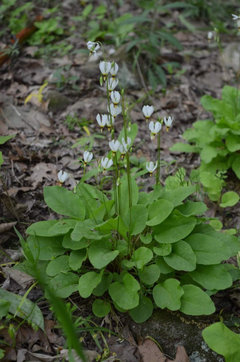
    Primula frenchii, French's Shooting Star It grows near sandstone cliffs in southern Illinois. Formerly Dodecatheon. Not everyone is happy about the reclassification.


    Twinleaf, Jeffersonia diphylla.


    Leucothoe fontanesiana, more Southeastern, but it looks very tropical.


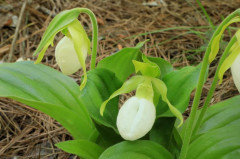
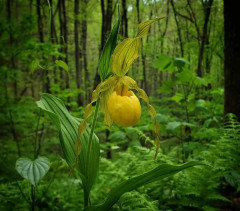
    Cypripedium acaule var. alba


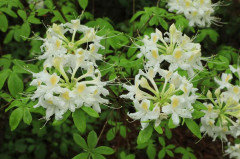
    Rhododendron alabamense


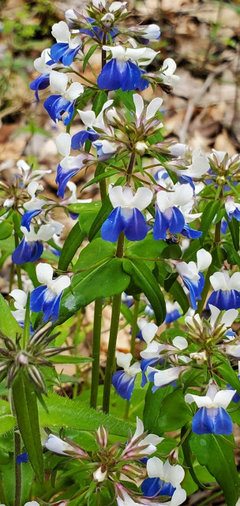
    Blue Eyed Mary, Collinsia verna. I had a difficult time finding seeds, but the western species grandiflora is easy to acquire. I was tempted to grow grandiflora, but it couldn't match the beauty of this one. You probably feel the same way about your native.


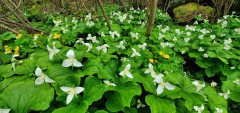
    Trillium grandiflorum is about to bloom in the next couple days. I have 20 of them and they are all in bud.


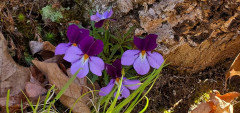
    Viola pedata, Birds Foot Violet


    Erythronium albidum


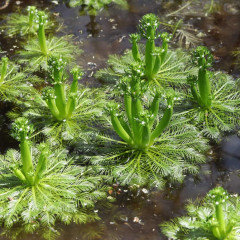
    Hottonia inflata. Primulaceae


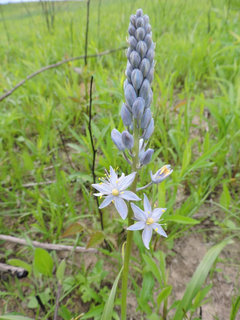
    Camassia scilloides


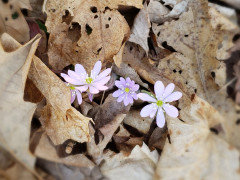
    Hepatica acutiloba, a newly discovered population with double flowers.


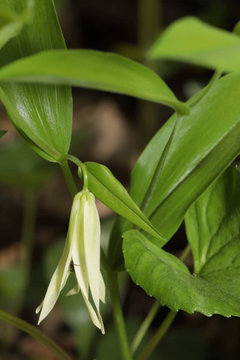
    Uvularia floridanum, has just been recorded in southern Illinois. This isn't even the tip of the iceberg, for plants to show.


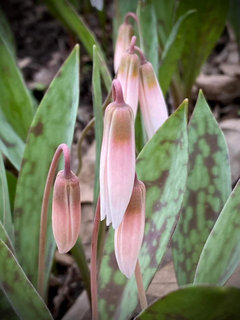
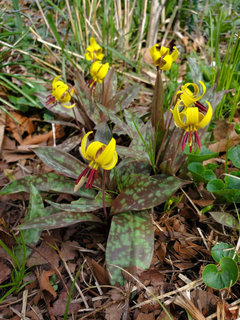
    Erythronium americanum


    Cypripedium parviflorum var. pubescens. This was taken by a botanist who goes out and hand pollinates endangered native orchid populations, and pins some orchids down, close to the ground, so they escape mower blades.

    User thanked Jay 6a Chicago
  • 4 years ago

    I like your photos Jay. Very nice! I hope you get to go out sometimes and see them yourself!


    "When I first came here and got into an argument over why my ID of 'wallflower' wasn't good enough. Floral explained it to me, very nicely..." I seem to remember this, and at the time I thought, "Oh, another noob that floral has to try to indoctrinate. How does floral have the patience?! Must be a British trait." It seems that her efforts have paid dividends this time around.

  • 4 years ago
    last modified: 4 years ago

    I've seen over half those plants in person. They were just nicer photos. Here's a few that I've taken in my area.


    Hepatica


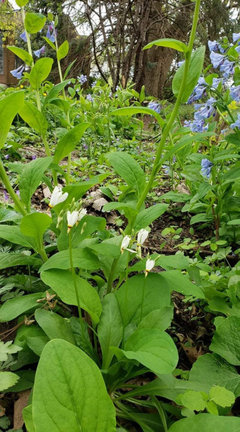
    Primula meadia, (Mead's Shooting Star), Mertensia virginica,(Virginia Bluebells), Impatiens capensis,(Orange Jewelweed).


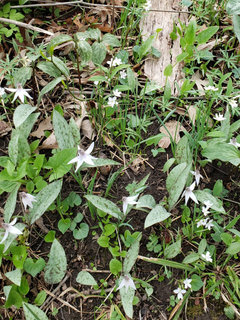
    Erythronium albidum. (White Dog Tooth Violet), (White Trout Lily),,,


    Dicentra cucullaria, Allium tricoccum, Trillium recurvatum, Sanicula? aka Dutchman's Breeches, Ramps, Stinking Bob, and Black Snakeweed?


    Jeffersonia diphylla, Twinleaf

    User thanked Jay 6a Chicago
  • 4 years ago

    Beautiful!

    “Jay, I can't believe you don't have a single member of Ericaceae in your garden!” Having always lived somewhere with acidic soil, one thing I am not looking forward to in my upcoming move to WI is living somewhere with higher pH. Heath family plants are my favorites, and I don’t think I can grow them in my new garden.

    User thanked NHBabs z4b-5a NH
  • 4 years ago
    last modified: 4 years ago

    Babs, I want to add a few Ericaceae. The species I think will do best, this far east are Vaccinium macrocarpon, Gayluccia baccata, Chamaedaphne calyculata, and I might attempt Prince's Pine, Chimaphila umbellata. They might do well in Wisconsin too. These species are found locally in the wild. This is my first year doing bog plants in containers, and the blueberry might do well in a bog pot. Seeds and plants already added to the bog containers, are Calopogon tuberosum, Pagonia ophioglossoides, Gentianopsis crinata, Sarracenia purpurea, Sphagnum, Sagittaria, Xyris, Rhexia virginica, Lobelia cardinalis, Dionaea muscipula,Drosera intermedia, and Drocera rotundifolia, Justicia americana, and Iris virginca var. shrevii.

    User thanked Jay 6a Chicago
  • 4 years ago
    last modified: 4 years ago

    Jay, I currently have the first three you listed in my NH wetland which is a borrow pit for road building, so manmade. I added the Chamaedaphne, but the other two were there already, most likely brought in by birds. I also have Chimaphila umbellata, but it is i a welldrained spot.

    I have considered creating a bed of bark mulch and ground granite at my new place to accomodate a few favorite Heath family plants. I will see what I want to do once I have actually moved.

    User thanked NHBabs z4b-5a NH
0