Software
Houzz Logo Print
bengz6westmd

Challenge -- ID these trees

2 days ago
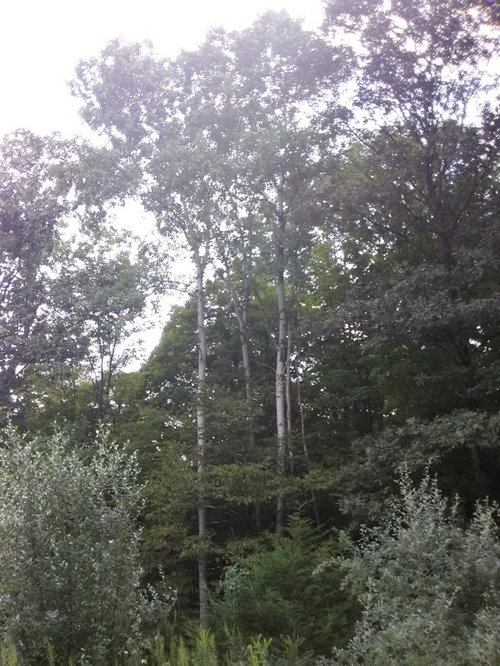
Came across a patch near me of not-common trees, but still not unusual for my area. Couldn't get closer because of a deep, thorny ravine. Not a great pic, but that's part of the challenge. They are younger than the surrounding woods, but just as tall, guessing 75 ft.


Comments (13)

  • 2 days ago

    Are you talking about the birch trees? They look like white birch.

    bengz6westmd thanked Sigrid
  • 2 days ago
    last modified: 2 days ago

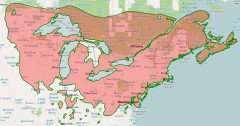
    Possibly Populus tremuloides (quaking aspen).

    check for flat leaf stems.

    bengz6westmd thanked BillMN-z4a
  • 2 days ago

    At least in the high elevation forests of PA, white birches do not look like this. Much whiter bark, and shorter.

    Therefore I agree with Bill.

    bengz6westmd thanked UpperBayGardener (zone 7)
  • 2 days ago
    last modified: 2 days ago

    Clue, there were several isolated specimens of these, even larger, on my forested oak, pine, hickory lot in mountainous southwest VA where I previously lived.

  • 2 days ago

    Yellow Birch?

    tj

    bengz6westmd thanked tsugajunkie z5 SE WI ♱
  • 2 days ago
    last modified: 2 days ago

    Aspen? I didn’t look at any comments i swear! Those are tall!

    So in southern Wyoming there is a place called Aspen Alley. https://cowboystatedaily.com/2024/09/14/wyomings-famous-aspen-alley-is-getting-old-and-not-what-it-used-to-be/

    bengz6westmd thanked L Clark (zone 4 WY)
  • yesterday

    Beng,

    Without a leaf or other part of the tree that's a descriptor, it would be difficult for us to give an accurate id.

    It may be a more widely spread tree that's an outlier but tbh, a tree that grew in SW Virginia doesn't give us a whole lot of information about the tree in your picture.


    Populus deltoides is another candidate, that has white bark until it matures for several years.

    Populus grandidentata bark is generally more grey in color with a different 'look'.


    And there are others that aren't native to my area so I wouldn't have a clue if it was one of those.

    To me, it really, really looks like Poplus tremuloides unless there is another Populus spp. that l don't know about, that looks pretty much the same.

    bengz6westmd thanked BillMN-z4a
  • yesterday

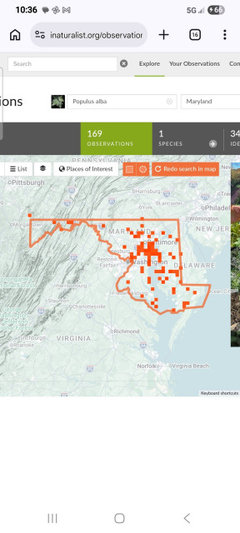
    Populus alba?


    bengz6westmd thanked Jay 6a Chicago
  • yesterday
    last modified: yesterday

    Ding. Ding. Ding. maackia gets it first. It's sorta surprising to me how many of these occur in my area and even down south in southwest VA where isolated big ones were in the canopy of the oak-pine-hickory forest -- several near 100 ft. On a mountain crest just west of me there are many saplings along the road-cut, tho they do occasionally occur down low near me as the pic shows.

    Just to add, this is not a species to plant in a yard as they are notorious in suckering, tho they are handsome in an appropriate siting, standing out w/smooth, creamy-white bark above the lower furrowed trunk even on mature trees. They also don't get the autumn leaf-blight that I see often on other populars and cottonwoods & turn a pleasing yellow.

  • yesterday

    "this is not a species to plant in a yard as they are notorious in suckering, tho they are handsome in an appropriate siting"


    When I was a little kid the first tree I actually "loved" was a P. deltoides at my bus stop. That doesn't mean I ever planted one!


    I didn't even know there was a Populus alba, nor did I know Populus tremuloides occurred in the northeast...so I learned two things from this thread!

    bengz6westmd thanked UpperBayGardener (zone 7)
  • yesterday
    last modified: yesterday

    I first thought about p. grandidentata, after all bengs area is part of it's native range.


    But what I've seen is the same as what the U of M describes.

    ' The bark on bigtooth aspen a green-gray and smooth, turning white-grayish and becoming furrowed with flat scaly ridges as it matures.'

    https://trees.umn.edu/bigtooth-aspen-populus-grandidentata

    So there must be geograhical differences?

    bengz6westmd thanked BillMN-z4a
  • yesterday

    The picture isn't real clear, but the lower bark looks to be furrowed, while the upper part of the trunk is smooth, similar to tremuloides. This is characteristic of this species in my part of the world. They also tend to grow on drier sites than tremuloides.

    bengz6westmd thanked maackia