

talk to me about multi-split ductless heat pumps or alt heating
We’ve just purchased a plaster & lath 1860 farmhouse in a full 4 season town in Ontario that’s been split into two units.
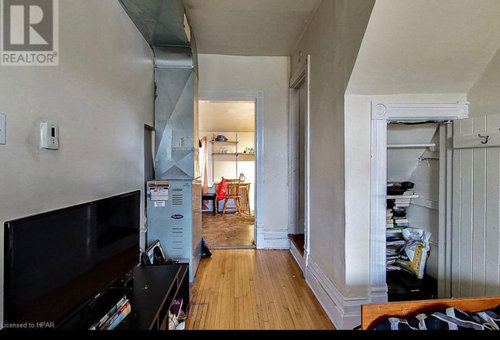
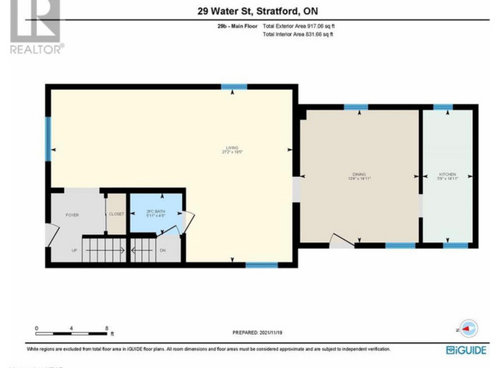
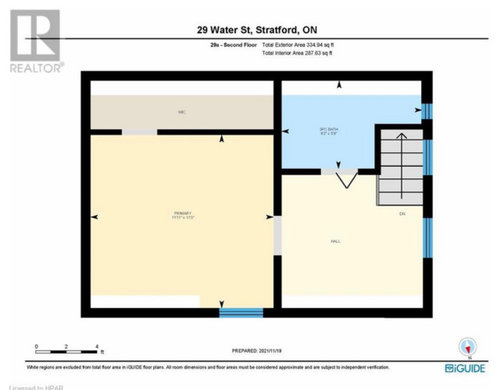
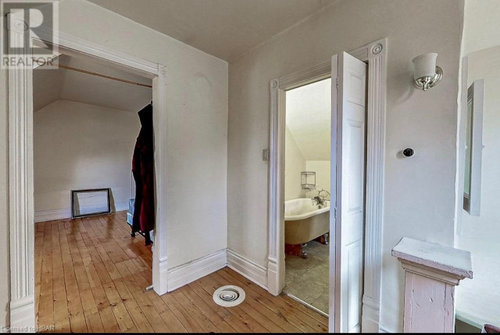
Our place is approx 900 square ft and currently has a 22 year furnace in full view in the middle of the living space. Before we spend thousands on another furnace (hopefully a bit thinner) we want to exhaust all our options. No basement, only a tiny crawl space. Thank you!
Comments (52)
 PRO4 years ago
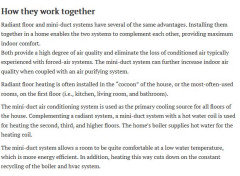
A change to a ductless mini split will free up the space occupied by your existing furnace and eliminate ductwork--in a 900 SF home where space is at a premium--it's definitely worth considering. Here's a link to a resource which provides a good overview:
Your local electric utility provider is another potential information source.Related Professionals
Grand Rapids Home Remodeling · Eugene Home Remodeling · Flint Bathroom Remodelers · Minneapolis Bathroom Remodelers · Mesquite Bathroom Remodelers · Sanford Bathroom Remodelers · Bowling Green Interior Designers & Decorators · Torrington Interior Designers & Decorators · Bloomington Interior Designers & Decorators · Rome Architects & Building Designers · Joplin Architects & Building Designers · Atlantic City Architects & Building Designers · Lynchburg Kitchen & Bathroom Designers · Niles Kitchen & Bathroom Designers · Brattleboro Kitchen & Bathroom Designers
Shauna Black
Original Author4 years ago@Austin Air Companie you're not kidding. Finding someone with this experience is proving difficult
Shauna Black
Original Author4 years ago@mike_home yes. to be honest it's less about the rates and more about the space.
- 4 years ago
Then it that case start getting quotes for mini splits. It is a good solution for a small 162 year old plaster and lathe house. You will have to investigate if your electrical panel will be able to support the added electric load.
 4 years ago
I love our mini split for ac, but it doesn’t do a great job heating. Make sure you have it sized right to heat the space properly.
Shauna Black
Original Author4 years ago@Kate great to know! Can I ask where you live (climate), how many you got and what size? What would you do differently? I heard back from a local HVAC person and he said they're only good to -10 to -15 celsius...so we would def need added heat (baseboards?) for the winter months.
- PRO4 years ago
A heat pump--including a cold climate heat pump-- needs to be sized for both the heating and cooling loads. Mitsubishi and Daikin claim theirs provide 100% of stated heating capacity at -5C They don't shut down at temperatures lower than that, rather, their efficiency drops off and they won't produce 100% of the stated heating capacity. Daikin claims theirs operates efficiently down to -25C
Shauna Black thanked Charles Ross Homes Shauna Black
Original Author4 years ago@mike_home yes, thank you. Your answer stressed me out because we've JUST upgraded from 60 to 100. $$$ ugh.
- 4 years agolast modified: 4 years ago
I have a mitsubitzi system that can heat with outdoor tempd below -20. However I also have a high effciency new boiler connected to old cast iron rads. The heat pump is far more costly to heat with. I use the heat pump only in the fall and spring when I wish to only add heat to the main floor and not heat the upstairs’ bedrooms. My heat pump system is two zones while my boiler is still one zone.
The AC is cost efficient and works well.
 4 years ago
OP: You might be amazed at what a good installer can install in a "tiny crawlspace". It's their job, they do it every day! If you have 24" of space down there, they can install a traditional ducted furnace/air handler and tie into existing or new ductwork.
That last install was a budget hack!
Shauna Black
Original Author4 years ago@sktn77a thank you for this! Def food for thought. They would have to run ducts up the wall to the 2nd floor to heat upstairs and install new vents - extra cost. It's looking like installing a multi split heat pump with two heads will cost less than installing furnace/ac/new ducts + more cost efficient in the long run.
- 4 years ago
@Austin Air Companie thank you for comments, I have a very similar situation, 1860 era house, upstate New York climate, 2 story-1200 sqft, total gut job to studs/rebuilt in progress, no ductwork in walls, old furnace with baseboard registers has been removed, all new windows and insulation phase planned. We are now choosing new system. Considering heatpump, minisplit with gas fireplace for supp heating. Can I ask you to further explain "going to multi head mini split in the coming era of changing refrigerants like underwear --- that option will never come close to a multi decade operation use traditional HVAC furnace" ? Also wondering about adding a hot water heater to the mix, can they run off the heatpump too? Thank you!
 PRO4 years ago
@Austin Air Companie thank you for comments, I have a very similar situation, 1860 era house, upstate New York climate, 2 story-1200 sqft, total gut job to studs/rebuilt in progress, no ductwork in walls.
Can I ask you to further explain "going to multi head mini split in the coming era of changing refrigerants like underwear --- that option will never come close to a multi decade operation use traditional HVAC furnace" ?
Ok, you got your work cut out for you. The problem is this structure you got is small and it's a two story structure. When it was built there was no such thing as air conditioning except for cracking a window or two at night.
In terms of the comment I made about "changing refrigerants like underwear" this is the phase we are about to enter in the USA. By 2023 next year --- we'll know more. The new refrigerants are coming, not yet here.
In about 10 years or less after that --- those new refrigerants will be again going away unless the road map (their current plan changes or gets derailed some how, like we put America first things like that... ;-) )
For a lengthy endeavor into this subject I have laid out the time line, included multi part video series embedded in that Katy, Texas Air Conditioning Blog Post on Kigali Amendment related Freon Phase Out and Eventual Ban.
Realize the ban will increase costs to the point in which it will almost certainly lead you to replacing equipment.
For your structure there *may not be* another better choice. Your structure wasn't designed for air conditioning. --- As such it must be redesigned to work (it needs ductwork and a place for that duct work). A traditional HVAC system lasts much longer than mini split type... that being said due to refrigerant issues -- hard to say right now. I will know more next year.
Mini splits are sold as pairs... indoor and outdoor units are paired to work because they often times communicate with one another. A traditional HVAC unit differs in that you can replace a piece of it to get the equipment to last longer. Mini split warranty periods are often times much shorter than traditional HVAC ducted equipment.
Cost of Ownership will be a thing moving forward. The name on the side of the box will mean less and less. Because no one that can think with their wallet will buy ever increasing freon cost when they can just buy a new unit that uses a newer cheaper refrigerant.
The fun begins in 2023.... We're in a race to prevent the world from ending in 2030. LOL.- 4 years ago
Wow, you've given me a lot to think about, and we have to make decisions soon 🧐 Thanks very much and if you don't mind I'll probably be asking a couple more in the days to come.
 2 years ago
@Austin Air Companie I did not know about the freon ban at all, and your post has me concerned. I have an ancient non-functional heating (gas) and cooling (electric) system that I wanted to replace with a mini-split. Based on the freon ban, should I be holding out until the mini splits are redesigned to use a replacement, or should I be trying to replace with freon now and get grandfathered in before the ban on selling new equipment? What is the last date I can buy freon?
My concern with any substitute to freon is a) it may not work as well; b) it may take years for them to work out bugs.
- PRO2 years ago
Based on the freon ban, should I be holding out until the mini splits are redesigned to use a replacement, or should I be trying to replace with freon now and get grandfathered in before the ban on selling new equipment? What is the last date I can buy freon?
R22 was banned in 2020, dry equipment pretty much ended in 2014 or so. Due to cost of this type of refrigerant it is better to apply that to new equipment today. So while R22 has been banned, we are speaking of new production of the refrigerant. I can still buy it today, but due to cost it is better to put that money in new equipment with a new refrigerant. (Every time the refrigerant changes the equipment changes too. While R22 Freon has alternatives the equipment wasn't really designed for them excluding 407c. But 407c adds more issues later in terms of availability because it is much less used. (Strength in numbers sort of thing, the more something is used the less likely you will run into: "Go get it from your mama's house."
This is mostly about $$ / in some cases it may come down to availability. As there are less places today to buy R22 Freon, but it's still available just costly. If money is no object? You could probably buy what ever you want for a pretty penny.
Everything Equipment wise you buy now in USA is R410a Puron. Puron / Freon are brand names as people use these terms interchangeably. R410a is technical term. This refrigerant is in the process of being phased out, with nothing yet available to replace it. 10% cut last year (2023) additional 30% cut this year (2024) total 40% cut.
So what happens when people need / want something with less supply? $$ ^ (cost goes up). So you have to understand the term ban / phase out etc. It's more or less telling you open your wallet wide is about the best way I can explain it. What do you mean I can't buy eggs for $1 a dozen any more? (Inflation, lack of supply, too many people eating eggs, climate change >name your excuse<)
Much of the R410a we buy now comes from where? Just take a wild guess. (I know this because it's printed on the box it comes in... I don't physically go to this country to buy it, I don't buy it from the internet where scams?? The higher prices go for something what happens, some illustrious criminal makes a fake lowers the price marginally to dupe? (how would you know sort of thing) As a professional I have to trust my supplier.
The con is always about money? Be wary of the cheap price as they say as it may cost you in ways you can only dream about.
I expect new equipment / new refrigerants (R32 & R454b) to begin sometime in 3rd or 4th quarter this year (2024). The new equipment will not be mix or match -- R32 equipment you will need R32 refrigerant only. R454b equipment -- R454b refrigerant only.
R454b is guinea pig realm as there is no life span estimate, no equipment in operation until this equipment starts showing up. (Part of it (R1234yf) has PFAS chemical associated with it, which could give additional reason(s) for discontinuing it abruptly. Like AC techs getting liver cancer enmasse due to point of contact handling etc. >canary in the coal mine<)
R32 is widely used in Europe since around 2014 or so. Over 100 million units in operation. But it has higher discharge temp and GWP numbers are higher than that of R454b. So R454b was easier for USA manufacturers to go to as both of these new refrigerants are an interium use with a 12 year exemption more or less. So the phase out / ban for these newer refrigerants will be no less than 2036 time frame. (according to Kigali Amendment step down targets for USA to get below 350 GWP, neither of these refrigerants come close to that target.)
So at this point it's somewhat of a gamble to say: Wait until the new equipment & new refrigerants come as we don't know what the prices of the new refrigerants are / nor the cost difference of equipment.
Thing is if you wait, R410a equipment may not be available. There won't be any dry equipment like there was with R22 Freon. R410a Equipment ban starts end of this year. EPA has given an additional year to install, but I believe this is only for new construction where these build outs are typically done 6 months in advance.
So the gamble is mostly in money for refrigerant later if you need it due to refrigerant leaks. Most of the time what I see is a window of 3 to 6 years on the worse end, 6-8 years on the better. 10 years best case scenario for anything manufactured since 2014 or so. (no matter which brand)
In terms of performance / efficiency: R32 looks to be in the driver seat here. R32 should be less costly too as it is single component refrigerant, Europe uses it so it is plentiful supply. However, R410a is 50% R32. So it's not likely to be that cheap, probably marginally cheaper is my guess.
12 years from now we may be talking about R290 and complete HVAC redesigns, because this refrigerant is none other than Propane. (not the type you buy for your grill though, it's refined refrigerant grade. So don't get any boom - boom ideas.) The cost will be more about making it safe and the people who work with it. $$$.
GWP of R290 has been estimated at less than 10, and in some instances maybe as low as 5 GWP. I seriouly doubt they will find a better refrigerant. But we'll have to wait and see.
I service the Katy, Texas area. - 2 years agolast modified: 2 years ago
"(R410a) is in the process of being phased out, with nothing yet available to replace it. 10% cut last year (2023) additional 30% cut this year (2024) total 40% cut."
Seems a bit nonsensical. Where do those numbers come from???
- 2 years agolast modified: 2 years ago
Based on the freon ban, should I be holding out until the mini splits are redesigned to use a replacement, or should I be trying to replace with freon now and get grandfathered in before the ban on selling new equipment? What is the last date I can buy freon?
The current refrigerant used in the US is R410a. Some manufacturers plan to use R32 and others plan to use R454b . These refrigerants are mildly flammable. Residential building codes are in the process of being updated to allow their use and what safety features will be required for safe use. Their is no date set when equipment with new refrigerants can be installed a residential application.
My concern with any substitute to freon is a) it may not work as well; b) it may take years for them to work out bugs.
The R22 to R410a transition was successful but it took many years. How the next transition will work has not been thoroughly thought out in my opinion. You have one Government agency who is implementing a reduction of R410a, while other agencies are concerned with consumer safety.
My advice is to buy the equipment when you are ready and have it professionally installed. The next administration is likely to decide how fast or slow the refrigerant transition will occur.
- PRO2 years ago
A number of states have already revised their statewide building codes to allow the use of A2L (mildly flammable) refrigerants in residential HVAC systems. Daikin single-head mini-split heat pumps are currently available with R32 refrigerant for installation in those states (they have been installed throughout the rest of the world for a number of years and the technology is well tested.)
There is a long history of replacing chemicals used as refrigerants, insecticides, herbicides, fire suppressants, etc. with less toxic and/or more stable alternatives as they become available. Some individuals lacking that perspective would have us believe the sky is falling because R410A is being phased out. It's not.
- 2 years ago
Well this seems like a mess. R32 and R454b will eventually work fine, but there could be a number of years where problems get worked out, and who wants to be a guinea pig for this extended beta test?
R410 works and is available now. It looks like R410a refrigerant will be available through at least 2036, so any R410 system purchased today should be viable for at least 12 years.
Is there an official date after which we will not be allowed to buy R410 equipment in the US? I am in California, if they have more strict deadlines.
- 2 years agolast modified: 2 years ago
In March 2022, the California State Senate passed SB-1206 which will ban the sale of certain refrigerants in the coming years. The bill was then signed into law by California Governor Gavin Newsom in October 2022. As part of the bill, the sale of virgin R-410a will be banned starting on January 1, 2030
- 2 years ago
"As part of the bill, the sale of R-410a will be banned starting on January 1, 2030."
The sale or the manufacture?
- PRO2 years ago
"As part of the bill, the sale of R-410a will be banned starting on January 1, 2030"
No, Mike, the sale of R410A will not be banned in California effective 1/1/2030. California SB-1206 provides the following in Section 2, 39735 (7):
(b) (1) A person shall not offer for sale or distribution, or otherwise enter into commerce in the state, bulk hydrofluorocarbons or bulk blends containing hydrofluorocarbons that exceed any of the global warming potential limits as specified in paragraph (2), (3), or (4).
(2) Beginning January 1, 2025, the global warming potential shall not exceed 2,200.
(3) Beginning January 1, 2030, the global warming potential shall not exceed 1,500.
(4) Beginning January 1, 2033, the global warming potential shall not exceed 750.
R410A has a global warming potential (GWP) of 1,890
If you'll take the time to read on to (7) (D) (1) you'll find the following:
(d) (1) The prohibitions established pursuant to subdivision (b) or (c) shall not apply to either of the following:
(A) Hydrofluorocarbons that are reclaimed. (emphasis added.)
To be clear, you'll be able to legally purchase reclaimed R410A in California in 2030 and beyond.
I don't know of any other topic on houzz.com where consumers have been fed more misinformation. Jeesh.
- 2 years ago
I added ”virgin” to descibe the type of R410a. Is the statment now correct or does it need further changes?
- PRO2 years ago
Why single out the state of California? The R410A phase down timeline calls for a 70% reduction in manufacture of R410A by 2030. It's likely that the majority of R410A that will be sold in the U.S. in 2030 will be reclaimed material in California and elsewhere.
- 2 years agolast modified: 2 years ago
"To be clear, you'll be able to legally purchase reclaimed R410A in California in 2030 and beyond."
If it's reclaimed, it'll be very expensive (just like R22 is today).!
- PRO2 years ago
Consumers needing to replace ailing HVAC systems utilizing R410A in the near term can opt to defer the replacement and live without air conditioning until systems are available with whatever replacement refrigerant is adopted. Or they can purchase a replacement system with R410A now, enjoy air conditioning and be prepared to incur somewhat higher maintenance costs in the future in the event refrigerant needs to be replaced. We've seen this show before.
- 2 years ago
Why single out the state of California?
The original author lives in California and historically California sets its own laws on things which effect the environment.
- PRO2 years ago
Mike,
While I'll agree that California has a history of pioneering environmental and health legislation, the restrictions on purchases of R410A in California won't have any environmental impact beyond those provided in the federal legislation which pre-dates it. Nor are they likely to impose any cost penalty on Californians by regulating the purchase of reclaimed versus virgin R410A. The vast majority of R410A for sale in 2030 will be from reclaimed sources--not just in California, but across the U.S.
Characterizing the two alternative refrigerants you noted as "flammable" is incorrect. They reside in ASHRAE's A2L "lower flammability" safety classification--not the A2 "flammable" classification. They're both a whole lot less flammable than A2 refrigerants.
Specificity and accuracy are important when discussing the regulated HFC phase down. Sadly, both are lacking in most of the debate on this issue in houzz.com threads.
- 2 years agolast modified: 2 years ago
Charles,
I edited my pervious post and added the word "mildly" to describe the word flammable.
Do you have any concerns of an A2L classifed refrigerant leak in the vicinity of an open flame? Are you aware of any lab testing of this scenario?
- PRO2 years ago
Mike,
Every alternative choice involves a trade off between costs and benefits. The choice of an A2L refrigerant requires balancing the toxicity and flammability risks against the risks of the alternatives. The mildly flammable character of A2L refrigerants would not be an impediment to utilizing them in my home.
- PRO2 years agolast modified: 2 years ago
Do you have any concerns of an A2L classifed refrigerant leak in the vicinity of an open flame? Are you aware of any lab testing of this scenario?
There is a belief that there will be some type of refrigerant leak detection device, probably required via building code is my guess that will prohibit the AC / Heat Pump in question from firing off if the refrigerant leak is detected by said device.
This is merely speculation at this point, until I see it I am not sure how they will go about it.
In my opinion it's not the refrigerant that poses the real threat, it's that it's mixed with oil (a certain type of oil that works to cycle itself back to the compressor with the aid of the refrigerant. These oil(s) change from refrigerant to refrigerant as well. So there are many working parts to this, not just a single thing like refrigerant only to worry about.)
Systems that use R454b it is widely believed that standard POE oils in use today will be also used with R454b type systems. The system(s) for safety will probably require some sort of detection device that could in turn lock the system out and force run the fans of the system in question. For USA, this is primarily why most manufacturers are choosing R454b because it requires less work arounds. The PFAS component when they discuss these things is mysteriously absent. Meanwhile the USA, not to mention Europe is banning these chemicals from other products but for critical infrastructure needs like comfort cooling eh, we're just going to use it anyway.
The canary in the coal mine, is the AC tech that is in direct contact with these chemicals day in and day out. Maybe they get it on their clothes, bring it home to their family? Much like asbestos did decades earlier. So the EPA admits PFAS chemicals are bad on one end, but ok for others.
My 2024 Freon Wars video update to this topic does a deep dive into what they are doing.
R32 refrigerant is believed to require a slightly different oil that circulates thru the system, not to mention some sort of control for the higher discharge temperature of this refrigerant on top of potential controls for refrigerant leak detection and probably fan lock in control in the detection of a refrigerant leak.Because refrigerants tend to pool, the fans act as a means to disperse the "mist" if you will. The mist mixed with oil (whatever kind it is) lowers the ignition temperature of the mix. Even R410a suffered the same thing, but with much less fan fare.
R32 is a single component refrigerant with no PFAS chemicals attached to it because it is a HFC refrigerant. The potential baddies are HFO refrigerants. They are already out there... as of 2021 all newer automobiles in use today use R1234yf HFO as the refrigerant. (I provide the proof in the video clip above.)
I service the Katy, Texas area.
"To be clear, you'll be able to legally purchase reclaimed R410A in California in 2030 and beyond."If it's reclaimed, it'll be very expensive (just like R22 is today).!
Yep, it's what will drive new sales of new HVAC equipment that uses a "so called" newer cheaper & "eviro friendly" refrigerant. That's the catch 22 of buying a R410a system in 2024, but it could help you escape a generation of equipment. As a new R410a system should last in the realm of 15 years which will put you smack dab into the next equipment ban of R32 / R454b systems. (2036 time frame, I've been telling you these things since 2021.)
The con for California is you spring a R410a leak sometime around 2030 and can't get the refrigerant to perform a repair. Everything in this country is decided by a vote. ( You voted for it, not to make this political but to tell you why it's happening. How do I do that without making it political? ) - 2 years ago
There is a belief that there will be some type of refrigerant leak detection device, probably required via building code is my guess that will prohibit the AC / Heat Pump in question from firing off if the refrigerant leak is detected by said device.
What about the furnace or oil or gas fueled boiler firing off when when a leak is detected? What about a leak occurring in a utility closed in a kitchen? Will there be a safety device to disable the gas stove?
Will all of the safety requirements be resolved, understood, and ready to be deployed by January 1, 2025?
- PRO2 years ago
In contrast to R22, R410A will be phased down--not out. Let's look at some facts:
Manufacture of residential HVAC systems with R22 refrigerant was phased out in 2010-- fully 23 years after the Montreal Protocol was adopted. Production and importation of R22 was banned in 2020--fully 33 years after the Montreal Protocol. There was plenty of advance notice.
Manufacture of residential HVAC systems with R410A (which is a blend of R32 and R125) is scheduled to be phased out at the end of this year, and by the end of 2025 for VRF systems. Production of R410A refrigerant began being phased down beginning in 2022 and leveling out at 15% of baseline production level in 2036. So, unlike R22, manufacturing of R410A will continue, albeit at a reduced level. Refrigerant reclaimers have been ramping up to reclaim more R410A to help mitigate the effects of the phase down. Most sources list the average life expectancy of a residential air conditioning system at 10 to 15 years. There should be ample R410A (and R470A which can be used as a replacement for maintenance purposes) available over that time period.
Both R32 and R125 are A2L refrigerants; their toxicity is rated the same as R410A (indeed R32 is a component in R410A.) The stated health hazard on the Material Safety Data Sheets (MSDS) for R32 and R125 for HVAC technicians servicing equipment is the potential for frostbite--the same as R410A. As for equipment changes, I do not believe that HVACR manufacturers will rely on installation of safeguards in homes other than what they provide as part of their package. The most likely scenario, in my opinion, is leak detection installed in proximity to coils with shutdown of the compressor in the event a leak is detected.
- PRO2 years agolast modified: 2 years ago
What about the furnace or oil or gas fueled boiler firing off when when a leak is detected? What about a leak occurring in a utility closed in a kitchen? Will there be a safety device to disable the gas stove?
Will all of the safety requirements be resolved, understood, and ready to be deployed by January 1, 2025?
Certain locations may have differences to building codes as there are some differences depending on where you live. So the proper answer is to consult a professionally licensed HVAC contractor in your area.
For my area I think it will be limited to the box in which the Evap coil sits in, once refrigerant leak is detected it locks out equipment and forces blower to run to dissipate the "mist" if you will. This lock out, once it happens does not reset. Meaning that professional visit will be required to resolve the issue.
These kinds of refrigerant leaks are enclosed in the box and dispersing the mist thru the structure aleviates the risk of ignition of these fumes. So don't over blow this Mike, it's mildly flammable with very low possiblity of an ignition.
On the exterior condenser if refrigerant sensed, it force runs the condenser fan and locks the compressor out from running. Again once this event is triggered it requires a professional to check it out. ( I don't know if they will do this to the exterior unit as it's outdoors and typically well ventilated enough... but for liability who knows? We can only guess right now.)
-------- R22 vs. R410a Vs R470a ---------
R22 has been in use since the 1950's, equipment phase out in 2010, dry equipment up until about 2014 or so. Then they produced R22 Freon up until about 2020 when production was finally banned. So that's 70 years of use.
R410a was developed in the late 1990's. I grauduated HVAC trade school in early 1996 and only after I graduated did they then start covering it at the trade school. I was exposed to it in 2001 as the large HVAC company I worked for then was a Carrier distributor. So early on in my HVAC career I have dealt with both R22 and R410a. So life of R410a so far has been just over 20 years a far cry from R22 Freon's 70 year reign. (There was a large stock pile of R22 to work thru. Not so with R410a.)
R410a is twice the operating pressure of R22. Typical operating pressures R22 75 PSI / 250 PSI
R410a 150 PSI / 425 PSI. It's more common with R410a unit for it to be flat of refrigerant. You can not reclaim something that isn't there. (refrigerant leaks, means the refrigerant leaks out.)
R470A (also known as RS-53) is a zeotropic mixture consisting of 44 weight% R1234ze(E), 19% R125, 17% R32, 10% carbon dioxide, 7% R134a, and 3% R227ea. It is considered to be a replacement fluid for R410A.
R125 is being phased out due to high GWP, R134a is also on the chopping block. Currently R470a is prohibitively expensive if you can even buy it. So you have a builder who doesn't buy refrigerants claiming that something that isn't there is available? From what I see online costs on average of around $1000 a drum for R470a. That's just the cost of refrigerant, not fixing the leak(s), labor, etc. GWP for R470a is estimated around 909 GWP. EPA is cutting to 700 GWP. So it can be easily said R470a will be short lived at best, just based on already known requirements moving forward.
So this thought that R470a is going to save your poor AC unit? possibly those in Calfornia, but only because they won't be able to buy R410a after 2030? I think by that time, R470a will probably be an after thought. Due to cost.. as always.
As I have said before... cost is what will drive replacements just as before with R22. The cost of R22 stayed low up until about 2018 or so, relative to what R410a cost at that time.
That is all changing. 2024 is only the beginning.
I service the Katy, Texas area.
- PRO2 years ago
"Will all of the safety requirements be resolved, understood, and ready to be deployed by January 1, 2025?"
While some states may still need to modify their statewide residential building codes, the 2024 International Mechanical Code which is generally incorporated by states in their building codes has already added the A2L refrigerants to their list of permitted refrigerants and specified any requirements for its use depending on the classification of the system and the building's occupancy.
"What about the furnace or oil or gas fueled boiler firing off when when a leak is detected? What about a leak occurring in a utility closed in a kitchen? Will there be a safety device to disable the gas stove?"There are lots of hazards in a typical home. Mine has quantities of gasoline stored in my attached garage, ammunition in a closet and natural gas piped to multiple appliances to name a couple. While codes can't address every possibility or combination of possibilities for an incident, they do consider the severity and probability. The changes to the International Mechanical Code represent the thoughtful consideration of contractors, engineers, and safety experts over a number of years and many hours of debate. Regulators trust the process and so do I. For your specific concern, follow the process specified in the 2024 IMC.
The good news is that the sky is not falling, at least with respect to ongoing changes in refrigerants approved for residential applications. I can't predict whether homeowners who need to purchase R410A in the next 15 years will go bankrupt doing so, but then again, I'm not an alarmist.
- PRO2 years ago
Hmm ok, providing information on up coming changes to the HVAC industry is now being an alarmist?
Even when HVAC repair, retro fit installations, HVAC system upgrades for residences is my primary job function?
I know the break point when the cost of refrigerants reach a certain threshold, that it become more obvious to buy new AC equipment yet again, rather than sink money in a refrigerant housed by older obsolete AC / heat pump equipment.
Bankruptcy?: This may play a factor too. Last time was 2008/2009. If you wait long enough history often repeats itself in various mystical ways.
The con / difference from R22 to R410a?
ODP vs GWP : all current refrigerants except for R32 & R454b are going away. So putting stock in a replacement for R410a isn't going to work for long for many more reasons than just $$ alone.
R32 & R454b: These also will be phased out again. The timeline is already set, mark your calendar 2036. Could this date change? yeah, maybe. But the change is coming.
If this makes me an alarmist? so be it.
R410a temp glide
R470a temp glide
I service the Katy, Texas area. - PRO2 years agolast modified: 2 years ago
Ray,
There's a difference between raising awareness and anxiety.. You've carved out a niche as the "profit" of replacement refrigerant doom using every possible opportunity to direct houzzers to your politically-charged video. Unfortunately, you don't even have the benefit of a high school chemistry class by way of background.
Change is not always better nor always welcome. In the case of the R410A phase down, there isn't a lot the average consumer or HVAC replacement technician can do to affect the outcome. The 2024 IMC outlines what needs to be done with respect to residential systems. The sky is not falling. Get over it.
- PRO2 years ago
"How about get educated as to what will probably effect your household in some form within the next few years." You're not educating anyone, Ray, nor are you in a position to do so. You're simply upping the anxiety level of homeowners who know even less than you do. If you want to educate homeowners, point them to information provided by first hand sources--not your politically charged second or third hand version of reality.
- PRO2 years ago
What like the EPA? The DOE?
Both of which are government agencies. Made up from those the people elected by casting a vote.
Everything in this country is decided by a vote. So whether you like it or not, politics is a part of it. - PRO2 years ago
Houzzers who are interested in an update on refrigerant phase downs can get it here::
https://grummanbutkus.com/blog/refrigerant-phase-downs-what-you-need-to-know/
It takes about a minute to read and spares readers the warped viewpoint and political slant of Ray's not-ready-for-prime time videos.
- PRO2 years ago
Yes absolutely please read Charles provided link, here's a snippet from it that you shouldn't miss like he did.
Click to enlarge.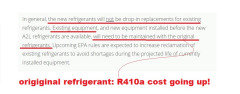
Then for more clarification, watch my videos for further clarification.
- PRO2 years ago
I am glad you've started reading everything I write Charles. Keep doing that.








mike_home