Software
Houzz Logo Print
rick7072

Identify this plant?

4 years ago
last modified: 4 years ago
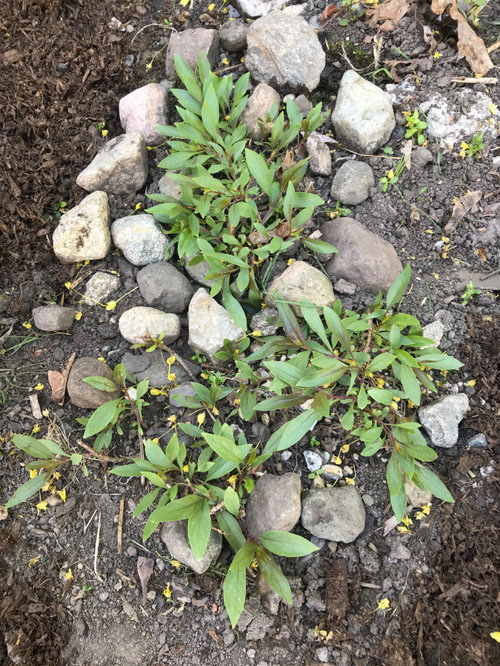
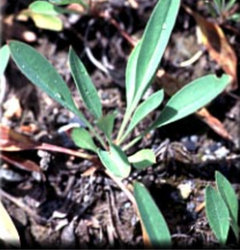
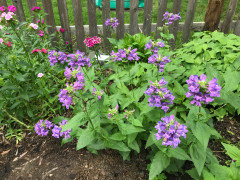
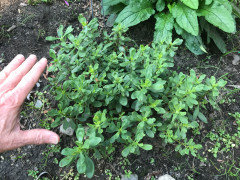
Can anyone identify this plant growing in my garden in Boston, MA? I thought I'd planted it in January 2021 from seed from the American Penstemon Society seed exchange, and had it labeled as being Penstemon euglaucus. But seeing it now finally growing a bit a year and a half later, I don't even think it's a Penstemon at all. Probably bad record-keeping on my part, and I now realize I have no idea what it is. It's growing in a site that gets a few hours of sun mid-day.

Ignore the rocks - I just placed them there to provide better surface drainage for when I thought it was Penstemon. Thanks for any help.


Comments (20)

  • 4 years ago
    last modified: 4 years ago
    It looks like a juvenile Penstemon euglaucus to me. The leaves match. They can have some red coloring in the leaves and stems. Opposite leaf arrangement, leaves, oval, lanceolate, oblanceolate, glabrous leaves and stem, mounding habit, leaf tips sharp, petiole lengths match. The blue color must be affected by conditions. In photos I see some plants that are more green, and others quite blue. I see some glaucous leaves in there. They grow on hillsides in Oregon, and they need good drainage. No worries. Success 🎉


    Penstemon euglaucus

    Rick (zone 6b, MA) thanked Jay 6a Chicago
  • 4 years ago
    last modified: 4 years ago
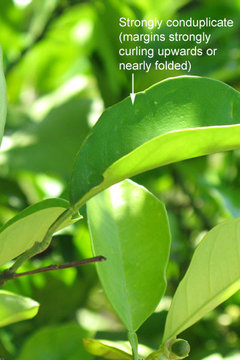
    Ive grown P euglaucus and they always have that cupped leaf appearance. i dont think that this is a penstemon. maybe an aster.


    Edit: on second thought, it might be a Penstemon, just not euglaucus.

    Rick (zone 6b, MA) thanked User
  • 4 years ago

    There's something about the leaves that look very Penstemon- y. to me. Looks similar to early P. digitalis, with the red coloring. You're right about the lack of cup shaped leaves. This plant is being grown on the wrong coast, so maybe that's a factor? As an example, I tried growing the west coast Asclepias cordifolia, and it looked terrible and sickly, here in the midwest, but out west it thrives and looks gorgeous. I'm going to get a 3rd opinion on this one.

    Rick (zone 6b, MA) thanked Jay 6a Chicago
  • 4 years ago
    last modified: 4 years ago
    I very much appreciate this discussion. Of course I’d be overjoyed if Jay is right. but possibly I‘ll have to wait till it blooms to know for sure. (Hopefully I won’t have to wait till next year for that.) It is interesting to speculate that since it‘s definitely being grown on the wrong coast, can the entire plant—especially the look of the leaf—take on a very different appearance? The leaves don’t at all look glaucous in the sense of having a powdery bloom or waxy coating. But Jay, your idea that the bluish coloring may arise primarily when it’s being grown in its typical PNW range is interesting. Who knows what it looks like if grown here in New England? And your wondering if the classical cupped shape may also be a product of its environment is even more intriguing.

    I have a beautiful Penstemon digitalis growing maybe 20’ away, but the leaves on that plant are giant even when they’re young.

    Macranthos: if it turns out not to be a Penstemon, I’d say aster is a good bet.

    My inspiration for even trying to grow P. euglaucus in Massachusetts comes from Dale Lindgren, who wrote (2003) that many penstemon ”are untried in a variety of different conditions and may prove to be more tolerant than expected. Experimentation is needed.”

  • 4 years ago

    Rick, check the leaves to see of they are coated with a white, waxy powder? A west coast, botanist friend agrees with macranthos, and she thinks it's some other Penstemon species also. If I'm wrong, my apologies, but it seemed to fit most of the criteria. Please give us updates if possible. I grow P. digitalis, P. smallii, P. calycosus, P. hirsutus, and P. tubaeflorus. I gave up trying to grow the western Penstemon species. They were southwestern actually, species like Pine Leaf Penstemon, just can't handle my wet, humid midwest climate.

  • 4 years ago

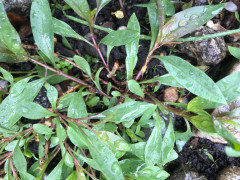
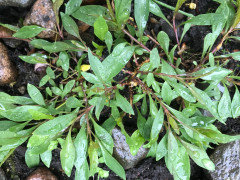
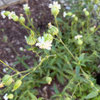
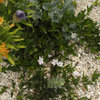
    Two more photos, a little more close-up, to go along with my comment above.


  • 4 years ago
    last modified: 4 years ago
    Looks like white powdery leaf surface, and some leaves are slightly cup shaped, hmm? Penstemon usually bloom early, so it shouldn't be too long a wait. Mysteries are exciting!

    Rick (zone 6b, MA) thanked Jay 6a Chicago
  • 4 years ago
    last modified: 4 years ago
    Horticultural mysteries: I seem to (unintentionally) specialize in them. I’ll go out tomorrow morning and look more closely for a glaucous bloom on the leaves, and for a slightly cupped shape (I wonder what the botanical term is for that). Thanks for the encouragement.

    btw, I’m also growing all five of those eastern native Penstemon you mentioned, in addition to P. pallidus and P. laevigatus. I’ve been amazed at how vigorously P. smallii reseeds - I’d have it all over this one bed if I didn’t pull out the seedlings.

    A couple of southwestern species are growing well for me: P. eatonii and P. barbatus.

    I’ve also had reasonable success with two Pacific Northwestern natives, which is why I thought to try euglaucus: P. serrulatus which has grown vigorously, and P. ovatus with its gorgeous blue has also been strong. I had to find the right part-sun spot for both of them.


    P ovatus:


    P. serrulatus, with a bit of Sweet Wiliam on the left -


    Three plants of P. barbatus (really happy with these) -


  • 4 years ago
    last modified: 4 years ago
    Those are beautiful plants Rick. Great colors. Penstemon smallii hasn't done well here, and it has never self seeded. The term for cupped leaves is conduplicate. We might need a flower to get an ID.


  • 4 years ago
    last modified: 4 years ago
    Ok, So it's not an Aster because those all have alternate foliage. My bet is on a Penstemon after that closeup. It could be euglaucus that looks weird because of all the variables discussed, but I agree that we're going to need a flower to figure that out.


    Edit: could it be Penstemon rydbergii? Just a thought. It looks a lot more like rydbergii than euglaucus in my experience. P rydbergii would be another one for you to try out east. It's got a good distribution in moist areas.


    I'm not surprised that serrulatus and ovatum do well for you since those ones grow west of the Cascades. They're practically east-coast plants themselves growing in the more-humid valley areas. Others that might do well for you are cardwellii, barrettiae, azureus, and fruiticosus, and on some rocks/rockwall maybe rupicola, davidsonii, procerus, and richardsonii. Also, be sure to try Nothochelone nemorosa. These all grow in wetter areas naturally. I've seen lots of euglaucus in both moist and totally dry areas around Mt Hood, and they did ok when their seeds were grown into cultivation for me. They seemed to prefer a bit of shade in my garden.

    Rick (zone 6b, MA) thanked User
  • 4 years ago

    Rick, no help here towards an ID (though I do agree it's a probably a Penstemon). What I want to say is how jealous I am of all the Penstemon species you're able to grow. I've struck out with many of those same ones...several times. I have a large, nearly two acre garden, and have success with many things that "won't" grow here, but most of the penstemons hate me. Clay soil, wet winters, super humid summers; there's just too much stacked against them. The only dependably perennial one for me is "Husker Red'. How pedestrian, lol. I'm trying 'Midnight Masquerade' this year. It's supposedly more tolerant of moisture. Hmmmph, we'll see.

    Rick (zone 6b, MA) thanked fig_insanity Z7b E TN
  • 4 years ago

    Fig, how available are the eastern penstemon over there? Out here, we have a small fraction of all western species available at a good Penstemon nursery (like Wild Ginger Farms), which is still quite a few species. As for Eastern species, besides those already mentioned, have you tried canescens, laxiflorus, gracilis, multiflorus, australis, or pallidus? Have you tried serrulatus?


    Rick, another that you might try is whippleanus. It's done better than most in thick clay and a moist spot.

    Rick (zone 6b, MA) thanked User
  • 4 years ago
    last modified: 4 years ago
    Macranthos— Penstemon rydbergii is an intriguing thought. I’ve never (deliberately!) tried growing it, but the description in the 2003 Lindgren and Wilde book absolutely confirms what you say: “Growers in moist climates find it long-lived and pleasing.”

    If there was a mixup of identification, I don’t know where it occurred. It’s possible that somewhere along the process of getting the seeds to the seed exchange (can’t remember if it was NARGS or American Penstemon Society) and then put in the mail to me a couple of years ago, the packet was mislabeled or misidentified, and that it’s actually rydbergii, or some other penstemon. Or I mislabeled it at some point. But even if it turns out to be some interesting new Penstemon euglaucus var. coastus eastus I would like to try rydbergii maybe next year.

    Your suggestions for other species to try are right on, and I actually am growing P. barrettiae in my garden soil. I’m pretty sure I sowed the seed at the same time as the mystery penstemon, and it’s done ok with good leaves last year and now this year. I’ve read that even under its native habitat it takes three years from seed to flower, so I don’t know if or when it’ll flower for me.

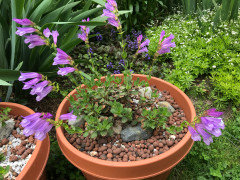
    I also have fruticosus growing not in my soil but in a decorative planter with a mixture of gravel, baked clay, different size pebbles, sand, and a bit of potting soil as the growing medium. It flowered last year and was glorious.

    Cardwellii hasn’t done as well but is still hanging on. I’d like to try azureus again - I think I couldn’t get the seeds to germinate. Rupicola is also in sand and gravel in a decorative planter, and bloomed moderately last year. Richardsonii flowered one year and then died. I want to try again with procerus—I think that’s another that I had trouble getting to germinate, which apparently is unusual. But it should be able to grow here.

    I don’t know about Nothochelone nemorosa and will look it up. I see it’s called Wooded Beardtongue. Similar to penstemon but placed in a separate genus.

    And yep, I have the mystery plant in a half-shade/half-sun location.

    Thanks for all your help. Penstemon are a wonderful species but not grown much here in New England except for the many cultivars of P. digitalis.

    P. fruticosus - a complete joy to see this last May 21:


    P. barrettiae September 2021 with healthy leaves. Seed sown January 2020. Will it flower this year? Who knows.


  • 4 years ago
    last modified: 4 years ago
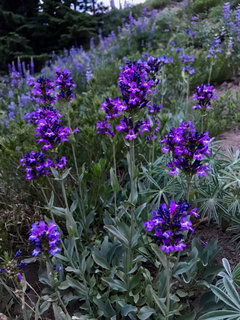
    Jay—I’m growing Penstemon pinifolius here in Boston not in my native soil but in a decorative planter filled with a mixture of several sizes of gravel, rocks, baked clay, sand, and a little potting soil, just like I have P. fruticosus. It flowered nicely last year and continues to grow. I don’t have a rock garden so these planters with a course mix have been a good workaround.


    Pineleaf Penstemon


    Penstemon grandiflorus also has grown nicely in a pot -


  • 4 years ago
    last modified: 4 years ago
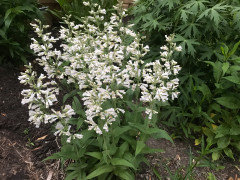
    Hi, Fig - very glad to get your note. Yeah, I would imagine that in Tennessee it would be a bit harder to grow western Penstemon than it is here in New England. We have some weeks of brutal heat and humidity in the summer but I’m sure less than what you have. And I’ll bet the clay soil is also not to most Penstemons’ liking.

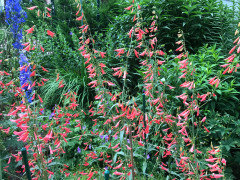
    It’s definitely been a struggle to grow these but I have had some reasonable success and am truly happy to see them in bloom. Especially that fruticosus with its jeweled flowers, the grandiflorus which is getting ready to bloom, and the brilliant scarlet red cardinalis and eatonii - all just gorgeous. And it all was just a dream three years ago. I joined the American Penstemon Society and they’ve really helped me.

    Have you tried P. smallii? That’s native to the Carolina hills and I imagine would do well in Tennessee as it grows very well here. Also P. murrayanus, native to Texas and Louisiana, is growing well for me.

    Glad to talk more about this with you.

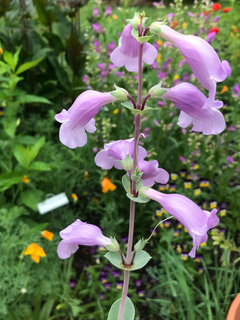
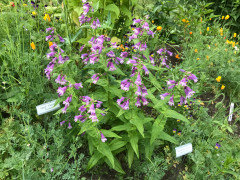
    P. smallii


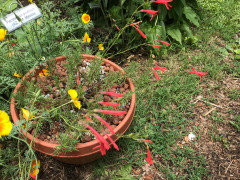
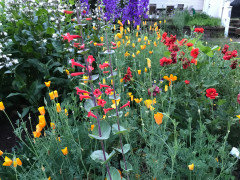
    The upright red flower stems in the center-left is P. murrayanus with its interesting perfoliate leaves, California Poppy spread throughout; blue-purple delphinium in the background, and Geum on the right.


  • 4 years ago
    last modified: 4 years ago

    Well, shoot. Penstemon murrayanus is quite a looker, unlike its name.

    Rick (zone 6b, MA) thanked User
  • 4 years ago

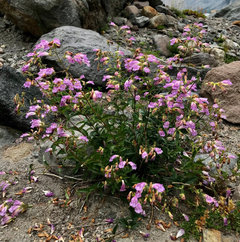
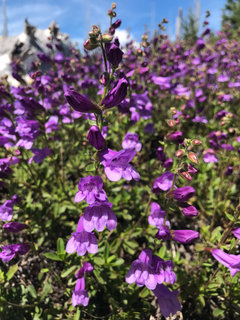
    Here are a couple out in the wild. Just a few things I found on my phone with a look through.

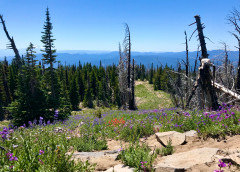
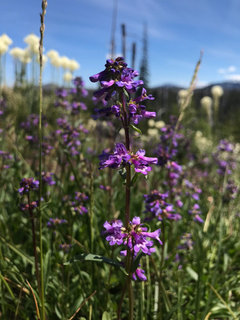
    I think these are all rydbergii. I've seen thousands of procerus, but just don't have any on my phone for some reason...


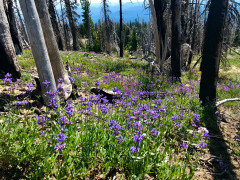
    More rydbergii, in and amongst the lupine, asters, Castilleja, etc.


    Nothochelone nemorosa on Mt Hood.

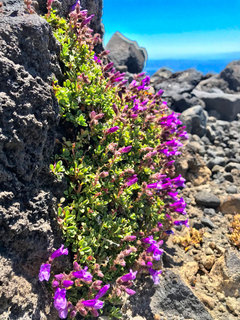
    I think this is fruticosus. On Mt Adams.

    davidsonii up high on Adams

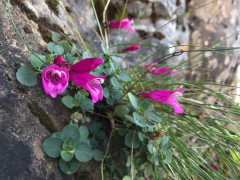
    rupicola is one of my favorites! I have some pictures somewhere of enormous plants growing on a huge serpentine crag... but, here's a little one growing in the Columbia Gorge.

    Here's euglaucus growing up at Cloud Cap on Mt Hood. Luminous.


    Rick (zone 6b, MA) thanked User
  • 4 years ago
    last modified: 4 years ago

    Macranthos, those pictures are all gorgeous. The euglaucus is stupendous. Luminous is right. And also that rupicola growing vertically on a cliff, and the color of the rydbergii. Someday I’m going to come out west and see myself some penstemon. Do you know that in all the time I’ve lived here in Massachusetts, and I’ve spent plenty of time hiking and I'm a reasonably-trained amateur botanist (botany was my major for a while in college), I’ve never once seen a penstemon in the wild? And I know for sure that the vast majority of gardeners will say the same thing. It's sad.

    It’s likely that a few university botanists in the area know of some small populations of a few of the species, but they’re keeping the location to themselves "for security concerns." The truth of the matter is that for all the talk about “eastern native” penstemon, very few gardeners or hikers have seen any of them in the wild. They're simply not common in their native habitat. Penstemon digitalis, P. laevigatus, P. tubaeflorus, P. pallidus, hirsutus, calycosus--all officially native in Massachusetts but I've never seen a single one of them in the wild and I know no one who has. And a few others are actually native a bit south of here.

    I forgot to include a picture of what might be my favorite eastern native penstemon: P. pallidus, which I enjoyed in my garden for two years. This year I guess it decided it was too tired and disappeared.


  • 4 years ago
    last modified: 4 years ago

    Hey Rick. It looks a lot like euglaucus now, but it could be procerus or rydbergii. I confess, I don’t know them well enough to tell the differences. Maybe measurements from a key could help.