Software
Houzz Logo Print
foodonastump

Weed or desirable?

4 years ago
last modified: 4 years ago
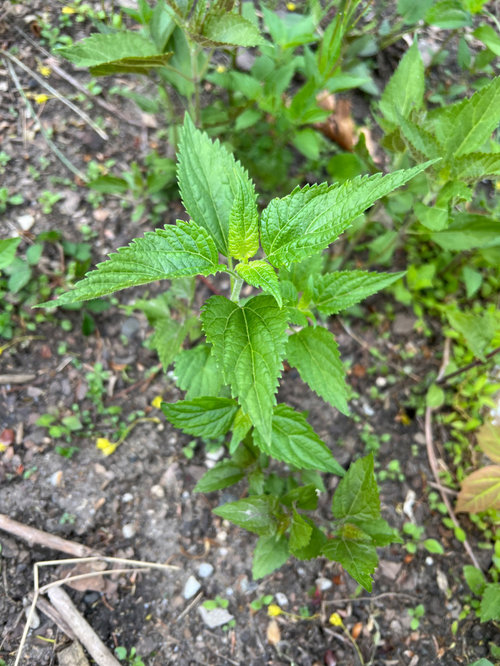
EDIT - ADDING ”NAME THAT PLANT” to the discussion.


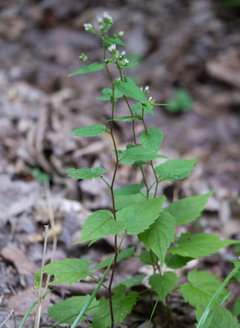
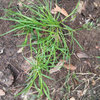
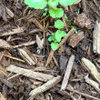
I know this isn’t the best forum for this but I don’t know what is. I have a lot of these popping up in a perennial garden and I don’t know if they’re weeds or something I’m just not remembering. I downloaded an app that tells me it’s white snakeroot but I’m not convinced, and even if I was I’m not sure whether to pull or love. Any ideas? I’m on Long Island. TIA!


Comments (25)

  • 4 years ago
    last modified: 4 years ago

    Looks like mint...if it is, the stem will be square, not round. Have a smell.

  • 4 years ago

    I have no clue, but there is a wonderful app we use called SEEK. It identifies plants ( and animals- insects, all delights) . Highly recommend

  • 4 years ago

    It's weed...put some in your pipe and smoke it :-p

  • 4 years ago

    Could be Stinging Nettle, a weed. Does it give you a little sting or itch when you touch it?

  • 4 years ago

    Mint. Squish between your fingers...maybe....peppermint....

  • 4 years ago

    I'd go with Gardengal!

  • 4 years ago
    last modified: 4 years ago

    No stinging, no smell, round stem.

    Downloaded seek, thanks. Couldn’t get a firm result but it did keep coming back to it being some sort of dicot, daisies or something. Entirely possible. Will try to add Name That Plant. Thanks!

  • 4 years ago

    Looks like mint to me. Can be very invasive.

  • 4 years ago
    last modified: 4 years ago

    Not mint, not nettles....it IS white snakeroot.

    Don't know what to say to convince you all but plant ID apps are not very accurate for any but the most basic or common of plants. Most are estimated at only a 50% accuracy rate..........

  • 4 years ago

    Agreed with GG48.

  • 4 years ago

    Thanks all - whatever it is (and I’m fine saying snakeroot) no one other than my MIL has tried to convince me it’s something I want, so it’s gone!

  • 4 years ago
    last modified: 4 years ago

    Definitely Ageratina altissima, has the unmistakable teardrop with wings vein pattern.

  • 4 years ago

    Another vote for Ageratina altissima. Very little, if any, doubt about it.

  • 4 years ago

    Tomato / tomahto... Ageratina altissima / Eupatorium rugossum.


    I have tons of this in my backyard garden after having introduced "Chocolate Eupatorium" years ago. The dominant descendants are green leaved, but some chocolate ones still come up. I'm fond of how the white flowers give life to the garden in fall.


    It is one of those volunteers that seems to come up just where I need something. But I keep a densely planted garden; I'm not one who tries to frame individual plants with a blank, homogenous background wood mulch.


    You could leave it to see how you like it, and change your mind later. It is not difficult to remove at any size.

  • 4 years ago
    last modified: 4 years ago

    There are so many in the wild, I don't see the point in growing them. I grew the chocolate too, but they weren't so attractive after they started popping up everywhere. They are also Allelopathic.

  • 4 years ago

    We had white snakeroot near our home in upstate PA and for years I'd just pull it out.

    Our ground is very rocky and the plants were fairly easy to remove. But last year when i pulled them I broke out in an unpleasant rash within a few hours. It was very itchy and lasted for nearly a week. That's when I finally decided to ID the weed. Now our landscaper takes care of them.


  • 4 years ago

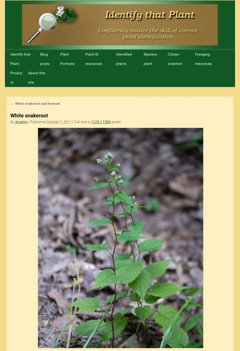
    In the OP the stem looks green. In this pic, white snakeroot looks like the stem is dark. Also the stem looks more like a vine than the one in the OP. The OP, the leaves look more closely placed.


  • 4 years ago

    Annie, if macranthos, jay and co. say its White Snake root that is what it is. If you frequented the Name That Plant Forum you’d be familiar with them and their wide knowledge of plants.

  • 4 years ago
    last modified: 4 years ago

    I will attest to the extensive knowledge of our Name That Plant denizens.

    And FWIW, common names can be problematic because more than one type of plant may be known by the same name.

  • 4 years ago
    last modified: 4 years ago

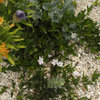
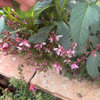
    Annie, I'm afraid you were veiwing a site that is spreading false information. The plant you posted as white snakeroot is really Eurybia divaricata, WHITE Wood Aster. It's always a good idea to check at least 3 sources to confirm that something is true, before stating it.


    Eurybia divaricata

    FYI, Ageratina has 330 species. Only 6 occur in North America. The 5 other species here, all occur in the south.

  • 4 years ago


    It's no easy task identifying. And after they are dug when you don't have the memory of where they were growing in your garden it's tougher. I have had more correct than not using plant identifying apps. Well not me, but my neighbor the master gardener. She often gives me a hand identifying things. The spiky leaves on the OPs plant always makes me wary for weeds...but that's a false fear. When in doubt let it grow see what it reveals!!

  • 4 years ago

    OK then I stand corrected. I don't expect false info on plant identification like I do on certain other topics, but now I know I need to.

  • 4 years ago

    Well that's interesting, I learned something today too, from this site: https://bplant.org/compare/white snakeroot vs late boneset

    I looked up pics of white snakeroot and the flowers looked so familiar, I see them every autumn in the local park. I'd thought they were boneset, but now will have to look more closely because they might well be snakeroot.

  • 4 years ago
    last modified: 4 years ago

    “I don't expect false info on plant identification...”

    Sadly, it happens all the time. People upload their own photos to sites and misidentify and mislabel them. Then others repeat the error. Even Wikipedia sometimes has incorrect illustrations. A lot of sites appear to have no mechanism for verifying ids. Check and compare several sources, preferably not blogs. The site quoted above shows photos of different species, all supposed to be WSR. http://identifythatplant.com/white-snakeroot-and-boneset/