Software
Houzz Logo Print
mxk3

Why won't my kousa dogwood flower?

4 years ago

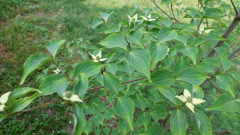
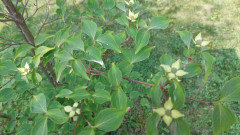
This is Year 4 in the ground and this thing has never flowered except the year I planted it, and I can't figure out why. She's in a part-shade location, I don't think it's too dry there based on my observation that foliage has always looked very healthy and full, and she has grown/filled out over these past few years. Can you think of any particular reason she's refusing to flower?

Comments (21)

  • 4 years ago
    last modified: 4 years ago

    As I recall, mine did that and then started blooming around year 5. I figured it was transplant shock. Also, they don’t bloom until June in these parts, do you see flower buds?

    tj

  • 4 years ago

    I am in a similar situation and have seen just a few out of mine that is probably 6 years in the ground from a very small transplant. It has not been very showy yet but is growing nicely where two Cornus floridas passed 7 years back.


  • 4 years ago

    Hhhhmmmm...maybe a cultivar whose flower buds are being killed in winter? Whatever its listed USDA zones are in the realm of US commercial horticulture, it covers a wide native range in East Asia, intergrading with evergreen (sub)species that are only zone 8 hardy, so perhaps it is a more tender one.


  • 4 years ago

    Seed grown kousas are notoriously slow to flower - 7-10 years. But that would not explain why it was flowering the first year.

  • 4 years ago

    I’ve been having same experience with two kousas. Both bloomed fairly nicely at about year 3 after planting, but since then pretty much nothing. Some years not even a single flower at all on either. Two different varieties. I was always wondering if when I planted them at the edge of an oak forest if they just want more sun. I’m finding most shrubs/trees here in NH want a lot more sun than in warmer zones. Fortunately the trees are beautiful and the fall color is great. But, each year I am sad when yet again, no flowers……..

  • 4 years ago

    I just looked up the plant tag for the first C. kousa we planted ('Milky Way') - 2003. I'm not sure how long it took to bloom well (pictures from 2000-2009) are on the hard drive of the old computer which is now in storage in the basement...) but I do remember being disappointed for the first few years....! It eventually did start to bloom well as it got older/bigger/got more light by leaning towards the neighbour's garden! So, patience.... Consider planting one of the variegated ones (e.g. Wolf Eyes). The first one I planted died as it got too dry in the place I planted it. The second one I planted near the dead stump of a pine tree so the stump acts as a 'nurse log' to hold water and provide nutrients for the dogwood. So far, so good... I don't care if it ever blooms because the variegated leaves provide a show on their own! I think the C. kousas need a fair bit of light to bloom well, so it'll be interesting to see if Milky Way changes much now that we took down the old sick ash tree in March this year.

  • 4 years ago
    last modified: 4 years ago

    Several kousas over the years and each took 3-4 years to bloom, if not 5. Scattered blossoms during those years.

    All my kousas have had an alternate year bloom cycle. One year covered from tip to trunk with blossoms. The next year flowers but far, far fewer. I've observed the same with other woodies

    such as viburnum plicatum tomentosum some rhodies and a stewartia.

    Once the plant is mature enough to have many flowers the lesser blooming years are not as obvious.

    If you dig down in the literature I'm pretty sure my experience can be confirmed.. It's not something the breeders and sellers advertise.

  • 4 years ago

    Marie - true re dogwoods having good bloom years followed by poor ones…! I’ve noticed that more in the dogwoods than other woodies but it’s probably true for others too as some do seem to have poor years on a regular basis if I think about it….

  • 4 years ago

    "I've observed the same with other woodies

    such as viburnum plicatum tomentosum some rhodies and a stewartia."

    With the exception of fruit trees, the vast majority of woody plants do NOT observe alternate bearing or biennial flower production. Once established, they will flower consistently year after year provided weather conditions are acceptable for the flowering.

    I would be interested in seeing any scientific evidence that would support the alternate year theory. With a degree in horticulture and many decades growing and gardening professionally, I have never seen any reference to this outside of fruit bearing trees.

  • 4 years ago

    GG48, It may be your growing conditions vs. ours farther east. In my NH garden, my kousas definitely has some years better than others.

  • 4 years ago
    last modified: 4 years ago

    GG, don't know what to say except I see with my own eyes. My V.P. T. Mariesii varies from year to year. Not strictly non-bearing , bearing. More like 'light flowering/fruiting to heavy/prolific.

    I've never tried to quantify the differences and I'm not going to to research it.

    Let's just say it's one of the things you have not personally observed in your experience.

  • 4 years ago

    Not only have I never observed it, I find it very odd that this apparent phenomenon is not referred to by any authority on woody plants I have ever encountered. Pardon me for my dubiousness.

    Perhaps a significantly colder in winter climate makes a difference. If so, I would say it is atypical rather than routine.

  • 4 years ago

    my kousas definitely has some years better than others.


    Not that I want to join into the fray, but this might go back to my winter climate variability theory.

  • 4 years ago

    My kousa is blooming sparsely this year after a very full bloom last year. Both years had quite similar winters and springs. While there are definitely years that it doesn’t bloom to to particularly cold weather killing the flower buds, mine seems to have a natural alternating cycle as well.

  • 4 years ago

    Interestingly, the bloom on mine is sparse this year also, though it was spectacular last year. However, my crabapple was beautiful this year, when last year I had no blooms at all, go figure!

  • 2 years ago

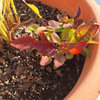
    I'm reviving this topic because it mirrors my question today. We have a Kousa Dogwood we planted 20 years ago. It's always bloomed well until this year. It may have only put on 4-5 blooms. Other than that, it looks good. Good growth, lush leaves, not showing any stress to me. It looks like it took the year off from blooming. A couple of posts say this is natural. Another says that this shouldn't be the case. Should I be concerned when it fails to bloom?


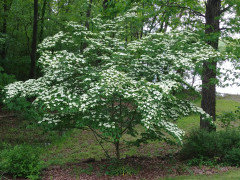
    This picture was taken a couple of years ago.


  • 2 years ago

    "they will flower consistently year after year provided weather conditions are acceptable for the flowering." That sums it up. Our Kousas bloomed like never before this past spring/summer. It was spectacular. Our winter last year was warmer than usual. Not sure if there is a correlation.

  • 2 years ago
    last modified: 2 years ago

    There is most definitely a phenomenon of differential fruit/nut/seed bearing in both sessile and pedunculate oaks and most especially in beech. We refer to years of plentiful seed production as mast years. I have no idea whether this applies to dogwoods but differential flower and seed production is affected by an array of physiological conditions, with often quite marked divergence from expected annual production. Both 2022 and 2023 were mast years in the UK. And, of course, there are breeding genetics to consider also. A seed grown acorn or walnut can take between 30-50 years before producing nuts, yet breeding has increased precocity to such extremes that it is possible to have a nut bearing walnut in it's 5th year. In other words, I don't think it is remotely surprising to observe all sorts of bizarre behaviour in plants and confident assertions that this is or isn't true is really not a hill I would defend.

  • 2 years ago

    No blooms on mine this year 2024, but it bloomed beautifully last year in 2023.

  • 2 years ago

    It could be your plant is a seedling and is still juvenile. Seedlings take longer to flower because they have to reach a certain height to become mature.