Software
Houzz Logo Print
jason_carlton26

What has destroyed my hosta?

I have a section of garden that was put in before I bought the house some 20 years ago. It's on the North side of the house (so shaded), and the original owners put in 3 hostas along with 3 bunches of Autumn Joy sedum.


In the middle of this garden is my dryer vent.


This year I noticed that the hosta in the middle, closest to the dryer vent, was small, wimpy, and yellowish. So today I dug it up to replace it.


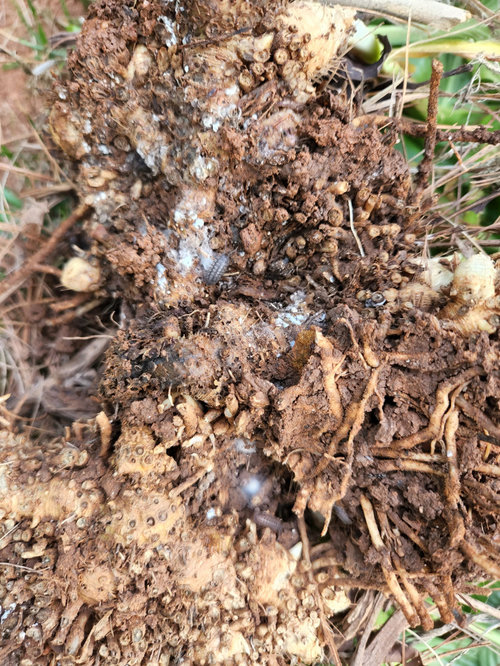
When I turned it over:


What the heck, it looks like a horror show! Black beetles, white mold, and bulbs appear to be almost completely eaten away!


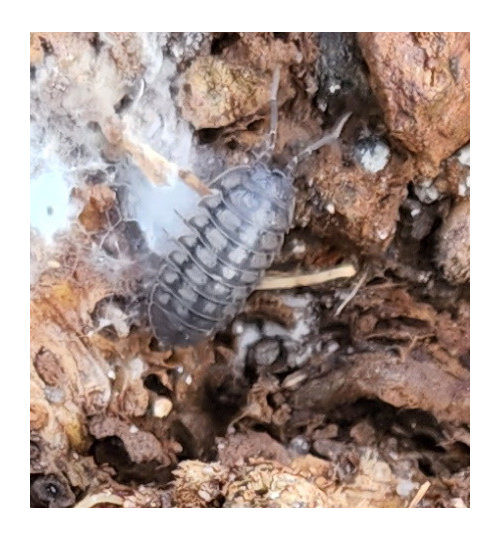
Here's a close up of one of the beetles:


My instinct is that the dryer vent has caused this in some way (heat and humidity?), but it's been there for 20+ years so I can't imagine what's changed.


Any other thoughts?


What do I do to repair the soil before planting a new hosta here?

Comments (12)

  • 4 years ago

    "What do I do to repair the soil before planting a new hosta here?"


    Sounds like a perfect spot to put a tchotchke- I don't know that I'd put a hosta back in that spot. I'd put a little bunny statue, small bench, or wind spinner- something so the heat from the dryer vent couldn't possibly be anything to ever have to worry about.

  • 4 years ago

    looks like a pill bug to me.. not a beetle.. irrelevant to the hosta issue ...


    the hosta forum is one of the most active forums ...


    i cant tell much of anything from these pix.... looks like it fairy ringed and dry rooted ...


    interesting you had one of the most total full sun plants.. the the sedum ... next to what must be a pretty heavy shade plant in your area.. the hosta ... and.. one can survive with little or no water ... and the hosta is a water hog ...


    i suspect lack of proper deep watering is a big part of the hosta issue ...


    ken

  • 4 years ago

    That's a pill-bug, not a beetle (technically a crustacean, and not an insect!) They feed on dead and decaying organic matter, so they're not the cause of the Hosta issue, but likely started chowing down once it was already a goner.

  • 4 years ago

    It sounds like the consensus is that the dryer vent is the issue. I can't imagine why it's suddenly a problem after 20 years, but why not? LOL


    I've never loved this area, though, so I'm tempted to dig it all up and start over. I might make another thread later to discuss plant ideas. Last year @prairiemoon2 z6b MA turned me on to hellebores, so I'm gonna look for some small bushes that'll handle the dryer vent to add height and texture, then replace the sedum with hellebores :-)


    interesting you had one of the most total full sun plants.. the the sedum ... next to what must be a pretty heavy shade plant in your area.. the hosta ... and.. one can survive with little or no water ... and the hosta is a water hog ...


    @ken_adrian Adrian MI cold Z5, they were planted together here when I bought the place, and surprisingly, both seem to do pretty well! This is one of the other hostas in the same garden that's doing fine; hosta on the right, sedum on the left:


    You also see Mondo grass, Purple Heart setcreasea, and in the bottom left you can barely see a dark Coral Bell heuchera.


    Autumn Joy sedum is one of my "indestructibles", though. I cut them back every year in early June and stick the cuttings in the ground, they are everywhere! Full sun, deep shade, wet, dry, it really doesn't seem to care one way or the other.


    the hosta forum is one of the most active forums ...


    Thanks, I didn't know there was one! I put it under "Garden Clinic", and the site recommended that I include "Perennials" but didn't suggest the "Hostas" board. Houzz is almost cursed by having TOO many subforums, making all of the conversations spread far and wide...

  • 4 years ago
    last modified: 4 years ago

    Jason, I bought a new Hellebore last year, that is wild. I planted it in the fall and this is my first season with it and now that it is up and growing, wow. The foliage is specatular. I really bought it for the name, Dorothy's Dawn, which is a memorial plant for my Mom. But the foliage was the second reason.

    'Dorothy's Dawn' Hellebore


  • 4 years ago

    Now that I know about them, I love them and can find a million places for them! LOL Those buggers ain't cheap, though :-O

  • 4 years ago
    last modified: 4 years ago

    Oh, btw, I agree it is a pill bug that is not a problem in the garden.

    The area you posted a photo of, looks like it needs a little refresh. When I want to do that and want to improve the soil, I use the lasagna technique to build up the soil. You collect yard waste, not diseased but greens and browns as if you are collecting for a compost heap. Fall leaves, grass clippings, banana peels, egg shells, etc. I save cardboard boxes and you layer the materials in the area you want to rebuild. A layer of cardboard, a layer of greens, a layer of browns - until you have about 6-12" height, top it with mulch and leave it until it breaks down. If you start now, the area might be ready to replant in the Fall. Keep it watered to help with the process.

    I love Sedums too. They are industructible and trouble free. I have plenty of Sedum Autumn Joy, planted in full sun and part sun, but not shade. I bought a new sedum a few years ago that I love, from Bluestone Perennials.

    'Blue Pearl' Sedum

    Here it is in my garden in full sun....


    I've also heard great things about 'Thunderhead' Sedum....

    'Thunderhead' Sedum


    Jason, zone 7A, near Greensboro NC thanked prairiemoon2 z6b MA
  • 4 years ago
    last modified: 4 years ago

    Jason, I bought Dorothy's Dawn locally and paid $30. for a gallon size, which I was happy to pay, but I don't normally spend that much or buy perennials in gallon sizes. Although I should for Hellebores because they are slow to mature. I pick up small inexpensive ones at local plant sales for little money and keep adding more each year and just wait for them to mature.

    I bought a few last year, from NHHostas that were starter plants for about $8. a piece. And I love that many Hellebores produce a lot of seedlings around the base once they start flowering.

  • 4 years ago
    last modified: 4 years ago

    Great info on the lasagna technique, thanks! I've been saving cardboard to use as a weed barrier, so I have tons of that :-) And I always save my egg shells for the garden, too. I don't have any banana leaves, but I could always take one for the team and make a banana pudding... you know, for the sake of the garden and all ;-)


    I love the Blue Pearl! I just planted some Night Embers last year that look similar:


    https://www.michiganbulb.com/product/night-embers-sedum


    Mine are still small, though, so I just have high expectations :-)


    The hellebores I've seen locally are $30-40, too, and that turns in to a lot of money when you want several of them! Once I start rebuilding this area, though, I hope to buy 3 or 4 of them. I didn't know that they cast seeds, that'll help a LOT to fill in other shady areas!

  • 4 years ago
    last modified: 4 years ago

    Banana Peels, not leaves...easy enough. You don't have to add those. Really anything organic that breaks down can work. Small twigs if you break them into small pieces. Banana bread is always good too. ;-)

    I've tried a couple of dark leaved sedums and this Blue Pearl is my favorite so far. Yours looks good too. I've already divided mine into 3. [g] I've had it two years.

    We have good local plant sales in the spring. One in particular where 3 sisters organized gardeners who sell their own divisions and seedlings and I always find some small divisions of hellebores for about $6. a piece. A real bargain but at that size you do wait for them to be large enough to bloom. I buy a few every year, so I have a few that are good sizes now. Yes, once yours flower, look around the base of them for seedlings after they drop seed, they germinate readily.

    Another plant that I find indispensible for shade is the epimedium. Not a showy plant, is more like a ground cover, short bloom time of delicate flowers, but very carefree and for me they grow in lots of places nothing else will.

    Of course, I know that trying to add natives to shady areas is very popular now too. Do you use ferns in the shade too?

  • 4 years ago
    last modified: 4 years ago

    The demise of Jason's hosta could be due to cultural factors - or pillbugs. Pillbugs (or sowbugs, which are similar in appearance but can't roll into a ball) are crustaceans that commonly feed on decaying plant matter, but sometimes they're a major pest on living plants, particularly feasting on tender growth.

    Typically, it's gardeners in the South who report serious damage from these pests, while Northern gardeners only know them as harmless critters that hide in mulch or under rocks and plant pots and clean up dead material. Here's a forum discussion where the regional divide is evident:

    https://www.perennialreference.com/forums/viewtopic.php?t=44897

    I've never had a problem with sowbugs/pillbugs when gardening in the Northeast and Midwest. During the time I lived near the Texas Gulf Coast, they proved to be serious pests, devouring seedlings and young plants to the nubs (malathion was necessary to control them). Regional differences in behavior could be related to the speed at which plant matter breaks down due to heat and humidity. When sowbugs/pillbugs run out of decaying matter to eat, they're known to eat living plants. Since they typically feed at night, gardeners may be slow to realize what's happening.

  • 4 years ago

    Pillbugs (or sowbugs, which are similar in appearance but can't roll into a ball)...


    Wait, roll into a ball... you mean roly polies? LOL I had forgotten all about those! We had them everywhere when I was a kid, but I haven't actually seen them in a long time!


    The ones I saw didn't roll up, so I guess they're actually sowbugs. The link you gave had several people saying that sowbugs had killed their hostas, so I guess it really is entirely possible that they were at least part of the problem!


    My guess, then, is that the dryer vent created warm, humid conditions that were primed for sowbugs, and they came in and took advantage. I've had loggers clearing trees from around my property since February, which has resulted in large areas of leaves also being removed... it's possible, even likely that the sowbugs were in those leafy areas, and now they're looking for a new home. That would explain why it's just happening now.