Software
Houzz Logo Print
webuser_966539049

Is this a goner?

4 years ago
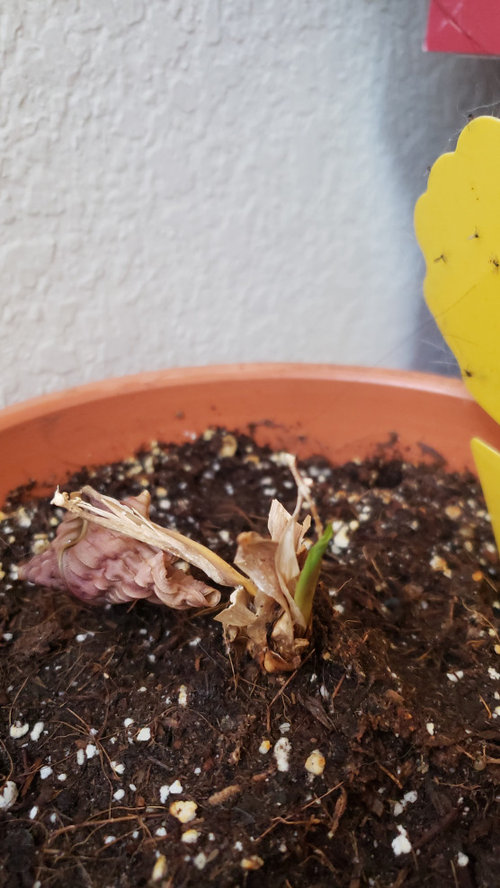
This is a Calathea Beauty Star that just kept on drying up. I am.not sure if the remaining is still alive. What can I do to help it recover?

Comments (2)

  • 4 years ago

    id probably bare root it.. repot it in fresh media.. and learn how to water the new media ..


    your media looks clogged with old roots.. and that is probably causing water management issues.. such as.. water runs to the edge and out the bottom ... rather than properly wetting the media ..


    ken

  • 4 years ago
    last modified: 4 years ago

    Rose - I think we have discussed most of what I'll discuss below, but I'll reiterate because it might be helpful to others (and maybe you, too). The gnats stuck to the sticky card serves as good witness you're over-watering. The plant is still viable, as the new green shoot poking it's head up through the soil signals you're getting an opportunity for a do-over. I probably wouldn't repot just yet, but I would adopt a little trick that allows you to closely monitor what moisture levels are deep in the pot, where it matters. How wet/dry the top inch or two of the soil is is pretty much irrelevant if the pot is 5" deep or deeper (unless you're using a highly aerated and very fast draining soil). Reason, in a 10" (deep) pot, the top 2" can feel completely dry while the bottom 6" of the soil is still 100% saturated and virtually uninhabitable by roots. This means we shouldn't be promoting the ridiculous habit of using the advice to "water when the top inch or two of the soil feels dry". That's not to say anyone here is promoting that rubric, only that it's generally poor advice that leads to chronic over-watering. Our concern should be with what moisture levels are deep in the pot. It's silly to water when the bottom 6" of the soil column is already 100% saturated, but we need a way to test water levels deep in the pot. Below, see the short piece I wrote about using a tell to determine what appropriate intervals are.

    The other thing I'm wondering is whether or not you have an appropriate nutritional supplementation in place. A surprising number of hobby growers don't understand how critical it is to ensure plants get the proper nutrition, or how to maintain control over their plants' nutrition. Should we discuss that, or have we already?

    Using a 'tell'

    Over-watering saps vitality and is one of the most common plant assassins, so learning to avoid it is worth the small effort. Plants make and store their own energy source – photosynthate - (sugar/glucose). Functioning roots need energy to drive their metabolic processes, and in order to get it, they use oxygen to burn (oxidize) their food. From this, we can see that terrestrial plants need plenty of air (oxygen) in the soil to drive root function. Many off-the-shelf soils hold too much water and not enough air to support the kind of root health most growers would like to see; and, a healthy root system is a prerequisite to a healthy plant.

    Watering in small sips leads to avoid over-watering leads to a residual build-up of dissolved solids (salts) in the soil from tapwater and fertilizer solutions, which limits a plant's ability to absorb water – so watering in sips simply moves us to the other horn of a dilemma. It creates another problem that requires resolution. Better, would be to simply adopt a soil that drains well enough to allow watering to beyond the saturation point, so we're flushing the soil of accumulating dissolved solids whenever we water; this, w/o the plant being forced to pay a tax in the form of reduced vitality, due to prolong periods of soil saturation. Sometimes, though, that's not a course we can immediately steer, which makes controlling how often we water a very important factor.

    In many cases, we can judge whether or not a planting needs watering by hefting the pot. This is especially true if the pot is made from light material, like plastic, but doesn't work (as) well when the pot is made from heavier material, like clay, or when the size/weight of the pot precludes grabbing it with one hand to judge its weight and gauge the need for water.

    Fingers stuck an inch or two into the soil work ok for shallow pots, but not for deep pots. Deep pots might have 3 or more inches of soil that feels totally dry, while the lower several inches of the soil is 100% saturated. Obviously, the lack of oxygen in the root zone situation can wreak havoc with root health and cause the loss of a very notable measure of your plant's potential. Inexpensive watering meters don't even measure moisture levels, they measure electrical conductivity. Clean the tip and insert it into a cup of distilled water and witness the fact it reads 'DRY'.

    One of the most reliable methods of checking a planting's need for water is using a 'tell'. You can use a bamboo skewer in a pinch, but a wooden dowel rod of about 5/16” (75-85mm) would work better. They usually come 48” (120cm) long and can usually be cut in half and serve as a pair. Sharpen all 4 ends in a pencil sharpener and slightly blunt the tip so it's about the diameter of the head on a straight pin. Push the wooden tell deep into the soil. Don't worry, it won't harm the root system. If the plant is quite root-bound, you might need to try several places until you find one where you can push it all the way to the pot's bottom. Leave it a few seconds, then withdraw it and inspect the tip for moisture. For most plantings, withhold water until the tell comes out dry or nearly so. If you see signs of wilting, adjust the interval between waterings so drought stress isn't a recurring issue.

    Al

Sponsored
Buckeye Basements, Inc.
Average rating: 5 out of 5 stars40 Reviews
Central Ohio's Basement Finishing ExpertsBest Of Houzz '13-'21