Software
Houzz Logo Print
susan_johnston17

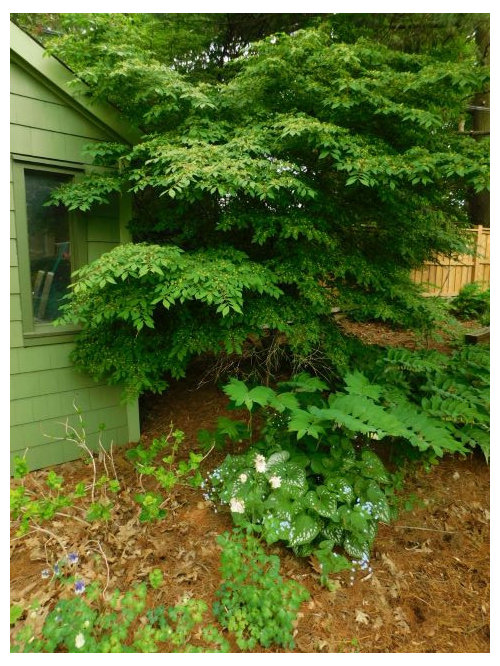
Does your burning bush look like this?

4 years ago
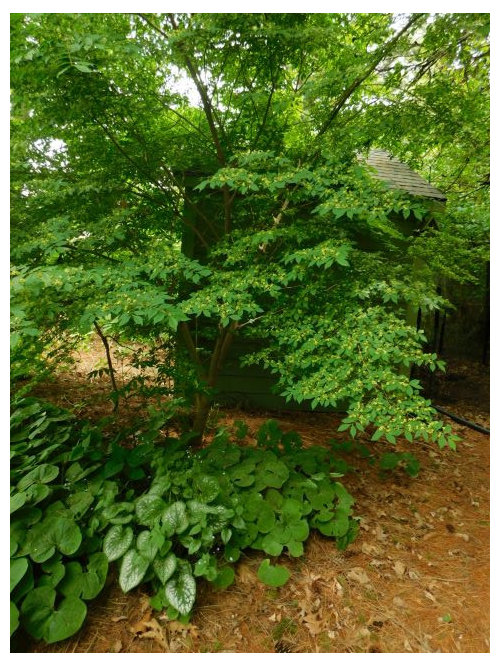
Back in 2003 we planted a 'dwarf' burning bush next to the garden shed. We kept it pruned to more-or-less one trunk. It did get relatively large - but never like this and it never bloomed before. I didn't recognize it when I saw it today - until I saw the trunk which was identifiable by its shape. Is this normal for these - I've never seen one that looks like this in our neighbourhood... Is it something that happens due to its age? What will it do next - do all those flowers produce seeds that germinate?! What would you suggest I do with it at this point?


Comments (30)

  • 4 years ago

    LOL, woody, I think you will get a lot of suggestions to cut it down!


    :)

    Dee

  • 4 years ago

    I am not convinced it is Euonymus alatus. The species itself can get pretty large(~20') under the right conditions but for the compact form to achieve that size is rather startling. How long since it was last pruned? And the habit looks more in keeping with a large growing spindle, like E. europaeus or americanus. And both of those will get great fall color too.

    Also the flowers seem inordinately large and showy for alatus as well. They are in full bloom here also but tiny compared to what shows in the photo. They are typically described as "inconspicuous" and that's exactly right!

    A closer look at the stems could confirm. And alatus has perfect flowers so the potential exists for every flower to produce a viable seed, if it proves to be that.

  • 4 years ago

    Ok. I was wrong about the dioecious nature.


    I’d like to see some stems to decide if it’s alatus or not. I was taking OPs word for it.


    woodyoak thanked floral_uk z.8/9 SW UK
  • 4 years ago

    I will look at it more closely tomorrow to try to get an understanding of its true identity. I still have the tag so I’ll look at that too - but since it was supposed to be a ’dwarf’ and is rather large, I’m not sure how reliable the tag is! Someone asked when we last pruned it - I’m not sure when exactly but years ago as the only pruning we did was to try to keep it more-or-less to one trunk to make it like a small tree. What is weird to me is that in all the years it’s been growing here this is the first year it has looked like this - re flowers. Why would it bloom like this now after 19 years in the garden? How difficult would it be to remove it if that’s what we decide to do? And when would be the best time of year to do that? What would you replace it with?

  • 4 years ago

    Looks like compact burning bush to me, they can grow pretty large. In fact, the previous owner of my home planted a few on the east side of the house around the same time as yours (about 20 years ago), and even with fairly regular pruning they grew large enough to block the windows so I decided to remove them (a couple years ago). I'm sure they would've easily reached the size of the one in your photo. Not sure why you haven't noticed flowers before, perhaps some environmental trigger caused heavy flowering this year and previously flowering was relatively light(?)

    woodyoak thanked arbordave (SE MI)
  • 4 years ago

    You would be very hard pressed to find a compact form of alatus that exceeded 10'. Even here, where things seem to grow to their maximum size. If it did get much larger than that it was probably the straight species mislabeled.

    Those flowers also seem huge for alatus - they don't typically measure even a quarter inch across and even with my crummy eyesight, they look at least double that size or larger. And my previous comment about them usually being termed "non-showy" or "inconspicuous" still applies :-) The photos are indicating quite the opposite.

    woodyoak thanked gardengal48 (PNW Z8/9)
  • 4 years ago

    I was just looking at the plant tag - it does call it E. alatus ’compactus’. The odd thing about the tag is that it seems to be in English and Spanish when labelling in Canada is required to be in English and French… When I did a Google search, I found this University of Oregon site had interesting pictures of the flowers that appears to look like those on our shrub https://landscapeplants.oregonstate.edu/plants/euonymus-alatus-compactus. I will have to take better puctures of the flowers and stems tomorrow…. Clearly it has got too big for where it is so, at the very least, it needs to be pruned to take up less space. But if I remove it entirely, what should I replace it with that would survive the current conditions? The soil there is a sandy pocket in our otherwise clay soil. Over the years I have tried many things and most have died! This thing seems to grow well. What else would like these conditions? In March this year we removed an old and somewhat sick ash tree that put a small bit of shade on this shrub for maybe an hour in the morning - would the little bit of extra light be enough to trigger this major bloom?


  • 4 years ago

    I will try again tomorrow to go get better pictures of the flowers and stems - I have tree pollen allergies and the burning bush is close to both a white pine and a red oak that are not making me feel good today! Maybe in the past my allergies meant I was inadvertently avoiding this area when it was flowering! The other odd thing about this shrub is that it has never had any of the red fall foliage they are noted for. We did notice a bit of pleasant pale pink color from this area in the last two falls but it doesn't show on any of the fall foliage color pictures I have on file. We had always thought that maybe the reason for the lack of color is that it got too much shade. Maybe this year will be a bit different in the absence of the ash tree. We'll see..... I also wonder if the odd tag that doesn't meet Canadian labelling requirements could mean that whatever was in the pot could be who-knows-what and not the specific plant noted on the label.


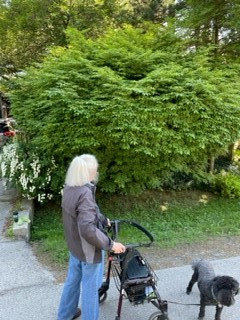
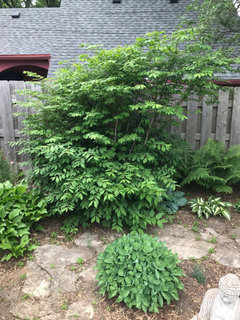
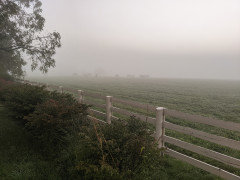
    When we were walking the dog this morning, I paid attention to the burning bush shrub at a neighbour's place. It was blooming but the flowers looked smaller to me and 'inconspicuous' did seem like an appropriate description. The shrub there is a bit older than the one here and I never remember seeing it pruned - it is a very different shape than ours as I try to keep ours to one stem to make it more tree-like. Here is what the neighbours' shrub looked like this morning (I'm 5'1" so that gives you some idea of how tall this shrub is....):


  • 4 years ago

    Your comments just confirm my opinion that yours is not E, alatus but one of the other spindles :-) But the stems should tell us for sure....when you feel ready to check them out.

    woodyoak thanked gardengal48 (PNW Z8/9)
  • 4 years ago
    last modified: 4 years ago
    I'm pretty confident woodyoak's shrub is a compact burning bush (Euonymus alatus 'Compactus') as specified on the tag. A very common landscape shrub in this region, and over time it grows surprisingly large (I have seen many older specimens that reach 10'+). The pink fall color in past years is consistent with being located in shady conditions, and the relatively heavy flowering this year is likely a response to increased light. One possible explanation for the English/Spanish label could be that it was grown in the US and shipped into Canada for retail sale. The different shape of your neighbor's shrub would be explained by the difference in sun exposure and how they were maintained.

  • 4 years ago

    How do you explain the size of the flowers? They are at least 2 to 3 times the size of those found on Euonymus alatus.

    woodyoak thanked gardengal48 (PNW Z8/9)
  • 4 years ago
    last modified: 4 years ago

    Woody, you need to remove that plant. Thousands of seeds are forming - many will drop to the ground beneath the plant to form a thicket and you'll be crawling around on your hands and knees yanking them out. The seeds are attractive to birds and they will spread them about as well. It needs to go -- then you have the fun of choosing a new shrub which doesn't happen very often.

    PS: I'd replace it with a mountain laurel.

    woodyoak thanked cecily 7A
  • 4 years ago

    Imo the flower size is perfectly consistent with alatus. https://www.rhs.org.uk/plants/6969/euonymus-alatus/details

    woodyoak thanked floral_uk z.8/9 SW UK
  • 4 years ago

    Cecily - that shrub has been there for almost 20 years without seeding around. In fact, I have never seen fruit/ seeds on it - but I have also never noticed flowers previously either, whichis whi I wasn’t sure what it was when I saw them this past week!


    I am a literal ’seat of the pants’ gardener so weeding ’on hands and knees’ is normal for me - although getting more difficult as I age….


    The soil here is neutral-to-alkaline which eliminates a lot of choices. I doubt mountain laurel would survive. I’ve tried a lot of things over the years and most have died within a year or two. whatever this is seems to like the soil and growing conditions there which makes me somewhat reluctant to just dig it out (not an easy job..) without knowing for sure what it is and whether digging it out is the best option.

  • 4 years ago
    last modified: 4 years ago

    Woodyoak should cut a branch, and take good close up pictures of the flowers with something next to them for scale. Also, take close pictures of the branch to show the bark character.

    I agree with the behavior modifications from a shady location - but not the oversized flowers. Euonymus alatus will not have big flowers. I suspect they will have a significant petiole (pedicel?) which will figure in their prominent appearance. Winged Spindle won't do that either.

    woodyoak thanked ViburnumValley central KY Bluegrass z6
  • 4 years ago

    I will try to take better pictures this afternoon if time and conditions permit :-) I had been thinking of laying measuring tape beside some flowers to give a better feel for their size... Some of the things I've read have talked about number of flowers in a cluster so will try to show that. Is there anything specific I should look to show re the 'wings' on the stems? What else should I focus on that would aid in ID?

  • 4 years ago

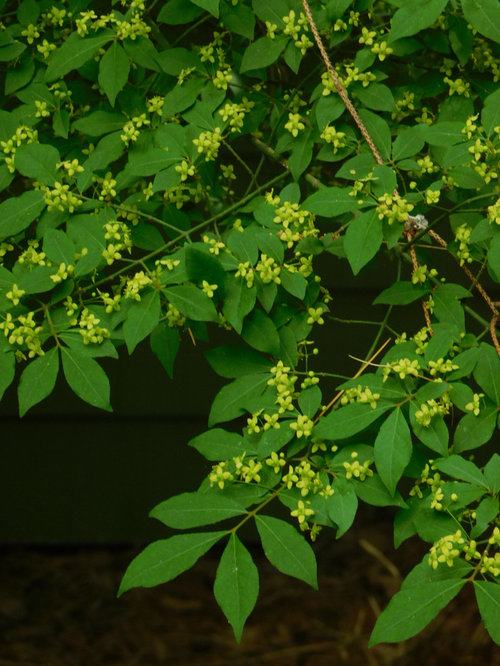
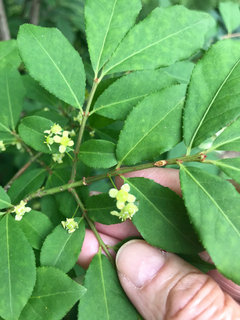
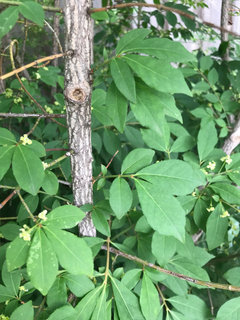
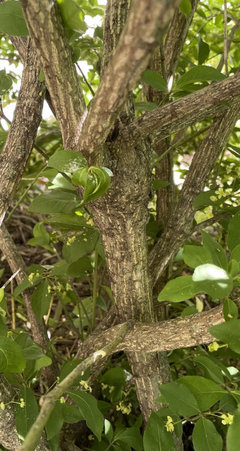
    Here are some (not very good!) pictures from this morning.... I have no idea what this is!:


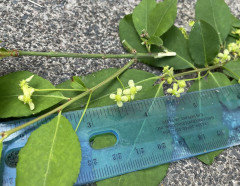
    The flowers seemed smaller this morning - but there are a LOT of them and they are starting to drop now.


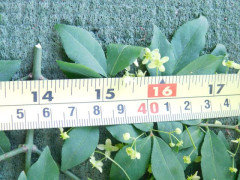
    A branch showing both leaves and flowers - I wanted to take a close image that would show the male structures if they were there but cannot get my camera to focus that closely for some reason....:

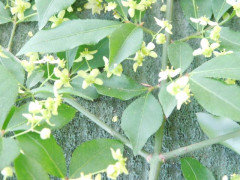
    With a measuring tape so you can evaluate size:


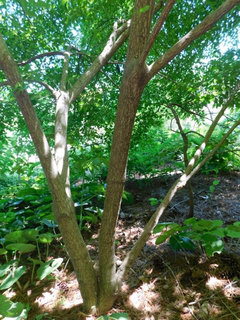
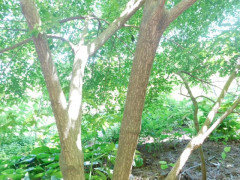
    I saw no 'wings' anywhere! The trunks did have streaks of lighter color and some small bumps. There were virtually no suckering shoots from the base - it was pretty much bare under there except for a few wild ginger groundcover plants. There is one woody stem/trunk about 2-3 feet or so from the main trunk. You can see it on the right side of the pictures below. I'll remove that trunk/stem this fall.


    So what is this?! I will look for fruit to see what that looks like when/if it forms.

  • 4 years ago

    speaking of "compactus alatus," I have one and am seeking advice on how to trim it. Last year, I took out many lower bushes because they were covering under plantings of hosta. As a result, this year the lwer branches are grown out more so than the upper branches, giving it this odd look. I will post pics in next post.

    debra


  • 4 years ago

    Pictures:


    Any recommendations are welcome.

    debra

  • 4 years ago

    Think I’m going to have to eat my words .....


    woodyoak thanked floral_uk z.8/9 SW UK
  • 4 years ago

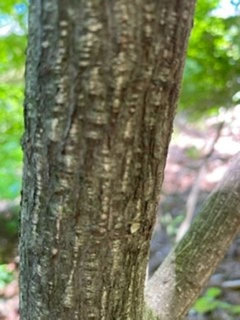
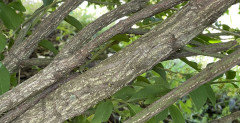
    This is a better picture of the bark, taken by DH with his cell phone. You can see in this picture that it is less smooth than it looks in the pictures I took but it still doesn't look like ones I saw on-line....


  • 4 years ago

    LOL!! Floral, I have to eat mine often.....you hardly ever :-)

    I have seen literally hundreds of these shrubs planted.....maybe even thousands. And none have resembled the OP's shrub in habit, size or flower size, which is why I was so skeptical it was Euonymus alatus 'Compactus'.

  • 4 years ago

    There are photos from two sources gg & floral, before you eat your words……… lololo

    debra

  • 4 years ago

    The stumbling block for me is absence of wings On the OP’s.


    But I have seen hundreds of native E europaeus and never one as big as that. Maybe because they’re almost invariably in hedges here.

  • 4 years ago

    Regarding the "wings", this webpage from Oregon State University says, "... they [wings] often do not develop in this cultivar [Compactus] to the extent they do in the species."

    I've posted (below) a few photos of an EAC that I planted a number of years ago at a nearby property. Though not as large as the OP's plant, the stems have not developed noticeable wings, which is consistent with other EAC's growing in this region per my observations. EAC's can also grow relatively large, and keep in mind that the OP's plant is growing in a shady spot and evidently has been pruned to make it more tree-like.


  • 4 years ago

    I drive by twice a day what feels like a 3 mile long (4.8 km) hedge of Euonymus alatus 'Compactus', which was inadvisedly planted by the newer Irish owner of an historic central Kentucky Bluegrass horse farm - after failure at properly growing an equally long planted hedge of Viburnum x rhytidophylloides 'Alleghany' and completely obliterating the fine views across its venerable landscape.


    If pressed, I could stop and photodocument the dickens out of individuals within it - and hope I can withstand the revulsion. Here's a couple of older pictures (September 2021) of some mangy EACs in a wet spot under the canopy of a group of walnuts.


    I see arbordave's images, and raise him one. I think I can clearly see the "squarishness" in cross-section of the younger green stems he show - that woodyoak has not illustrated. Usually, that squarishness will represent the edges or 4 lined character in those Burning Bush/Winged Spindle selections that are reserved in their wingy-ness. To have that reduced to zero in woodyoak's plant is odd, but I guess I will rescind my jaundiced cynicism as well.

  • 4 years ago
    last modified: 4 years ago

    "To have that reduced to zero in woodyoak's plant is odd". There certainly could be some "squareishness" present on some of its branches, we only see a few branches in the photos. But I don't think an absence of "wingy-ness" is a deal breaker considering that his plant is being "stretched" somewhat by the shady conditions.

  • 4 years ago

    Since there seems to be no clear/easy answer re what this shrub is, I think my next step is to wait and watch for quantity and ’look’ of any fruit and see if the absence of the ash tree makes a difference in the fall foliage color and then decide whether I need to remove more than just the one stray growth about 3’ from the main plant.


    arbordave - what makes you think woodyoak = ‘his’?

  • 4 years ago
    last modified: 4 years ago

    sorry, meant to say "its", now edited ;)