

Spending More Upfront For Long Term Savings?
Wondering if building walls extra thick, using triple ply windows, geothermal heating is worth it?
Looking for other ideas, suggestions and thoughts on making mh home as energy efficient as possible and willing to pay if it brings long term savings.
Comments (38)
 4 years ago
And you need to make sure you have the right GC/subs that can design/build things correctly so you actually get the desired energy efficiency results.
Related Professionals
Cape Coral Architects & Building Designers · Chatham Architects & Building Designers · Beatrice Home Builders · Mountain Home Design-Build Firms · Madison Design-Build Firms · Athens Design-Build Firms · Muskogee Design-Build Firms · San Francisco Design-Build Firms · Everett Design-Build Firms · Jackson Home Builders · Greenville Home Builders · Martinsburg Home Builders · Petersburg Decks, Patios & Outdoor Enclosures · Fort Wayne Decks, Patios & Outdoor Enclosures · Amherst Decks, Patios & Outdoor Enclosures- 4 years agolast modified: 4 years ago
Location is everything. It doesn't take much to get to zero and going over that is unlikely to be financially wise.
I live in NC which is fairly mild. I spent about $25k total after rebates to build a 3800 sqft house that is net zero energy (HERS is -7). It is hard to really tally everything but that is a reasonable estimate.
It was a long payback at prices a few years ago - now it is a much shorter payback given the price of NG and the coming electric rate hikes.
Colin Reilly
Original Author4 years agoThanks everyone, I'm not trying to get to net zero. Just trying to save money in the long run because the cost of gas/oil, propane etc keeps increasing in price.
Can someone explain what a good location is?
- 4 years ago
Better insulation almost always has a payback. Georhermal or solar often does not. You havr to dig into your degree heating days, and the specific cost of wnwrgy in your location. There no uni ersal answer.
- 4 years agolast modified: 4 years ago
One of the problems with these discussions is payback is garbage. Payback period (a.k.a. payback) is largely considered the worst metric for analysis as it removes the time value of money. Money (or in your case savings) is more valuable in your hands today that it is in the future. Would you hand me $25,000 cash today if you knew for sure that I would give you $25,000 back in five years? You obviously would not, but you might consider it if I would give you back $35,000 in five years. However, as the time before return increases, so does the amount of total return required.
So the problem is figuring out the required rate of return to run a net present value (NPV) calculation. So let's ignore that for now and just look at a cash flow analysis. Suppose you are financing at least $25,000 on this house for 30 years at 4.5% interest (since money is fungible it doesn't have to be the specific $25,000 you spent on energy efficiency upgrades). Then $25,000 in upgrades to energy efficiency would need to see $1,895 per year in savings to cover the marginal amount of interest, taxes, and insurance payments.
Few energy efficiency upgrades are really worth it financially, which is not to say you shouldn't do it, it just shouldn't be financially driven. I looked at a geothermal system for my home and it was pretty negative.
ETA: the above assumes the various projects will all last at least 30 years.
ETA2: the above cash flow analysis is imperfect compared to NPV as it assumes that every project will last 30 years and ignore costs and benefits beyond 30 years.
 PRO4 years ago
Too often decisions about energy efficiency are viewed in isolation, yet a number of "energy upgrades" yield spillover benefits such as improved occupant comfort and health. Air sealing of a structure is one example. Air sealing reduces the infiltration of unconditioned, unfiltered outdoor air, reduces drafts, and reduces the heating and cooling load over the life of the structure. Start your list with those upgrades which produce multiple benefits and work down from there.
- 4 years ago
Increase mortgage payment makes a good way of looking at "payback" although it isn't perfect.
I actually found solar did just fine with a low interest rate (not today I guess).
Location meaning climate....
- 4 years ago
Location means where you're building. Since you're interested in saving on NG, it seems you're in a location that gets a cold winter.
- 4 years ago
Once when my dad was about 90, a Subzero commercial came on extolling how food lasted longer because of its superior refrigeration, and my dad said "Sure, but I can throw a helluva lotta food away for the extra $8000 dollars."
 4 years ago
The more square footage % underground the more energy efficient the house will be.
- 4 years ago
About 20 years ago we did an addition that doubled the size of our house, including a separate apartment. we put in a new geothermal heat pump. our electic bill did not increase at the time even though usage did increase.
we live in central va so plenty of days with either heat or ac on . our house is all-electric. we feel like the $30k investment has paid off. we had plenty of space for horizontal trenching which might be less expensive than vertical well-style trenching.
Today’s heat pumps are probably more efficient than they were when we built.
- 4 years ago
Also in the payback issue is better insulation/window placement/ air sealing is reduced size of equipment for heating and cooling. Reduced size equals lower repair and replacement costs. It can also mean smaller outdoor equipment for better aesthetics as well as smaller and fewer ducts/registers.
Better air sealing helps during outdoor air quality issues like fires.
Better air sealing/insulation helps with temperature control during outages. Helps with sound isolation.
Whether any of these things matter is determined partly by ... location.
Air sealing is almost always the best payback. But proper design can be even better payback.
- 4 years agolast modified: 4 years ago
I feel like the villain here for pointing out the problems with this analysis but... better air sealing and better insulation don't necessarily have a positive payback. They do have indefinite lives which means they theoretically have positive payback, but they also generally have a smaller effect on sales price when you sell your home.
I do well to stay in a home 10 - 12 years. It is unlikely that "better" air sealing and "better" insulation will pay for itself in 10 - 12 years as my utility bills are just not that high with typical air sealing and typical insulation. I will never get my money back in ten years and I will not see a big price increase because of those things.
----
When I came to Gardenweb, I was building a house because the market was down from the 2008 collapse. It was a neighborhood I didn't want to live in long term, the houses all had complicated roof lines and were just too much, but it also provided an investment opportunity for me because I felt I could exploit the costly builds with a simple but large build and the developer was in financial trouble. It was more an exercise in project costing than it was in design, I wasn't interested in good design, I was only interested in livable until I could resale for profit.
Upgrades to the shell of the home (upgraded insulation and better air sealing) were actually among the worst returns. Items like ground source heat pump and better windows had better returns because people could see those things and see them as valuable. The people on this site are not representative of the general population. Most buyers will pay more for triple pane windows in a poorly insulated wall than they will for double pane windows in a well insulated wall, even though the latter is objectively better.
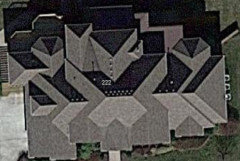
ETA: Here is a typical roof from the neighborhood mentioned above that illustrates why I thought a simple cost-effective design might be a great investment...
- 4 years ago
Here's a insulated slab construction method for a cold climate. Pair it with a loop version ground source heat pump and solar. See what the cost is.
- 4 years ago
My comments in this thread are not meant to discourage people from upgrading the energy efficiency of their home, they are meant to discourage people from overvaluing "payback" in their analysis. Financial metrics, such as return on investment and payback periods are just a benefit in a cost-benefit analysis, they should not be used as a hurdle to acceptance.
I would advise making most decisions about upgrades to your home by looking at all of the benefits and then seeing if the cost is worth it. You will likely find that some of the most valuable upgrades to your home are not the most financially viable ones.
A few examples from my personal experience... Where I grew up the most common saying about the weather is, "if you don't like it, stick around... it will change in five minutes." We went on lockdown in March 2020 and I went back there for the lockdown. It was 74 degrees and glorious on my first day back and we woke up the next morning to 3" of snow. One of the benefits of good insulation and a tight home in that area is that your house maintains a comfortable temperature when the weather is drastically switching between heating days and cooling days. It is nice to have the heat/air off because it is in the 70's and wake up with 3" of snow on the ground and still have a comfortable home, even if there is no financial reason for it. Were I to look at only the financials I might have worse windows and worse insulation because the energy rates there are just cheap.
Also in that same home we had a lovely family who took up residence in a Pin Oak about 40' from my bedroom. Have a listen to the year round calls of the barred owl (be sure to get at least a minute into the video to hear both the male and female).
I was so happy that one of the things my father looked at when designing his home was insulation and windows that could deaden the noise from outside. It was lovely to close the windows and sleep rather than celebrate with that family.  4 years agolast modified: 4 years ago
LOL
Fortunately, our neighbourhood airborne guardians are hawks, like this broadwinged friend on our chimney.

Ya lookin' at me??
****
I've moved a couple of dozen of times in the last few decades. Upgrading beyond Code would have had zero payback.
- 4 years ago
I would suggest that basic air sealing above code is very cheap - like $500 and could easily save $50 a year. I really doubt that the life expectancy is only 10-12 years but it does depend on what you do. But, I don't disagree with your payback argument.
Of course, we should all be driving 30 year old Corollas and living in 500 sqft trailer homes as that is the way to get rich...
- PRO4 years ago
Depends what you consider air sealing. For some, that might mean taping the joints of the house wrap and caulking plates. For me, it means that, plus installing spray foam insulation at the rim joists and 1 1/2" of spray foam insulation on the interior of sheathing if we're using fiberglass batt type insulation. Plus a conditioned crawl space. Those items are significantly more than $500, but making the home's envelope tight is something that's awful hard to do later on.
Some of a home's initial construction details reflect the sense of "stewardship" of the first-owner and/or builder of the home. They may not be economic in the short run, but they add value over the life of the structure. The farm house I grew up in will see it's 200th birthday this decade. If the owner had a short-term payback mentality, it wouldn't have made it past the century mark. - 4 years ago
@Charles Ross Homes said, "Some of a home's initial construction details reflect the sense of "stewardship" of the first-owner and/or builder of the home. They may not be economic in the short run, but they add value over the life of the structure. The farm house I grew up in will see it's 200th birthday this decade. If the owner had a short-term payback mentality, it wouldn't have made it past the century mark."
We seem to be agreeing that financial returns are not the only, or even the primary, metric in upgrades.
However, the onus to create value for subsequent owners is up to subsequent owners. People absolutely should pay more attention to the construction and design of a home than they do. It is a shame that so many people value appearance over well built homes.However, that is their right. If they want well built homes then the best way to achieve that is to ensure that well built homes sell for a premium rather than by trying to guilt clients building a home to do things at their cost to benefit future unrelated homeowners. You might as well just hand them extra money at closing.
- 4 years ago
One thing to factor into payback maybe that when you go to sell, buyers will care more about energy costs. Then it will factor into resale. While I doubt oil/NG prices will remain this high, it is hard to predict. It is very difficult to make any progress on climate with cheap fuels.
One example of how things change is how redfin puts flood risk on listings which I believed started last year. I actually know of a recent buyer who looked at that.
The NAR says that energy costs do effect resale prices. Specifically that energy efficiency improvements boost prices. I believe they claim a 10 year return - ie $1,000 a year saved is worth $10,000 - probably mostly for visible/obvious stuff like solar panels.
I certainly see HERS scores marketed for some new houses. Not universally and impossible to know if it makes a difference.
I remember 25 years ago in Buffalo NY, the utility cost was a factor. Even on rentals - we had a partial house that was fairly cheap at $425 but the NG cost over the year was average $200 a month. That meant winter was $600 in NG. In that market, housing was old and leaky with inefficient equipment and house values were low. So fuel was a significant part of monthly expenses.
And quality of build does matter in certain markets. For as long as I remember, "custom built" has been a marketing term around here. It meant it wasn't a production builder as those have always been known to be built as cheaply as legally allowed. I live in an area with most homes built in the last 20 years and everyone beyond perhaps a first time home buyer has heard the stories about replacing big dollar items at 10-15 years that shouldn't have failed that early.
Of course, lots of "custom" built homes are spec homes built as cheaply as possible and most buyers can't really tell the difference before buying. In my area of tear downs, it is easy to see which ones are spec - housewrap instead of Zip nearly every time. But some builders are well known to build their specs better and they seemingly command a premium.
- 4 years ago
@David Cary - There is a noticeable bias in your post, you seem invested in proving that energy efficiency works, but in the end I am only doing the math. I also want it to work, but it usually doesn't.
"One thing to factor into payback maybe that when you go to sell, buyers will care more about energy costs. Then it will factor into resale."Again, let's be careful with the word "payback". Give me $10,000 and I will pay you back in 20 years. You wouldn't dream of investing $10,000 in something that only paid you back. You want to see some kind of benefit for that investment. No rational person is going to spend money they could invest or use today to have it drip back into their bank account for the next 20 years.
I think we would be better off just saying "return" instead of payback.
An acceptable financial analysis considers all cash flows, including those that are likely to happen when you sale your home. Please note above where I specifically said that some energy efficiency upgrades (solar and GSHP's) have a benefit when selling. I then noted that improved air sealing and insulation have little, if any, benefit when selling a home.
Buyers may care more about energy costs, they may not. No one has asked to see my utility bills on a home I was selling for 15 years now. Our energy costs are low here and no one seems to care.
One example of how things change is how redfin puts flood risk on listings which I believed started last year. I actually know of a recent buyer who looked at that.Things do change, but unpredictably. If you want to guess what people in the future are going to value, then have at it. However, historically speaking, few have managed it with any success.
I certainly see HERS scores marketed for some new houses. Not universally and impossible to know if it makes a difference.Then how do you account for it mathematically if you don't even know if it makes a difference? Just to be clear, I am sure it makes a difference, however, the benefit you receive has to exceed the cost not just make a difference.
And quality of build does matter in certain markets.You actually counter your own argument in the next paragraph on this one. Of course, marketing matters, but are people paying for actual build quality or the marketing? I saw someone market their property by saying "real 2x10 floor joists, not engineered 2x4 trusses." You can market just about anything and to be fair, in a fire I guess 2x10's are better.
The positive "payback" of upgraded insulation and air sealing is largely an example marketing. They are both permanent, so they last as long as the house lasts. So you can stretch your payback period out to a couple of hundred years and note that they are always positive. In reality, when the payback period is shortened to the likely time of ownership, most homeowners will not see a positive return. Of course, if you are only spending $500 to achieve it, they can, but that is not my experience.
- 4 years ago
There are two good methods of analysis to use when considering the financial benefits of upgrading a home.
(1) If you are financing the home, you can just use a net cash flow analysis. It is imperfect but easy. You simply take the cost of the upgrade x 1.5% (to account for marginal taxes and insurance) + monthly payment x 12 = annual cost. If your annual savings exceed the annual cost, then the project is probably acceptable. It is imperfect because it assumes that you will own the house the entire time of the mortgage and ignores what happens if you sell early.
(2) A net present value analysis (just use an online calculator rather than factors). Net present value is the discounted cash inflows - the discounted cash outflows. If it is zero or positive the project is acceptable, if negative it is not. This looks at all cash flows, including those that will happen when you sell the home and discounts them to their present value.
The difficulty is establishing the discount rate. I use 8% as that is a conservative return on equity investments over their lifetime. If you are looking at the financial benefit of spending X amount per month, then that should be compared to investing that money somehow. Some are more comfortable with lower discount rates especially when financing the project so I will just use the 30 year mortgage rate in that case.
- 4 years agolast modified: 4 years ago
Sure - definitely biased.
I wonder about your 1.5%. My solar panels don't impact taxes or insurance - by state law I believe. I certainly didn't have tax increase when I installed on a prior (already built) house. And the tax man didn't see my HERS score either. You can argue about rebuild cost but as you know, once past a certain amount, the marginal dollar insured is pretty cheap. I also typically go with the minimum the insurer allows because full catastrophic loss is very rare and I am willing to eat that risk.
A dollar saved is better than a dollar earned in a taxed environment. Don't forget to account for that. If I sell an equity, I am not getting 8% (of course all tax deferred are maxed out so marginal investing is taxed). Now - you are way better at this analysis than I am. But as we all know, the current low capital gains tax rate is not guaranteed to be there when you sell.
Also, energy inflation has to be accounted for. So the savings increases every year as does the value to a future (informed) home owner.
When I did solar and did the mortgage based accounting, it was $80 a month to save $110. That was at 3% I think. I refinanced to 2.25% later so that helped. The $110 has grown to $120 since we built. By the time we move, it might be $200.
- PRO4 years ago
An incremental cost analysis based on incremental mortgage payments may be an okay short cut method when considering upgrades to components and systems with life expectancies greater than or equal to the mortgage term (e.g., insulation, air sealing, conditioned crawl space, etc.) However, for items like HVAC systems with life expectancies of 15 +/- years and a mortgage term greater than 15 years, you could find yourself still financing an upgrade after its useful life is over and it's been replaced. I do think it's reasonable to assume escalating energy prices when doing the analysis. I'd assume their historic rate of increase as a starting point.
- 4 years ago
@Charles Ross Homes - which is why you use NPV analysis in those cases. It corrects for that problem.
- 4 years ago
@David Cary - the OP is discussing building a new home. In a new build the closing cost is usually used as the tax basis and the insurable replacement cost. Your decisions about a remodel on your existing house are not germane.
As @Charles Ross Homes pointed out. So long as your solar panels last 30 years and you stay in the house for 30 years then you have a net gain. If you sell 10 years after installing the math no longer captures the reality.
- PRO4 years ago
The average homeowner is not likely to a rigorous cost analysis like NPV, and so a short cut method that's good enough is, well, good enough.
I find the majority of "upgrades" in residential construction to have long payback periods--in many cases exceeding the life expectancy of the system. If that's the case, a more rigorous financial analysis is moot. A homeowner might still opt for the upgrade if it provides other benefits such as comfort, health, or safety or makes for interesting cocktail party conversation. - 4 years ago
@Charles Ross Homes - we seem to be in agreement in this thread. Your post above is largely the entire point I am making, with one caveat.
Those building a home shouldn't use payback as a hurdle to acceptability. Accepting only things that have a positive financial return can actually be detrimental to your long term financial health, as it can lead to a home you are less comfortable living in, which itself leads to more moves and the associated transaction costs of selling a home and building/buying another.
The best financial return on a home is likely going to be designs and upgrades that keep you happy in your home longer. The financial impact of any upgrades should be considered as well as other benefits of those upgrades to find real value rather than just a perceived financial benefit.
- 4 years ago
If your definition of a "payback" period doesn't include opportunity cost then you surely need a better payback model. OTOH, payback or NPV is almost always a terrible decision making model to use (can't tell you how many dreadful, destined to fail, business plans I've reviewed that had great NPVs).
We did a deep energy retrofit on a 1950 garrison colonial and built a very efficient addition onto it. We tried hard to do things that made some kind of economic sense (vs some neighbors, for example who spent $80K on a geothermal system that reduced their heating bill by $200/year), so focused hard on insulation and air sealing, using multiple kinds of insulation to achieve maximum benefit for the money spent.
Will we personally reap a financial benefit? I doubt it. Our energy bills run about 30% of the norm for the neighborhood, an impact that is easy to show a buyer. Our solar panels recovered the initial investment in 6-1/2 years and should continue to make power and generate SRECs for us for the next 20+-- that I suspect is our strongest positive economic impact (something like a 15-20% annual return on investment). I haven't calculated an NPV or ROI because I really don't care; it's good enough.
My basic decision rule was will this investment yield significant positive environmental impact over the next 100 years? (conservative-- we are surrounded by 200-300 year old houses). It comes down to if we don't start doing a better job on managing our energy use there will be no desirable future. That rules out stupid stuff like geothermal systems that consume more energy to build than they can save in their lifetime. So taking a longer view costs a little more and someone may not pay me a profit for it in this lifetime. Big deal. I build lots of stuff in my shop, all of it is better than it "needs" to be, and I wouldn't have it any other way.
In the meantime we live in the most comfortable house I've ever had. - PRO4 years ago
"NPV is almost always a terrible decision making model to use (can't tell you how many dreadful, destined to fail, business plans I've reviewed that had great NPVs)."
Any analysis based on projected future cash flows is subject to variables outside the analyst's ability to control and potentially outside the analyst's view, too (a world-wide pandemic comes to mind as one example.) Where investments in upgrades are being considered which improve occupant comfort and health, financial analysis often takes a back seat to gut feel. I can't imagine someone in a drafty, uncomfortable home reveling in the fact that they saved money on air sealing. - 4 years ago
"OTOH, payback or NPV is almost always a terrible decision making model to use (can't tell you how many dreadful, destined to fail, business plans I've reviewed that had great NPVs)."
NPV is just math a formula and if your numbers are correct it can't be wrong. It is as objective as 2+2.To be fair, lots of small businesses are ill equipped to manage the thousands of assumptions present in any project analysis. A calculation on energy savings for home improvements is so rudimentary compared to even the most simple business model. So the experiences with those things really don't apply to home improvements.
By the way... this is my research. I study inefficiency in capital projects. Specifically my research focus on the gap between the weighted average cost of capital and the required rate for corporations in capital projects. - 4 years ago
"I can't imagine someone in a drafty, uncomfortable home reveling in the fact that they saved money on air sealing."
I suspect that is the typical situation most homeowners find themselves in. In the U.S. production builders skimping on quality is the norm. I would argue that without the requirement for blower door test, that most tract builders would still be building homes that you could see daylight through if you cut a hole in the drywall. - 4 years ago
"NPV is just math a formula and if your numbers are correct it can't be wrong. It is as objective as 2+2."
I had the rude awakening early on in my career when was pushing for a technology acquisition at a Fortune 500 company. I asked our finance guys what the NPV of the deal was going to be and their response was "What would you like it to be?".
An older and wiser mentor on the business side told me "just do what makes sense scientifically, we'll make the numbers come out".
I guess that's pretty much how I approach investing in home energy efficiency improvements; do everything you can while following the "don't be stupid" rule. - 4 years agolast modified: 4 years ago
I had the rude awakening early on in my career when was pushing for a technology acquisition at a Fortune 500 company. I asked our finance guys what the NPV of the deal was going to be and their response was "What would you like it to be?".
You either know this is being deceptive or you really don't understand NPV.
Again, this is what I research and I have published several peer reviewed articles on businesses treating NPV the way you are describing. Because of that behavior businesses require a premium on projects, that is largely known as a deception premium. In other words, your Fortune 500 company prices in your lying about the NPV, as do all of them. It is just cheaper for them to set a significantly higher discount rate than it is to incentivize employees to make realistic unbiased assumptions. I assure you that everyone does it, everyone knows about it, and I am quite grateful because it is easy to get grants to study it.
However, that problem is not with NPV, it is a problem with the people using it being intentionally deceptive. NPV is just math, the formula works because it is just a list of figures to multiply and then subtract, so long as multiplication and subtraction work, it works.
----
The reason your post is deceptive, is because you are taking incredibly complicated estimates and pretending that any problem that exists in those, must also exist in incredibly simple estimates. An NPV for the energy efficiency of a home improvement requires only one or two estimated figures and those are not unique to NPV.
(1) The monthly utility bill savings. This is the same number you are going to have to estimate for ANY calculation on financial impact. While this is an estimation, there is some data to help you out.
(2) The premium demanded if/when you sell.
Sure, these are estimates, but numbers can't be off by an order of magnitude like even simple business calculations can be. I have a 6,000 square foot home with fiberglass insulation, typical air sealing, and the lowest efficiency heat pump available 18 years ago... the average difference between my highest and lowest annual electric bills is $200 (we use almost no heating or cooling in some months). So even assuming that there is a further $40 of constant HVAC costs every month, my total costs are about $1,680 per year.
Compare that to a calculation of just working capital for a single small restaurant (just working capital, not labor cost, not food cost, not utility costs, not equipment life... just working capital), I would be amazed if you could get that one single relatively simple number for a relatively simple business within $5,000 of accurate for a year.
You are pretending because people can and do get those incredibly complicated estimates wrong, that there is something wrong with the tool. There, isn't. Your point is disingenuous.
- 4 years ago
In my area, closing cost has little to do with tax value. That also being said, is there really a closing cost in a true custom build? Heck I paid the solar outside of my contractor entirely so even if there was a closing cost, it wouldn't have factored in. I am sure this varies by jurisdiction.
Every time I have custom built, there was not a cost that the government could see. There was a mortgage based on an appraisal. And a tax bill based on an appraisal. Most of the time, there wasn't even a casual conversation about costs with the appraiser - but at least once, it was asked in an informal way (by the mortgage appraiser - certainly not a tax appraiser which in my area doesn't really exist - you could be gold plated everywhere and it wouldn't matter)
I was talking about 2 different times - once solar added on existing and once solar on new. Confusing for sure. Both relevant and evidence regarding taxation status.
The mortgage financial works pretty well with solar - since 30 year warrantees are pretty standard. Foam hopefully lasts longer. I still think you can't neglect future resale. I think it is actually pretty common sense legislation to require energy cost estimates (or history) in the future - if nothing else, it helps justify efficiency improvement which are a net societal positive. No one should skimp on insulation because they might sell in 5 years on a 50 year structure - that is just bad incentives which is in the power of government to fix (or at least help with).
- 4 years agolast modified: 4 years ago
@David Cary - Then just don't add 1.5% to your cost. I am not sure we need a long discussion of that. Cost is pretty simple to figure out and is not an estimate, just use the actual difference in your payment and be done, no real need for a major discussion on how costs may differ in different areas.








Vvall