Software
Houzz Logo Print
raee_gw

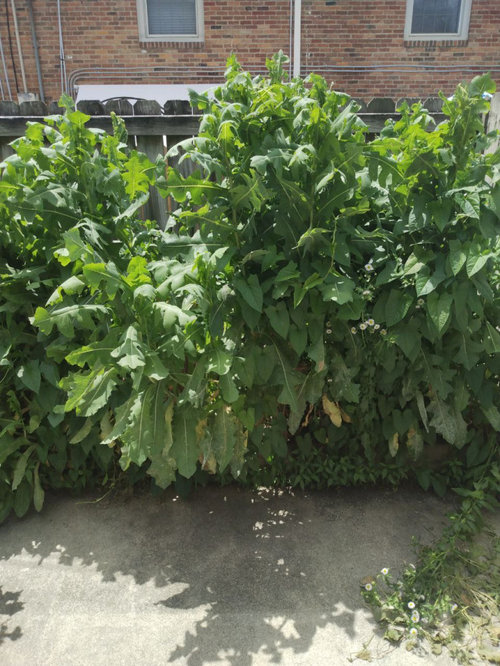
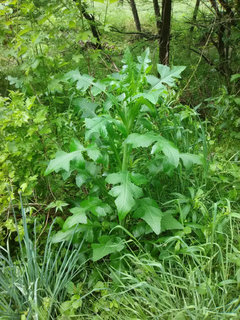
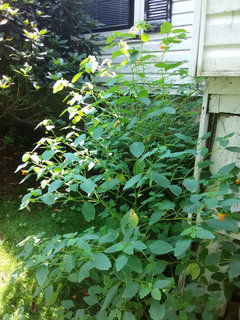
What is this weed?

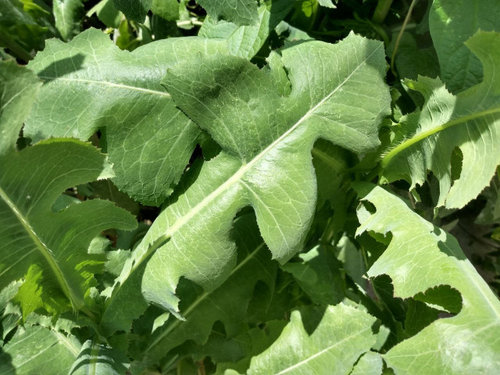
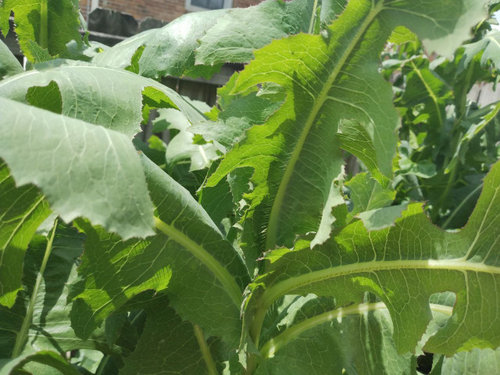
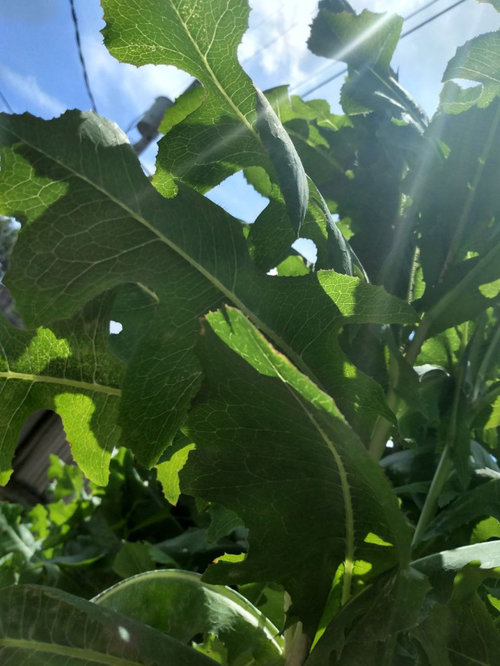
Tall, growing very fast, and currently hitting 5-6 ft. No signs of flowering yet. No particular scent to the leaves. The back of the leaf has thin, pretty soft spines down the center rib. I though at first it might be Canadian Thistle but it doesn't have all the spines that CT has, and the leaves aren't the same shape.

They've popped up on my relative's apartment patio. I'm wondering what is the best control. We are in central Ohio.


Comments (20)

  • 4 years ago

    Compass Plant, perhaps. Silphium laciniatum.

    tj

    raee_gw zone 5b-6a Ohio thanked tsugajunkie z5 SE WI ♱
  • 4 years ago

    Lactuca serriola

    raee_gw zone 5b-6a Ohio thanked Jay 6a Chicago
  • 4 years ago

    Lactuca and Convolvulus. Just pull them: it won’t take half an hour.

    raee_gw zone 5b-6a Ohio thanked User
  • 4 years ago

    It could be Calystegia sepium, and not Convolvulus arvensis.

    raee_gw zone 5b-6a Ohio thanked Jay 6a Chicago
  • 4 years ago
    last modified: 4 years ago

    That looks similar to what grows all over my lot, getting 10 ft high or more end of season. It has watery, hollow stems, milky sap & smells like lettuce. I also have Lactuca serriola which is kinda similar but not IMO what the OP is showing.


    raee_gw zone 5b-6a Ohio thanked bengz6westmd
  • 4 years ago

    Ok, floral, you’re right. The Convolvulus/Calystegia will take quite a bit more effort to eradicate than the Lactuca. A first round assault will help.

  • 4 years ago

    Ben, I ran through all possible species of Lactuca, and serriola look the closest. What species do you think it is?

  • 4 years ago

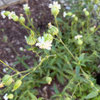
    I do know about the convolvulus, unfortunately! Not sure about the weed with the small white sort-of-daisy-ish flowers, which I've seen in fields all my life but don't know what it is.

    I think I will have to get back over there and take a closer look at the main stems to know if it is Lactuca serriola or Silphium laciniatum, will I not? They seem to be very similar as far as the leaves. Unless one of you can see the stem well enough to tell? Aren't silphium stems very hairy, while Lactuca are not?

  • 4 years ago

    It is not Silphium lacinatum. I’ve grown that and it starts life with a huge basal rossete of lacinate foliage that yours is missing. in addition, Silphium stems are solide and Lactuca are hollow.

    raee_gw zone 5b-6a Ohio thanked User
  • 4 years ago

    Silphium laciniatum leaves don't have spines running down the midvein of the adaxial surface. Their leaves usually never grow more than 3 feet high, before they send up a flower stalk. Silphium leaves are thick and leathery, and would never wilt and look limp like yours. Silphium leaves don't bleed white sap. It's definitely a question of which Lactuca species it is, so we have to wait. A photo of your Lactuca would be nice Ben.

    raee_gw zone 5b-6a Ohio thanked Jay 6a Chicago
  • 4 years ago

    Too bad it isn't Silphium, since it is critically endangered here - although it sounds impossible to transplant, and I really couldn't leave it to grow.

  • 4 years ago

    Lactuca serriola, absolutely, cannot be anything but. Ben, perhaps your 'serriola' is another species?

    raee_gw zone 5b-6a Ohio thanked Jay 6a Chicago
  • 4 years ago

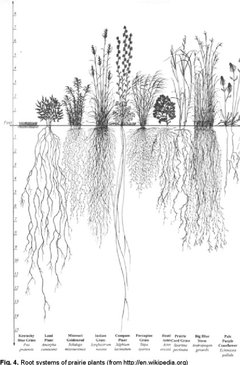
    Yeah, Silphium have huge taproots that are some of the deepest in the meadow ecosystem, if I recall. They're easy enough from see tho.

    raee_gw zone 5b-6a Ohio thanked User
  • 4 years ago
    last modified: 4 years ago

    Ben, your Lactuca looks pretty close to the OP's plant. Check and see if it has pickles running along the midvein on the underside of the leaf. There is a lot of variation in serriola leaves. Sometimes they aren't lobed at all, and sometimes they are heavily lobed. The lobes of Lactuca serriola stick out straight or point down, whereas the lobes of Silphium laciniata point up.


    raee_gw zone 5b-6a Ohio thanked Jay 6a Chicago
  • 4 years ago
    last modified: 4 years ago

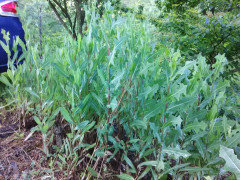
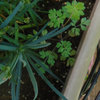
    Jay, the example in the pic I show above does NOT have prickles. The typical serriola that also grow all around does have the prickles, tho they're not hard & won't really stab you. Also, the serriola get only 3 -4 ft tall, where what I showed above grows WAY taller. Typical serriola below w/reddish stems.


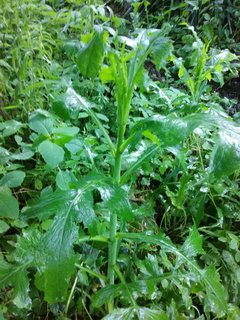
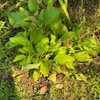
    Now, pic on the fly that's not the best, but another (small) ex of what I showed originally. Hollow, watery green stem.


    Just for fun, here's a 6 ft tall jewelweed beside my house from last summer. There's a spouting there that watered it well.


    raee_gw zone 5b-6a Ohio thanked bengz6westmd
  • 4 years ago

    I agree on Calystegia. I was using ”convolvulus” carelessly. I’ve fought it for 30 years.

    raee_gw zone 5b-6a Ohio thanked floral_uk z.8/9 SW UK
  • 4 years ago

    Floral, all the Calystegia species have been moved to Convolvulus, so you were correct. I knew about a couple of them, but had no idea they all were reassigned.


    raee_gw zone 5b-6a Ohio thanked Jay 6a Chicago
  • 4 years ago

    Ben, I'm not very good at identifying Lactuca species because they all look so similar. A couple candidates are L. canadensis and L. floridana which both have hollow stems, but it can possibly be a different species. Let us know what color the flower is, either blue or yellow. It night help narrow it down. Thank you for supplying the photos!

    raee_gw zone 5b-6a Ohio thanked Jay 6a Chicago
  • 4 years ago

    Jay, I'm certainly not good at IDing these various lettuces. A search shows canadensis and floridana both have reddish young stems like serriola, so not them. I do know that the first pic I showed originally gets the little yellow flowers and then the wind-blown seeds, which seed like crazy. L. serriola also has the tiny yellow flowers.