Software
Houzz Logo Print
bboisvert123

Is this season a loss?

4 years ago
Hi Everyone,


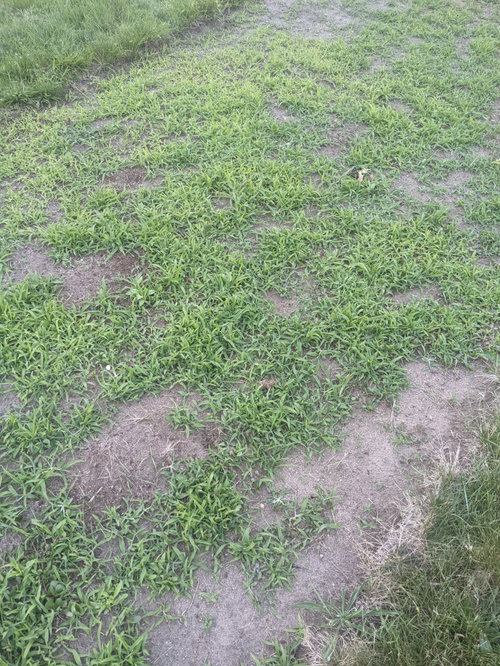
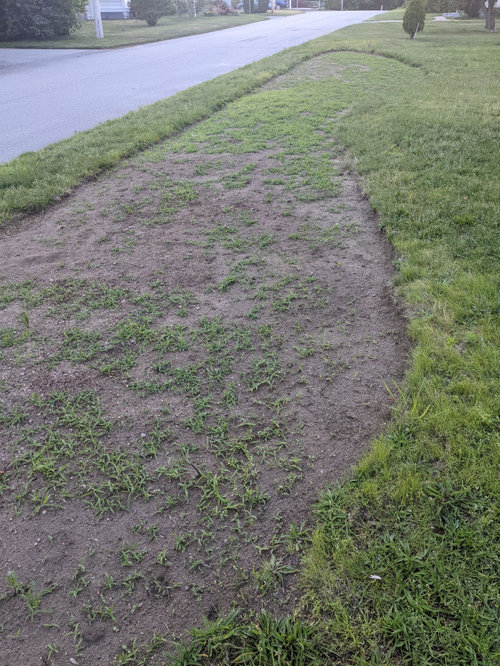
I live in New England and rototilled a section of my lawn in mid May, then spread a wildflower seed mix in the first couple of days in June. Since I have limited gardening experience, I let the plants grow for a full month to ensure I could ID them properly and it looks like the majority of the planting bed is crab grass! Is there any chance of salvaging this project this season? Any suggestions for how to move forward?


Comments (17)

  • 4 years ago

    I’ll give it a go since nobody has answered. I’m not familiar with crab grass but I believe it is a heavy seeding annual. So you need to get rid of it before it flowers.


    Did you water the area after you sowed the seed?

  • 4 years ago
    last modified: 4 years ago

    If you decide to start over I would plan for next season. Cover the area with cardboard followed by mulch. The mulch keeps the cardboard in place. The cardboard will eventually decay but it will smother the weeds in the bed. Google "kill weeds with cardboard". Lots of videos on the subject.

    That area will look great planted with wildflowers!

  • 4 years ago

    I'll alsp say that I also heaped tons of leaves under my cardbaord, with plenty of mulch on top. Great weed killer.


    Per the meadow, I have had real real difficulty just spreading seed and having it sprout reliably. Birds eat it, etc, and conditions may not be ideal. I wintersow my seeds in milk jugs (very popular method--google it) and plant out the seedlings. I have much greater success.


    But, that being said, I am also trying to start a meadow in a grassy area where the dirt is likely some builder's fill. It is not going well! The soil is a challenge. I had visions of natives popping up easily in my local soil, and it ain't so easy. I can't do soil amending with compost, etc, for this whole area like it's a normal garden, so i'm not sure what to do myself. Starting meadows/wildflower areas is harder than it sounds! I will say the echinaceas and native asters took to it well. Beyond that, I've got grass and weeds. Dandelions sure do like it!

  • 4 years ago

    I hesitated to weigh in here because I have really no knowledge of meadow or meadow-type plantings, but my thoughts align with those above. I feel like trying to do this kind of project is not (easily) sustainable as it does need maintenance like any other garden to remain weed-free, to replant when necessary, etc. I think if you plant and ignore it, it pretty much goes to weeds and more, just like any other garden.


    That being said, if you do want to work at have this type of garden (and hey, why not, it's like working at having any other type of garden!) I would go the cardboard and mulch route also, and plant plants, not seeds. You could take the flat blade of a pickaxe and skim off that crabgrass first (getting the roots!) if you wanted a bit more help in removing it before putting down the cardboard.


    I second winter-sowing. I've been doing it for almost 25 years and it's the only way I start seeds. And you can actually use this method in the summer as well, to start some stuff for fall planting; you just need to adjust a few things and pay more attention as you go. But personally I would lay down cardboard and mulch/shredded leaves now, mulch again in fall, winter-sow, and plant next spring.


    Good luck and please keep us updated so we can see how things worked out!

    :)

    Dee

  • 4 years ago

    Thanks everyone for the input! It seems like planning for next year is my best bet. I did water the seeds every day for the first week and about 5 out of 7 days the following month. I assumed I would have to weed throughout the summer, but I didn't expect it to fully take over! I'll definitely create starters for next season.

  • 4 years ago

    Crabgrass and many other weed seeds can remain viable in the soil for many, many years, and they are adapted to sprout in conditions like those you have created with lots of light and not lots of competition. As others have said, starting with plants that you have started from seed in more controlled conditions tends to be more successful, and winter sowing is one way to do this. You could also start some seeds in containers now and then transplant in early autumn when the soil is warm for good root growth while the days are getting shorter and cooler. Having mulch of some type over the bed will block light to those zillions of seeds already in the soil so that they don’t sprout will help with but not eliminated weeding. As others have said, removing what is there now and mulching will keep from adding fresh crabgrass seeds.

    And mad_gallica’s comment about meadows not being a natural climax community to most of the northeast is spot on, though I have been told that there are parts of Long Island that have some grassland naturally. I did not mow our fields one year and one steeper section for 3 years and am seeing trees over my head in the three year section, and tiny trees in the one year part.

  • 4 years ago

    Ive been planting praire plants for a few years now. I will say prairie plants are extremely frustrating. The flowers take a long time to mature 2-3 yrs and the grasses can take longer 3-5 years at times. Not all is lost though, especially if the seeds you put down are perennial plants. Many of those plants require wet freeze/thaw cycles in order to germinate. So they are most likely still good.


    I would kill the grabgrass with roundup or cover with cardboard. Neither of those will kill perennial flower seeds. Dont till it any more. Next May I would put down annual flower mix and a germination blanket. The annuals will jump out of the ground and give you something pretty to look at. The perennials are really tough and they will eventually show up, but might be the following season. Be careful to not use any pre-emergent chemicals or 2-4d. You can try weeding by hand, but only if you recognize the weed. If you have not added grasses to the mix you can use “over the top” herbicide to control weedy grasses like crabgrass and foxtail.


    Hope this isnt too late.

  • 4 years ago
    last modified: 4 years ago

    I have a small meadow, which was kept so by mowing every few years. The past two years, I have mowed more frequently (once a month or so). This has created more variety of plants and increased the frequency of bloom. If I were looking to start it again, I'd probably gather seeds from pretty "weeds" in the area and spread them out over the area that I wanted to turn into a meadow, then run over it with a mulching mower. I wouldn't water at all. ...Poppies tend to self-seed in my area when they have an even playing field (like at the bottom of a pot sitting on bare ground fabric). This fall, I intend to seed the meadow with poppies. To do it, I will mow very closely at the end of the year then rototill the dirt. Then spread the seed. I will not use Roundup. (I use no pesticides) and I will not water. We'll see if it works.

  • 4 years ago

    I read an article in Fine Gardening about matrix planting, which I think works better for the meadow look in NE. But Houzz did an article on it, too. Get Year-Round Good Looks With Matrix Planting in Your Garden (houzz.com).


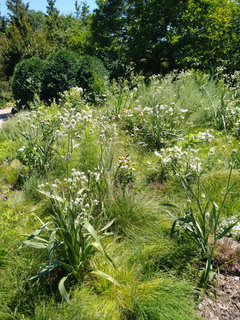
    You have a base layer, often sedges or grasses, then a layer of flowers and a layer of focal points. Here's an example from the Olbrich Botanical Gardens in Wisconsin:


    It has prairie dropseed as the base layer, the remainder include rattlesnake master, white meadow phlox, daisies, and I think some Liatris.


    The reason to do things this way is that just planting wildflower seeds rarely works. Most of those mixes include plenty of seeds that aren't native, because native perennials are often difficult to germinate (requiring sometimes several winters) and slow to establish.

  • 4 years ago

    This is the Fine Gardening article

    Plants for a Matrix-Style Garden - FineGardening

  • 4 years ago

    After smothering the crabgrass this summer, I wouldn't bother with seed. I get plugs. I like The Pollen Nation in NJ, but I have a lot of woodsy shade. Others like Prairie Moon.

  • 3 years ago
    last modified: 3 years ago

    Ah no, I would start over. I have a small meadow but in the UK. It has not been an easy project and has taken me 4 years to approximate something I am happy with. I spent 2 years assiduously weeding, spraying and covering, to get the cleanest planting area possible (and I still have an eternal headache of weeding out wild oats). Also, spring planting - dreadful idea in the UK. Once I was ready to sow, I did a wildflower/native grass mix (for calcareous soils) in October. Gives hardy perennials a chance to stratify while the few annuals germinated then grew very slowly over winter. Like a lot of things, the largest effort goes in preparation, while the actual sowing took 5 minutes. I also had to decide what sort of meadow I wanted. I couldn't have a spring flowering one which carried on so I could include late summer flowers such as sanguisorba, scabious and the like because the grass must be cut. I left it too late for one year and the grass lodged everywhere - looked a mess. I settled for a meadow which has small spring bulbs (anemones, camassia, narcissus) along with primula (oxslips, cowslips) and other short alpine meadow plants, so I do my first cut in the first week of July.

    I dunno, I could ramble on interminably about this because it has been a fascinating (and frustrating project) and absolutely not as simple as the many seed merchants would have us believe.

    I think a UK meadow would probably not transpose easily to the US...but having made numerous attempts at prairie style plantings (in my arid county), I realised I had to rely on a mish-mash of plants and techniques which are not always accepted horticultural orthodoxy.

  • 3 years ago
    last modified: 3 years ago

    I agree with above, meadows in the NE are not a thing.

    If we're talking prairies, then there's been a lot of truths said, but I would suggest that better results (for me at least) are to start my seeds as species pots, transplant, etc. I would never buy some half-***'d mix, broadcast it, and expect it to magically work. Plants aren't really like that...all have different needs and growth rates etc, and the slower (and probably more desirable) plants will be crowded out by the faster ones. Nothing is labor free, and magical. Study, read, experiment.

  • 3 years ago

    You do not - and should not!- use roundup or any herbicude to lkill crabgrass! As floral ssid, it us an annual so you just need to keep it from going to seed by mowing ir pulling. I also agree with gallica that you cannot create a natursl prairie in the northeast. Our soil is too fertile (though you can cut snd remove the biomass to help reduce the fertility.) The most oracticsl way to create a low maintenance meadow effect I found is in the recent book ”Federal Twist,” named for a garden by the name in New Jersey. The strategy is to plug large holes with the mist compeitive perennials - for which are included many lists. It is the lazy man’s version of matrix gardening, and it works!

  • 3 years ago

    Be sure to get your seeds from a good, reliable source. Some of these "meadow in a can" things are pretty worthless. Good luck!

  • 3 years ago
    last modified: 3 years ago

    kitasei - thanks for the referal to the book 'Federal Twist' - sounds like a formal experiment of some goals I've tried to work on over the years. I'd love to see how someone else did with it. I see it is available at my library.

    I'd have to agree in theory and small personal experience, that trying to grow plants that normally grow in poor soil, or even drought resistant plants from the Western part of the country, has never worked for me. It's really trial and error to figure out how to adapt to the change in climate for me.

Sponsored