Software
Houzz Logo Print
jess_barrett55

Am I making myself crazy, how can I approach my yard issues better?

4 years ago

So I’m starting to drive myself a bit crazy here with my yard and what I believe to be weeds but maybe I’m wrong. I’m hoping someone can answer my several questions below. I tried to document all of these in pics…


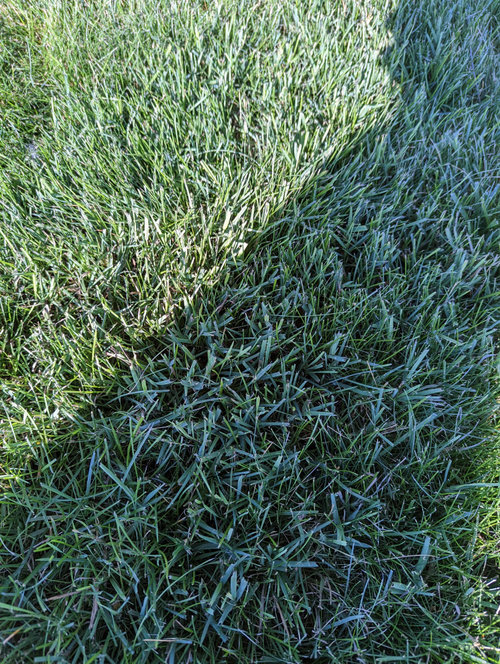
I’ll continuously get these smaller batches of what I thought was tall fescue but from what I read tall fescue will grow faster than the grass around it which doesn’t seem to be the case for me. Also they will typically pull out by hand pretty easily which I also don’t believe should be the case with true tall fescue. So what are these patches that are driving me crazy as I just can’t unsee them and I’m spending too much time obsessing over them and pulling them by hand ☹, reseeding, and watering. Pics #4,5


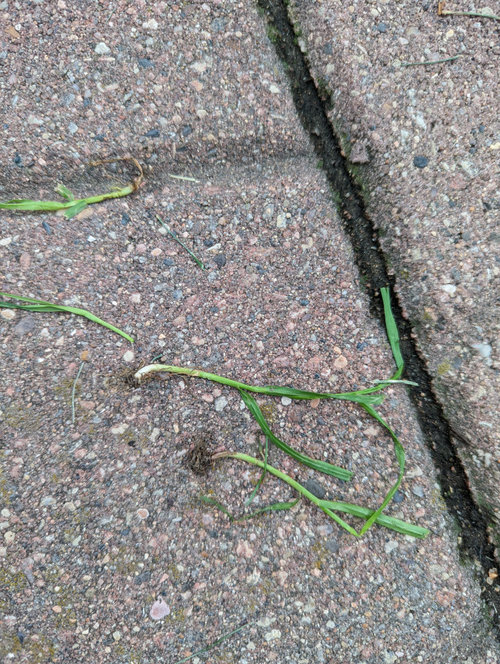
I have dogs and every year when I go to repair the pee burns I find that no matter what grass seed I use there always seem to be a handful of seedlings that look like weeds to me but maybe they aren’t actually weeds after all and I’m spending all this time and energy pulling them when it’s not necessary. I guess the reason I think they are weeds is that they seem to be a bit lighter in color and grow faster than the other seedlings around them. I also showed a pic of what the seedlings look like when they are pulled out. Pics #1,2


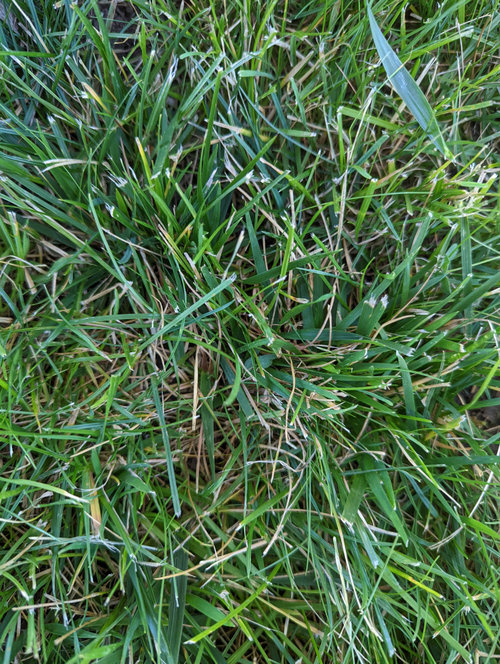
There is also a section of what I believe to also be weeds that I’m curious on how to get rid of as well, this picture isn’t the best so apologize. Pic #3


ANY advice would be greatly appreciated as I feel like I’m not approaching these issues the most efficiently and cost effectively.

Thanks in Advance


Comments (9)

  • 4 years ago

    Thanks Jordan. Are you saying that in each one of my pictures that's tall fescue? I feel like pic #3 is something different as it almost has more of a milky color to it too. So that's even what the ugly random seedlings are too? I swear I've been pretty good about checking the seed mixture the last couple times when buying seed but I must have missed it being in the mix then. Is tall fescue something that spreads as well, and does it like certain areas better than other like shade, certain, types of soil, etc? I just swear growing up my parents lawn never had this stuff. Either way I absolutely hate it as it just looks like it's a weed and it angers me that I can't just treat it like a weed lol.


    Anything else I can do to help increase my chances of this stuff showing up year after year? Also any other "characteristics" of tall fescue to look for to confirm that that's indeed what I'm spending so many hours pulling out by hand?


    Lastly, for some reason I thought I read that there is a product that kills just Tall Fescue, called something like Tall Fescue Control but that only certified lawn folks can purchase it?


    thanks again for your help!!!

  • 4 years ago

    Where do you live?

    What is the target grass type you're hoping for? Do you want only fescue? Only Kentucky bluegrass? Only rye?

    When were the last two times you fertilized and what products did you use?

    What is your watering schedule? How often and for how long do you water?

  • 4 years ago

    Sorry for the delay.....I live in Minnesota and I believe what I'm hoping for is a combo of Kentucky Bluegrass and rye grass or honestly probably anything that looks similar and just doesn't have big wide blades and loos like a weed like tall fescue does IMO.


    I actually have not fertilized this year as I've had alot going on and our summer has been very hot and border line droughtish. So the last time would have been fall winterizer and I typically just use the Menards brand stuff or Milorganite if I can catch it on sale.


    In terms of watering I typically do about a 45 min water once a week. But if I have new seed then typically I'll sprinkle them down by nozzle 2 times a day or 3 if it's hot. Unfortunately I didn't get my dog pee spots reseeded until late Spring this year and like I mentioned it's been pretty darn hot with no rain starting in June.


  • 4 years ago

    Thanks for the location and good answers to my questions. Your answers show you are doing everything right (IMHO). Here's how it might have gone.

    Had you said you were watering every day, I would have given you my short essay on watering deeply and infrequently. Sometimes people encourage weed seed germination by watering every day. You don't have that issue. Had you said you were fertilizing on the Scott's 5-step plan (or however many steps they have this year), I would have suggested an organic fertilizer at least once a year, but the Milorganite covers that. It seems the folks with organically fertilized lawns don't report dog pee spots. An organic fix for dog pee spots is to drop a handful of table sugar on the spots to feed the soil microbes. Had you told us you lived south of Tennessee, I would have suggested that you had an uphill battle to establish a KBG and rye lawn. Yes I realize lots of folks have them just south of Tenn, but with the climate going the way it is, "the South" is moving northward with respect to the grasses which should be used. So far I think you're safe with the winter mix grasses.

    There are tall fescues which are fine bladed. Apparently whatever you're getting is not. Since you shot down every one of my retorts, you're on your own with pulling the weeds. You might consider painting RoundUp on the coarse bladed grasses with a foam brush. That will kill only the weeds, but it's a bit of trouble.

    Jess Barrett thanked dchall_san_antonio
  • 4 years ago

    Thanks dchall_sam_antonio so you said that a KBG lawn seems to fill in, do you mean that after pulling some of the tall fescue here and there that the KBG will fill those spots in? If so how quickly would something like that happen?


    Also, does Tall Fescure spread? What type of tall fescue are fine bladed so I can keep an eye out for that when picking seed moving forward?


    Also FWIW, it seems like most of these tall fescue areas are around areas where I had dog pee burn out spots, is there something related there? Also in terms of your sugar trick is that something I can do once the burn mark shows up and then they literally "Fix" themselves?


    Also, does tall fescue seem to thrive more in areas of shade or extra moisture, because it seems like that seems to be case in my scenario.


    I'm contemplating changing over an approximate 10x10 area in the corner of my back yard that is more on the shaded side that I have a hard time getting grass to grow consistently over to a pea gravel pee zone, but am a bit worried about doing all the work and then not being able to train my dog to actually go over there consistently and/or they won't like peeing on pea gravel. Speaking of does dog poop also kill grass, I guess I just assumed pee was the big issue.


    Lastly, can you tell me why I get these small clovers and small, almost flower like, weeds in my yard here and there? the clovers have more of a soft stem that seems to tear pretty easy, where the other weed has a much stronger stem which can some times branch out into several branches but typically mine are just one stem.


    Thanks you so much!!


  • 4 years ago

    1. How fast will KBG fill? Sorry, but someone with more experience with KBG will have to chime in on that. When I lived in Dayton (1979) I undoubtedly had some, but I was not paying any attention at that time. I was a student.

    2. Does tall fescue spread? Not like KBG does. Fescue is generally classified as a bunch type grass while KBG is called a sod forming grass. Fescue plants are individuals which will get larger, but KBG actively sends out runners to spread.

    3. Again don't know whether the dog pee spots affect different types of grass differently. (What good am I today????) Yes, sugar can go down at any time before or after you notice the burn spot.

    4. Fescue will survive in some shade. KBG and rye will not.

    5. Rather than pea gravel, why not try mulch? I have grass and mulch, and my dog seems to prefer lounging on the mulch. But he also seems to prefer peeing on the grass. Hmmm. Anyway, mulch is easier to recover from than gravel. Also you can sometimes get free mulch from a local tree trimmer if you ask. The stuff from their chipper/shredder is perfect mulch. I've never seen dog poop kill grass.

    6. The clover-like plant is oxalis. You can kill it without harming the grass using Weed-b-Gon Chickweed, Clover, and Oxalis Killer.


  • 4 years ago

    Hello again, and thanks again so much to both of you for your help. If you don’t mind I still have a handful of questions and would be so appreciative of any more advice.


    In terms of putting down pea gravel and not mulch it’s because the area is kind of on a slight side hill and I didn’t want the mulch washing away during heavy rains into my neighbor’s yard, plus the area is close to my house and my soil is very clayish and holds moisture the way it is and didn’t really want to encourage anymore moisture near the foundation. However the more I’ve read about this idea, it sounds like I should possibly use something a bit bigger than pea gravel so it doesn’t get suck in my pup’s paws, etc.


    So is there something that encourages the Tall Fescue and Oxalis to grow as I’m fairly certain the tall fescue is growing in areas that I “repaired” from dog pee and the seed shouldn’t have had any tall fescue in it.


    I’m still a paranoid that I’m pulling more areas that I think are tall fescue that possibly aren’t so here are some more pictures to hopefully confirm that what I’m seeing is indeed tall fescue.

    In terms of other areas that I recently repaired and if I see some of the seedlings/grass growing taller than the others what does that mean? Are those weeds, tall fescue? Am I better off trying to pull them now then dealing with them later?


    I’m mainly just trying to figure out what is the best use of my time and resources at this point since I’m in the Midwest and summer is almost over anyway ☹


    I’ve attached some pics which hopefully helps explain my questions.


    So is is Tall fescue mixed in right?


    Is this more tall fescue mixed in and then see the few sprouts of brighter green grass, which is from new seed as this is an area I reseeded this year. Are those brighter tall sprouts weeds or...


    another example of an area that I reseeded....the brighter thicker strands that are kind of curled over are what?


    In general what type of grass is in this photo and is the thicker bladed stuff tall fescue near the bottom of the photo or something else? I get confused cause it doesn't seem real "clumpy"


    Is this a weed or a type of grass?


    I'm assuming this is a weed or type of bad grass here mixed in, notice the whiteish/reddish blades


    Well again, thanks so much for all your help, it's so greatly appreciated!!

  • 4 years ago

    Bumping this to hopefully get a response :-)

  • 4 years ago

    Generally if you see a plant growing that you don't want in that location, it's a weed. In the case of weed grasses growing in target grasses, pulling the weed is very effective.