Software
Houzz Logo Print
oneira777

what shrub could it?

4 years ago

Gardeners,

Here is a challenge. I just saw a 10 foot shrub with pale lavender blue flowers while driving. Any guesses on what it could be? It looks like a ever green, but I am not sure. I don’t think it is California lilac because I doubt anything flowers this late.

It looks like it would make a great privacy screen.

Any guesses on what it could be? Sorry no pics!

Comments (30)

  • 4 years ago

    How about telling us where it was?

    tj

  • 4 years ago

    Check also Vitex agnus-castus. But we really need more info.

  • 4 years ago

    It was in Seattle. Thank you everyone who has taken a crack at it so far. Am going to look up what you suggested and get back

  • 4 years ago
    last modified: 4 years ago

    Unlikely to be either the plumbago or the vitex if in Seattle. And yes, too late in the season for ceanothus to be in bloom.

    Can't think of many other shrubs of that size flowering now with that coloring......possibly Hibiscus Blue Bird or similar blue cultivar. And there are some very late (into August) blooming rhododendrons but they are not common in most gardens. Hydrangeas of course but hard to mistake them as evergreen. Or as ceanothus :-)

    Any chance it might have been a vine growing very solidly on a trellis?

  • 4 years ago

    How fast were you driving? :)

  • 4 years ago

    Fori, I would like to believe I was doing 35 🤣

  • 4 years ago

    @gardengal, it could be on a trellis. It’s blooms were erect and kind of reminded me of a lavender lilac.

  • 4 years ago

    I took a look at hired. It could be hired. The color and the bloom type matches. But vitex looks very bushy and this was not very bushy. It looked more airy.

  • 4 years ago

    I am not sure why vitex got autocorrected to hired. I meant vitex in the previous comment.

  • 4 years ago

    Looked up hibiscus blue Hurd. Could it grow that tall? It was at least 10-12 feet tall.

  • 4 years ago

    Bird not Hurd. Darn autocorrect.

  • 4 years ago

    I have no idea if Crepe Myrtle grow in Seattle, but ours are in bloom now, and some varieties have that color flowers

  • 4 years ago

    This IS perplexing !! What you describe sounds like a vitex/chaste tree but they are not the slightest bit common here. I have only seen one that I can remember years ago when doing plant ID for my hort degree. Have never seen one in any private garden or for sale in any area nursery. But they do grow here, if pretty uncommon.

    Any chance you could drive by again and get a photo? That would certainly help :-)

    Crape myrtles do grow here..........but rarely flower unless a very long and hot summer. Which we most definitively are not experiencing this summer!! Has been unusually cool and damp until just recently. We have had to wait until the end of July to experience anything close to "normal" summer weather. I would be very surprised to see any crapes flowering here.

  • 4 years ago

    What does 'looks like an evergreen' mean? Is evergreen being used a synonym for conifer? ie needle like leaves? Or does it mean thick leathery leaves.


    No chance it's just a Buddleja?

  • 4 years ago

    Buddleia!! Never thought of that! And lord knows there's enough of them around as they propagate here like bunnies (Class B invasive species).

    I guess I assumed any PNW'ers would recognize butterfly bush since they are SO common.........

  • 4 years ago

    I had the Aha moment on the way to work this morning and was checking in to see if the Buddleia, Butterfly Bush had invaded anyone's consciousness yet.

  • 4 years ago

    Hard to know for sure, it sounds like a California lilac. It appears to come in many varieties. I’m a avid gardener from the Chicago area and I have more blooms on my plants this year than usual.
    Possibly blooming longer or later.
    I’ve been around rose’s my entire life and I’ve seen some rare things happen.

  • 4 years ago
    last modified: 4 years ago

    @T Ciardiello, What kind of California lilac - ceanothus - do you have growing in Chicago?

  • 4 years ago

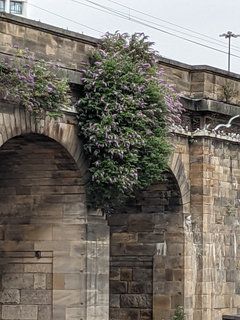
    Oh god everyone, it could be buddleia. It is more of a pale lavender kind of a thing which threw me off. Jordan, your pic helps. I think of buddleias as being more darker purple and shorter. Can buddieias grow 12 feet tall and be pale lavender? It was a bit less bushy. It is an hour away, so not easy to go get a photo 😢😢

    For the longest time , I suspected it to be a California lilac but mine stopped blooming a long time ago. I couldn’t shake off the feeling it was a California lilac hence I said evergreen.

    Everyone, I really appreciate the help. I am leaning toward buddleia.

  • 4 years ago

    Gardengal, you mention that Crape myrtles don’t flower much in Seattle. I was just thinking of getting one as I lack a summer flowering tree/ shrub. Should I forget getting one?

  • 4 years ago
    last modified: 4 years ago

    'Can buddieias grow 12 feet tall and be pale lavender? " Yes....easily. And for self seeded ones - of which there are many - a pale lavender is a much more common color than dark purple.

    Unless you really, REALLY have to have one, I wouldn't bother with a crape myrtle. Their ability to flower here is just too inconsistent because of our cool summers and if/when they do flower, it is very late summer into early fall. If you must, site somewhere with reflected heat....against a south facing wall or surrounded by a paved surface. But no guarantees on flowering :-)

  • 4 years ago

    Thanks gardengal, you saved me a whole bunch of pain. I am passing on the crape myrtle. Sounds like too much of a hassle. I will look for a different shrub.

  • 4 years ago

    Buddleja


    Ceanothus.


    Note different habit, flower shape and shade of blue.

  • 4 years ago

    It’s buddleia!! The first pic nails it.

  • 4 years ago

    Thanks floral.

  • 4 years ago
    last modified: 4 years ago

    Vitex are actually present here both in the planted landscape and in independent garden centers. But these shrubs produce branching flower spikes that mostly point up rather than there being a lot on each specimen that arch outward. Or even point downward.

    And are certainly much less prevalent regionally than the weedy butterfly bush.

    As with orchard fruits and hybrid rose bushes local success with crape myrtles is merely a matter of appropriate variety selection. With Seattle even having street tree plantings of 'Natchez' and others that are able to perform here. Plantings that I have seen in color as early as July. The Center for Urban Horticulture also has a collection of multiple different kinds on view.

    See A. L. Jacobson, Trees of Seattle - Second Edition (2006) for specific locations of Vitex and Lagerstroemia in that city.

  • 4 years ago

    "The Center for Urban Horticulture also has a collection of multiple different kinds on view."

    Which may bloom once every 5-7 years.....if we are lucky. I've visited CUH many times when these failed to bloom. Like this year. 'Natchez' is perhaps the only cultivar with reliable flowering in this climate. And even that is not a guaranteed annual feature.

  • 4 years ago
    last modified: 4 years ago

    And I've repeatedly seen the CUH crape myrtles in color throughout the planting - I seriously doubt there have been 5-7 year gaps. And there are three levels of performance in Seattle, with various long established plantings demonstrating all three (depending on what cultivar they are): 1. Seldom blooms; 2. Blooms annually but not until September; 3. Blooms every year, sometimes as early as July. So that since it is August 15th it may be too early to determine that any given local specimen is not going to bloom at all this year.

    Article - Trees that merit planting in Seattle by Arthur Lee Jacobson

  • 4 years ago

    Whatever.

    Ever wonder why crape myrtles are not heavily marketed in area nurseries? It is rare to find an independent nursery selling any, let alone a selection of cultivars. They are just not reliable performers in the cool summers of the Puget Sound region.