Software
Houzz Logo Print
elena_nuta

Floppy new ficus leaves

4 years ago
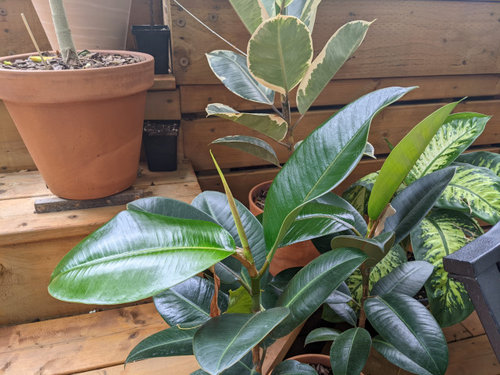
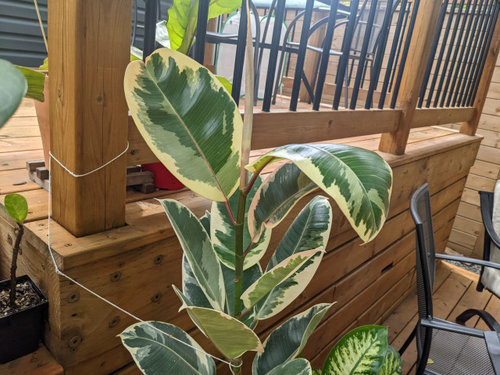
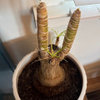
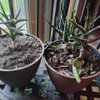
New leaves of my ficuses sometimes come in and are super floppy. Why does this happen?
The variegated one hasn't been repotted this year so I don't think it's a roots issue. Both plants are generally really happy, are outside and get some direct sun in the day. The soil for both has lots of bark and perlite added and are in Terra cotta pots with wicks, so I don't believe overwatering to be an issue.
I considered underwatering but I use a wooden skewer to check the soil before watering.

Comments (6)

  • 4 years ago

    New leaves naturally do not hold on to turgor pressure due to increased transpiration rates, therefore are more likely to droop. As they mature, this improves greatly. If only your young leaves are doing this, i suspect the trees are healthy, and wouldn’t be too concerned. If this is also happening to older leaves, a watering issue (too much or too little) is more likely.

  • 4 years ago
    last modified: 4 years ago

    The most distal leaves on any Ficus are the most likely to wilt from a loss of turgor, and that has nothing to due with whether the leaves are mature or immature.


    If I were to sever the long sacrifice branch on this Ficus so it's length was reduced by half, it's very likely the foliage at the end of the stub would be first to wilt from a loss of turgidity, even though the few leaves remaining leaves are fully mature.

    The primary drivers of a loss of turgidity are 1) under-watering (reason obvious). 2) Over-watering - the lack of oxygen that accompanies too much water in the grow medium affects the root system's ability to efficiently take up water and move it throughout the plant, with the most distal organs being the first to suffer from the water being shut off. soil compaction and it's lack of soil oxygen belongs in the same category. 3) A high level of dissolved solids can affect the osmotic rate at which water can move into cells from intercellular spaces in the plant, which can result in more water loss from evapotranspiration that is supplied by of the plant's plumbing.

    If you're flushing the soil regularly and not trying to fertilize at luxury levels, it's probably not a high level of dissolved solids in the soil solution. If you are using a well-aerated medium it can't be soil compaction. If you are watering while you can still detect moisture in the medium of a fully established plant (entire soil mass is colonized by roots) and notice the leaves attitude is lethargic during the day but it improves at night during the dark phase when the stomata (small pores in leaves that allow water vapor and other gasses to exit the plant) close, you're almost certainly over-watering.

    Edited to say: Some of the Ficus with larger leaves are noted for, once having wilted, leaves that are often unable to recover to their original spatial position. IOW - the leaves having once become droopy due to wilting, might not be able to recover their original perky attitude. Elastica and lyrata are a couple of the several larger leaf species known for this habit. It occurs because the weight of the leaf compresses cells on the underside of the petiole (leaf stem), which would be the inside of a curve. On the outside of the bend, the top of the leaf petiole, tension is created in the cells. By forming compression wood on the underside of branches and tension wood on the topside is how most trees support extremely heavy branches w/o them drooping all the way to the ground level until they find objective support. Unfortunately, without a high percentage of lignin, a natural polymer that makes branches woody and strong, the leaf petiole is sometimes unable to bounce back from the stress once applied.

    Al

  • 4 years ago

    where are you.. big city name..


    NONE of my houseplant get any direct sun.. ever... full bright shade ..


    in sun.. you might have watering issues .. the plants inability to maintain proper water pressure at a cellular lever.. that is to say.. your leaves dont stay turgid because of the sun ...


    i hope that is what al says.. and explains why ...


    ken

  • 4 years ago

    I'm near Toronto, Canada.


    I try to give even my fully-indoor plants some sun! Almost all plants are in some kind of window.


    The leaves seem to have recovered actually.  It might have been underwatering, with the heat sometimes I have a hard time keeping up with the watering!

  • 4 years ago

    I'm near Toronto, Canada.


    I try to give even my fully-indoor plants some sun! Almost all plants are in some kind of window.


    The leaves seem to have recovered actually.  It might have been underwatering, with the heat sometimes I have a hard time keeping up with the watering!

  • 4 years ago

    How much sun you can/should give your plant should be predicated on several factors. 1) First/ foremost is probably how much sun the plant wants/needs to maintain a high level of vitality (health). 2) If the plant is moved outdoors for an annual summer's vacation, its quirkiness insofar as how it responds to being brought indoors (in fall) after outdoor summer sun exposure toward the extreme end of what it's programmed to tolerate is a consideration. Some plants, trees in particular and ficus among them, are prone to leaf shedding within a few weeks of being brought indoors after summering outdoors in a full sun setting. 3) Whether or not your plant is in a developmental stage where the grower's primary focus is on quickly increasing the mass of the plant, or if the plant is more toward the finished end of the spectrum where the grower is happy with the plants size and eye appeal, and would rather keep the plant in more of a holding pattern. This doesn't mean it's better to deprive a tree of light in hope it won't quickly outgrow its current pleasing shape. It's always better to focus on the plant's health, keeping the plant growing strong whenever cultural conditions/ the season allows, and maintain the plants shape and structure through judicious pruning. It's more work, but for most of us, caring for our plants is a labor of love that scratches that nurturing bone we might not even realize we have. It also results in a more vibrant plant that provides growers and visitors alike that the grower's got it going on and knows roots from shoots.

    About that shedding thing ..... I want to add some perspective to that. Your trees can put on several times as much biomass in the course of a year by moving them outdoors when temperatures allow. My tropical trees grow at least 3-5 times faster, maybe even more, than they do in fall/ winter. early spring growing in a controlled environment indoors under lights. So from the perspective of growth rate and development of branch structure, there's no place like outdoors. Not even a greenhouse, the advantage of which is due mostly to the increase in length of the growing season. So, if you want fast growth, your best choice is moving the tree outdoors if you can, and dealing with any shedding that results as it comes. Keep in mind though, that a healthy tree brought in from a summer outdoors is going to have a LOT of stored energy early on if it's indoor stay, so it will have the energy to quickly push a flush of new, pristine leaves that will be perfectly adapted to the whatever photo load it's exposed to wherever it's sited.

    The leaves seem to have recovered actually. It might have been underwatering, with the heat sometimes I have a hard time keeping up with the watering! Plants are economical organisms which are reactive to their environment, and programmed so they waste as little energy as possible. As such, they do not look into the future and decide summer is coming, so I'd better grow a little larger root system in case it gets hot and/or windy one day. When it gets hot/windy they react to hot/windy by closing small openings in leaves and branches (stomata) in order to preserve moisture within the plant and maintain enough internal water pressure to keep all of its organs turgid (plumped up/ full of water). Sometimes the ability of the root system is inadequate in its ability to keep up with evapotranspirational water loss, even after closing the openings through which most moisture is lost to surrounding air. The type of wilting this causes is almost always episodic and transitory, self-correcting as soon as the cultural condition(s) return to within the limits of what the plant is able to tolerate. You should see marked improvement late in the day as the sun goes down. Air conditioning might or might not be what turns the tide and corrects the wilting because with cooler air comes drier air. In almost all indoor cases, wilted plants naturally perk up as the sun goes down because they experience a nearly complete absence of passive solar (heat) gain, and stomata will be closed in preparation for the dark cycle.

    Al