Software
Houzz Logo Print
lmecheverri

maritime pine needs help

3 years ago
Hello Pros!
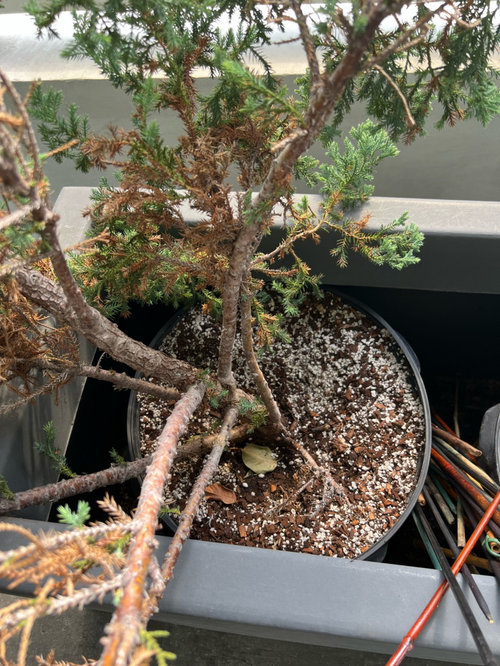
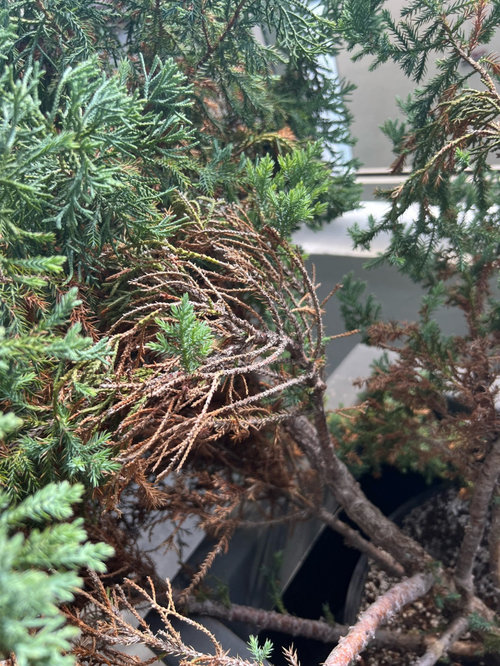
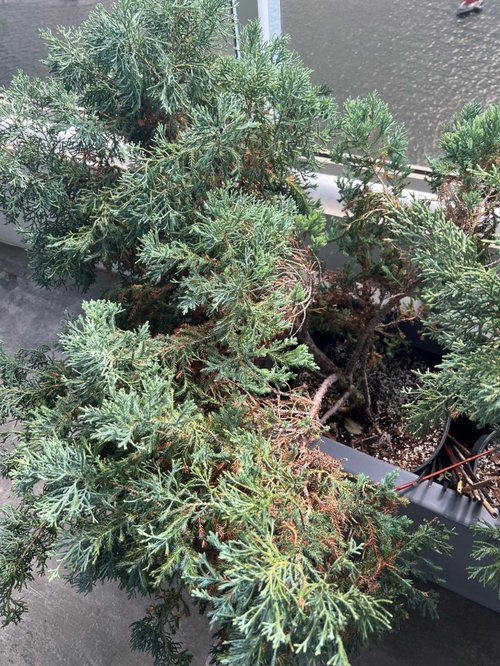
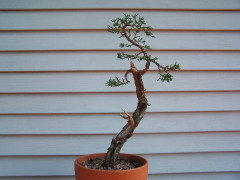
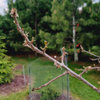
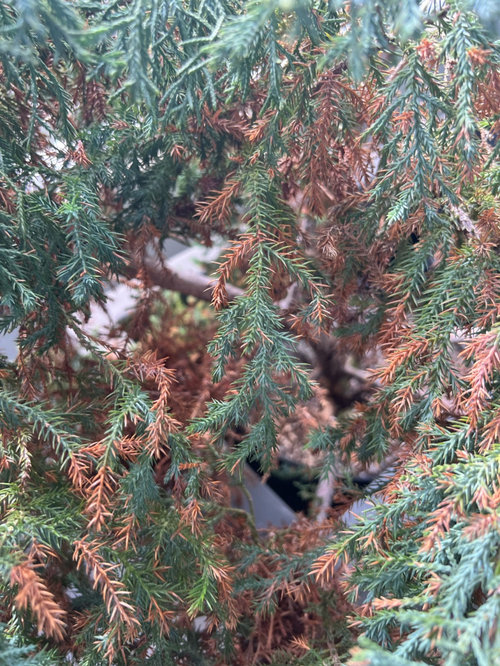
I got this pine, I believe is called maritime pine but I might be wrong. It’s in Florida in the outdoors but it seems it’s not on top shape. Any suggestions on how to recover it?

Comments (7)

  • 3 years ago
    last modified: 3 years ago

    Junipers - possibly one of the cultivars of chinensis. It's difficult to guess at what's causing the stress w/o a better sense of how it's being cared for. Depending on the species, it could be the heat.

    Al

  • 3 years ago

    Pretty big tree for that sized pot, 1 gal?

    The bark media/soil looks dry.

  • 3 years ago

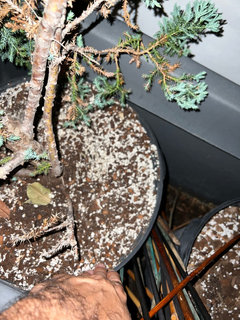
    Definitely more than a gallon… see pic with my hand

  • 3 years ago

    Tapla - pls tell me what the best way to take care of it. I just water it

  • 3 years ago

    when was the last time the media was changed.. media breaks down.. and when it does.. it leads to watering problems.. which lead to.. wait for it.. brown needles ...


    can you pull it out of the pot.. and snap a couple pix of the roots.. and then shove it back in the pot.. and then post the pix..


    how do you water.. and how often ...


    this is a conifer.. which is also a tree.. some peeps suggest.. the root mass should be twice what you see above ground.. if that is true .. then looking at your plant.. you should easily understand the pot is much to small ...


    not many trees.. conifers .... last very long term.. in pots ... unless you become very good at growing things in pots.. and that involves much more than just watering it ...


    ken

  • 3 years ago

    Pls tell me what the best way to take care of it. I just water it.

    L - There is nothing to give you a hint as to what species of juniper it is? It might well be that the FL heat is not within the limits of what the plant can deal with. Asking a plant to operate at or beyond the limits it's programmed to tolerate is very stressful.

    It's not the size of the pot that matters, it's how rootbound the plant is in the pot. A liner (small) juniper in a 1 gallon pot will grow just as fast and with as much vitality (all else equal) as a plant in a 10 gallon pot, up until the point in time when the root/soil mass can be lifted from the pot intact. That is the approximate point where root congestion begins to take a toll. This is true for all plants grown in a container.

    There is no hard and fast rule about the size of the root mass vs top mass. Large trees can remain very healthy in very small pots if the roots are regularly pruned to make room for more small roots, the ones that do the lion's share of the work.

    Junipers do not like wet feet, so be careful about over-watering. If you're watering correctly, so you are wetting the entire soil column at least 20% of the total volume of water applied exits the drain holes, you should be fertilizing about every 4th or 5th time you water, using the mixture for 'production rate'. Also, see "Using a Tell" below. It will help you water at the appropriate intervals.

    To keep track of how many times you've watered, drop a marble in the pot each time. When you're about to drop the 4th or 5th marble in the pot, it's time to fertilize.

    You should keep the pots shaded from direct sun. Roots will begin to shut down when their temperature reaches about 80*. This can occur when temps are in the low 70s if the pot is getting direct sun. When pots are shaded, and because water evaporative water loss from soil has a cooling effect, roots will be able to tolerate temps well into the 90s.

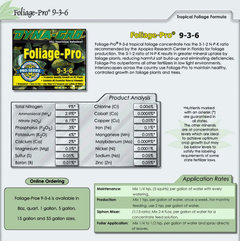
    I have at least 50 junipers in pots, and maybe 200 other woody plants. All are very healthy and are fertilized regularly with Dyna-Gro's Foliage-Pro 9-3-6 fertilizer. It is a complete nutritional supplementation program in a single container.

    This is a Juniperus chinensis "Sargentii"

    Check your plants carefully for spider mites. Look for them where it's shady - underside of the foliage. Hold a sheet of white paper under branches and tap/ shake the branch. Check the paper for tiny moving dots that will resemble specks of finely ground pepper.

    This link will take you to an overview I wrote about Good Growing Practices. You should find it helpful.

    Your junipers will need regular root-pruning to relieve the stress of root congestion. You can up-put them (to a larger pot) from time to time w/o root pruning, but that is less than a half measure as it only partially relieves the stress of tight roots. Where you live, early spring or even the last weeks of winter is the time to repot - any time in March should work well. If only up-potting, you can do that any time.

    FWIW - both root congestion and nutritional deficiencies will tend to cause interior foliage (close to the trunk) to die back, leaving the tree with the pompon or poodle effect with tufts of foliage located primarily at branch tips where extension growth (growing longer) occurs.

    Using a 'tell'

    Over-watering saps vitality and is one of the most common plant assassins, so learning to avoid it is worth the small effort. Plants make and store their own energy source – photosynthate - (sugar/glucose). Functioning roots need energy to drive their metabolic processes, and in order to get it, they use oxygen to burn (oxidize) their food. From this, we can see that terrestrial plants need plenty of air (oxygen) in the soil to drive root function. Many off-the-shelf soils hold too much water and not enough air to support the kind of root health most growers would like to see; and, a healthy root system is a prerequisite to a healthy plant.

    Watering in small sips leads to avoid over-watering leads to a residual build-up of dissolved solids (salts) in the soil from tapwater and fertilizer solutions, which limits a plant's ability to absorb water – so watering in sips simply moves us to the other horn of a dilemma. It creates another problem that requires resolution. Better, would be to simply adopt a soil that drains well enough to allow watering to beyond the saturation point, so we're flushing the soil of accumulating dissolved solids whenever we water; this, w/o the plant being forced to pay a tax in the form of reduced vitality, due to prolong periods of soil saturation. Sometimes, though, that's not a course we can immediately steer, which makes controlling how often we water a very important factor.

    In many cases, we can judge whether or not a planting needs watering by hefting the pot. This is especially true if the pot is made from light material, like plastic, but doesn't work (as) well when the pot is made from heavier material, like clay, or when the size/weight of the pot precludes grabbing it with one hand to judge its weight and gauge the need for water.

    Fingers stuck an inch or two into the soil work ok for shallow pots, but not for deep pots. Deep pots might have 3 or more inches of soil that feels totally dry, while the lower several inches of the soil is 100% saturated. Obviously, the lack of oxygen in the root zone situation can wreak havoc with root health and cause the loss of a very notable measure of your plant's potential. Inexpensive watering meters don't even measure moisture levels, they measure electrical conductivity. Clean the tip and insert it into a cup of distilled water and witness the fact it reads 'DRY'.

    One of the most reliable methods of checking a planting's need for water is using a 'tell'. You can use a bamboo skewer in a pinch, but a wooden dowel rod of about 5/16” (75-85mm) would work better. They usually come 48” (120cm) long and can usually be cut in half and serve as a pair. Sharpen all 4 ends in a pencil sharpener and slightly blunt the tip so it's about the diameter of the head on a straight pin. Push the wooden tell deep into the soil. Don't worry, it won't harm the root system. If the plant is quite root-bound, you might need to try several places until you find one where you can push it all the way to the pot's bottom. Leave it a few seconds, then withdraw it and inspect the tip for moisture. For most plantings, withhold water until the tell comes out dry or nearly so. If you see signs of wilting, adjust the interval between waterings so drought stress isn't a recurring issue.

    Al