Software
Houzz Logo Print
hollyhobbyist

Input/ideas for native hedge?

4 years ago
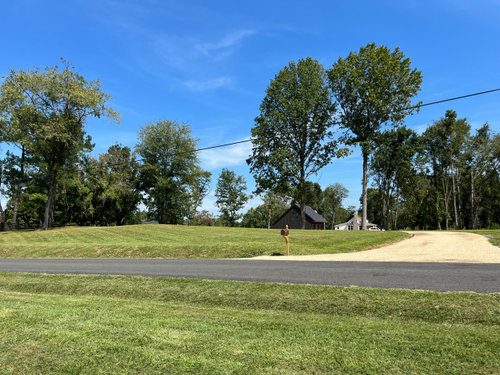
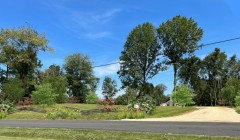
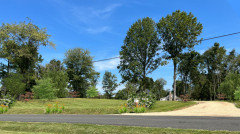
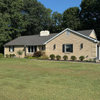
I am looking for input/ideas for a meandering hedge across the front 250’ of our property.


The area is rural, zone is 6B, and the hedge will receive full sun, and moderately dry conditions, although I plan to water until established.


We will be installing a four-board fence first, and then want to plant a hedge behind the fence for additional privacy. I plan to keep it trimmed to 4-6 feet high, and want to plant native VA species.


I have done a little research and wonder about: viburnum (Allegheny), winterberry holly, and chokeberry. Other ideas? Trying to decide whether I should mix groups of species, or go with one? Your input is appreciated!


Comments (27)

  • 4 years ago

    I think a mixed shrub border--not a trimmed hedge--would be much more attractive and easier to maintain. Include small native trees as well--Viburnum prunifolium (Blackhaw), redbud, Cornus florida, Fringe tree, etc

    hollyhobbyist thanked laceyvail 6A, WV
  • 4 years ago

    I wonder if you're a Virginia native and are aware of the maintenance that will be required to keep the multiflora rose, grapevines, autumn olive, bradford pears, etc out of a 250' hedge. It looks to me like a couple of well placed shrubs closer to the house would provide screening with much less maintenance.

  • 4 years ago

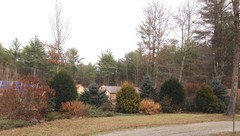
    Thank you Cecily, it is sure worth thinking about! We have a large screen of evergreens running down much of the left side of the property to give us privacy from our neighbor - there we put down a thick layer of wood chips. The chips keep the weeds and invasives at bay, and will be very good for the trees. We'll probably do the same up front.

  • 4 years ago

    Thank you laceyvail, I will definitely take a look at those species, and I like the idea of incorporating some small trees into the screen. We have 5-6 red buds in front of our evergreen screen which runs down the left side of the property.

  • 4 years ago

    if this were a farm production field.. what you are doing is called soil conservation ... creating a windbreak ...


    there are tons of info on how to do this ... and its usually within your local county soil conservation district office..and these days.. websites ...


    e..g.: https://duckduckgo.com/?q=VA+soil+conservation+native+plants&t=ffab&ia=web


    in my MI... such offices actually have spring plant sales ... small plants easy to plant.. and easy to care for .. and sold in lots of 15 or 50 ... cheap ...


    forgive me.. but you are nuts to plant 250 foot line of plants you have to shear once or twice a year ... take the time to find the right plants.. that dont require such ... you seem to have plenty of useless grass.. that you dont have to plant everything a few feet from the road.. so use your space wisely ...


    of course the alternative is.. that you have the checkbook to hire that job out once or twice a year .. and all the power to you if you do.. now that i am older.. one of my regret.. was not planning ahead to when i couldnt physically do these types of jobs myself anymore.. and frankly.. you can barely find peeps willing to do them.. even if you have the checkbook ...


    planting this type of thing.. with small plant.. would involve a dibble..


    https://duckduckgo.com/?t=ffab&q=planting+with+a+dibble&iax=videos&ia=videos


    and if you find the right plants.. you wouldnt need water ...when they plant forests.. there is no watering ...


    and frankly.. based on the pic... i cant figure out how you are going to water a 250 foot line of plants with the house so far away ...


    ken


    hollyhobbyist thanked ken_adrian Adrian MI cold Z5
  • 4 years ago

    I love your idea. This nursery is aimed at wholesale but sells retail on a couple days per week: Schott Nurseries - Native Plants availability list


    You might already know this, but just in case I'll mention that if you're interested in feeding birds, try to avoid the very "improved" natives species. Such as, some viburnums and deciduous hollies now feature bright red berries that persist through winter -- pretty, but that means no one wants to eat those berries.

    hollyhobbyist thanked User
  • 4 years ago

    Nickel - thanks for the contact and info.

    Ken, good idea to check out the early spring sales to get the best buys. I'm fortunate to have a handy husband who not only built the house and shop, but has lots of equipment and landscape contacts. I work full-time and look forward to getting outside for some rejuvenation and don't shy away from hard work one bit. We've got hoses to stretch - if need be - just until they established. I don't plan to or believe I'll need to after that unless there is a severe drought. And you're right, I want to select things that won't grow too big and obstruct my view to the west, but will give me a little privacy from the road. I don't want to "shear" the plantings - just trim them 1-2 times a year max to keep them healthy and looking reasonably neat.

  • 4 years ago

    Given the huge amount of space you have, I don’t think you will need do any pruning to speak of if you choose native shrubs suitable in size and form to start with.

    hollyhobbyist thanked floral_uk z.8/9 SW UK
  • PRO
    4 years ago
    last modified: 4 years ago

    Here are a few ideas: serviceberry, viburnum, witch hazel, willow, dogwood & daylilies


    hollyhobbyist thanked Dig Doug's Designs
  • 4 years ago

    More great ideas - thanks Doug! I really like the ideas of the serviceberry, viburnum and witch hazel - maybe the dogwood along the driveway - we are going to plant a willow back near the shop to help with some drainage issues there and they are such a fun tree. Do you or anyone else have experience with bottlebrush buckeye? That's an attractive shrub that I'd like to use - if not up front, somewhere else.

  • 4 years ago

    I'm going to agree with Cecily, and wonder if you have any idea what you are getting yourself into. It isn't the invasive shrubs that are going to be the biggest problem, IME, it's the native trees and vines. The 'weed' control issues with a shrubbery are very different from a lawn. If you wanted it to end up as a bit of somewhat wild woods, that would be one thing, but it sounds like you want it to top out at a particular height.

  • 4 years ago

    Thanks Doug! How did you do that?

  • 4 years ago

    I appreciate your concerns mad - I've taken care of other hedges and I do know how those trees can take hold. I just keep an eye out and get in there with some loppers, or a saw for the one or two that have missed by eye. The work, IME, is worth the benefits. Life is short ;-) plant a hedge.

  • 4 years ago

    No hedge. Simply mixed shrub/small tree border.

    hollyhobbyist thanked laceyvail 6A, WV
  • 4 years ago

    I work full-time and look forward to getting outside for some rejuvenation and don't shy away from hard work one bit.


    ==>>>


    my point was.. if i didnt make it earlier ... will you still be wanting to be doing it in 20 years.. or will you have moved away by then ...


    i dont like dougs one idea with the wood fencing.. that just looks like an hour of weedwhipping to me ... design smart ... work less ..


    otherwise.. you seem to have crossed all my other variables .. but do read up on wind breaks .. which .. again.. is exactly what you are doing... though you insist on calling it .. hiding the road ... knowledge is power..


    ken

  • 4 years ago

    I posted this for design input - and appreciate those that have given that! I've put a lot of time and thought into creating my screen, and have great photos of individual specimens and ideas for gardens in other areas of the property. What I don't have are good examples of mixed shrub borders, hedgerows, hedges, take your pick of the noun! that match what I'm looking for. So I put the thought out there, in the hope that others could chime in with what they knew or thought would go well together. I will know it when I see it, and have always planned to consult with local landscape architects as I hope to get it planted this fall. MY intent is a privacy screen that provides beauty to look out onto and gives food or nesting opportunities for the animals. It will break the wind from the west, but that is not the purpose. If the same plantings were in a bed to the south side, they would not break much wind at all. If others aren't a fan of my idea, that is fine by me. By all means, do what works for you! I will do the same.

  • 4 years ago

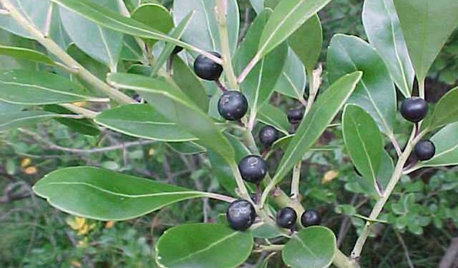
    Inkberry

    hollyhobbyist thanked Sigrid
  • 4 years ago

    FWIW, I love the native shrubbery idea. And the local birds and insects will appreciate it far more than an empty expanse of lawn.

    hollyhobbyist thanked floral_uk z.8/9 SW UK
  • 4 years ago

    Thanks to all of you for your feedback!! Inkberry is a great alternative to boxwood, and might be very appropriate when the ground slopes down at the driveway - to provide that additional, evergreen screen at the lowest point during the winter months.


    I REALLY admire UK gardens - a lot! Monty Don is just amazing as are many of the contributors on that show. Truth be told, my plan is to have several individual gardens in the back of the house as he does at Longmeadow. I'd incorporate some non-natives in those. Some of our evergreens on our northern screen are non-natives too. We wanted height, but had to deal with some shade and wetter areas that cedars do not like. Therefore, we purchased several local cedars for the brighter, dryer areas, while incorporating others.

  • 4 years ago

    Oh, and just as an FYI - we've been in our new house for less than two months. That's why there is so much grass - ground stabilization is required to receive an occupancy permit. Now it's time to have some fun!...thanks for your input.

  • 4 years ago

    we are going to plant a willow back near the shop to help with some drainage issues


    While there are plants that will grow with poor drainage, no plant, not even a willow, will help with drainage issues.

  • 4 years ago
    last modified: 4 years ago

    Plant the winterberries in your damp area which is where they naturally grow. Ones in dryish areas tend to have small berries and may struggle without supplemental water.

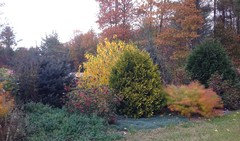
    Think about spicebush/Lindera benzoin if it is native to your area. Lovely yellow autumn color, a yellow haze of very early spring flowers, and red berries if you have a male in the mix. It is the bright yellow in the middle of the photo below.

    Consider fall color.


    Be aware that deer may an issue for some plants. My arborvitea/Thuja occidentalis get munched without ptotection.

    Consider having at least some evergreens or other plants with winter interest. IME many plants with berries are bare before January arrives. Some of the willows and dogwoods have colored twigs.


    hollyhobbyist thanked NHBabs z4b-5a NH
  • 4 years ago

    Thanks for the input NH Babs, the spicebush looks great. I'll have to see if it's available here. Fall color is important, and most of the plants mentioned in this post have great fall color. While there are fewer smaller scale native evergreens to choose from, there are some, e.g., hollies to think about and incorporate. I think an evergreen ground cover near the driveway would also be nice (vice grass). A staggered row of deciduous shrubs will offer less, but some structure for privacy during the winter. I like the red twig dogwood, and plan to use that in a planting toward the back of the property.

  • 4 years ago

    One more thought. Look to see what witch hazels are native to your area. Here in central NH Hamamelis virginia is a native fall bloomer and has great yellow fall color. Mine typically bloom right around when the leaves drop. in more southern areas Hamamelis vernalis is a spring bloomer. Some selections are been chosen for fall color and/or bloom size and color. None of them have spectacular flowers, but all bloom at times that little else of shrub size is blooming.

    hollyhobbyist thanked NHBabs z4b-5a NH
  • 4 years ago
    last modified: 4 years ago

    "I'm not sure why anyone is having difficulty with this proposal."

    I think the polarity in the comments stems from the word "hedge"- to many, many Americans that means a very linear design monoculture sheared meticulously three times each year and maintained in tight geometric perfection at all times. The thought of grooming 250 feet of perfectly maintained "hedge" is daunting.

    To others a hedge can be a loose row of shrubs left to grow and do what they will- what I'd call a mixed border. I'm in the process of doing this in a bit smaller area and I've opted for 100 feet of mixed lilac varieties. They'll never be sheared and very likely hardly ever even pruned. At least in my lifetime.

    I would not call this a hedge. Other people might.

    That said I'm in 6b Kentucky and have both Rhododendron prinophyllum as well as Rhododendron canescens- I think both are native to Virginia as well?

    I ADORE mine- the fragrance is divine, especially the prinophyllum. Spring isn't really spring for me until I see those blooms and walk back to take in the fragrance.

    I think deer will be your biggest problem.

    hollyhobbyist thanked cearbhaill (zone 6b Eastern Kentucky)
  • 4 years ago

    cearbhaill - your lilac hedgerow sounds lovely. What a great idea! I do enjoy rhododendrons, and have planted them in the past. I plan to plant some in front of our evergreen screen as an intermediate layer. I think they will do better with part shade - our front border is full sun and might be too hot. We have MANY deer. A landscape designer that I spoke with recommended spraying new plantings thoroughly with deer repellent for awhile. The deer try the plants, obviously don't like the taste, and move on.