Software
Houzz Logo Print
emily_higgins2

Plant Diagnosis

3 years ago
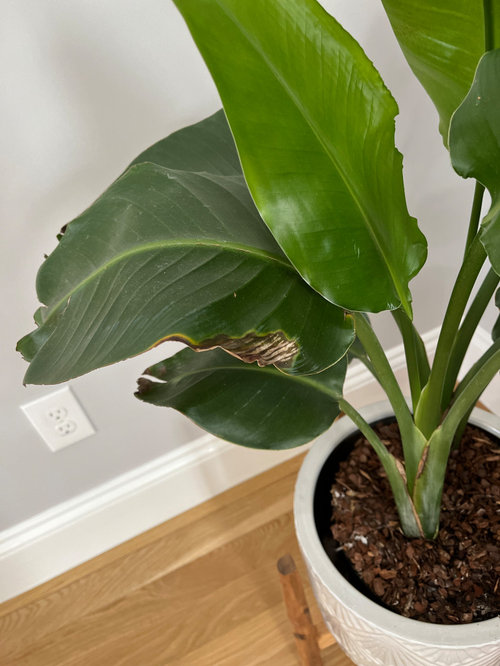
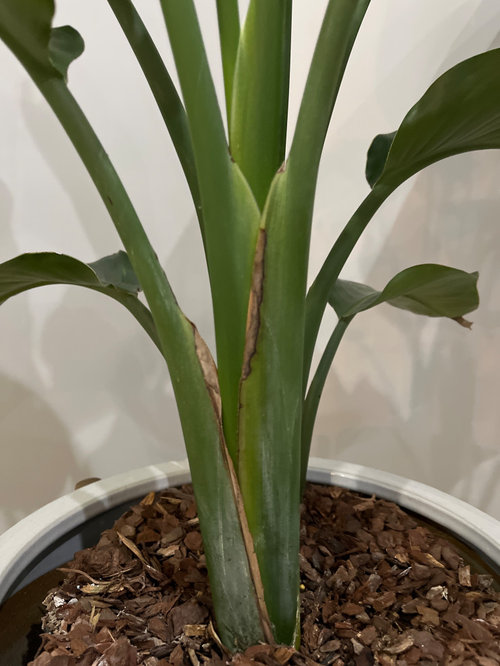
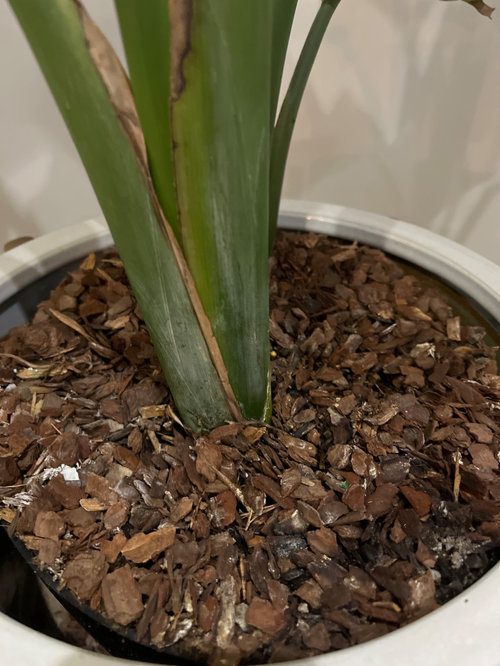
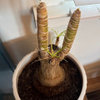
Hello - My Bird of Paradise leaves seem to be turning. Any idea if this is from a disease, over watering or something else? Would love some guidance before it gets worse. Thanks!


Comments (7)

  • 3 years ago

    I'm not an expert but I have seen plants dying of overwatering but I don't think this is one, however the following might help:

    Normally if a plant is overwatered the leaves get mushy and it feels like cooked spinach, and the soil doesn't dry (you can touch the soil and lift the pot to check the weight to see if it is holding too much water)

    If this is not the case, then the other three options I can think of, that can cause brown leaves, are the following:

    1.The plant is getting too big for the pot, in that case it needs to be repotted in a one size bigger pot.

    In this case you might have noticed that when you water the plant, the water drains too quickly and sometimes the soil dries out, in between waterings, also faster than usual.

    You can tell the plant is too big for the pot if the roots are coming out of the drainage holes, otherwise you can try taking the plant (with the soil) out of the pot, if the roots have expanded and went in circles covering the bottom part of the soil then it is too big.

    2. It could be a burn caused by too much sun light or too much fertilizer, in that case the brown parts would be hard like dried herbs, if you have changed its place lately or overfertilized then just go back to the old routine. It could also be just the summer sun causing burn, in that case maybe give it less direct sun at this time of the year.

    3. If it is none of the cases it might have pests, in which case you might not see insects but may have noticed that the plant stopped growing. Thrips can make the leaves turn brown and eventually fall off. The only way that worked for me to spot pests was pointing a flash light at the bottom side of the leaf while you look at the upper side (the leaf is between you and the light) and look carefully for tiny crawling insects or even tiny colorless spots (that's where the insects bite the leaf to feed) or little black spots (their poop :( ), if you see these you'll need to isolate it and treat it quickly because they spread like crazy and can kill the plant.


    I hope this helps, and would love to hear from you how it goes :)

    Good luck!

    Emily thanked Souriana Shakkour
  • 3 years ago
    last modified: 3 years ago

    I see tiny white bugs in the soil when i dug into it. And there are tiny microscopic white dots under the keaves. Yuck! how do i treat this? should I move it to my garage until they are gone?

  • 3 years ago

    The leaf is curled up

  • 3 years ago

    These might not be the problem.
    Are they very tiny, walk really fast and jump? Then try adding water, if they float then they are just springtails which are not harmful but actually good for your plant.
    Here is a video where you can see them.

    If this is not them maybe post a picture if you can take one?
    https://youtu.be/c7UgKFtSjD0

    Emily thanked Souriana Shakkour
  • 3 years ago

    They are probably springtails.

  • 3 years ago

    The most conspicuous symptoms presented by over-watered plants are:

    * necrotic (dead) areas @ leaf tips and margins

    * little or no growth

    * malformation of new leaves

    * oedema

    * presence of springtails, fungus gnats, or other insects that appreciate soggy soils that contain rotting plant matter.

    When a plant is 'too big for it's pot' (rootbound), the most conspicuous symptoms are:

    * increasingly slow growth

    * loss of inner foliage such that leaves are present primarily or entirely at branch tips

    * decreasing level of vitality (health)

    None of the damage has the hallmarks of sunburn (photo-oxidation)

    To me, it looks like the plant has been chronically over-watered, but it is possible the soil has a level of total dissolved solids (salts from fertilizer solutions and tapwater that's too high. This can affect the root's ability to supply the plant's most distal parts (leaf tips and margins) with enough water. I can't really tell if any of the leaves have formed abnormally. If they have, it supports the probability that you've been over-watering. Calcium is essential to normal formation of cell walls and must be in the nutrient stream at all times. Too much water in the soil limits Ca uptake which in turn leads to imperfectly formed leaves with holes, tears, hooked tips, .... .

    I see the plant's pot is in a cache pot. When you water, do you allow the plant's pot to sit in the water that collects in the cache pot? How do you determine when it's time to water your plant(s)? If you're following the advice to water when the top inch or two of soil feels dry to the touch, you're almost certainly over-watering. If your pot is deeper than about 5", how dry the top of the soil is entirely incidental to how wet the soil is at the pot's bottom. If your pot was 10" deep and the top 2" of soil feels dry, the bottom 6" (or more) of soil could still be 100% saturated. Using a 'tell' to 'tell' you when to water eliminates the guesswork and helps us avoid shooting ourselves in the foot. See "Using a Tell" below.

    Are you fertilizing regularly? When you water, do you apply enough water to completely wet the entire volume of soil, with at least 20% of the water applied exiting the drain hole? If not, salts can build in the soil and cause issues already mentioned above.

    Using a 'tell'

    Over-watering saps vitality and is one of the most common plant assassins, so learning to avoid it is worth the small effort. Plants make and store their own energy source – photosynthate - (sugar/glucose). Functioning roots need energy to drive their metabolic processes, and in order to get it, they use oxygen to burn (oxidize) their food. From this, we can see that terrestrial plants need plenty of air (oxygen) in the soil to drive root function. Many off-the-shelf soils hold too much water and not enough air to support the kind of root health most growers would like to see; and, a healthy root system is a prerequisite to a healthy plant.

    Watering in small sips leads to avoid over-watering leads to a residual build-up of dissolved solids (salts) in the soil from tapwater and fertilizer solutions, which limits a plant's ability to absorb water – so watering in sips simply moves us to the other horn of a dilemma. It creates another problem that requires resolution. Better, would be to simply adopt a soil that drains well enough to allow watering to beyond the saturation point, so we're flushing the soil of accumulating dissolved solids whenever we water; this, w/o the plant being forced to pay a tax in the form of reduced vitality, due to prolong periods of soil saturation. Sometimes, though, that's not a course we can immediately steer, which makes controlling how often we water a very important factor.

    In many cases, we can judge whether or not a planting needs watering by hefting the pot. This is especially true if the pot is made from light material, like plastic, but doesn't work (as) well when the pot is made from heavier material, like clay, or when the size/weight of the pot precludes grabbing it with one hand to judge its weight and gauge the need for water.

    Fingers stuck an inch or two into the soil work ok for shallow pots, but not for deep pots. Deep pots might have 3 or more inches of soil that feels totally dry, while the lower several inches of the soil is 100% saturated. Obviously, the lack of oxygen in the root zone situation can wreak havoc with root health and cause the loss of a very notable measure of your plant's potential. Inexpensive watering meters don't even measure moisture levels, they measure electrical conductivity. Clean the tip and insert it into a cup of distilled water and witness the fact it reads 'DRY'.

    One of the most reliable methods of checking a planting's need for water is using a 'tell'. You can use a bamboo skewer in a pinch, but a wooden dowel rod of about 5/16” (75-85mm) would work better. They usually come 48” (120cm) long and can usually be cut in half and serve as a pair. Sharpen all 4 ends in a pencil sharpener and slightly blunt the tip so it's about the diameter of the head on a straight pin. Push the wooden tell deep into the soil. Don't worry, it won't harm the root system. If the plant is quite root-bound, you might need to try several places until you find one where you can push it all the way to the pot's bottom. Leave it a few seconds, then withdraw it and inspect the tip for moisture. For most plantings, withhold water until the tell comes out dry or nearly so. If you see signs of wilting, adjust the interval between waterings so drought stress isn't a recurring issue.

    Al