Software
Houzz Logo Print
jerseyjohn1

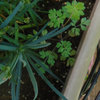
Name that plant.Need plant ID

3 years ago
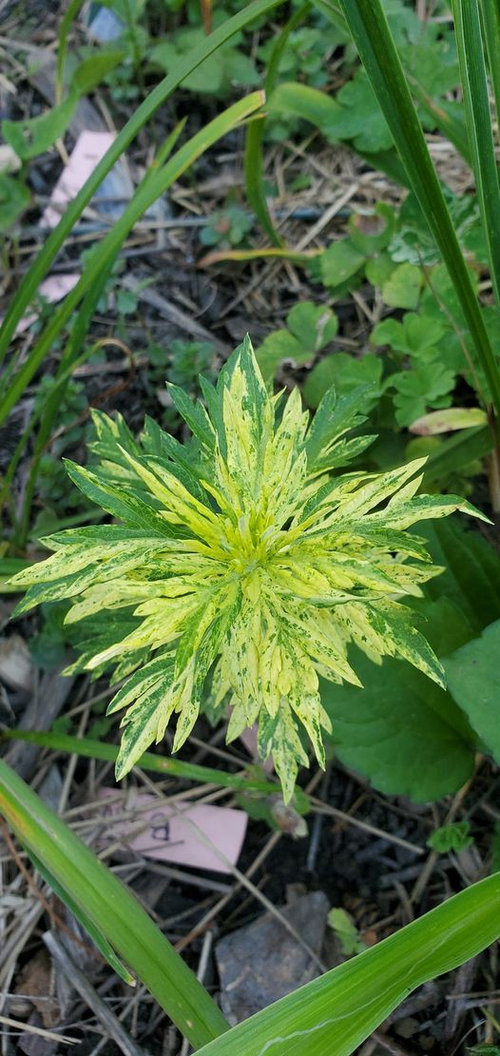
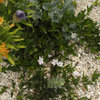
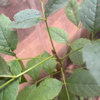
Didn't plant this. Any clue? Thanks


Comments (14)

  • 3 years ago

    Looks like variegated mugwort, Artemisia vulgaris 'Oriental Limelight'. A very aggressive spreader, you may want to consider removal or at least relocation to a very restricted area.

    jerseyjohn thanked gardengal48 (PNW Z8/9)
  • 3 years ago

    you may want to consider removal or at least relocation to a very restricted area.


    ==>>>


    thats an understatement..


    go dig a 4 foot wide hole.. and get every piece of roots out.. including the plant..


    wrap it in saran wrap.. encase it in cement.. and send it to the landfill ...


    and have that done by 6 pm.. or you will probably have a second one by dawn ..


    just an outright nightmare in a tended garden ..


    i suppose you might find some use for it .. say a 45 degree angle hillside that nothing else will grow on ... but i would still be hard pressed to not tell you to even avoid it then ..


    get rid of it.. ASAP ..


    and if you sen me one shiny penny.. i will tell you hoe i really feel about it ...


    and that aint no hyper-bowl ...


    ken


    ps: the only thing worse would be the chameleon plant.. hoyatoyya ... or however you spell that nightmare ...lol

  • 3 years ago
    last modified: 3 years ago

    Feel free to take the above comments with a grain of salt :-) Like many aggressively spreading plants, this can be controlled/confined if given some thought and care. Not anywhere close to the same class as houttuynia/chameleon plant!

  • 3 years ago

    I easily rid myself of Houttuynia not so with A. o. Limelight. It is a beast I have been battling in two spots.. The roots are deep and wide spreading. Just when I think I have eradicated it a little sprout will pop up. I am firmly with floral & especially Ken on this one. Location is everything when dealing with some aggressors.

  • 3 years ago

    It's doable with acreage. I wouldn't trust it to remain variegated.

  • 3 years ago
    last modified: 3 years ago

    Even the monsters are somewhat location dependent. I actually TRIED to grow A. o. Limelight (suitably contained), and it petered out over two or three years. However, Houttuynia 'Chameleon' not only tried to take over the planet by runners....out the bottom of a pot, it reverted to solid green and re-seeded. It actually managed to spread UNDER a sidewalk to the other side, in multiple places. The problem with houttuynia is that is has a structure with a horizontal rhizome that runs parallel to the surface...but nearly a foot deep. You can pull and dig, and dig and pull, but you WILL miss some of that horizontal root. And though I've been (mostly) rid of it for at least five years, solid green seedlings STILL pop up. Ugh.

  • 3 years ago
    last modified: 3 years ago

    I'm curious to hear how some of you think Aegopodium podagraria compares to Houttuynia and Artemisia in terms of agressiveness and difficuty in removing? I grew Houttuynia and Artemisia Powis Castle several years ago, but meh, I wasn't very impressed with either of them and dug them out before they had a chance to get out of hand. I grew Artemisia princeps more recently for it's medicinal value,(liver cleanser, detoxifier), but I grew it in a pot and it survived a couple winters. I don't get why people would want to grow any Artemisia species. The foliage is just ok, nothing to write home about? And the flowers, well they definitely are not attractive. Same goes for Houttuynia? Someone gave me a Hemerocallis cv that contained some Aegopodium roots and though the goutweed was just coming up in a small area, it took about 3 years to get rid of it completely. I think I had to eventually sift the soil for root fragments. I've managed to kill Campsis radicans, and running and groundcover bamboo. I brought a Tansy home and after a few more shoots emerged over a short period of time I dug it up and that was the end of it. I grew Japanese Knotweed for several years and it maybe had one sucker appear close by, but when I dug them out it was a done deal. There are 2 plants that I've grown more recently that turned out to be very aggressive. Apocynum cannibinum, and Cynanchum laeve. The main plants have been removed, but suckers appear in various locations The Dogbane is pretty much gone now, but the Cynanchum has spread underneath the brick patio and suckers are now appearing 40 feet away from where the original plant was. I'm growing Isotrema/Aristolochia tomentosum and Ipomoea pandurata which both sucker, but they seem tame in comparison to the Cynanchum laeve. I actually bought Japanese Honeysuckle years ago, but I dug it out before it started spreading. There is also a couple native Asteraceae that were extremely aggressive, Helianthus tuberosus and Euthamia caroliniana which don't play well with other plants. It looks like my Chinese yam has finally given up the ghost after 20 years of pulling up the shoots. So, how does Aegopodium podagraria compare to Artemisia and Houttuynia in agressiveness, and what is so attractive about them that makes people want to grow them? I can't see any point in making ones self miserable or hateful over some aggressive plant, or encouraging others to be miserable and hateful. I have the utmost confidence that I can eradicate any species by being practical and maintaining my cool.

  • 3 years ago

    noooooooooooooooooooooooooooo! Houzz just lost my post. Grrrrrrrrrrrrrrrrrr. I'm going to bed. I might try typing those four hundred words again tomorrow.

  • 3 years ago

    Powis Castle, isn’t comparable to Oriental Limelight. Different species and different growth habit. If you want a handsome silvery, ferny, compact, drought resistant plant PC fits the bill perfectly. I imagine people are attracted to OL and Houttynia for the coloured foliage and to Aegopodium in its variegated form for its fresh green and white leaves. If you don’t know their habits they look like attractive options. Aegopodium was actually introduced to the British Isles by the Romans as a vegetable. Thanks, Romans.


    btw unless your Japaneses honeysuckle never flowered it isn’t possible to be sure it didn’t spread since it does so by seed rather than vegetatively.

  • 3 years ago
    last modified: 3 years ago

    Like any other plant, notoriously aggressive plant's ability to live long and prosper and attempt conquest, as fig mentioned above, is very site specific. Zone, sun, soil, moisture conditions and competition all matter in how well the aggressors do. People's experience with them will be all over the map.

    Here on this NC mountaintop the Aegopodium barely clings to life while the Houttuynia and Artemisia are decent sized drifts that haven't really expanded exponentially in the 15 years I have been here. My parents planted all three of them. I am about ready to start pulling some Artemisia on the edges.

    The list of NAPs my parents planted is extensive. The three above, then let's see, Jerusalem Artichoke. Oriental Bittersweet, Gooseneck Loosestrife, Vinca minor, Lamium galeobdolon, Japanese Knotweed, Spirea japonica, Barberry, Hyacinthoides hispanica .......... and on. Should I mention all the landscape fabric they laid down?

    The plants I have declared war upon are the Lamium, Bittersweet (rare here) and two natives, Clematis virginiana and Solidago canadensis.

  • 3 years ago

    Jay decades ago I planted the variegated Aegopodium podagraria then realizing my mistake got rid of it relatively easily BUT the plain green is another story. There are two patches of it original to the property. One patch is out of the way but the other was under a huge hedge. The hedge needed to be removed and the A. p. went into take over mode. Hateful stuff! I have carefully dug deep and wide. There is less but it is still a nightmare plant. It is still regenerating at a phenomenal rate. Equal to or worse than A. o. Limelight? - it is a toss up.

    Lily of the Valley is a hateful thug as well.

    Lysimachia clethroides - Gooseneck loosestrife is a plant I adore but I am still working on removing it from a mixed bed. I keep looking for a spot where it will be by itself.

    Campanula punctata Cherry Bells & Elizabeth are insidious! They are still coming up in areas that I for all intents and purposes sifted the soil. Then there are the seedling from before I knew what horrible thugs they were.

  • 3 years ago

    I never knew Japanese Honeysuckle spreads by seeds. It is in my area of Illinois, but I never run into it. There is a small island(Langham Island) about 30 miles south of me that is the only place in the world where the Kankakee Mallow (Iliamna remota) is endemic to, but seeds are available and I have a small patch of them. Anyway, I'm just mentioning the Island because it was neglected for decades or hundreds of years and in the 80s people got together to restore it, and the work still continues. The Island was overrun with JH and other invasive species. Years ago I would pass a couple houses that had clumps of Gooseneck Loosestrife and I thought they were absolutely beautiful, but I think I heard about it's agressive downside and so thankfully I never grew it. The Aegopodium podagraria that hitched a ride on the Daylily my brother in law gifted(?) me with was the green form. I managed to keep it confined to a small area, but it was relentless at coming back. My sisters yard was covered with the green form and she gave up fighting it. I admired the variegated form and planted it at a house that I lived in for a short time, so it never became a problem during the time that I lived there. Ive grown Jerusalem Artichoke twice. I apparently didn't learn my lesson the Ist time. I had it beat back to about 1 or 2 small plants that were a safe distance from my good perennials and it spread like crazy from just the fragment, so it's still there, but I'm working at getting rid of it once and for all, because I want to put a bog garden in that area. It was a nightmare when I had it planted in with my nice perennials. The Campsis radicans I grew did travel past the fence line into the neighbors yards which made it more difficult to kill, because if the neighbors didnt deal with it then the roots were getting stronger. I still have small shoots popping up, but I pull them out and they aren't much of a problem. I grew the native C. radicans and the Chinese C. grandiflora. I did pull up 1 grandiflora shoot while tending to my fence in the next door neighbor's yard 2 days ago. A few years ago jeekesl was mentioning how unbelievably aggressive Cynanchum laeve was, which made me more determined to grow it, and now I wished I had listened to him, because he was correct. I'm just a little shocked that in 3 years time it has traveled about 30 feet under my brick patio and is heading towards my front yard. It's most likely going to appear on the other side of the fence in the neighbors yard, and I'll need permission to treat it. I've also found it growing in a pot, which is a mystery because the vine has never produced seed pods? This spring the Honeyvine didn't emerge from the spot where I planted it, and I surmised it was killed by being too wet over the winter, but later there were suckers popping up in several locations. I have to inspect the suckers to make sure they don't have Monarch Butterfly eggs or caterpillars on them before I pull them up. I may be a glutton for punishment because I just planted a Passiflora lutea in the spot where the Cynanchum was planted, but I'm hoping it stays behaved. It's the most cold hardy Passiflora species. I grew Passiflora incarnata years ago, and the plant that I bought bloomed beautifully that first year, but for the next couple years it would throw up shoots that remained small and never grew to flowering size. I realized that it would be a nightmare if I was growing it in zone 7 or further south. So I don't have any agressive plants that spread via rhyzomes that are terribly troubling right now, only a couple plants that spread by seed which are a bit annoying. The annual Ipomoea purpurea and annual, native Ipomoea lacunosa are having a population explosion. A wild bean that I brought home and has been with me several years now, Strophostyles helvola, the native but prolific White Snakeroot, Ageratina altissima, and a white wood aster, a Eurybia species. I have too many morning glories and wild beans, but the White Snakeroot and Eurybia are gone for the most part. I like having the Ipomoea lacunosa and Strophostyles helvola, there's just too many of them. The most weedy plants spreading by seeds are Verbena bonariensis, Verbena urticifolia, Verbesina virginica, Verbesina alternifolia, Elephantopus carolinianus, Palafoxia callosa, Helenium amarum, and Prunella vulgaris. Most of these are easily pulled out, but the roots of the Verbesina and Elephantopus really dig into the soil and often require a trowel for removal. Thank you for all the enjoyable and informative responses!

  • 3 years ago

    Thanks everyone. Will do