Software
Houzz Logo Print
getgoing100_7b_nj

Standard rose, dwarf hollyhocks, hydrangea macrophylla overwintering

I have roses with exposed bud union survive outdoors in small pots (2 gallon/10" or a bit larger) without any protection on my balcony against the apartment wall. Peony, several clematis have also survived. I do not have a cool garage or such. I can bring them in and treat them like houseplants - 65-70 degrees and 40-55% humidity, some sun and supplemental light or leave them out. I have one room that I keep at 60-65 degrees but gets same light. I also have a small plastic greenhouse that can provide protection from rain and chilly winds but will not get any sun at all so any cold protection is suspect. Right now the plan is to keep the hollyhocks in the little greenhouse -the pots are tiny:1-2 gallon and they are still blooming. Hydrangeas are in the green house but will need to come in before the temperatures dip significantly below freezing if I am going to get any flowers next year. Undecided on the rose. It is too tall for the greenhouse, I will have to remove two vertical shelves to accommodate it, which would limit what else can be in there. I am hoping to try spring flowering bulbs again, hoping the greenhouse will save them from rotting (which has been the case so far). Suggestions?

Comments (20)

  • 3 years ago

    In NJ, I wonder if your plants might be up to staying outside with out problems. Zone 7b is a pretty decent area for roses etc.

  • 3 years ago

    They are in pots so it's supposed to be equivalent to zone 5 in ground in terms of hardiness. Also, I understand that standard roses are particularly probe to dying.

  • 3 years ago

    I wish someone from your area would pipe up. I thought pots needed one more zone allowance.

  • 3 years ago

    I'm in a warm zone but In case bringing it in is not practical, here's what I do to insulate from heat, which should also work for insulating from cold.

     I wrap two layers of bubble wrap around my pots for summer heat protection. I added a thick cork mat ( you can get these in hardware stores) under the pot tray as well to insulate from below. The bubble wrap should go all the way down from the floor, around the cork mat, the tray and the pot, to up above the pot rim to allow you to mulch higher than the pot's rim.

    If you top all that off with a winter cover of garden fleece around the whole standard, I would think it's enough for zone 7b?

  • 3 years ago

    It's true, 2 zones lower if you are trying to grow outdoors in a pot. I have had Arborvitae in pots outdoors all year for years and I looked it up at the time I planted. They are in black plastic pots and they do well.

  • 3 years ago

    The "2 zones lower" mantra is only a guideline, not something written in stone :-) The root system of a plant is its most temperature vulnerable part, typically insulated by the surrounding soil mass to wide temperature swings. When they are grown in a container without that surrounding insulation, the roots are exposed to far colder temperatures than they would ever experience in the ground. But not all plants have the same degree of vulnerability. Japanese maples can experience fatal root damage in the low 20's despite them being rated a zone 5 plant. That means they can be at risk in even a zone 8 climate!!

    OTOH, the hydrangea should be fully root hardy without protection in a zone 7b. But the top growth and therefore the flowering ability can be damaged at temperatures that have no effect on the roots. A different issue requiring a different type of winter protection :-)

    The bubble wrap is a good insulating choice. So is using strings of Christmas lights (not the new LED type), a long time greenhouse winter heating trick. Or a heat lamp if a smaller area. Another method is to create a bunker or small fort out of bales of straw (usually present at this time of year for seasonal decorations), group all the potted plants together within the bunker and then mulch well around them with whatever you have on hand........loosened straw, dried leaves, harvest cloth or garden fleece, etc.

    Make sure that wherever you decide to store these plants for winter that they are as close to the house or structure as possible to take advantage of any radiant heat it may emit. And grouping the plants tightly together creates a microenvironment that will always be a few degrees higher than the ambient air temperatures. Every little bit helps!!

  • 3 years ago

    Thanks everyone for the suggestions, especially GG for the detailed post. I am mostly worried about the foliage - buds that may have formed on the hydrangeas and the bud union of the standard rose.I have them all next to the walls and grouped together. Hay bails aren't in the offing but I actually had the old fashioned lights hanging on the plants since Diwali but had to move it out of the way to move the plants. I have been thinking of using them for insulation but was also wondering if that would prevent the plants from going dormant, or burn holes in the plastic cover of the little greenhouse if I were to use it to wrap around the entire greenhouse? I guess the solution is to only use it when the temperatures dip well below freezing. The issue is I go away for a month in December/January, so can't intervene on a as needed basis....

  • 3 years ago

    Temperature tolerances of the rose and the hydrangeas will be dictated entirely by which particular varieties are involved. With there being a wide range in hardiness of roses; I have also had certain specific bigleaf hydrangea cultivars freeze in the ground a couple times even here in USDA 8. Otherwise deciduous stock presented to the retail market in bare-rooted condition in late winter/early spring has come out of dark and humid cold storage into which it was placed the previous November.

  • 3 years ago

    " I have also had certain specific bigleaf hydrangea cultivars freeze in the ground a couple times even here in USDA 8."

    I find that hard to understand. All macs should be root hardy to at least zone 5 and many of the reblooming (old and new wood flowering) cultivars are good to zone 4, as they were developed for colder climates. I grow several different cultivars of bigleaf hydrangeas in containers with NO winter protection and none have ever frozen for me and not even the top growth - most easily damaged by winter cold - has been affected.

  • 3 years ago
    last modified: 3 years ago

    I find that hard to understand

    One of them was 'Lanarth White'. Rated hardy to between 5 and 14 degrees F. by the RHS (below). Grew to be about 4 ft. across, then a winter came when it was maybe 5-10 degrees on the growing site - or colder - and zap!

    Hydrangea macrophylla 'Lanarth White' (L)|hydrangea 'Lanarth White'/RHS Gardening

  • 3 years ago

    I put the hydrangeas in brown paper grocery bags, topped them with packing peanuts and put them back in the plastic greenhouse. They were still pretty green and leafy so not sure it was the right thing to do. :) Not sure if they will need watering, it will be a bit of a challenge. The rose is also green with a couple of buds... It is against the wall. I put a couple of coco-pot liners on the bud union and wrapped the foliage and all in some burlap. Hopefully, the wind will not take away the burlap (it's brand new decorative strip kind with white lace :)).

  • 3 years ago

    Could the difference be the lack of humidity? I don't know where Embothrium gardens, but in my area, yes we get cold as quite cold as this is zone 5, but the extreme drying winds we get do a lot of extra damage.

  • 3 years ago

    If your Hydrangeas were still green and leafy they were not dormant and hence still need light. Get them out of the bags or the leaves will drop off inside the wrapping and probably rot.

  • 3 years ago

    Thanks Floral  it will be a -2/3 C tonight. I will bring them out of their bags tomorrow.

  • 3 years ago

    -2/3c shouldn't bother the Hydrangeas. The leaves will drop but it would take a string of below freezing days to cause damage.

    getgoing100_7b_nj thanked floral_uk z.8/9 SW UK
  • 3 years ago

    Forever a newbie - What variety of Hydrangea is that? Is it a seedling? I love the color of the bloom and wonder why it is still so fresh this late in the Fall. Also think that looks like a nice way of trying to protect plants in cold weather, have you had success with that?

  • 3 years ago
    last modified: 3 years ago

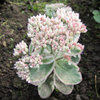
    Prairiemoon, no that is a mum. Hydrangea macrophylla is hardy in my zone so I never have had to protect them.

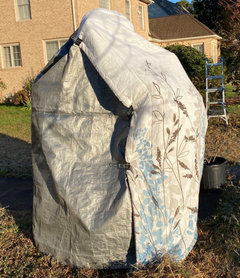
    This new variety of mum is very small and already showed some stress so I covered it a bit hopefully to give it some protection. My first year too so we will see. sorry if causing some confusion.

    My friend‘s way of protecting the potted standard rose. It is easy to open too

  • 3 years ago

    FANewbie - Oh, okay, I guess I was reading too fast. [g] That's a pretty Mum, hope it winters over for you well!


  • 3 years ago

    I garden in zone 5b, Central IL, USA... and I have found that any grafted rose, regardless the shape or type, does not do well with the late winter frigid weather we have. I can assure success by planting own-root roses, which include miniatures, climbers, and many other types and lots of varieties.

    It's very difficult to adequately protect the graft, especially with the standards. I have followed many pieces of advice along the way for saving them... to no avail. They simply can't tolerate our winters. I have wrapped them, dug them and buried them on their sides, blanketed them, moved them into buildings, etc... and they never last very long.

    And then I discovered own-root roses - roses that are grown on their own root stock without being grafted! This gives them a lot of advantages, especially when it comes to growing them in northern climates! Many types can be grown in pots and shaped like topiary, or urged to climb interesting trellises, some that are made to fit into pots of various sizes.

    If I grew any in pots, I would still need to protect the pot from the cold of winter, but there would be no graft to worry about. I could place the potted plants in one of my outbuildings, along with other potted trees and perennials that require some protection.

    The best place I have found to check out own-root roses and information about them is at Heirloomroses.com. The selection is wonderful, and there are types for every zone and use!