Software
Houzz Logo Print
neil_bradburn92

Best mite treatment

3 years ago

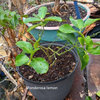
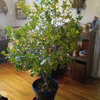
Hi all, I've got what appear to be mites on my citrus and I need your help. I can see the telltale signs of small webs dotted around the plants and can also see a bit of mottling and the odd 'pocket' in the leaves. I've got 4 lemons, a kumquat, a rangpur lime, a yuzu,a mandarin and a grapefruit, all supplied in 6l pots, and a number of them are infected. I'm in the UK and they are in the conservatory, so fortunately it's damp and descending down the single digits and thus I believe slowing their development. However, I believe the idea is to nip these infections in the bud and thus would appreciate your advice for the most effective and plant friendly treatment. I've got neem oil and a gentle soft soap handy, but I'm learning to take things slowly with citrus and to make the right choice.
Many thanks in advance!

Comments (20)

  • 3 years ago

    The common treatments to rid a tree from mites are: forceful water spray, soapy water spray, neem oil, horticultural oil spray. I normally rely on just a couple forceful water sprays, or a horticultural oil spray.

  • 3 years ago

    That's really helpful, thank you. Any specific type of horticultural oil?

  • 3 years ago
    last modified: 3 years ago

    I have always had great success with horticultural oil. All seasons is the brand I use. It is made of mineral oil I believe.

    Neil Bradburn thanked Ken B Zone 7
  • 3 years ago

    Neil, the brand of Horticultural oil that I use is Altura Pure Horticultural oil. However, you could use most any brand of Horticultural oil.


    Neil Bradburn thanked Silica
  • 3 years ago

     Did anyone try peppmint oil for mite's

  • 3 years ago

     Did anyone try peppmint oil for mites

  • 3 years ago

    Many thanks for all the replies. Since I have the ingredients to hand and the general agreement seems to be that any horticultural oil will do, I'll go with the olive oil and dish detergent approach. Kind regards.

  • 3 years ago
    last modified: 3 years ago

    @Neil Bradburn For mites - a 50/50 mix of unscented rubbing alcohol (70% isopropyl alcohol) and water, spritzed, provides instant knockdown. Used at 4-day intervals, making sure all plant surfaces are made wet with the solution will clear up mite populations very quickly - inside of 3 weeks if you spritz all your plants..

    Not all horticultural oils are created equal. You'll want something that has the word 'light', 'summer', or 'perfect' in the name. Heavier oils (like dormant oils) are inappropriate.

    Use extreme caution when deciding what 'soap' you use in any soapy water concoction. The only soaps we should use for treating plants are those made from long chain fatty acids of potassium, commonly labeled and sold as 'insecticidal soaps'. Even then, it's wise to first test the soap solution on a few leaves before going whole hog and coating the entire plant; and, always protect the soil from absorbing any soap solutions. Any soap or detergent that is dyed or scented should be avoided as almost all household products are a multiformity of phytotoxic ingredients such that the question isn't whether or not these products cause damage, rather, it's how severe the damage will be. Something I wrote about this topic:

    Detergents

    The advice to use solutions of dishsoaps/ detergents is short-sighted for a number of reasons. Dawn, Palmolive, Joy, ...... dishsoap, as an example, are each and all a mishmash of chemicals, at least eleven of which are phytotoxic. If the above-ground parts of a plant are sprayed thoroughly with even mild detergent solutions such that all surfaces including leaves are covered, the detergent can easily dissolve the protective coating of cuticular wax on the leaves of the plant. Cuticular waxes have evolved to 1) prevent leaves from excessive water loss 2) provide a protective barrier to fungal and bacterial pathogens which denies them a pathway by which to enter the plant 3) acts as a sunscreen to protect the plant from harmful UV rays 4) act as a deterrent to some forms of insect herbivory. Some soapy solutions of household products will even dissolve cell membranes, causing death of cells.

    If a detergent solution is used as a soil drench or makes its way into the soil as a consequence of over-spray or run-off, the effect on roots is immediate. Because one of the main function of roots is to absorb water and nutrients dissolved in water, they lack the waxy protective coating that benefits leaves. Detergent solution in contact with root cells can quickly dissolve the lipid membrane surrounding cells, killing the cells and inhibiting water/ nutrient uptake. Hair cells growing as appendages off larger roots do the lion’s share of assimilating water and nutrients, and these very delicate cells would be the first casualty of any detergent in the root zone.

    There are widely available insecticidal soaps, designed to be used topically and made mixing potassium with only long chain fatty acids, carefully selected and specifically formulated to be safe for mammals & birds, death on most insects they contact, and most important, safe for plants. If you need something "soapy", it would be much better if you selected a product intended for use on plants than one intended for other purposes; and, it doesn't matter how many growers attest to the fact they've used it for a hundred years with no problems. If 50 million people practice an imprudent measure not recognizing it's imprudent, it's still imprudent.

    While a water/ dishsoap solution might rid the plant of some insect pest, it can also leave the plant much more vulnerable to the next wave of insect predation, more vulnerable to fungal/ bacterial pathogens, at greater risk from solar damage, and limit the plant's ability to remain appropriately hydrated because of increased evaporative water loss.

    Al

  • 3 years ago

    Remember that when you do spray, do it in the evening to avoid burning the plants. I've seen plants sprayed with hort oil be burned even by grow lightslights so make sure they are off when you spray

  • 3 years ago

    There are various sprays that work to eliminate mites. Actually, spraying with a forceful spray of just plain water works quite well. If using water I would ecomend spraying 2 or three times.

  • 3 years ago

    Wow! You guys/gals are so helpful, kind and and well educated.  Thank you all again! Growing citrus seems to involve an advanced level education in botany and other sciences :-) 

    I read these posts before I tried the homemade soap solution and based on all the amazing information have been convinced to go down the isopropyl and water mix route; closely followed by a water spray. I've got the alcohol handy and all the arguments against DIY soap spray were enough to make me wary. BTW. I was intending to use castile soap which I understand is considered the mildest soap here in the UK and is frequently recommended as a topical DIY plant insecticide ingredient, but you have rightly made me wary. I would have considered the water spray option as to my eyes its the most 'organic', but it means some heavy logistics moving all the plants in and out to do the spraying, which I'm lothe to do.

    I'll start the weekend off with the first spritzing and then repeat at 4 day intervals.

    I can hopefully now focus my energies on trying to get my 12 inch tall key and kaffir lime plants to put on good growth indoors during a UK winter. He he!

    Thank you all again and have a restful weekend.

  • 3 years ago

    I'm not too educated on growing citrus trees  but I do know that peppermint oil kills mites

  • 3 years ago

    To that I would ask that you please avoid getting caught in the trap of thinking that because something smells good, looks benign, or someone you have no reason to trust vouches for its usefulness, it must then be harmless to plants.

    I do realize you have no reason to trust me, but I am doing my best to give you one.

    Take care, Howard.

    Al

  • 3 years ago

    Thanks, Howard. Another candidate option lodged for the future.


    Thanks for the warning, Al, and for all your efforts to help. I could be Niave, but I like to think my sixth sense for bull and my natural scepticism - especially when it comes to man's delusions of godliness :-) - serve to keep me in good stead.

    Kind regards

  • 3 years ago

       Neil Bradbury I'm not very smart when It comes to citrus most of the people on this forum are experts I'm not  I'm just basically going on trial and error for I'm just a beginner I'm not too educated on growing citrus trees  but I'm learning fast and trying things that seems to work even though they are unheard of so I admit I'm no expert

  • 3 years ago

    I know all things  that smells good  and looks benign is some times very toxic to plants  but I check and look up things first  but I will be the first to addmit I'm no expert like most on this forum but I do have some minimal horticultureal training from highschool     an d when I had a few trees I used a  1/4teaspoon of bleech on lemon lemon tree seedlings  for I know spider mites attack young trees that seemed to work   but I was using the bleach to give them more chlorine  and it seemed to be safe  for them because I added it to the fertilizer in a quart of water in a spray bottle


    Howard

  • 3 years ago

     Neil  Bradburn with me it's not a delusion   it is the truth  even my moral standards on a woman  comes from the Torah  namely the book of Leviticus

  • 3 years ago
    last modified: 3 years ago

    @Howard what's the best spray treatment to cleanse a woman's customary impurity? (Leviticus 15:19)

  • 3 years ago

    That I don't w because I never read that part of, the Torah