Software
Houzz Logo Print
webuser_449242646

Question about LA REINE

3 years ago

For the past decade I've been trying to grow a cool colored pink rose in this large flower bed with no success. The last roses were Memorial Day (Hybrid Tea, Tom Carruth, 2001) and Grandmother's Hat (Hybrid Perpetual, found by Fred Boutin, 1972). Both were recommendations noted for their vigor. Be that as it may, they failed in my garden conditions. The plants could not deal with my red clay soil (even though it has been amended), showing little-to-no vigor, and defoliated from the black spot fungus even with occasional spraying with fungicides. Yes I gave them a minimum of three years to get established. Heck, I gave them four!


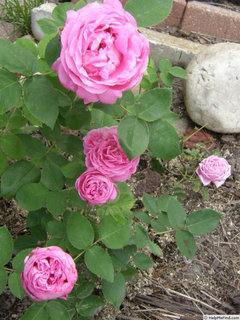
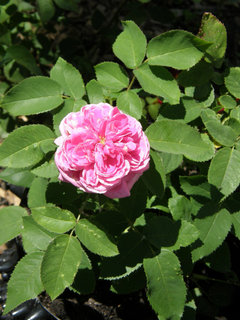
So I'm trying again. I love the looks of LA REINE (Hybrid Perpetual, Jean Laffay, France, 1842), but I'm terrified of being disappointed AGAIN. I'm only going to be in my current house 9-more years and would like to get some enjoyment out of that flower bed before moving. Is La Reine vigorous on its own roots in USDA Zone 7a (used to be 6b but we got upgraded due to climate change)? I would go with grafted or its more vigorous sport Barbara's Pasture Rose but neither are available through trusted mail order nurseries. The Antique Rose Emporium in Texas sells La Reine, and I know they select their roses for black spot resistance and performance growing own root, but Maryland isn't Texas. Our winters are longer and colder.


So my question is - Am I setting myself up for another big disappointment? Please be honest. My backup is THERESE BUGNET (Hybrid Rugosa, Georges Bugnet, Canada, circa 1941). I can get it grafted from David Austin Roses LTD, which should a) enable it grow in my clay soil and b) discourage suckers for which it is infamous.


LA REINE or THERESE BUGNET?


I really want La Reine because of fewer thorns, sweet fragrance, and those dang enabling pics at Hedgerow Rose (https://hedgerowrose.com/rose-gardening/hybrid-perpetual-roses/2012/05/30/growing-la-reine-hybrid-perpetual-rose/). I mean, the pic with her holding that globular bloom!!! Speechless! I dream of a rose like that.


Thanks,


Patrick


Comments (26)

  • 3 years ago
    last modified: 3 years ago

    La Reine as own-root preferred my VERY ALKALINE clay (pH near 8) back in 2012. It repeated well in full sun, healthy with alkaline tap water at pH 9 alternated with acidic rain. It died when I broke up the top hardened clay with too much acidic gypsum.

    I bought a 2nd own-root La Reine four years ago and planted near the rain spout. It broke down in horrible blackspots. I moved it to a dry bed. I noticed it's vigorous when watered with pH 9 tap water, but declined with too much acidic rain, despite a fast-drainage spot. I constantly have to top it with biochar at pH 8.6 to keep it healthy. This rose hates acid the most among my 150+ fragrant varieties, and best in a dry & alkaline region.


  • 3 years ago

    Patrick,can you describe in more detail how you amended your soil? I'm here in Tuscany, Italy, so my climate, etc, is very different from yours, however I DO have very heavy clay in some of the areas of my huge garden. It has taken many years for me to start getting the hang of how to amend such soil, and I'm still not sure I've got it right. But one thing that I think is definitely helping is adding expanded clay in large quantities. This stuff is used both in gardening and in construction-it helps retain moisture. Now, that in itself isn't a specific problem with clay soil, one would say, BUT what this stuff also does is help to lighten the clay soil. Some people say to use sand for this purpose, but to me that seems very problematic. I'd think one would have to add an awful lot of sand and mix it in EXTREMELY well for it to change the consistency of truly dense clay. Sand is also very, very heavy to drag around, and it would require the strength of a Hercules to add a lot of it and work it in well, and one would still risk ending up with a sort of cement. I could also imagine the clay eventually working it's way down ward,whilst the sand would be left at the top...not good.

    Instead, a large bag of little balls of expanded clay is relatively light-weight,and isn't hard to work into soil using a pick. It helps aereate the dense soil, and lighten it up considerably. Of course organic matter is important, too, but that does biodegrade, and by itself isn't enough to truly change the consistency of the soil in a short time.

  • 3 years ago

    It's not the soil, but the blackspot. I honestly think the global epicenter of blackspot is somewhere between Philadelphia and Washington D. C.

    So no to La Reine. If you want to order Therese Bugnet from Austin, make sure your soil pH is high enough to make Dr. Huey reasonably happy. That is going to be over about 6.0, which in that part of the world usually means regular liming.

    Have you looked at Frontenac? It's one that makes me happy, though in general there is very little cold-climate rose talk here.

  • 3 years ago

    I planted my own-root 'La Reine' (bought from Burling) in 2021; I garden on a fairly alkaline (7.5) clay-loam, amended. Last winter set the young plant back a bit, but I still got three flushes this past year. Of course, I'm in Zone 5b, so my standards for vigor and winter-hardiness may be fairly different than yours! I can attest that it is a mostly healthy variety, in full sun. (I don't spray.)


    I say this to anyone who will listen, but I would highly recommend 'Mrs John Laing', a related rose which I have growing right next to 'La Reine'. Better health and vigor, fewer thorns, far more floriferous, and more winter-hardy too. A pity it's so difficult to find...

  • 3 years ago

    I choose Therese bugnet, and have extra, just lmk.

  • 3 years ago

    About my growing conditions. I'm in Maryland, just north of the District in Montgomery County, USDA Zone 7a (formally 6b). We get four seasons with year round high humidity. Winters are not as cold as they were twenty-eight years ago. Summers are horrid, very hot and humid. My soil is acidic red clay (can't remember the exact pH, but was told it wasn't extremely acidic and should be perfect for roses). I amend the soil with Master Gardener Organic Soil Builder. Once per year in the autumn I pull up the cedar mulch (I like the smell and it repels insects). Rake the soil. Put down blue bachelor button seed, then cover with the soil builder, the old mulch, and fresh new mulch.


    The bed is raised and crescent shaped. My property is on a hill so the bed is terraced on a corner lot and receives full sun. It is a "Twilight Garden" with blues, purples, cool pinks, whites, and crimson reds. The back part of the bed near the street is raised further and planted with Russian sage, which is very happy. The bed is fronted by dwarf catmint (var. Select Blue), dwarf English lavender (var. Hidcote Blue), fragrant purple petunias, blue pansies, and four roses: Fair Bianca (English, white, grafted on Huey), Lullaby (polyantha, white, own root), Midnight Blue (floribunda, purple, own root), and Mrs. R.M. Finch (polyantha, pink, own root). These roses are thriving.


    In the middle of the bed are the "big" roses. LOUISE ODIER (bourbon, pink, own root) is struggling. I'm giving her one more year and then she is out. EARTH ANGEL was in the front because she was advertised as a short rose. Not in this bed! She is HUGE! So I ripped out a failing BOULE DE NEIGE (bourbon, white, own root) and replaced it with Earth Angel, where she can sprawl to her heart's delight. Love that rose BTW. Then there is NAHEMA (climber but grown as a shrub, shell pink, own root and doing well), DESDEMONA (shrub, ivory, own root and doing okay), MAGGIE (China/Bourbon hybrid, carmine, own root and doing great). ROUGE ROYALE (hybrid tea, ruby red, grafted on Huey, and does well IF I pamper her), and NOVALIS (aka Poseidon, grandiflora, lavender, own root and doing great).


    Louise Odier, Desdemona, Fair Bianca, Rouge Royale, and Midnight Blue completely defoliate from black spot if I do not spray weekly. Earth Angel, Nahema, Maggie, Novalis, and Lullaby hold their own against the black spot. Heck, Earth Angel, Lullaby, and Novalis could be grown completely no-spray with minimal leaf loss. I don't spray insecticides. I do spray with two fungicides designed to combat black spot: one as a preventative and another (Mancozeb) which kills the fungus. Powdery mildew and rust are not a problem in my region. Incidentally, Rouge Royale is on death row. I'm replacing her with QUIETNESS (shrub, pink, own root) in the Spring because I just can't keep up with the pampering she requires.


    If you haven't guessed already, I like repeat blooming, duel purpose (cutting & garden beauty) roses with Old Garden Rose flower form and strong fragrance. I also look for low thorned shrubs that grow vigorously own root but will accept grafted. As a rootstock, Dr. Huey does marvelously in my soil.


  • 3 years ago
    last modified: 3 years ago

    I agree that La Reine is not the rose for a garden withwith black spot pressure. I've fallen in love with photos of it but have stayed away from actually buying it for my garden.

    Have you considered Seour oeuroeur (please ignore the extra letters...Houzz won't ever let me fix typos) Emmanuelle (Cathedral Bells)? It toto (okay... trying again, now Houzz is deleting words). You might also try Rose de Rescht, Yolande de AragónAragón, or Duchesses de Rohan. Please forgive the misspellingmisspellings Houzz has a sense of humor when OIOI I type.

    All 4 of these roses seemed to be pretty clean of black spot in my garden. They are all one year or two year old plants, so I haven't had too many years to insertinsert (??? Okay Houzz... Thanks for inserting twice) observe them, but so far they've been healthy. I don't spray. I hadhave (😑) i have medium black spot pressure. This May the black spot seemed pretty bad compared to prevyyearsprevious previous years but these four roses were great.

  • 3 years ago

    I want to thank everyone who responded. Sorry Meg but Sidonie is not black spot resistant in my region. Most folks grow Marchesa Bocella instead. It is a bit too thorny for me. My choice is obvious. Based on the comments it is THERESE BUGNET. Strong fragrance, autumn colored foliage, lovely color, red canes in winter and thorns limited to the lower part of the canes. You get four seasons of interest so I'm not too disappointed.


    Here is an interesting blog entry about Therese Bugnet at Garden Musings.


    TRAILER TRASH THERESE

    https://kansasgardenmusings.blogspot.com/2013/05/trailer-trash-therese.html


  • 3 years ago

    Straw - oh heavens!!! Your La Reine blooms are amazing!!! Sooo beautiful!! :) :)


    Patrick - Therese Bugnet is a beautiful rose. I did have a problem when I grew it in zone 2. It survived the winters just fine...but every time I had a flush, we had a huge windstorm that would fling the petals to the wind. So if you get strong winds...it may not be the best choice. YMMV :)

  • 3 years ago

    Your garden sounds splendid, Patrick-those are all "my" colours (lavenders, blues, cool pinks, etc.) I grew up in PG County, so I know the climate and, yes, I bet that BS is a major problem for you. I also remember the beautiful azaleas that my dad grew,not to mention the spectacular ones that (once?) graced the National Arboretum in DC.

    Bourbons, as a group, do seem rather inclined to be vulnerable to BS; instead, I have this impression that rugosas tend to be very healthy and that they like acid soil. I can't grow them out here; they hate my climate and soil (rather alkaline).

  • 3 years ago

    'Therese Bugnet' may not be the voluptuous Renaissance Babe that you're looking for, but I long ago came to the realization that there's little point in trying to maintain a disease-crippled rose without employing severe life support culture. I've had many remarkable and/or historic roses in my years (yes - I'm looking at you, 'Soleil d'Or', you tragic beauty) and it will wear you down if you persist in spraying and coddling these cultivars: the constant battle is exhausting. And for what? A handful of pink blooms with a nice scent and pretty shape? There are scores of roses that fit that description, and many of them are growable without employing an army of chemicals to maintain them.

    So no, don't get 'La Reine' - get 'Therese Bugnet'. Its a reliable, healthy, pretty shrub with loads of "species-like" charm, including things like spectacular fall color. It will ask very little and offer a great deal, and for that you will appreciate it.

  • 3 years ago
    last modified: 3 years ago

    Sheila, you're probably just dryer than further north up ththe Willamette Valley that you grow without spraying what Paul and I can't. I've decided to enjoy bourbons at the Eugene rose garden where they have far more space than me and sptay.

    I'll enjoy your photos, too! You have such amazing garden. So incredibly gorgeous, Sheila!

  • 3 years ago

    @Sheila z8a Rogue Valley OR Sheila, I’m envious of your ’Soleil d’Or’! mine got blackspot so badly, even when sprayed with two different fungicides every 7-10 days. it eventually died from chronic leaf loss. Lucky youthat you can grow it! It can be so beautiful.

  • 3 years ago

    Ahhhh Hedgerow Rose will do that to you lol..Send you on wild goose chases lusting after your current obsession. Her instagram is no less enabling.


    Sheila, your La Reine is breath taking!

  • 3 years ago

    Oh, Sheila!!! Sumptuousness...thy name is Sheila's La Reine!!! And your Soleil d' Or is exquisite too!! :) :) :)


    Paul and Librarian - I totally agree with your philosophy.

  • 3 years ago

    Therese Bugnet is beautiful, of course. But I second Yolande d'Aragon, myself, since I can vouch for its disease resistance, being in the same zone with tropical summers (South Brooklyn, NY).


    But I think, really, that if you hanker for La Reine, you should really try it, and if it doesn't work out --- well, that's the breaks. At least you tried. These losses are part of gardening. Though I know how you you feel -- the heartbreak, I mean.


    As far as clay (probably acidic in your case), clay is actually good for rose gardening because it retains moisture and has lots of minerals. It is the lack of air spaces that makes it bad. Roots need air as well as water, but unfortunately mixing in sand just turns it to concrete. I have read information from many sources that seem trustworthy that the best and quickest remedy for lightening up clay is simply a thick layer of wood mulch placed on top. Apparently, it works like magic -- within months -- and, as a bonus, the mulch tends to neutralize the soil as well. Here is a random testimonial to wood chips for clay: https://youtu.be/YCtafUgoCX0

  • 3 years ago
    last modified: 3 years ago

    I actually bought Soleil d' Or' because Paul said it was the worst bush he had tried. I just wanted to experiment from best to worst. Now mine is next to Marianne and Dakota Redwing and they look great together, although SdO is the smallest bush.


    Marianne has a great Spring ahead as I took out the Arizona Cypress on the right, and she exploded in growth. SdO and DR repeat bloom, so they support Marianne while she rests.

  • 3 years ago

    Wow, Monarda - I'm amazed that you single out Yolande d'Aragon as highly disease resistant in your zone. Just goes to show how different regions are. I garden in dry Nebraska climate where we still get enough humidity creeping in from southern regions to give us a fair bit of blackspot on any susceptible roses. Nothing like what Mad Gallica mentions of the BS corridor near DC (a multiple meaning phrase now that I think about it), but about half of my roses get some to a lot of defoliation by August without spraying (which I don't do). I'm pretty tolerant of blackspot and most roses get by without it reasonably well.


    Yolande d'Aragon however holds a special award spot in my garden as being the most spectacular victim of Damask crud I've ever seen (whatever Damask crud actually is). Her leaves from about early July through the rest of the year look like they've been liberally spattered with rusty mud in large splotches. It's by far the ugliest foliage I've ever seen on a rose, and I have seen some BS champs. I rather wish she would just go ahead and defoliate from that mess, but she stubbornly hangs onto these truly disturbing looking leaves all season. I'm planning to move her to my back 40 area of the yard so that she can put out her blooms in spring and then crud all she wants without annoying me for the rest of the year. She's also spreading enough to be too big for her britches where I have her, and she doesn't bloom often enough to keep that prime location. I get a decent June flush then little afterward.


    In response to the original OP's question about Therese Bugnet, I can absolutely attest to her hardiness and disease free foliage. I never ever have to prune anything from her and she has pleasantly reddish stems that make a nice backdrop for other roses. She's an 8 foot or more clump of arching foliage that requires zero care from me. I can't recall any foliage issues from her ever, and being a rugosa you don't want to spray her anyway. I agree with the trailer trash article though about being pretty uninspired by her most of the time. Her bloom cycle is no more than about two weeks and it's unusual for her to put out more than 2-3 blooms total for the rest of the season. She's the first to bloom and her speed at fading individual blooms is remarkably fast, such that I can miss getting a photo of a mostly nice bloom or spray if I tend to another area of the garden first. Her spring flush is rather "blink and you'll miss it" for me, and this spring I think she had no more than a week at the end of May that she bloomed.


    If she were in a better spot I might remove her, but she holds her own under a 2nd floor balcony enough to earn her soil. Yes, she gets plenty of sun, it's just a cumbersome place to garden and pretty dry. I suppose she might bloom a little more with more acidic soil or water, but the trailer trash article reinforces my impressions that she's mostly background foliage for most of the year. She's a much shorter bloom cycle than any of my other once bloomers, and Veilchenblau has about four times as much bloom time and visual impact in my yard.


    I second the notion of trying Soeur Emmanuelle for a large healthy pink, or something like Bliss Parfuma or Pink Martini. They have big fat old fashioned blooms but very healthy foliage for me.


    Cynthia

  • 3 years ago

    Souer Emmanuelle is a large, healthy pink here too. La Reine had a rough year black spot wise until this fall and then miraculously it didn’t look too bad

  • 3 years ago

    I had to get rid of Rose de Rescht because of the damask crud, but Yolande's leaves seem healthy enough. Unfortunately, I have to get rid of her, too because there is no room. I was sad about Rose de Rescht, though, it really does have a carrying fragrance --- in gardens other than mine.

  • 3 years ago

    Sheila - so beautiful! You can REALLY grow roses well!


    Cynthia - I think I'll run right out and get Yolande. :) :) Nope. :) :)


  • 3 years ago
    last modified: 3 years ago

    rosecanadian Damask crud (brown or black patches on leaves), such as on Yolande occurs at high pH, esp. with salty horse manure at pH 8, or with rock dust Azomite at pH over 8.

    I had to change the soil twice for Yolande before I realize that it hates high pH, high salt or too dry. Soil has to be moist 24/7 to prevent damask crud.

    With zero-salt fertilizer (alfalfa meal) and tons of acidic rain, Yolande is healthy. Yolande is best for high-rain climate, and gets damask crud when soil is too dry, high pH, or high salt.

    Below is my Yolande as 1st-year own root, the scent is pure heaven, best scent among my 150+ fragrant varieties. It doesn't repeat well like La Reine, but the scent is way better than La Reine.


  • 3 years ago

    Yolande and RdR are healthy here too. They are great roses.