Software
Houzz Logo Print
four_gw

flowers versus leaves

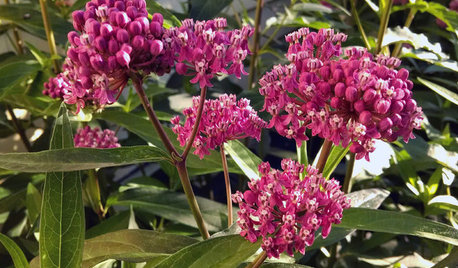
Am I correct in thinking that, while plants are blooming vigorously, their production of leaves decelerates? I am thinking of removing flowers from milkweeds, in hope of shifting emphasis to leafing.

Comments (20)

  • 3 years ago

    In general, you are correct. Most good gardeners understand that the act of pinching flowers and buds will redirect a plant’s energy to branching and making new foliage. Sometimes, however, other forces are stronger and flowering will occur no matter what but that is not the rule.

    four (9B near 9A) thanked rhizo_1 (North AL) zone 7
  • 3 years ago

    >" Sometimes... flowering will occur no matter what" ___ Yeah, I had that possibility in mind.

    >"...but that is not the rule" ___ Good enough for me, thanks much.

  • 3 years ago

    I love it. Such useful information to those of us who want to put it to use.

    (In a macro sense, moves the plant creature out of the realm of the mysterious into the understandable.)

    >"in the dark period), demand for energy for secondary growth increases at the expense of primary growth" ___ Would we expect that plants growing in permanently darker spots would be thicker, more defensive, less foliated than their kin growing in permanently brighter spots?


  • 3 years ago

    Would we expect that plants growing in permanently darker spots would be thicker, more defensive, less foliated than their kin growing in permanently brighter spots? No. Thickening is the result of the plant laying down files of cells in which food/ energy is stored. The more light a plant is exposed to (w/o there being a too heavy photo load), the thicker it will grow.

    There are 2 ways to look at your question re 'more or less foliage' when comparing the dry mass weight of foliage between plants genetically equal but grown under different photo loads. One is by comparing what % of the plants' dry mass is made up of foliage, and the other is the increase in dry mass of the foliage over any given time. In both cases, all else equal, the plant receiving the heavier photo load would have more foliage mass than the plant receiving less light.

    I mentioned that plants' photoperiod responses (blooming, budset, dormancy .....) are not actually triggered by day length, rather, it's the length of the dark period. While this might seem to be a ridiculous statement, it's true. Something I wrote some time ago and saved because the topic comes up from time to time:

    Plants have the capacity to "count" the number of hours of light that strikes photosynthesizing surfaces, and leaves are responsible for doing the counting. They contain a protein pigment that's sensitive to light (phytochrome). This pigment occurs in one form sensitive to visible red light and another sensitive to far-red light. Molecules of this pigment convert from one form to the other, depending on the type of light it absorbs. During the dark phase the form sensitive to far-red light gradually reverts to the other form, so it's the length of the dark period which determines the ratio of the two forms. This is how plants "count" the number of hours of darkness, and what drives photoperiod response. It's through phytochrome's conversion from one form to another that the plant is able to detect the end of the dark period.

    Al

  • 3 years ago

    >"The more light..., the thicker it will grow."

    >"secondary growth (thickening)" >"in the dark period), demand for energy for secondary growth increases"


    ??

  • 3 years ago
    last modified: 3 years ago

    Temperate climate adaped woody plant energy allocation within the plant body is regulated by hormones produced by winter stem buds. With opening of these buds in spring prompting production of new shoots and roots, setting of these same buds in autumn resulting in elongation (60% of the annual increase in length) of existing roots at that time. With this latter phenomeon being one of the main drivers of recommendations to plant winter hardy trees and shrubs in fall. (Various herbaceous perennials like peonies and Californicae irises also have an annual rooting out period triggered by overwintering spring growth initials having been formed).

  • 3 years ago

    @four (9B near 9A) I'm not understanding the question.

    Al

  • 3 years ago

    @tapla, it is just that they seem contradictory.

  • 3 years ago
    last modified: 3 years ago

    Does removing the words in parenthesis clarify what I said? The pecking order is generally true, but not carved into stone. E.g., in some plants, as the summer solstice passes and day length diminishes, demand for energy for secondary growth increases at the expense of primary growth.

    This means some plants stop or significantly slow extension and growing new leaves as, after the summer solstice, the daily dark period increases. Instead of spending all their energy on producing new growth, they save it for the coming winter and the spring push. It's the 'saving' part that causes the thickening. The point being made is the pecking order is somewhat malleable rather than being entirely rigid.

    Overall, though, in plants which are genetically the same but growing under differing levels of photo load but all else equal, the plants with the heavier photo load will have proportionately more biomass, part of which will be reflected in the thickness of stems and branches as well as in the volume of foliage. More light = a heavier/ sturdier specimen because it increases both extension and thickening (primary and secondary growth).


    Al

  • 3 years ago

    Clarified, thank you.

  • 3 years ago
    last modified: 3 years ago

    What species of milkweed are you referring to? I think a milkweed plant could be coaxed into growing more foliage if you clip off the stems, along with any flowers. It really depends on the species of milkweed and the location it's growing in. Common Milkweed is very common here, grows like a weed, and if I clip the stems they will often grow sidebranches or they will send up new shoots, or both. Tropical, (curassavica), and Balloon Milkweed,( Gomphocarpus) will put on more new growth when they are clipped and if they are happy. Some other species like quadrifolia and variegata are less vigorous, and they won't grow new leaves if the flowers or tops are removed. I had a Blunt-leaved Milkweed, A. amplexicaulis, and I removed the flower buds, because the aphids destroyed them, and it didn't grow any new leaves, but it sent up another shoot. Milkweeds have evolved with stratagies to survive herbivory, and they may decide to put more energy into growing stronger roots or rhyzomes instead of above-ground leaf growth, (if their flowers and tops are removed). I allowed some A. syriaca to bloom and I removed the spent flowers right after, and they stayed in much better condition(fresh) for the remainder of the summer, unlike the common that I allowed to go to seed, which developed rough, ratty leaves. I'm not sure Florida has a native milkweed species as vigorous as syriaca. The blue and pink Tweedia/Oxypetalum vines will put on new growth if they are clipped or the flowers are removed. The Monarch cats really liked the pink Oxypetalum solanoides. One good thing about removing the flowers is it will keep adult Monarchs from shedding OE on the plants while nectaring, and only egg laying females will be landing on them, (for the most part).

    four (9B near 9A) thanked Jay 6a Chicago
  • 3 years ago

    Thanks, Jay. Although it would be great if multiple species would grow well here, as a practical matter it is an A. curassavica monopoly region. All of mine are defoliated except for newly-emerged tiny leaves at top (these A. c. grow one-stemmed). I will be sure to clip when suitable opportunities arise.

  • 3 years ago

    Curassavica and Gomphocarpus can grow new leaves really fast. Unless they are covered with Oleander Aphids, and they are the most attractive milkweeds to aphids. You must have the deep south population of Monarchs that remain there year round, and don't winter in Mexico? Do you have caterpillars all year long? That population also has the highest incidence of OE. I don't know how much growing space you have, I could suggest a vine like Cynanchum or Matelea to supplement your available host leaves, but Cynanchum laeve needs a large area, and is very agressive. I was looking at ebay, and they have seeds for A. obovata and A. nivea. I've never seen those 2 offered before. Obovata might be the closest match to something like syriaca here. Nivea is almost identical to curassavica, except it has green and white flowers. The currasavica will put on new growth if you remove the flowers. If you run out of leaves routinely you might consider growing Gomphocarpus physocarpus or fruticosa, because they can get huge. A few years ago I had the milkweeds in pots. I had Gomphocarpus physocarpus, Asclepias currasavica, Calotropis procera, Dregea sinensis, Oxypetalum coerulea, and Oxypetalum solinoides. The Monarchs used the Gomphocarpus the most and the Oxypetalum solanoides came in second, then curassavica, Calotropis, Oxypetalum coerulea. I never saw cats on the Dregea sinensis, but the aphids attacked it the most, and I was constantly spraying them off. It's a really beutiful vine, and if it is used as a hostplant that would be great. It's too cold up here to succesfully winter over.

    four (9B near 9A) thanked Jay 6a Chicago
  • 3 years ago

    >"Monarchs that remain there year round" ___ True.

    >"caterpillars all year long?" ___ Yes, except in random long periods of very cold.

    >"highest incidence of OE" ___ Truly high. My experience in last three years has been that adults that eclose in first part of year are capable; then, from spring onwards, fewer caterpillars survive to pupate, rarely does a capable adult eclose.

    >"I could suggest.... you might consider growing...." ___ I will explore for availability of each.


  • 3 years ago
    last modified: 3 years ago

    I was looking at what native species would be more agressive and send up more stalks and the most ideal one for Florida would be Whorled Milkweed, A. verticillata. The leaves are narrow but the multiple stalks it sends up make up for it. Asclepias obovata is rhyzomotous, and has large leaves, though I havent seen any photos of it where it's growing in a clump of several stalks, like syriaca does. Im thinking that if the Monarchs in Mexico can spend the winter without laying eggs, than the Monarchs that stay in the deep south can get by without laying eggs. If everyone in the deep south cut back or removed their milkweeds in late fall, the infected adults will most likely die off before spring, and the rate of infection would decrease, because the healthier survivors will be the ones laying eggs. I don't see any other way to deal wirh the OE problem down there. Of course curassavica has probably naturalized in some areas of Florida. It's caring deeply about the Monarch population, that makes a lot of people in the deep south keep their milkweeds growing all winter, but it may be actually doing more harm than good.

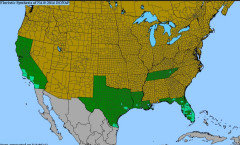
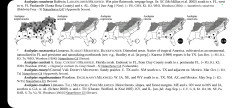
    Asclepias curassavica is not native to any state in North America. It's native range is further south in Mexico and further south. It has naturalized in Florida so much that many people think it's native. If everyone in the south cut back their curassavica, Gomphocarpus and any other exotic milkweeds and exotic vines in the subfamily Asclepiadoideae, and people started removing the plants that are naturalizing in the wild, it would help the migrant Monarchs in the south, by allowing the healthy butterflies to be the main population laying eggs in the spring. The bonap map for Asclepias curassavica is garbage , not truthful, and misleading. The states should be in blue, meaning curassavica isn't native to those states. People should focus on having flowers with nectar in the winter, instead of providing host milkweeds that cause Monarchs to phase into the breeding cycle and spread OE into the entire population.

    https://ucanr.edu/blogs/blogcore/postdetail.cfm?postnum=43489


    This map for Asclepias curassavica is not truthful. The green areas should be blue, because these are warmer states where curassavica has naturalized. It isn't native to any U.S. state.


    four (9B near 9A) thanked Jay 6a Chicago
  • 3 years ago

    >"more agressive and send up more stalks and the most ideal one for Florida... A. verticillata" ___ I will place it at top of list.


    >"If everyone in the south cut back... exotic milkweeds... healthy butterflies to be the main population laying eggs" ___ How would it affect the ratio ot eggs laid by healthy and unhealthy layers?


    In the linked article : "tropical milkweed,,, disrupts the monarch migration patterns"; the migration part is explained. The sentence continues : "and can lead to the spreading of OE"; no basis given for the statement.

  • 3 years ago

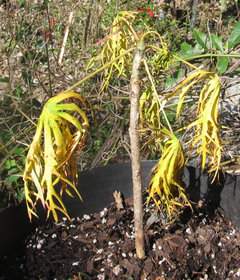
    Related to topic, this entry could be called "leaves vs leaves". Description and thoughts follow photo :

    (It was not exposed to the freezes. Just did not do well in cold. Remains healthy.)

    This plant is presented as a case in point; the question is general.

    I am inclined to clip off the leaves in such cases, thinking that 1) they might be a drag on resources, and 2) they probably provide no benefit.

    Of course later they will fall. My intention is to help towards new leaves production..

  • 3 years ago

    The plant has chemical messengers that keep plant central informed of which leaves are pulling their weight (creating more energy than they are using) and which aren't. Those that aren't will automatically be shed. The first step of the shedding process is 'resorption', during which the plant appropriates mobile nutrients and other compounds that can be used elsewhere in the plant, so even after a leaf is not a benefit in terms of it providing food/ energy, materials already paid for are being scavenged by the plant and used elsewhere. Once the abscission layer is formed at the base of the petiole where it attaches to the plant, it then becomes a useless appendage (to the plant). That is about the time that most leaves fall away from the plant, separation being caused by their own weight, wind currents, rain, .... .

    Whether or not new leaves appear depends largely on timing (the length of the dark period), how much more energy/ food the plant makes beyond what it takes to keep its systems orderly, and how limiting cultural conditions (light, temperature, soil air:water ratios, nutrition, etc, are.

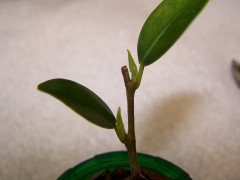
    Once the leaves along the stem in the image are shed, there is 0 chance new leaves will grow to take their places. Instead, new branches will form from suppressed axillary buds locates immediately above the attachment point of the leaf being shed. The only sure way to force new branches to grow where you want them is to sever the stem immediately above where you want the branches. As the branches extend, they will produce new leaves, but again, once those new leaves are shed, no individual leaf will ever grow in the same location, only branches. The stem of this cutting was severed, resulting in new branches (even if at first glance they might look like leaves) growing in the leaf axils.

    For the most part, there is no advantage to the plant if the grower removes leaves, living or dead. Viable leaves are producing food or being scavenged for their mobile contents, and dead leaves are never a literal drain on energy. In some cases, the number of obviously dead but persistent (still attached) can shade other leaves, limiting their ability to carry on photosynthesis, but the tree cannot devote any resources to leaves 'walled off' from the plant by an abscission layer any more than a person could devote resources to a prosthetic device.

    Al

    four (9B near 9A) thanked tapla (mid-Michigan, USDA z5b-6a)
  • 3 years ago

    >"'resorption'... compounds that can be used elsewhere" ___ That alone covers both uncertainties, thanks Al,


    >"0 chance new leaves will grow to take their places" __ Never had such illusion. I expect new leaves at tops and tips.


    >"new branches... immediately above the attachment point of the leaf being shed" __ I wish. Knowing now that it has happened for somebody somewhere, I will begin to look and look, hoping that it happens someday on some plant of mine.

Sponsored