Software
Houzz Logo Print
isherwood777

Tide Ultra Stain Release Free liquid

3 years ago

Does the current formulation of this have OBs? Greeny? Anybody?

Comments (27)

  • 3 years ago

    As far as I know, it does not. However However, I believe it is identical in formula to Tide plus Downy FREE

    Pat Z5or6 SEMich thanked doreycrouse
  • 3 years ago

    Hi Pat! It does not contain OBs! I am using it right now and can tell you and others it is not the same as the Tide w/Downy free. It does not contain cellulase like the w/Downy version and I think it is more surfactant heavy as well. It cleans better than the w/Downy or regular free and gentle formulas. Only con I have so far is I find it harder to rinse out of towels.


    My sheets have never been cleaner so this gets two thumbs up from me!

    Pat Z5or6 SEMich thanked littlegreeny
  • 3 years ago

    Bless your hearts, Dorey and greeny.

  • 3 years ago
    last modified: 3 years ago

    Pat - my bottle has none listed among the ingredients.

    Pat Z5or6 SEMich thanked Cavimum
  • 3 years ago

    isn't cellulase a good thing?

  • 3 years ago

    I just finished my first wash with TideUSRFree and really LOVE it. The clean is great, but the rinsing is an issue with my semi-hard water, so I will do another load tomorrow with less detergent. Love it, Greeny!

  • 3 years ago

    Cavimum, do you have a rinsing issue with this?

  • 3 years ago

    Pat - as far as i can tell, there is no problem rinsing in our moderately hard water.

    Pat Z5or6 SEMich thanked Cavimum
  • 3 years ago

    If no optical brighteners, I'm guessing this isn't the best to use on white sheets?

  • 3 years ago

    One the tide.com website, one can select a detergent and click the Smartlabel link to show the product's ingredients. Tide Ultra Stain Release Liquid Laundry Detergent contains Fluorescent Brightner 71 which appears to be a brightener...though I don't know why someone would want to avoid this ingredient.

    Cellulase is an enzyme and Tide Ultra does contain three enzymes (cellulase is not among them) which help remove stains. According to this article World of Enzymes article it is found in humans ("in order to digest properly the herbs, sprouts and greens, people need cellulase") and is a common ingredient in detergents. The article states, "The activity of cellulase is commonly to break down cellulose..." Why it would "eat[s] away at fibers" as claimed above is unclear.

  • 3 years ago

    The link above is for the regular, scented version of ultra stain release. Here are the ingredients for the free version. Note there are no optical brighteners.


    Ingredients

    Pat Z5or6 SEMich thanked littlegreeny
  • 3 years ago

    And to comment on the other statement questioning my reasoning about not using detergents that contain cellulase is pretty clear and simple; cotton is primarily composed of cellulose. And according to the world of enzymes link above, "The activity of cellulase is commonly to break down cellulose..." Enough said.

    Pat Z5or6 SEMich thanked littlegreeny
  • 3 years ago

    "The activity of cellulase is commonly to break down cellulose..." refers to the digestion of "herbs, sprouts and greens" in the human body. Do you really think that Proctor and Gamble is going to put so much cellulase in a detergent that it's going to destroy your cotton clothes? Oh, come on.

  • 3 years ago

    Cellulase reduces fabric pilling which helps smooth fabric surfaces and make colors appears brighter and whiter due to less fuzziness. An additional effect of that is smoother fabric fibers are more resistant to soils and stains attaching to them. So, yes, cellulase "eats" fabric fibers but to a minimal extent for providing the intended effect.

  • 3 years ago

    To find out why many of us on this forum don't want optical brighteners in our detergents, on our bodies, or in our machines, you might want to do a search on houzz of "optical brighteners" or "OBs" or "OB's".

  • 3 years ago
    last modified: 3 years ago

    "in our machines..."

    • Mary: "Mom, the washer won't start."
    • Mom: "Darn optical brightners!"


    Problems with Optical Brighteners

    • "further studies [of skin irritation] were inconclusive"
    • "Later studies were unable to replicate these findings [of environmental effects], and the results were, again, inconclusive."
  • 3 years ago

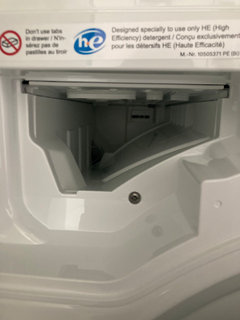
    Pat and Littlegreeny: You both seem to be pretty comfortable using a liquid detergent based on this thread, and I am curious to know if you ever experience the problems that arise from using liquid versus powder, especially in a FL machine. My MIL uses Liquid Tide in her Miele, and a few weeks ago when I was over there I made a point of opening the dispenser tray...I have given up trying to convince her to switch to powder; I did discuss with her using the proper amount. Even with powder I use less than the suggested amount on the packaging, and the results have been so much better. Wondering what you think.

    Pat Z5or6 SEMich thanked armjim
  • 3 years ago

    armjim, i will always have a box of Tide With Bleach powder in my laundry room. I use both Tide Free liquid and the powder intermittently because I can't make up my mind about which is best. I think because of my mostly hard water, I prefer the liquid most of the time. But Tide WB powder sure comes in handy when you need oxygen bleach. Keep in mind that I have an old top load, water hog, agitator machine that I hope doesn't die until after i do. I think using both liquid and powder detergents is the safest thing I can do.

  • 3 years ago

    @armjim similar to Pat, I also use Tide liquid and powder, depending on the load. I think the main issue with washers getting funky is from using too much liquid detergent along with quick wash cycles that don't properly rinse laundry or the machine. That combined with cold water washes leads to some pretty ideal conditions for mold and bacteria to funkify any washer.


    I wash kitchen/bath towels and sheets at 140F, regular cottons at 105-120F, cleaning clothes at 170F, and napkins at 120F. The coldest temp I use is 85F for my denims. My washer is set to dispense 26 mls of Tide USR free which is just under 2 tablespoons. When I use Tide free powder, I only need about a tablespoon to clean a full load.


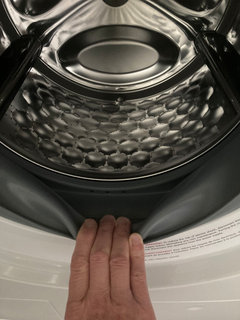
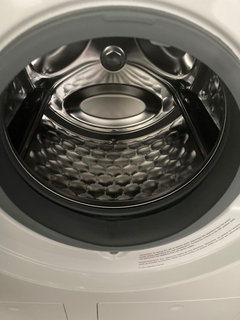
    I also wipe the door seal and detergent dispenser cavity dry at the end of each washday. I keep the detergent tray out of the washer when not in use and leave the door ajar. My washer looks and smells like new.


  • 3 years ago

    Pat you and me both-I never want to let go of my TL, limitations and all. For us the powder works best, but I have to really make certain I use the proper amount. It is amazing how using too much is just as bad as not using enough. I stay with the original formula, add 20 Mule Team or similar, and use Oxyclean stain remover as needed. Have not used FS in months-I want to go back to using it-at least for towels and bedding, but I am leery at this point of sour smelling towels again.

    Pat Z5or6 SEMich thanked armjim
  • 3 years ago

    I am impressed by how new that looks littlegreeny! I never use cold water for washing unless a very specific item is being laundered. I have the WH set very high-I estimate it is at least 140 F. Luckily that it is in the garage and the LR is next to the garage, so the water does not have far to travel. I learned from all of ya'll to watch my dosage, and it has served me well as I said to Pat earlier and on other threads. I keep my TL SQ clean-I always wipe down inside the lid and around the agitator. I want no funkiness in my washer.

    Pat Z5or6 SEMich thanked armjim
  • 3 years ago

    I use Tide Free/Clear liquid formulas on dark colors because there are no OBs added. The light colors get the powder versions.

    Pat Z5or6 SEMich thanked Cavimum
  • 3 years ago

    I'm using those formulas on light and white colors too because I don't want OBs on my precious bod.

  • 3 years ago

    I avoid OBs because they are completely unnecessary ingredient in laundry detergent. Their only function is to make laundry appear brighter, whiter or cleaner, without actually cleaning anything. They do this by converting ultraviolet light and then re-emit it in the visible blue spectrum.


    They are designed to not wash out of your laundry and will be in contact with your skin even though the long-term effects of these chemicals are still unknown. They don’t biodegrade, which means that once they get into wastewater, they remain in it for a long time. They can bioaccumulate into aquatic life.

  • 3 years ago

    I don’t mind a little Cellulase every now and then, but I do have suspicion that it can weaken fibers.

    Also, I prefer no OBAs on darks and colors. The difference is noticable!

    Pat Z5or6 SEMich thanked doreycrouse
  • 2 years ago

    God, I love this old post. Reminds me why this forum is so valuable.