Software
Houzz Logo Print
elizabeth_baylor60

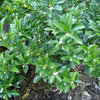
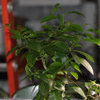
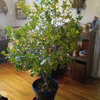
Young citrus trees growing lower branches with no vertical growth

2 years ago

I put in a set of citrus trees (Eureka lemon, Moro blood orange, [random] lime) in my front bed about a year ago. The soil isn't great (lots of clay) but I took out the existing nandina (nightmare) and have been working on establishing edibles and pollinator plants. My citrus are surviving but not thriving. The do have some heathy growth on lower side branches but refuse to grow vertically on the original lead branches. Totally new to this but am wondering if trimming the tops of the vertical branches could prompt some growth. Advice appreciated!

Comments (14)

  • 2 years ago

    Can you post a pic and closeups of your plant(s)?

  • 2 years ago

    By vertical do you mean horizonal? If so that is exactly what citrus trees do.

  • 2 years ago

    Thanks for the quick response. Adding images here.

  • 2 years ago

    Your tree looks like atypical young citrus tree.

  • 2 years ago

    It's a set of 3 trees. My concern is that they've been in the ground for a year now and haven't grown taller. They've just put out long branches toward the base.

  • 2 years ago

    A one year old in ground citrus tree should be fertilized 5 times per growing season.+

  • 2 years ago

    Agreed with Silica--fertilize more, and you may see additional topside growth.


    A bit unrelated--pull back the rocks a little from the base of the tree before springtime. They'll easily get very hot in the sunshine and make it harder for the tree if they're in contact. When the canopy eventually establishes, feel free to move them closer.

  • 2 years ago

    Remove the stake the trees are attached to as well, they will never get strong enough to stand up to wind and the weight of fruit with a crutch attached.

  • 2 years ago

    Ok, so focus on fertilizing and pull back on rocks and staking. I put down the rocks a month or so back to keep the squirrels from digging around the roots, but will try to figure out something else as it warms up. Does the pruning seem unnecessary?

  • 2 years ago
    last modified: 2 years ago

    They're just getting established. I would not prune anything at this stage. The plants need all their leaves to sustain themselves. If they grow a LOT this summer, you could trim an inch or two off the longest shoots to sort of keep things in balance, but they're going to put out lots more little branches eventually.

    Usually, they way citrus grow, a long branch will form fruit. Fruit will pull it down. Then shoots will grow up from the weighed-down shoot and those will grow more upright. Then those will bear fruit and bend down. And so on. ..

    Elizabeth Baylor thanked Dave in NoVA • N. Virginia • zone 7A
  • 2 years ago

     ken B Zone7

     I agree  how do they expect the tree to get an real strength  without  being  able to  swing with the wind


    Howard

  • 2 years ago

     Elisabeth Baylor 

     that sounds like  they were grafted  and the graft  is growing that is all I can say  other   than there might a pest insecet  with out further information  can tell us what is going on

  • 2 years ago

    It's a set of 3 trees. My concern is that they've been in the ground for a year now and haven't grown taller.


    ==>>


    one wonders why you skipped the tree forum ..


    tree time is counted in decades ...


    your trees will be exactly how you want.. in a decade ... there is NOTHING you can do to speed it up ..


    it is common tor transplanted trees to do . .what appears to be.. nothing for the first year or two..... before it does anything you 'see' ... that is because it is growing the roots.. to grow the tree you want..


    the root system of a tree is said to be 2 or 3 times what you see above.. so you should appreciate the work it is doping underground...


    water properly.. deeply.. and infrequently .. to encourage root growth.. fertilizer is not really going to speed up tree time ... a little wont hurt.. but dont kill it with too much fert love ..


    and next time.. add the tree forum ... or when you need pruning help ...


    ken


    ps: hot rocks around ANY plant.. retain heat late into the night.. and plants dont like hot roots... so remove all the rocks.. and brick... if you havent already...

  • 2 years ago

    About trees planted in the landscape:

    First year they sleep.

    Second year they creep.

    Third year they leap.

    IOW, it takes some time for the tree to get its feet under it and established.


    I have a question re how you went about planting the trees and what was the condition of their roots at plant-out time.

    * Were the roots congested to the degree the entire root/soil mass could be lifted from the pot intact?

    * If yes to above, did you do anything to correct the congestion, or did you simply make a planting hole, set the plant, and back-fill.

    * Did you use native soil to back-fill the hole, or did you 'amend' the soil you used to back-fill with organic matter?


    The reason I ask is because root congestion has a profound effect on branch extension, and can slow extension growth to the point you would swear no extension is occurring. Also, planting holes not filled with native soil encourage roots to remain within the confines of what was the original planting hole. This (back-filling with native soil) is more a concern for the future, but the root congestion question and how it was handled at the time of planting-out is of immediate concern because congestion severely limits availability of resources essential to growth, including root growth.


    For plants in the landscape, no one without access to analysis of the soil your trees are in can tell you what is appropriate in terms of how much, how often, or with what product(s) you should fertilize. Any other contention is just a SWAG. How often you fertilize depends ion the type of fertilizer you use. A controlled release product might be appropriately applied once per year; whereas a soluble synthetic product might be appropriately applied as often as each fortnight. This assumes that the NPK % of the product are appropriate, and they won't be. A soil analysis with recommendations might have you applying things like elemental sulfur, magnesium sulfate, potash, urea, ..... almost never a commercially prepared multi-nutrient fertilizer product.


    If a soil test just isn't in the cards, and since nitrogen is the nutrient most deficient in the landscapes, go with a slow release (not controlled release - they are different) product high in N. Something like 30-10-10 or 27-0-3 is about the best you can do if you you have to guess. Choosing fertilizers for container grown plants is easier because you can discount the nutritive value of materials like pine bark and peat. Coconut products require work-arounds for best results because of it's higher pH and high K content.


    Al