Software
Houzz Logo Print
webuser_882437576

Rose galls from Palatine?

Hi everyone,


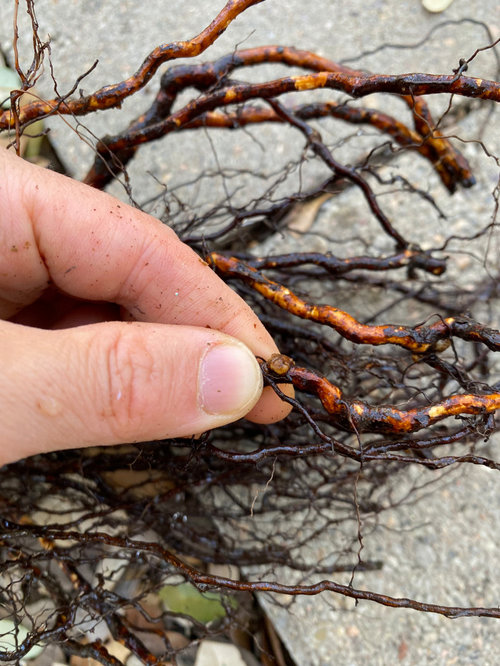
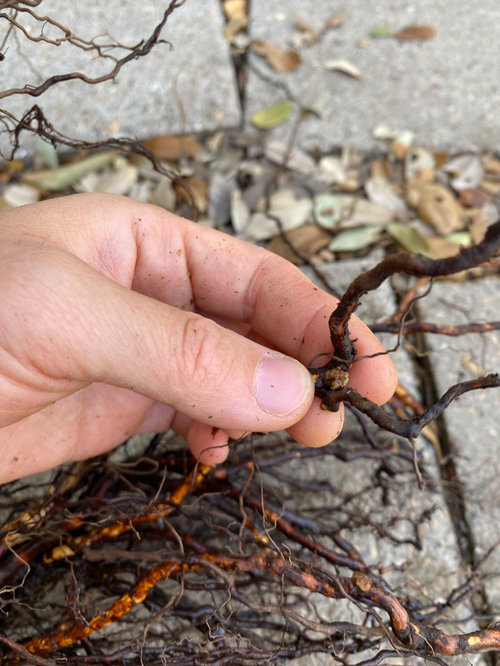
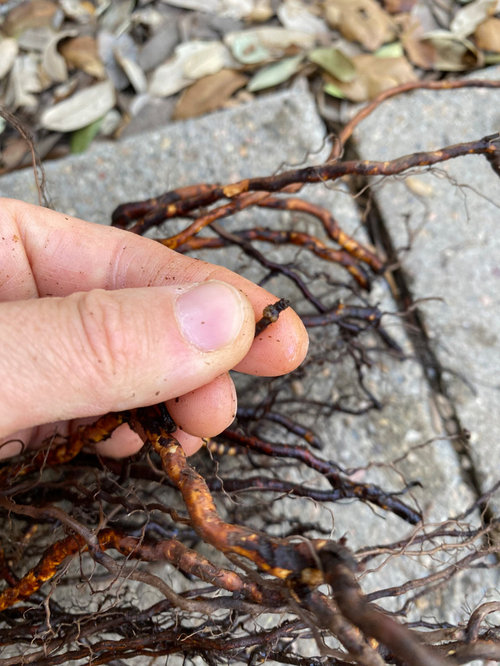
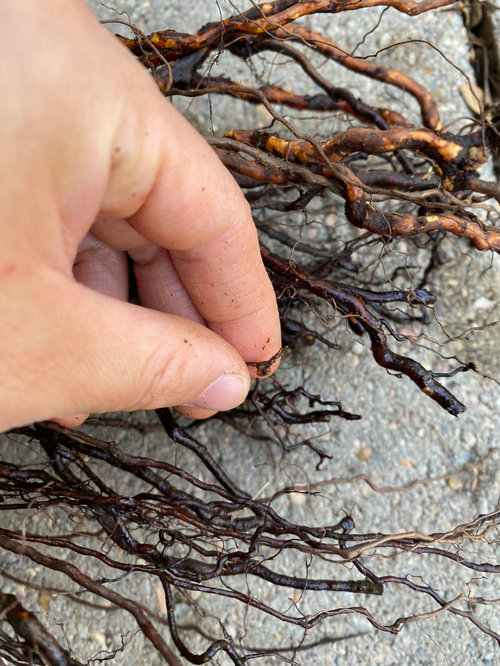
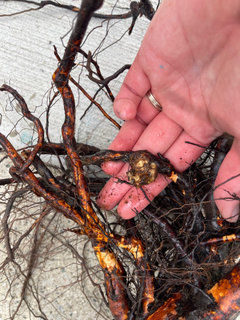
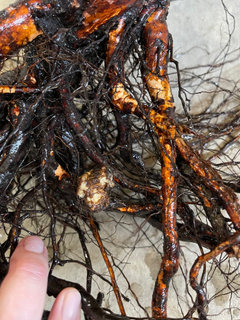
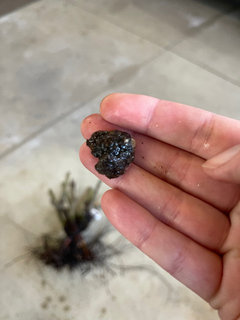
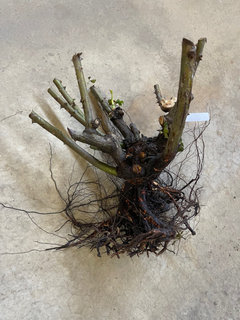
Have any of you experienced rose gall issue with Palatine's roses? I received my order over the weekend and discovered these galls(see photos) on the roots. I consulted with a third party with expertise to confirm that those are rose galls. Has anybody had the same problem? Should I dispose of the rose? I had the issue with another rose in the past and I got rid the rose. I was so sad to see this happened again, and it is on the one rose that I wanted the most. And of course the other three roses in the same order were unfortunately soaked into the same water. I cannot say they are safe now. I wonder if the other roses from the Palatine have the same issue. The rose gall is highly contagious after all. Those galls are very small. I examine everything very carefully and that's why I discovered them. I even wish I didn't look so closely, so my excitement of receiving the roses wouldn't be ruined. :(


Comments (46)

  • 3 years ago
    last modified: 3 years ago

    If i were you I'd wait for a more experienced rosarian to comment on here. Your photos don't look like the common photos I've seen of gall, but I alsoalso haven't experienced it first hand.

    I've only received the best quality of plants from Palatine in the past.

  • 3 years ago

    I’m not a photographer. i don’t know the lingo.

    Is the problem one of focus, lighting, or something else?

  • PRO
    3 years ago

    Librarian, yes I want to hear more from other people. I have videos that show more clearly how these galls look. The fact that they have a cauliflower kind of look and that they are on one side of the root concerns me. I was looking at this video and feel like they fit all the description. https://www.youtube.com/watch?v=bgdq9b7TpF0&t=1552s

    I guess I am looking for a reason to convince me to keep the roses. I really don't want to get rid of them, but I am afraid of putting my other roses at risk. Anyways, that is why I am making this post.

  • 3 years ago

    Ugh. Maybe you should send an email to Palatine asking them. This could be damaging to their brand and they may want to make it right for you. They will tell you the truth about it. I have no idea...others here may.

  • PRO
    3 years ago

    rosecanadian, I understand your concern for their brand. I emailed them twice. The first email they emailed back quickly and said they could not be sure and asked me to just cut them off. The second time, I presented more evidence and I have just heard back from them now. They said they refunded the cost of that one rose and asked me to mail the rest back for a full refund. I am honestly struggling if I should mail the rest back because I can see that the roots of their roses are the best amongst the ones that I have received. I do want to keep them, especially since they are hard to get in the US. And I have heard of their reputation, which is why I stayed by the computer to refresh their webpage every 10 minutes when they were about to sell their roses in December last year. Anyways, I hope you understand my struggle as a fellow rose gardener.

  • 3 years ago

    HU - yes, of course, I understand. :) :) You're so right to be concerned. I wish someone knowledgeable about rose gall would respond. I'm sorry this happened and I wonder if we should all be worried about our new roses coming.

  • PRO
    3 years ago

    rosecanadian, I guess we should just carefully inspect all the roots before soaking. I just happened to caught a sight of a very small knot when I was unpackaging the roses, but I didn't think too much about it before soaking them all together. Knowledge brings sorrow, if you know what I mean... I encountered root gall once, so I decided to check carefully again, and then I found 4 galls. :'( We all just need to be more careful to avoid future sadness, I guess. I am waiting for someone who has more knowledge about the issue to respond...

  • PRO
    3 years ago

    Sunny Mississipi, I'm so sorry to hear about your experience. It sounds like it probably came from the nursery. I am now more inclined to not keep the remaining three roses and ship them back as Palatine has requested. I'm not sure if they will resell the roses though. I can tell you that the galls I found are very small, so it is normal that people wouldn't be able to see them unless they know what they are looking for. We definitely need to be more careful to inspect the roots in the future, even when receiving orders from reputable companies. But I guess we wouldn't be able to know if they have used the pruner to cut the infected roses and then cut the healthy ones. The symptom wouldn't be showing immediately, if you know what I mean. Anyways, we can only do so much. I have seen people receive roses from DA that have root knot nematodes, but I guess they are not as serious as rose galls.

  • 3 years ago

    I just got my Palatine order last weekend, 3 healthy looking bare roots. But… I don’t know if they had galls or not because I didn’t think to look! I soaked them and planted them on Friday and Saturday. All three are in pots for now, so maybe that’s best. At least they won’t be infecting any other plants if they do have galls. And I don’t plan to dig them back up to check them.

  • Business_Name_Placeholder thanked SoCalGardenNut
  • 3 years ago

    Well this is worrisome. My eyesight is really poor and I probably wouldn't even be able to see it.

  • 3 years ago
    last modified: 3 years ago

    I dont think my rose The Pride has it because i cut down a bit of the root before i planted and neither did AL. But i didnt check on Dimitri, it’s huge root. But the last 2 are in container at the moment.

  • 3 years ago

    Thanks for the article @SoCalGardenNut

  • PRO
    3 years ago

    Judyjunebug, If you already planted those roses, I wouldn't worry too much. Just keep an eye on them. I don't think we need to worry about every rose that comes from Palatine... I might just be one of the few unlucky ones. Being careful is always good, though. I actually have a "quarantine area" for suspicious roses. LOL. I don't want gardening to be a burden. It suppose to be something enjoyable.


    SoCalGardenNut, Thank you for the article. It is helpful.


    Kristine, We can only do our best to inspect. Like I have said, gardening suppose to be something that we enjoy, not something that we get paranoid with...


  • 3 years ago
    last modified: 3 years ago

    Not every little nodule on a root is Gall. When rose roots get nicked or cut, they form callus tissue, which is a precursor to root formation. Its a kind of undifferentiated meristematic tissue.

    Tiny nodules MIGHT just be callus that formed when a root got damaged. Gall typically forms on stems above ground and near the crown/bud union, rarely (if ever) deep below ground. That article linked to above states right at the start:

    "Rounded light green to light tan growths on roots or bud union

    Irregularly shaped, rough, woody-looking dark-colored masses on stems near soil line or just below the surface"

    I'm inclined to believe the tiny nodules on those roots are just random callus formations.

    Business_Name_Placeholder thanked User
  • 3 years ago
    last modified: 3 years ago

    I have to go with Paul on this one. Those look like calluses formed due to physical damage to me. I do know that Palatine, because it ships to the US, has to undergo regular inspections by the Canadian equivalent of the USDA, the AAFC. It's even possible that those nodules might be northern root knot nematodes, but again, Palatine has to submit to inspections. I tend to think that simple calluses are the most likely diagnosis.

    If there are any of the nodules large enough to cut open, a callus will be hard, tough, and solid, but obviously just a scar over vascular wood. A gall will be woody, yet spongier, more "pithy" than the material it grows from. On larger galls, you also won't see any grain or direction, just an undifferentiated mass. Your nodules seem too small to use that last diagnostic, though.

    Business_Name_Placeholder thanked fig_insanity Z7b E TN
  • PRO
    3 years ago
    last modified: 3 years ago

    Paul and Fig, Thank you both for the information. It does make sense. I guess what made me scared was that the third party expertise that I consulted with actually had similar situations where the galls weren't near the soil line, but were underneath, and looked very much like what were on my rose. In their case, the nodules were actually galls. That is why I was asking initially to see if anyone else has the same problem. Sunny's response made me concerned as well... I guess I will keep them all in pots in the quarantine area for a year and check the roots again during the next winter? I am not sure... But I appreciate your help!

  • 3 years ago

    Well, I think that Paul and Fig are really good people to listen to on this. Maybe just let them be and see how it goes. Paul Barden is a Pro...he knows a lot. :) And Fig knows a lot too. I'm not going to worry about it when I get my roses from Palatine. :) :) I'm really grateful that you brought this matter to our attention. Thanks so much, HU.

  • 3 years ago
    last modified: 3 years ago

    I agree with John - its extremely unlikely those roses would have passed their Ag inspection if they were galls. Cross-border Ag inspectors are bulldogs when it comes to such things.


    "the third party expertise that I consulted with actually had similar situations where the galls weren't near the soil line, but were underneath, and looked very much like what were on my rose. In their case, the nodules were actually galls."


    My question is: how did they know for certain? Did a plant pathologist diagnose this for them?

  • PRO
    3 years ago

    Rosecanadian, thank you for letting me know that Paul and Fig are very experienced with roses. It is comforting to know.

    Paul, that is a good question. And in fact they did consult with a plant pathologist to confirm. :(
    It was the guy introduced in this video:
    https://youtu.be/bgdq9b7TpF0
    I am a studious person so I actually spent an hour to watch the video, and found the galls I discovered on the root fit all the descriptions. You can’t imagine how heartbroken I was. I contacted the YouTuber and have her asked the experts for me. I sent them more detailed videos. They came back to me and said yes they believe those are galls. And then I came to this forum to ask around again, because I just don’t want to give up those roses. As I said in the previous comment, I am looking for a reason to keep them. :’( Aside from this issue, the roots look awesome, you know. And they are the varieties that I want to have for a long time. Anyways, I am more inclined to keep them instead of shipping them back, and probably have them quarantined for a year and check the roots in the next winter, just to be safe…

  • 3 years ago

    "They came back to me and said yes they believe those are galls."


    Diagnosing something like this by viewing a couple of photos isn't a particularly meaningful diagnosis. But do whatever makes you comfortable. A business like Palatine knows what Gall in their inventory would do to their reputation, so its not likely that they would knowingly ship plants with Gall on them, and even more unlikely that they would pass Ag inspection across borders.

  • 3 years ago
    last modified: 3 years ago

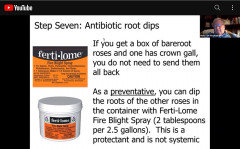
    The video says you dont have to send your roses back, use fire blight to spray.


  • PRO
    3 years ago

    Paul, thank you. I don’t believe they would knowingly sent the roses with disease out. And I do want to continue to believe in their products. Just want to be cautious in everything to avoid future sadness… I have ordered over 20 bare roots from different suppliers this spring and I didn’t see these kinds of development on other roots. I guess that is one of the reasons that I am more concerned. If it is normal to have these little nodules, then why would only one out of the twenty has the problem? That’s just a question in my mind. I still have a lot to learn. But I really appreciate these discussions. They give me a lot to think about.

    SolCalGardenNut, thank you for pointing that out. When I watched the video, the plants were already in pots, so I didn’t even think much about this method. And plus they were all soaked together for a while. I was too worried about how that would affect the roses. Maybe I should pull them out from the pot and use this method to treat them.

  • 3 years ago

    Is there someplace you could take your rose to so they could see/test it in person? Then you'd know for sure. :)

  • 3 years ago

    Hey @HU-528415629 are you even able to ship the others back to Canada without an AG certificate?


    This article and several others show images of it appearing on roots like yours. But I agree with Paul that unless a plant pathologist has tested it, there's no way of being totally sure.


    I removed a rose last year because I thought it had crown gall. Now I think I jumped the gun and it was likely a very large callous. Bummer for me.

    Business_Name_Placeholder thanked User
  • PRO
    3 years ago

    Robert, Thank you for the articles. The galls do look very much like mine, unfortunately. :( In fact, in the last couple of hours after discussing with my husband, we decided to get rid of the 4 roses that came from Palatine. I know it perhaps sound extreme to many of you, but we don't want the risk at all. After all, we spent thousands of dollars for our garden, and not to mention lots of labor work. Palatine has emailed me a prepaid returning label and has scheduled the carrier to come to pick up the package. I guess it is their business to worry about how to get it over to Canada.

  • 3 years ago

    @HU-528415629 I think you are doing what is perfectly sensible. Don't feel badly. Our gardens are a major investment of time and money, and we need to do what we need to do to feel good about them. I'm just bummed you won't have the roses you really want (was one an Augusta Luise?).

    Business_Name_Placeholder thanked User
  • 3 years ago

    I'm a bit puzzled by crown gall, because on the one hand, the stated treatment is to destroy the affected plant and replace all the soil where the plant grew. But on the other hand, the microbial culprit, Agrobacterium tumefaciens, is described as being pretty much everywhere. So why is replacing the soil effective at all - wouldn't the bacterium be present in whatever new soil you get, unless it's specifically sterilized? Is it a matter of bacterial population density, once a colony gets established, that makes it dangerous? Or is it like a lion that gets a taste for eating humans - there's no fix but to destroy the rogue animal?

  • 3 years ago
    last modified: 3 years ago

    I wouldn't go with the assumption that a given prospective planting site was infested without first seeing plants already growing in it with galls on them. I also wouldn't leave roses (or any other non-aquatic plants) sitting in water. It does nothing to assist bare-rooted stock with recovering from being dug up and it does produce a likelihood of a percentage of nutrients within the plants being leached into the water. When enough time has elapsed. Which of course is a detriment rather than a benefit.

    Business_Name_Placeholder thanked Embothrium
  • PRO
    3 years ago

    Robert, yes, one of them is Augusta Luise. Very sad to see it go. I was so thrilled when I was able to make the order, because you know how hard it was to buy the popular ones on their website. But oh well... We just have to do what we have to do.


    Steve, those are great questions. It probably needs experts to answer all of them. All I can say is that we can only do so much. I just personally believe that if we see the problem already, but we don't do anything about it, then it is on us. However, we can't control everything... We can only do our best.

  • 3 years ago

    I would pot AL versus throw it away. This way there would be no risk of contagion.

    Business_Name_Placeholder thanked Sheila z8a Rogue Valley OR
  • 3 years ago

    I agree with Sheila. As hard as AL is to get your hands on (I've been trying for four years, and gave up this year), I'd keep it potted, let it grow a year, then in the Spring of 2024, UN-pot it and examine the roots. If it has crown gall, it will be more than obvious by then. If the nodules are merely scar tissue, they won't grow, whereas galls will...considerably. Keeping it as a potted plant, it can't spread any potential infection. I'm not clear whether Palatine has already refunded your money for the roses. If not, I'd contact them again and see if they would extend their offer of a refund until next year, considering that you've already informed them of a *possible* problem.

    Business_Name_Placeholder thanked fig_insanity Z7b E TN
  • PRO
    3 years ago
    last modified: 3 years ago

    Fig and Sheila, Thank you both for your advice. I did some more digging on the rose gall topic and found out that even the water that drained from the infected rose's pot can spread the bacteria as well. It is just very contagious. And after looking lots and lots of gall pictures (I know, Im quite sick of it already), I tend to believe those nodules are galls. I think it really depends on how much risk you want to take. I wish I could just re-gift AL to those who are willing to take the risk, you know. Only a couple of days in pots, those roses already took off. New shoots coming out everywhere. I was literally heart broken when I pulled them out this afternoon. The soil in the pots are gonna be thrown out, too. We just want to have as little risk as possible. Our babies got ill at the same time. Lots of effort to take care of sick babies, so no more energy for sick roses. :'(

  • 3 years ago

    I guess I'll be throwing out my Comte. The ball I trimmed off the roots was slightly larger than quarter-size. I didn't realize it was gall. And I certainly didn't know it could transfer through the water draining from the pot! I bet this is why it became a one-cane-wonder haha. Such a beautiful and fragrant rose! I'm going to miss it.

    I'm sorry about your experience HU. I hope you are able to nab Augusta for 2024!

    Business_Name_Placeholder thanked Sunny Mississippi 8a
  • PRO
    3 years ago

    Thank you, Sunny. Since you already discovered the gall, throwing it out is probably the best choice. I am sorry about that, too.

    It is hard to do gardening; you have to battle against weeds, insects, and all kinds of diseases. But gardening also gives us so much to look forward to - we always have hope for the next spring!

  • 3 years ago

    HU - your children are sick? I'm sorry. You're going through a lot now. You did the right thing for your situation. Like you said, you put a lot of work/money into your garden.

  • PRO
    3 years ago

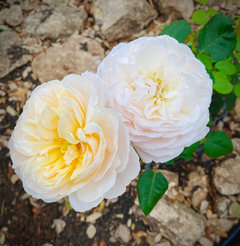
    Thank you rosecanadian. It is nothing serious. You know how easy for the little ones to catch something during winter and spring time. It was just one thing after another that made me stressed out. I love my children and I love my roses. I don’t want to see any of them getting sick. Today I saw my first roses blooming for this spring, and I thought to myself, although they are just common ones that are easy to get in the US, nothing special like AL, but if we put our effort into them, they are still breath catching. I think I’m doing better now. (The roses in the photos are Moonlight in Paris, which is easy to get in HD or Lowe’s).

  • 3 years ago

    Agrobacterium tumefaciens is present in soil, everywhere. Anywhere A. radiobacter is found, there will be some amount of A. tumefaciens as well. A. tumefaciens only acts as a pathogen when it can infect an open wound. (So, deep mechanical cultivation around rose roots is probably not a good idea.) Its not as "infectious" as some people would have you believe. It can only infect a plant that has open wounds. Casual exposure to the bacterium won't infect your other roses. Chances are the bacterium is already present in your garden anyway.


    Control of Gall on individual plants can be achieved (especially if galls are young/small) by 1) removal of the galls and 2) treatment with Gallex/Galltrol.


    It is my personal opinion that there was no reason to discard those plants, especially since its questionable whether the nodules on the roots of your plant were pathogenic in origin or not.


    Note: some varieties of Rose are extremely prone to A. tumefaciens infection. Dig up any established plant of 'The Fairy' and odds are extremely high that it will have Gall on it somewhere. Most established plants of it that I have seen have been infected with Gall. Its not the only one.

    Business_Name_Placeholder thanked User
  • 3 years ago

    HU - beautiful Moonlight in Paris blooms. :) :)


    Paul - It's so helpful to have your experience here. :)

    Business_Name_Placeholder thanked rosecanadian
  • 3 years ago

    I don’t mean to hijack this thread but I received a rose too this spring (from a different vendor) and wondered if this was rose gall on the roots. Part of it cracked off and it was hard. The vendor said it was a callus. I put it in a planter to be safe but I had also soaked it in a tub with all of my Palatine roses so I followed the video mentioned above and soaked those with the fire blight spray before planting them. I am in SW Michigan zone 6. Will there be a way to know if the plant has this, I was hoping to put it in the ground this fall. It’s Evelyn too….

  • 3 years ago

    Looks gall-ish to me, though I don't have a lot of experience with it. Compare to the pictures at https://pnwhandbooks.org/plantdisease/host-disease/rose-rosa-spp-hybrids-crown-gall and elsewhere.

  • 3 years ago
    last modified: 3 years ago

    Thanks Paul. Your expertise is invaluable to us all here on the Roses Forum.

    To what it's worth, I dug up a rose a number of years ago that had been planted two years earlier as a gallon size, OR, from old Chamblees. The rose was growing very well. I just didn't like the bloom. There was a root gall on it the size of aan English Walnut about 10 inches out from the crown.

    Whether it came from Chamblee's infected or got infected in my garden, who knows. It did not appear to effect the growth of the rose. I have not seen gall on any other roses in my garden, but I honestly have not been a careful examiner for root gallgall before or since.

    I did plant a new roserosros in the same locale with no ill effects to it that I detect.


    Moses

  • 3 years ago

    I have cut off galls at crowns of plants and the roses carried on beautifully.

  • 3 years ago

    I got definite huge galls on a rose band from a well known nursery several yrs ago. It was up near the stem and was unmistakable. It went staight in the trash. Never had gall before or since.

  • 3 years ago

    Its worth remembering that the Agrobacterium species that causes galls lives in the soil everywhere. Its likely present in your garden. Any time there is an injury to the roots of a Rose, there is an opportunity for the bacterium to start a gall. There's no guarantee that a rose that starts life without galls in your garden will continue to live its life without gall - it can be introduced at any time, and certain cultivars are notorious for spontaneously developing gall. (As we've already stated, 'The Fairy' is notorious for it)


    So nurseries that produce tens of thousands of roses every year are going to end up with some percentage of roses with one or two galls on their roots somewhere. Its a tiny number, and it does not suggest that any one nursery is "distributing infected plants" as if its some kind of willful negligence. Its just a fact of life in the business.


    If you receive a rose with one or two tiny galls on the roots, cut them off and carry on. You cannot say with any confidence that the growth is caused by Agrobacterium tumafascens without testing. Gall-like callouses can for on rose roots for a number of reasons, and not all are A. tumafascens galls.

Sponsored
Wannemacher Interiors
Average rating: 5 out of 5 stars26 Reviews
Customized Award-Winning Interior Design Solutions in Franklin Cnty OH